

Antique Wall Barometer Thermometer
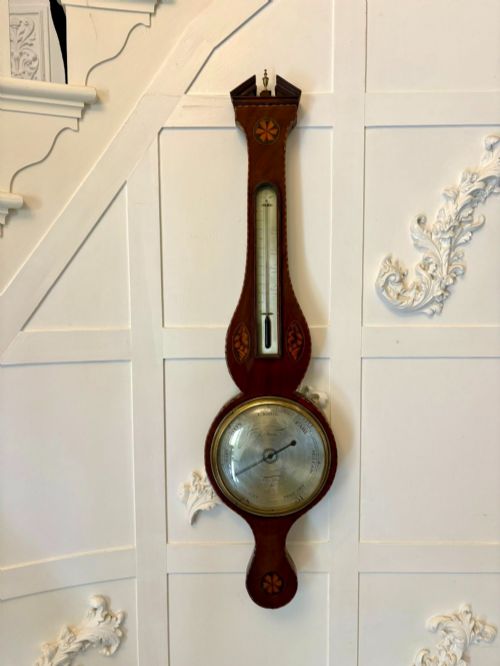
These antique wall barometer thermometer pieces combine weather measurement with domestic woodwork from Georgian, Victorian, and Edwardian periods.
Antique Wall Barometer Thermometer
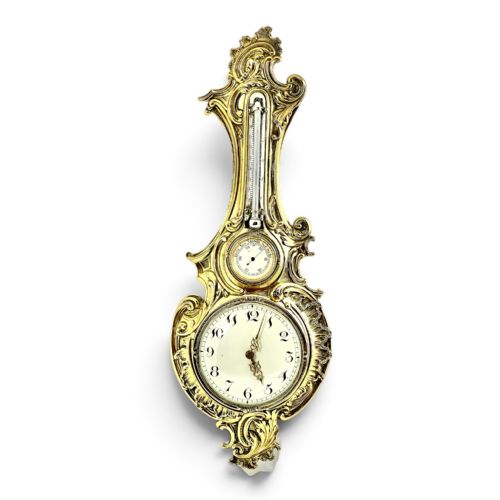
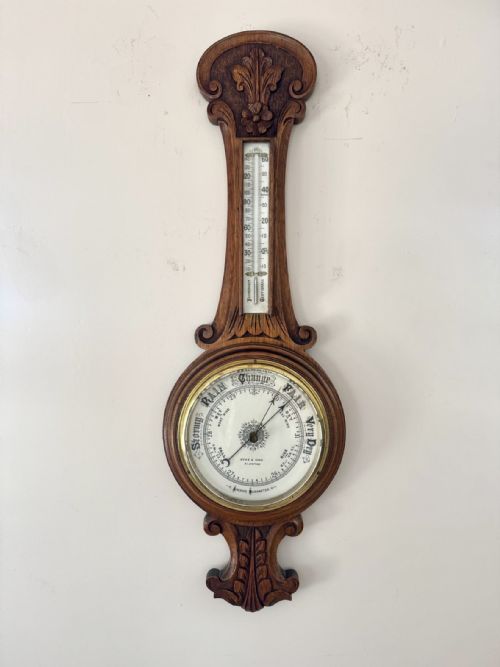
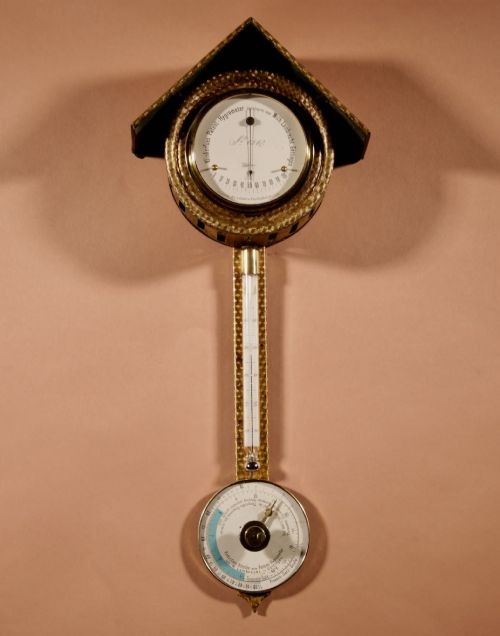
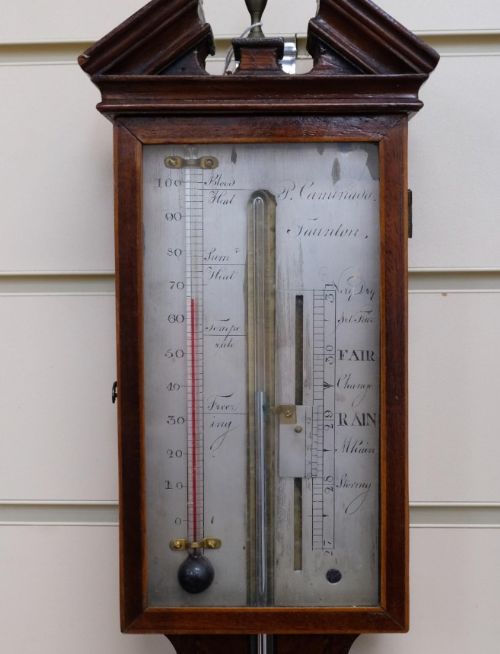
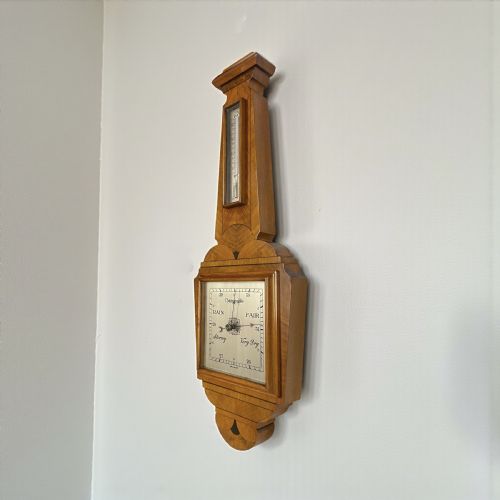
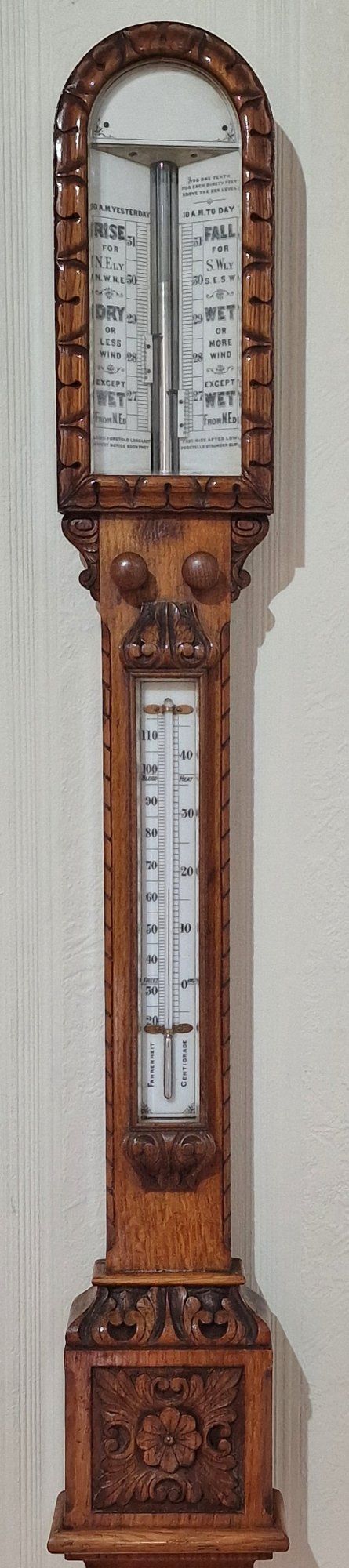
An antique wall barometer thermometer combines atmospheric pressure measurement with temperature reading and occasionally clock mechanisms in a single wooden case. When you search for an antique wall barometer thermometer, you will encounter banjo shapes, stick designs, and architectural wall stations.
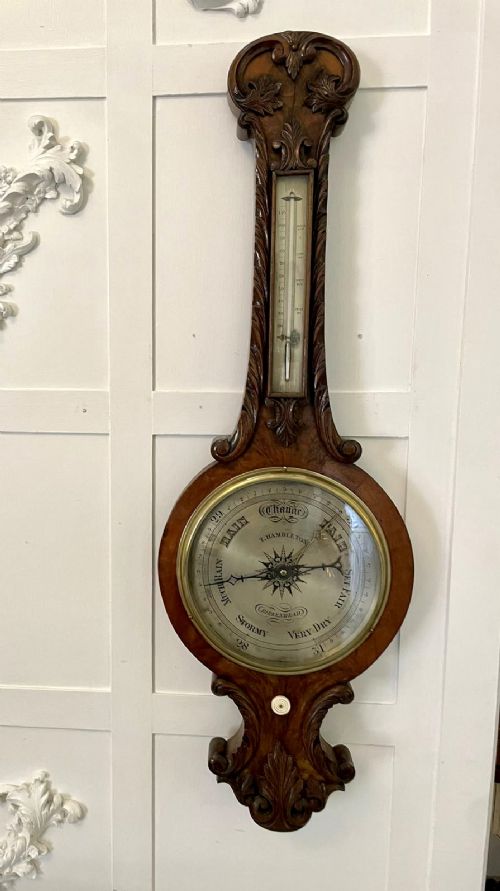
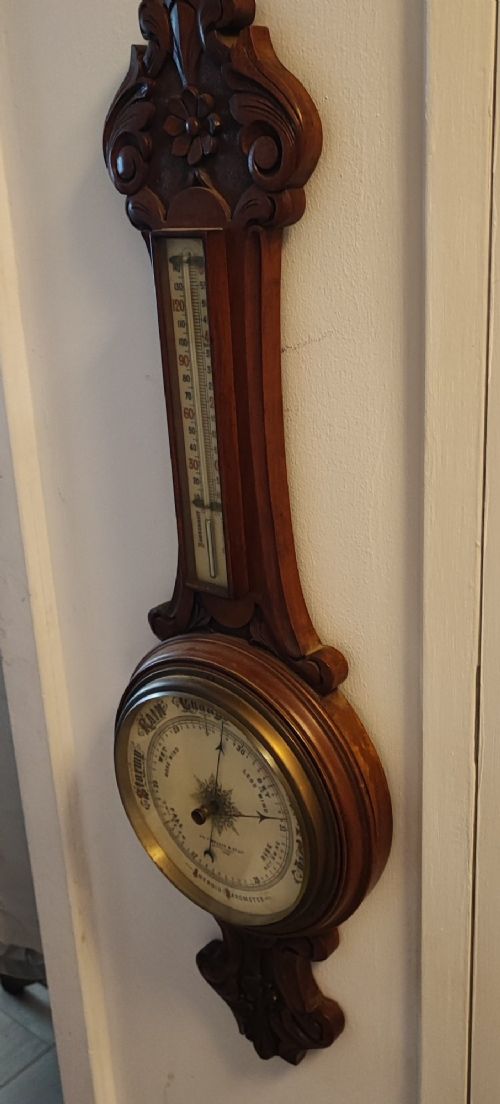
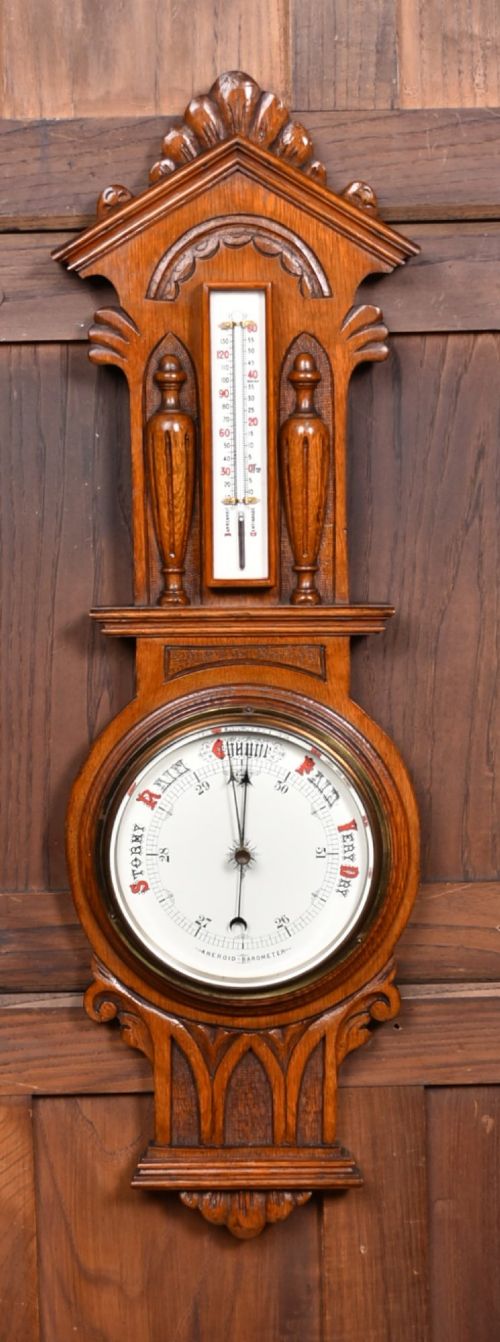
The Victorian period supplies the highest number of carved oak and burr walnut examples, often featuring added hygrometers or thermometer scales alongside the main dial. Georgian and Regency pieces tend towards simpler mahogany stick formats or shell inlaid banjo bodies.
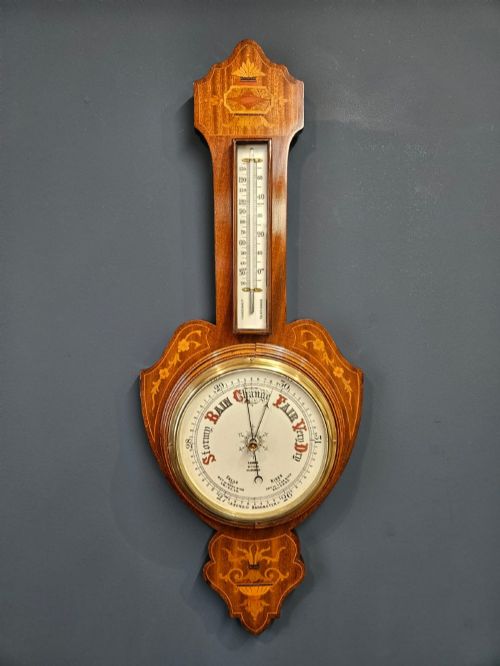
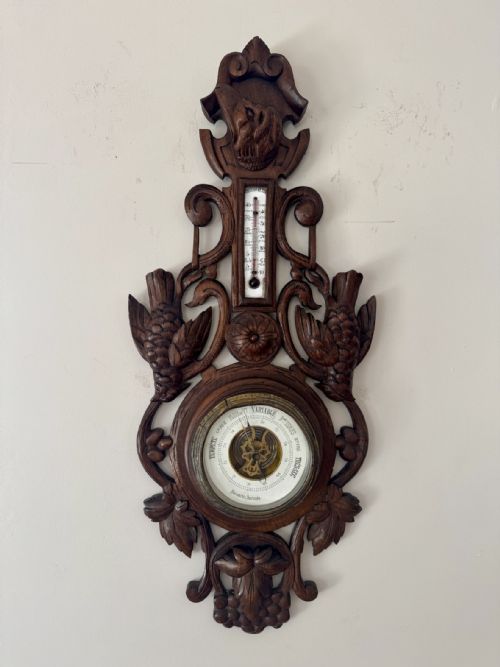
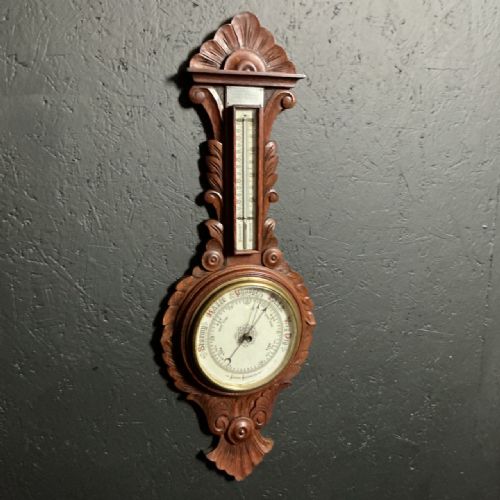
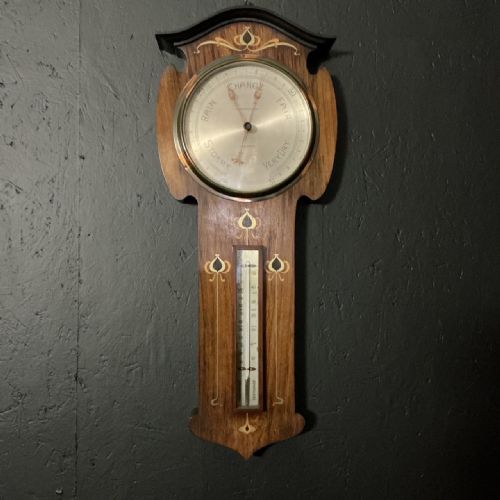
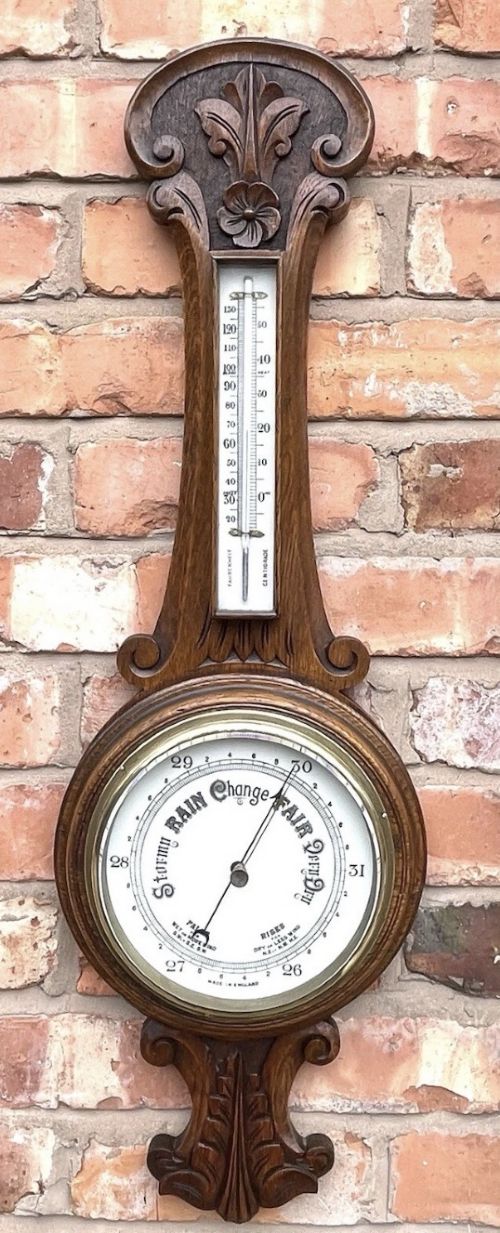
Edwardian and later iterations lean into carved oak frames and simpler aneroid movements, while Black Forest pieces introduce deeply carved wood detailing depicting birds and foliage.
Materials and construction
Cabinetmakers utilised dense hardwoods including mahogany, oak, walnut, rosewood, and satinwood to house the delicate interior mechanisms. Cases frequently incorporate decorative elements such as mother of pearl inlay, shell marquetry, and carved foliage.
Interior mechanical systems rely on traditional mercury columns in stick barometers or sealed metal aneroid capsules that respond to atmospheric changes. Dials are protected behind bevelled glass fronts, sometimes mounted within cast brass bezels.
Some Victorian oak barometers feature hand-carved wooden birds peering out from the timber foliage to oversee the daily weather forecast.
Assessing craftsmanship and condition
Quality rests upon the crispness of the wood carving, the choice of veneer timbers such as burr walnut or figured mahogany, and the legibility of the engraved dial. Maker signatures inscribed on silvered brass plates elevate the standing of an instrument considerably.
The integrity of the internal barometer movement and the presence of matching mercury tubes or functioning aneroid linkages dictate the mechanical merit of the piece.
Hyde & Sons Sleaford·Wilh Lambrecht Göttingen·P Caminada Taunton·B Besozzi of Weymouth·G & L Guanziroli London·Negretti & Zambra·Prada of High Wycombe
The Antique Wall Barometer Thermometer Glossary
- Aneroid barometer
- A barometer that measures atmospheric pressure using an expanding and contracting sealed metal capsule rather than liquid mercury.
- Banjo barometer
- A domestic wall barometer shaped like a banjo, featuring a circular dial at the top and a longer trunk housing a thermometer.
- Stick barometer
- A tall, narrow wall instrument that uses a vertical glass tube filled with mercury to display atmospheric pressure.
- Hygrometer
- An instrument used for measuring humidity levels in the air, often incorporated into larger weather station wall pieces.
- Aneroid
- A sealed metal box mechanism utilised in barometers to register air pressure changes without employing fluids.
Antique Wall Barometer Thermometer: Frequently Asked Questions
How do I read an antique wall barometer thermometer?
The main dial displays atmospheric pressure readings marked in weather descriptions such as stormy, rain, change, fair, and very dry. A secondary pointer can be manually set over the primary needle to track daily pressure shifts.
The accompanying thermometer registers ambient room temperature in Fahrenheit or Celsius alongside the pressure scale. Combined weather stations may also feature a hygrometer dial to measure relative air moisture.
Where should I hang my barometer?
Mount the instrument securely on an interior wall away from direct sunlight, radiators, and heavy draughts. Temperature extremes can affect the sensitivity of the internal metal aneroid mechanism or mercury column.
Ensure the wall has sufficient structural support to hold the weight of denser hardwood and glass assemblies.
How do I tell a Victorian barometer from a Georgian one?
Georgian and Regency barometers generally favour tall stick formats or slender mahogany banjo cases with subtle string inlay. The woodwork is restrained and focuses on clean grain patterns.
Victorian and Edwardian versions embrace heavier oak and walnut carvings, wider banjo bodies, and more elaborate decorative motifs such as carved birds or floral flourishes.
Do these instruments still work accurately?
Many aneroid and mercury instruments retain functional movements that respond to local weather shifts. However, historical barometers often require professional calibration rather than acting as precise meteorological tools.
Treat the readings as general atmospheric indicators while appreciating the mechanical heritage and cabinetwork.