
Antique Vesta Holder
An antique vesta holder is a pocket-sized container designed to safely carry matches before the widespread adoption of safety matches.
Antique Vesta Holder
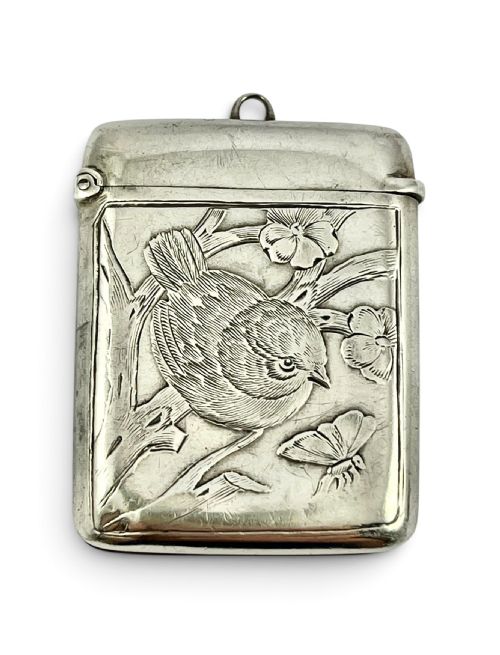
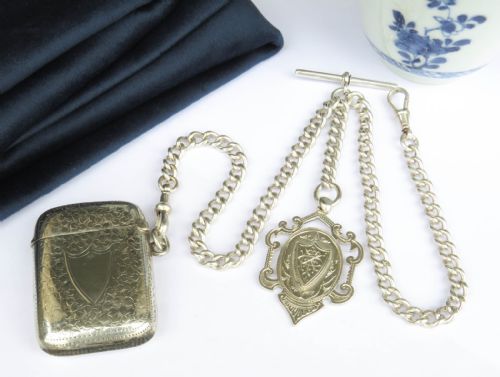
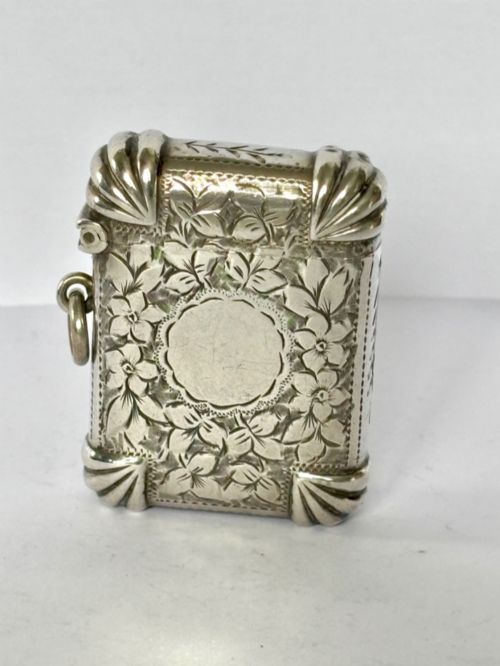
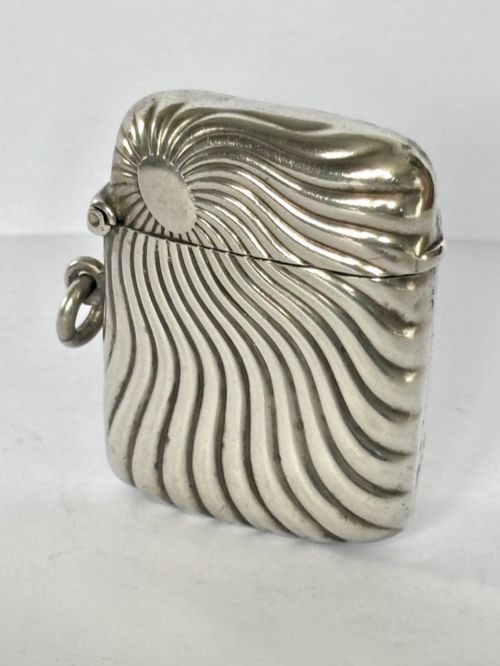
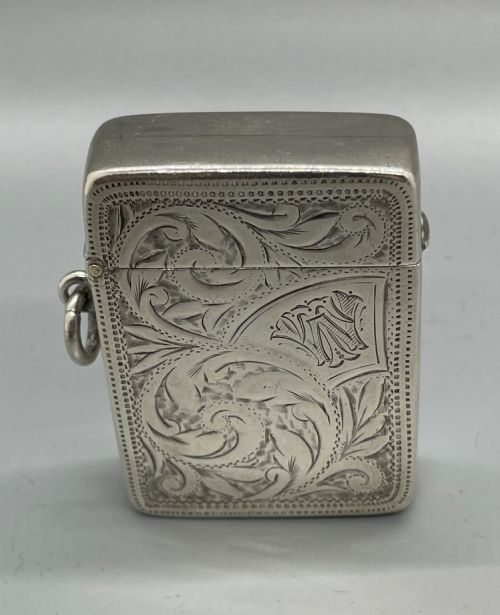
An antique vesta holder is a small metal or mixed-material container engineered to hold short wax matches known as vestas, protecting them from friction and moisture in the pocket. These pieces span the Victorian, Edwardian, and George V periods, reflecting the daily smoking and lighting habits of the late nineteenth and early twentieth centuries.
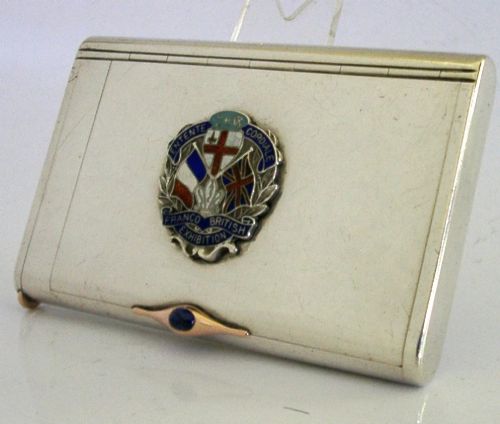
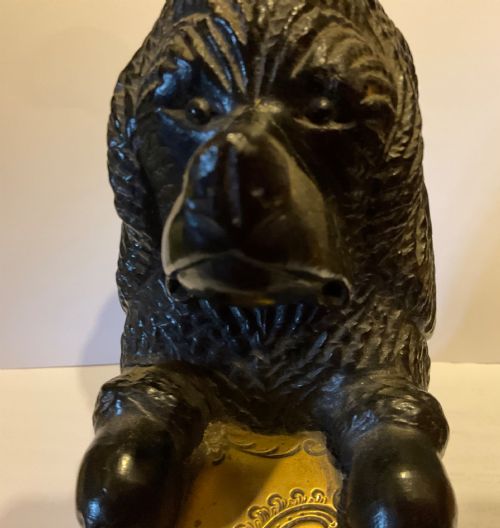
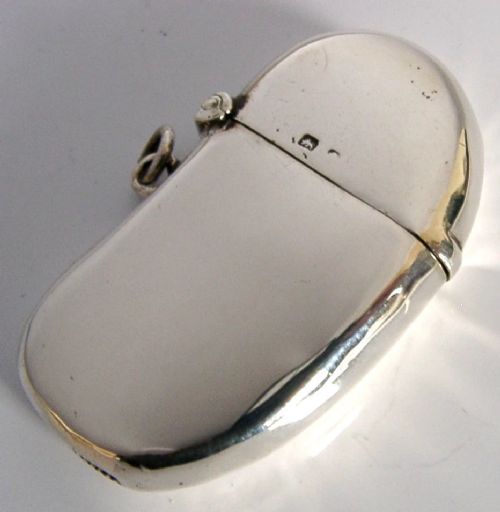
The most common versions met on this page are sterling silver rectangular cases stamped with British assay office hallmarks, alongside novelty forms shaped like animals, kidneys, or combined with sovereign holders and match strikers.
How they were made
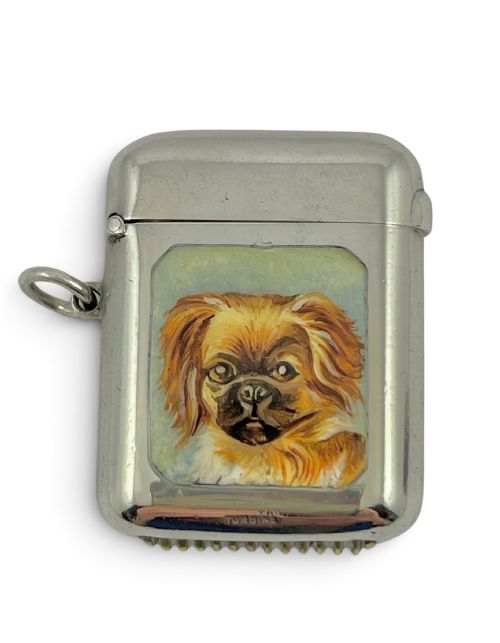
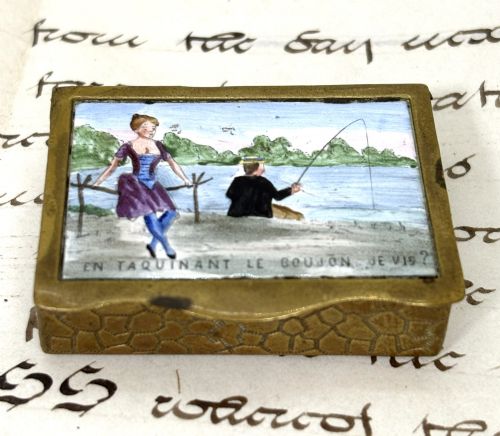
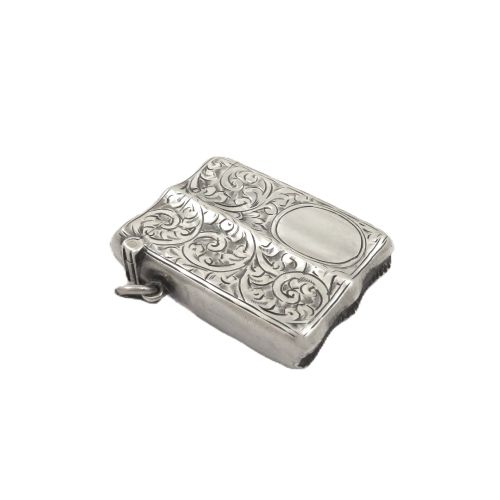
Makers utilised stamping, pressing, and hand-engraving on sterling silver, brass, and gold, often incorporating enamel panels, glass inserts, or carved wood to create decorative surfaces.
Internal components typically involved a spring-loaded lid to keep matches secure and a ribbed or cross-hatched striking panel integrated into the base of the case for igniting the vesta.
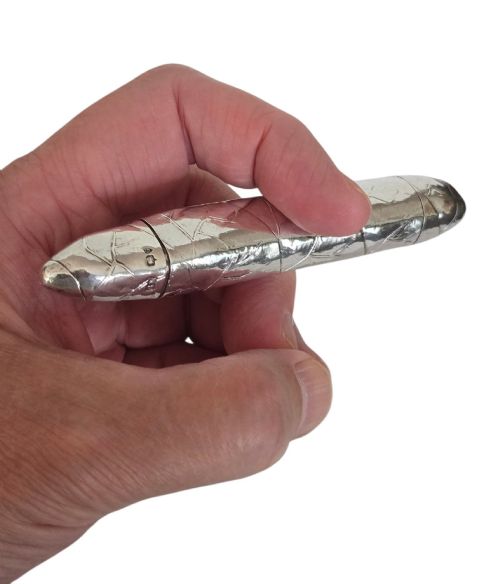
Victorian manufacturers offered novelty vesta cases shaped as begging dogs, horse hooves, and double-ended cigars.
What varies in quality
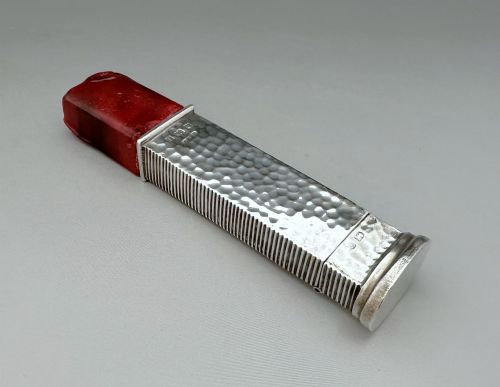
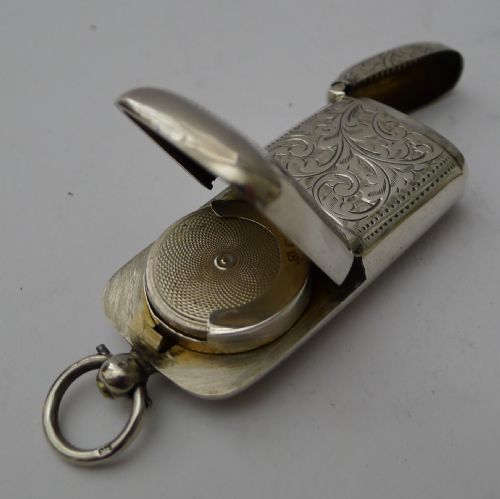
The distinction between standard production items and exceptional pieces rests upon the complexity of the mechanism, such as multi-compartment combinations for sovereigns, stamps, or sealing wax, and the presence of fine hand-painted enamel work.
Maker attribution also dictates standing, with documented firms like Sampson Mordan & Co or A & J Zimmerman commanding greater interest due to superior gauge metal and crispness of cast novelty forms.
EV Pledges & Son·Robert Chandler·Sampson Mordan & Co·A & J Zimmerman·William Neale·Robert Pringle·Alfred Clark·Raphael Tuck & Sons·Samuel Jacobs
The Antique Vesta Holder Glossary
- Match striker
- A stationary table or bar accessory made from textured glass, ceramic, or metal meant for igniting matches. These often bear advertising or commemorative prints.
- Sovereign case
- A circular pocket container made to hold gold sovereign coins. Many high-end examples are combined directly with vesta compartments.
- Hallmark
- An official stamp applied by an assay office indicating metal purity, the city of testing, and the date letter.
- Go to bed
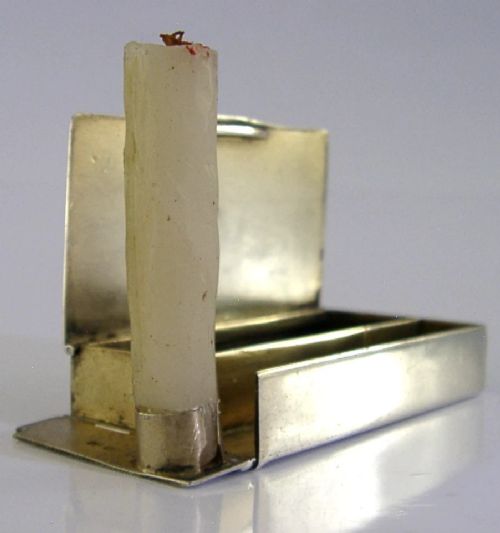
- A small portable chamber candlestick combined with a vesta holder. They were used by Victorians to light their way to the bedroom.
Antique Vesta Holder: Frequently Asked Questions
What is the difference between a vesta case and a matchbox holder?
A vesta case is a hinged metal pocket container designed to hold loose matches directly inside its body. The matches are shaken out one by one and struck against the textured base of the case.
A matchbox holder, by contrast, is an open-ended sleeve made to house a standard sliding cardboard matchbox. These were frequently used on dining tables or desks rather than carried loose in a waistcoat pocket.
How do I use an antique vesta holder today?
These pieces accommodate standard modern matches provided they are short enough to fit inside the closed lid. You can carry them in a pocket or handbag just as original owners did.
Take care when testing the hinge and spring mechanism, and avoid striking modern safety matches on antique metal strikes unless the friction panel is robust.
How can I tell the date of a silver vesta?
British silver pieces carry a stamped set of hallmarks that identify the assay office, the standard of silver, and a specific date letter. Comparing this letter against standard regional assay tables reveals the exact year of manufacture.
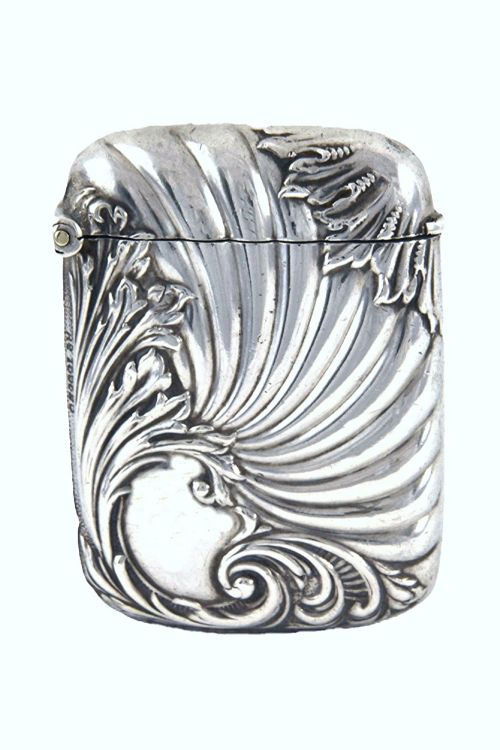
Style markers such as Art Nouveau curves or Edwardian restraint also help narrow down the production era when hallmarks are rubbed.
Why do some vestas have multiple compartments?
Combination pieces were manufactured to serve several needs of the Edwardian or Victorian traveller in a single pocket item. They frequently housed gold sovereign coins, stamps, toothpicks, or sealing wax alongside the matches.
These multi-use items represent higher-tier manufacturing and tend to be more complex mechanically than standard single-use match containers.