

Antique Velvet Stool
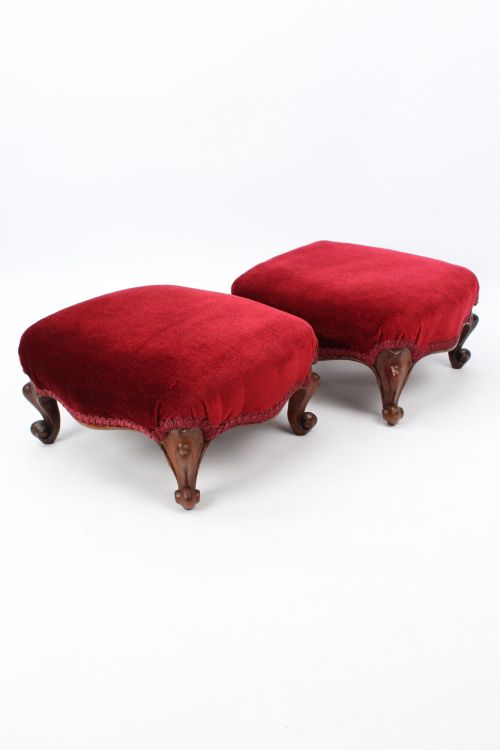
These antique velvet stool designs range from compact piano seats to large ottomans, offering traditional seating built for period interiors.

Antique Velvet Stool
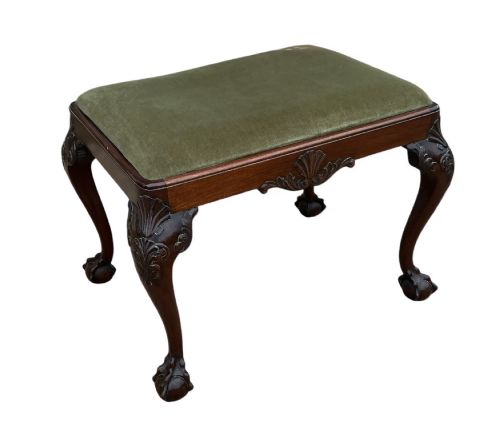
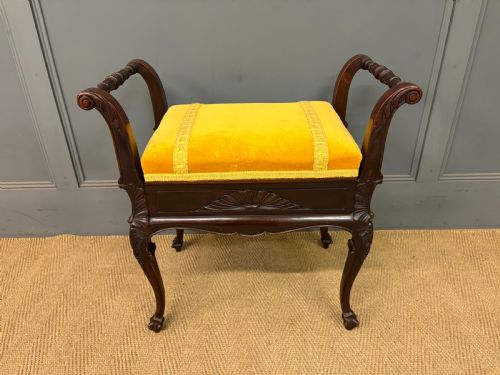
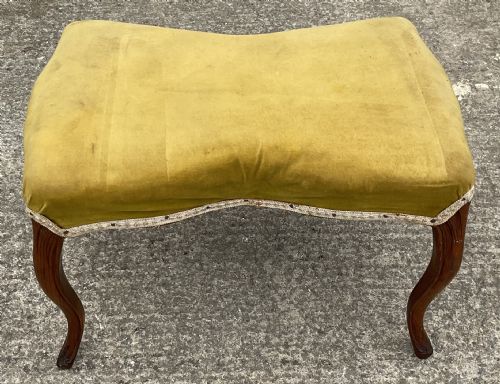
An antique velvet stool brings tactile textile upholstery and timber frames together in forms ranging from small footstools to large ottomans and piano seats. Buyers seeking this phrase encounter nineteenth-century Victorian walnut and mahogany pieces alongside Regency, Edwardian, and Art Deco examples.
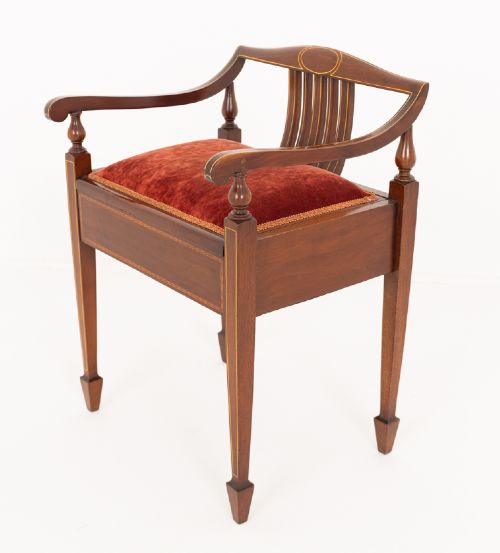
The selection centres on seating designed for specific domestic tasks, including adjustable piano stools, music chairs, window seats, and dressing table stools. Frames frequently employ traditional hardwoods such as mahogany, walnut, rosewood, and oak, often paired with brass fittings or carved details.
Victorian and nineteenth-century examples dominate the available forms, spanning styles from Gothic Revival and French Empire to simple turned-leg designs. Pieces vary from low gout stools to expansive country house storage ottomans and revolving piano seats.
How they were made
Timbers such as mahogany, walnut, rosewood, and oak provide the structural framework for these seats, shaped through turning, carving, and joinery techniques appropriate to each period. Frames frequently incorporate brass mechanisms for height adjustment or decorative castors, alongside giltwood and ebonised finishes.
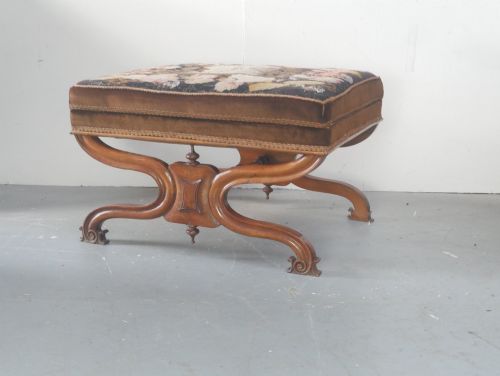
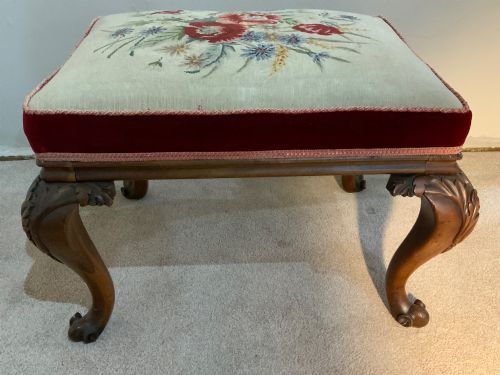
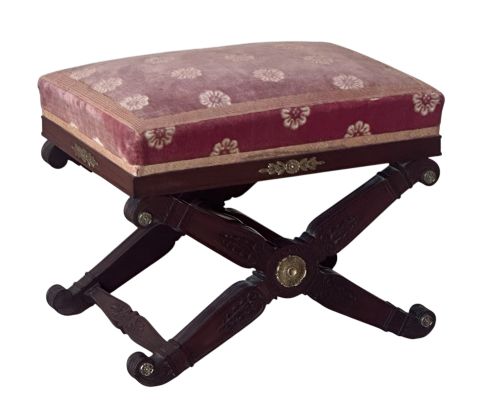
Upholstery relies on traditional textile applications, featuring velvet fixed over padded seats with decorative nails, gimps, or frame borders. Structural support utilises sturdy hardwood frames joined with mortise and tenon construction, occasionally featuring X-frame bracing or carved cabriole legs.
Some Victorian piano stools double as secret music cabinets, proving that nineteenth-century pianists also appreciated hidden storage.
What varies in quality
The distinction between standard domestic seating and superior examples rests on timber selection and the crispness of frame carving. Figured walnut, rich mahogany, and dense rosewood indicate higher-tier manufacture, particularly when combined with sophisticated mechanical adjustments or intricate giltwood detailing.
Proportion and stability separate finer pieces from simpler workshop production, with well-drawn frames exhibiting balanced proportions and robust joinery. The refinement of turned legs, paw feet, or carved ornament reveals the maker's hand and the original commission level.
Hallett & Sons
The Antique Velvet Stool Glossary
- Gout stool
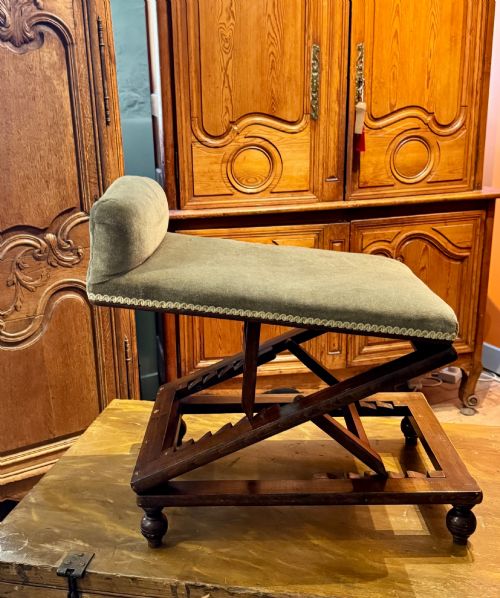
- A specialised footstool featuring an adjustable inclined top designed to support the feet and legs of someone suffering from gout. These nineteenth-century pieces often incorporate mechanical ratchets to alter the angle.
- Ottoman
- A low, upholstered seat or storage bench without arms or a back, frequently designed with a hinged lid. Large examples served as centre pieces or window seats in period drawing rooms.
- Revolving stool
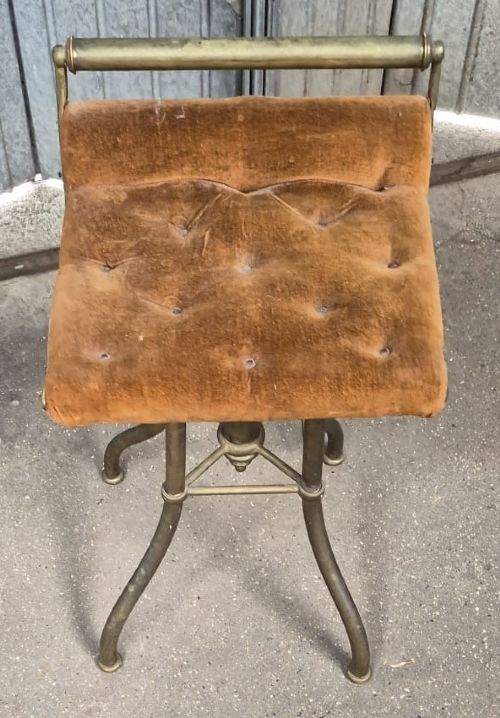
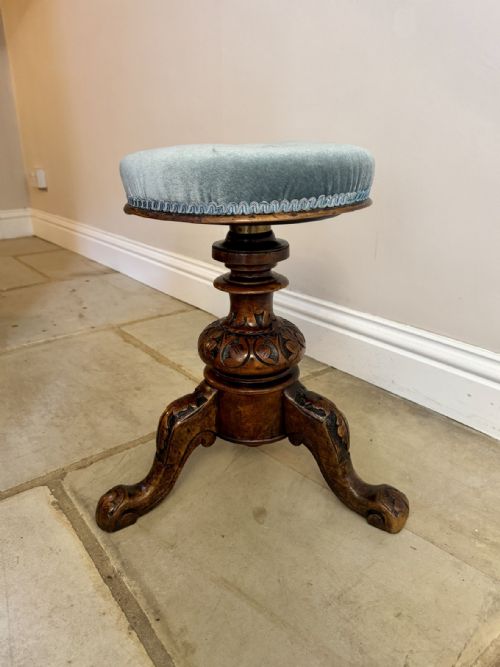
- A seat mounted on a central threaded wooden screw or metal spindle that allows the top to spin for height adjustment. Piano stools commonly utilise this mechanism for musicians.
- X-frame
- A structural furniture base formed by intersecting diagonal members resembling the letter X. This classical form appears in French Empire and revival seating.
- Window seat
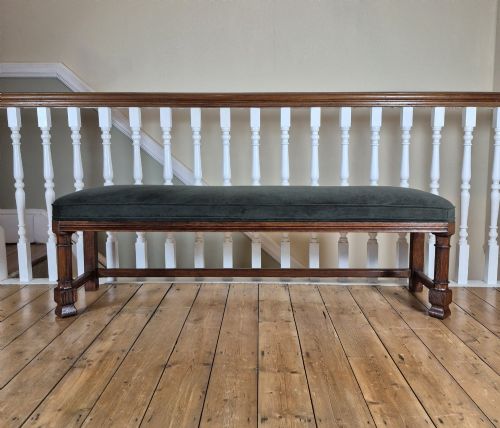
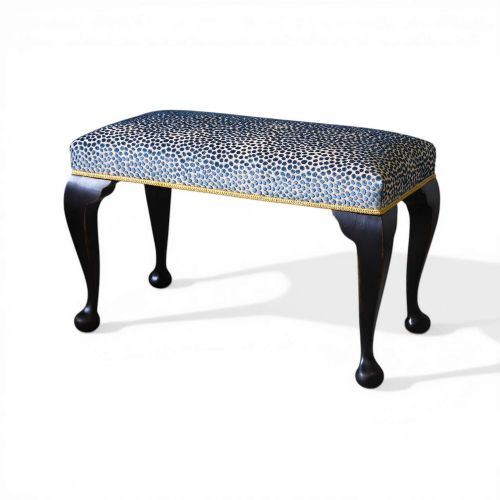
- An elongated stool or narrow bench proportioned to sit beneath a window recess. These pieces frequently feature upholstered tops and decorative wooden frames.
Antique Velvet Stool: Frequently Asked Questions
What is an adjustable piano stool?
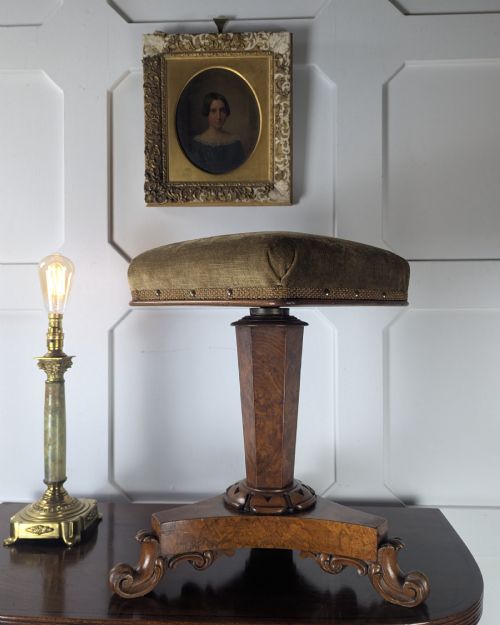
An adjustable piano stool is a specialised seat designed to let musicians alter their height while playing keyboard instruments. These pieces typically use a central revolving screw mechanism or side handles.
Period examples often feature round upholstered velvet tops supported by walnut or mahogany columns and tripod bases. They provide the necessary stability and adaptability for nineteenth-century parlours and music rooms.
How do I identify a Victorian stool?
Victorian stools are identified by dense hardwood frames, characteristically carved walnut or mahogany, combined with deep upholstery. Styles span from simple turned legs to ornate revival motifs.
These pieces frequently include revolving mechanisms, brass castors, or needlepoint and velvet textiles. Their construction reflects the industrial and domestic design trends of the nineteenth century.
Where were window seats placed?
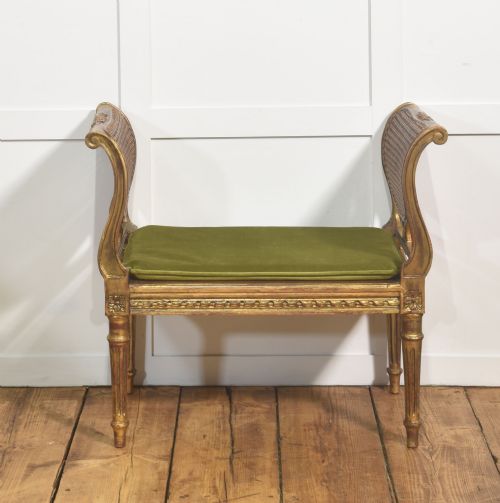
Window seats were positioned directly within architectural window bays or shallow recesses to provide comfortable daylight seating. Their narrow, elongated proportions allowed them to fit small spaces without obstructing room flow.
In period homes, these benches often matched other salon furniture and featured carved oak, mahogany, or giltwood frames with upholstered velvet or textile pads.
What is a gout stool?
A gout stool is an adjustable nineteenth-century footrest designed with a sloping cushioned surface to elevate the legs. The angled top relieves pressure and supports comfort for the user.
They often use stained beech or walnut frames with mechanical ratchets that alter the incline. Upholstered velvet or heavy fabric tops are standard on surviving examples.