
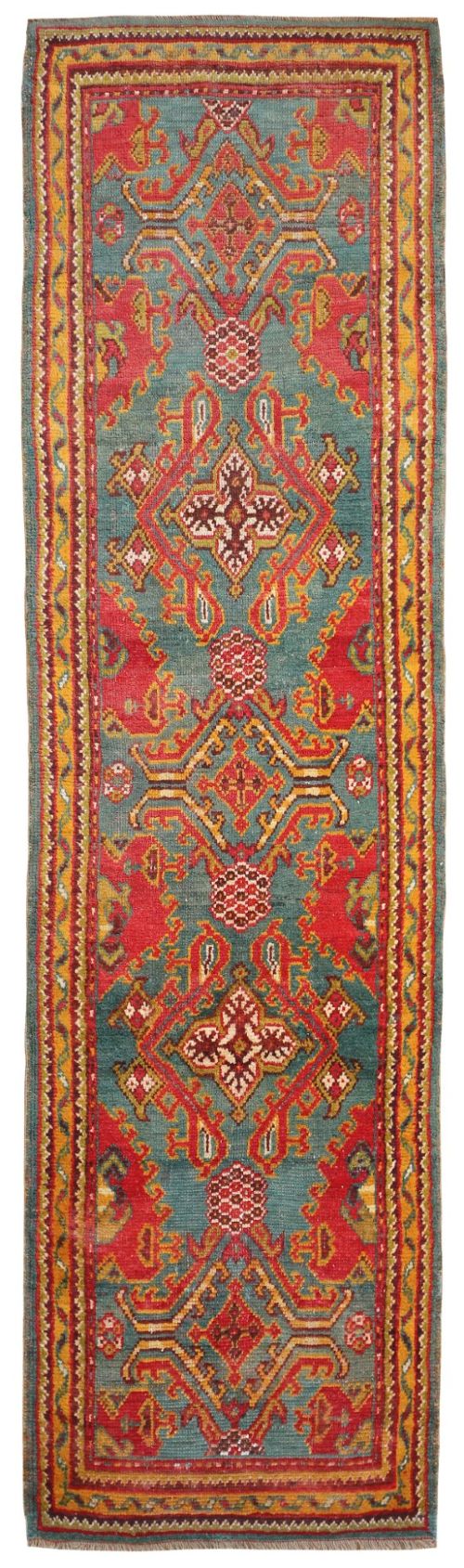



Antique Ushak Rug
An antique ushak rug brings warmth and historic pattern to a room through centuries-old Anatolian weaving traditions.

Antique Ushak Rug
An antique ushak rug represents a woven tradition originating from the town of Ushak in western Anatolia, encompassing large carpets, narrow runners, and small area rugs. These pieces often feature large-scale floral motifs, central medallions, or tree designs set against muted grounds.
The selections encountered here span from the late nineteenth century through the early twentieth century, reflecting Ottoman and Turkish aesthetic sensibilities. Buyers frequently encounter generous formats intended for substantial rooms alongside corridor runners and compact village weaves.
Beyond standard floor coverings, the category includes specialised formats such as kilims and prayer rugs, demonstrating the diverse output of the region. Each example carries the distinctive handling of scale and colour that distinguishes these historical carpets from later reproductions.
How They Were Made
Weavers constructed these textiles primarily using wool for the pile and foundation, occasionally incorporating angora wool for a softer handle and distinct sheen. Cotton also appears in the foundational structures of specific pieces, providing stability to the heavier formats.
Dyers utilised natural materials to achieve the characteristic faded palettes and soft tones associated with the region. Skilled artisans knotted the pile by hand onto sturdy warps and wefts, creating durable floor coverings designed for heavy domestic use.
Antique Ushak Rug Retail Price Guide 2026
Typical asking prices for ushak rug among the pieces listed under this phrase on Sellingantiques today, from the lower quarter to the upper quarter. They describe what is for sale here now, not the wider market.
Production dates span from the Victorian era through the early twentieth century, including nineteenth-century examples.
What Varies in Quality
Quality in these carpets rests upon the fineness of the knotting and the handling of the wool, which influences both the tactile feel and the definition of the pattern. Angora examples often display a particular textural depth through their fibre content.
The integrity of the pile and the preservation of the original borders and outer edges determine the overall state of survival. Higher-grade specimens maintain balanced proportions in their central medallions and harmonious transitions across the field colours.
Howard And Sons·Maples
The Antique Ushak Rug Glossary
- Ushak
- A traditional style of carpet originating from western Turkey, known for large-scale floral designs and subdued pastel colour palettes.
- Kilim
- A flat-woven carpet or rug made without a pile, produced through interlocking warp and weft threads.
- Medallion
- A central ornamental motif placed in the middle of the carpet field, frequently seen in traditional Anatolian designs.
- Runner
- A long, narrow carpet format specifically proportioned for corridors, hallways, and staircases.
- Angora wool
- A soft fibre derived from angora goats, utilised in specific weavings to yield a lustrous pile and supple handle.
Antique Ushak Rug: Frequently Asked Questions
Where were antique ushak rugs made?
These textiles were produced in and around the town of Ushak in western Anatolia, an established centre for carpet manufacturing in Turkey.
Weavers in the region supplied both domestic markets and international trade, developing distinctive aesthetic traditions that endured for centuries.
How do I care for an antique ushak rug?
Maintenance requires gentle vacuuming without rotating brush heads to protect the wool pile from unnecessary friction and wear.
Professional cleaning tailored to antique textiles helps preserve the natural dyes and fibres over decades of domestic placement.
What furniture suits an antique ushak rug?
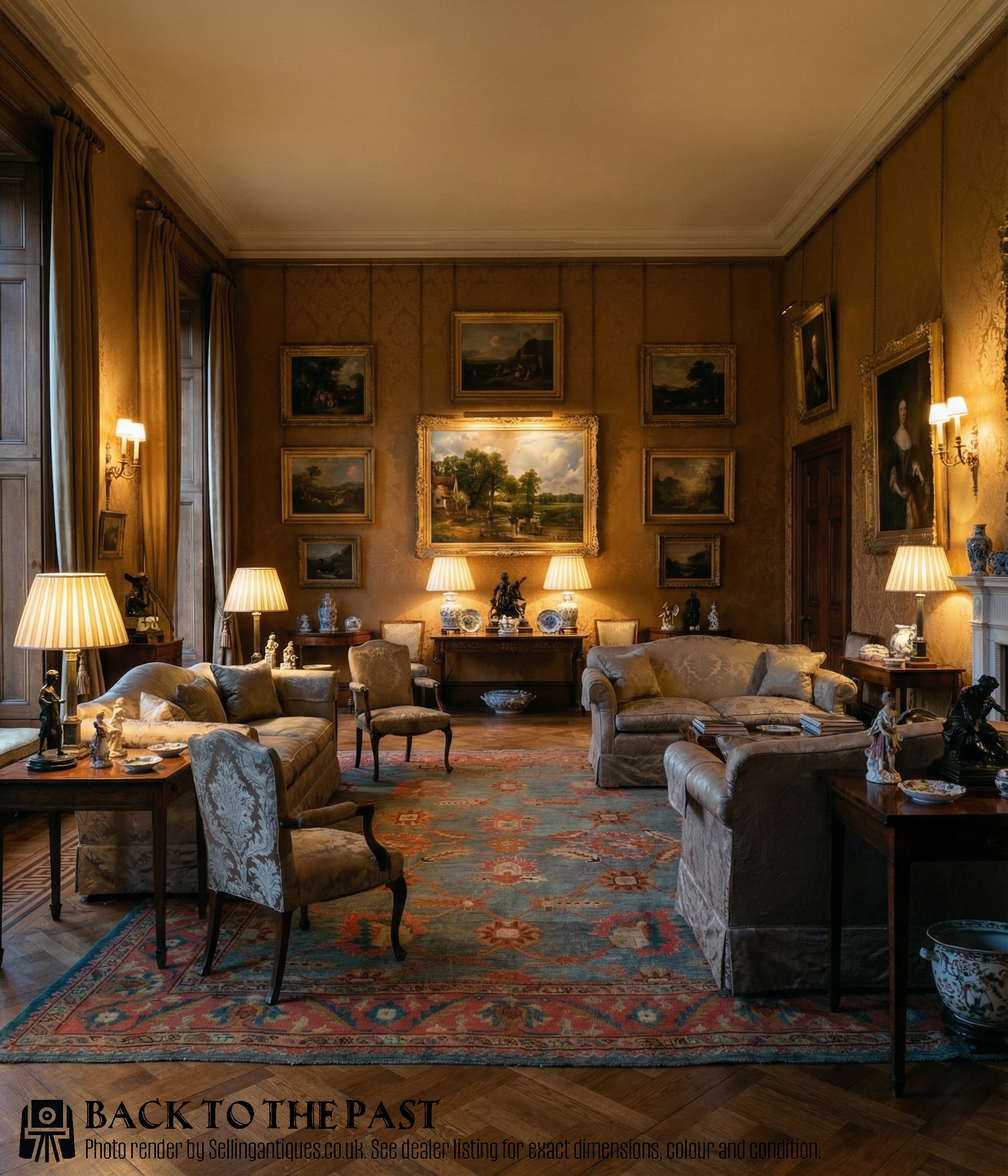
The muted palettes and large-scale motifs complement both traditional dark wood furniture and minimalist modern interior schemes.
Generous room-size carpets anchor living spaces, while runners integrate smoothly into entrance halls and narrow corridors.
How are different periods identified?
Dating relies on stylistic markers such as medallion geometry, border complexity, and the specific composition of the wool or cotton foundations.
Earlier nineteenth-century examples often display looser, more expansive floral drawing compared to later twentieth-century productions.