
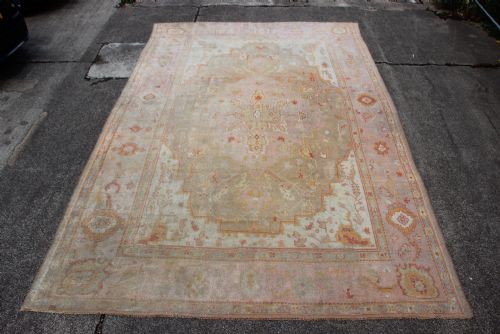
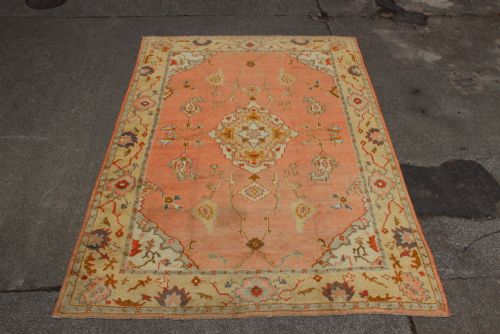
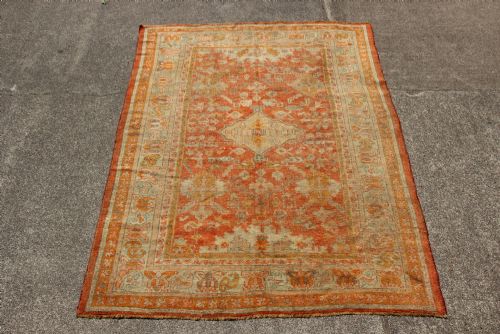


Large Oushak Carpet
A large oushak carpet brings monumental scale and subdued botanical motifs to a room, offering the weathered charm of Western Turkish weaving.
Large Oushak Carpet
A large oushak carpet represents a major achievement in Western Turkish floor coverings, traditionally woven in the town of Ushak. These pieces are defined by their generous proportions, designed to anchor expansive rooms with substantial floor space.
Most examples encountered here span the nineteenth and early twentieth centuries, particularly the decades surrounding eighteen-eighty to nineteen-twenty. They emerge from traditions described variously as Ottoman, Turkish, and Anatolian.
Buyers look for these rugs to introduce softened pastel palettes, pale grounds, and grand scale into domestic interiors. The typical format delivers considerable floor coverage while maintaining a lighter visual weight than denser Persian counterparts.
What varies in quality
Quality in a large oushak carpet rests upon the subtlety of the colour palette and the handling of the wool. Pieces featuring scarce ground colours, such as specific pinks or greens, stand apart from standard production.
The distinction between ordinary and exceptional weaving lies in the rhythm of the design and the integrity of the wool pile. Softer pastel tones and well-preserved structural integrity elevate certain examples above others.
The inventory spans the period from eighteen-seventy to nineteen-twenty, featuring wool, cotton, and angora wool constructions.
Maple and Co
The Large Oushak Carpet Glossary
- Oushak
- A town in Western Turkey renowned for centuries of carpet production. Carpets originating from this centre are celebrated for their distinctive floral designs and softer colour palettes.
- Anatolian
- Pertaining to the geographic region of Asia Minor, encompassing traditional Turkish weaving areas. This term groups rugs by their broader regional origin.
- Angora wool
- A fine fleece material utilised in specific nineteenth-century weaving variants. It yields a particularly soft texture underfoot.
- Medallion
- A central ornamental motif set into the field of the carpet. Traditional examples often feature geometric or curvilinear central designs.
- Ghiordes
- A historic Turkish weaving centre and knotting style associated with certain Anatolian carpet traditions. It denotes specific structural and aesthetic traits found in regional pieces.
Large Oushak Carpet: Frequently Asked Questions
How do I style a large oushak carpet?
These carpets work well in large reception rooms and drawing rooms where their monumental scale can be fully appreciated. Their muted pastel palettes allow them to anchor both traditional period furniture and contemporary minimalist interiors.
Allow sufficient floor margin around the edges to let the grand proportions and soft border designs breathe within the room. Keeping surrounding walls neutral helps highlight the subtle pink, ivory, and blue tones characteristic of these rugs.
What periods do these carpets cover?
The available pieces predominantly date from the late nineteenth century through to the early twentieth century. Production years commonly span from eighteen-seventy up to nineteen-twenty.
This era captures the transition of traditional Ottoman weaving into pieces tailored for Western decorative tastes. The enduring styles reflect decades of Anatolian craftsmanship without relying on modern synthetic materials.
What materials are used in these rugs?
Traditional construction relies on natural wool and cotton fibres for the pile, warp, and weft. Selected pieces incorporate softer angora wool to modify the handle and texture of the surface.
Natural dyes provide the characteristic faded grounds, soft pinks, and pale blues seen across the inventory. These organic materials age gracefully, developing a mellow patina over decades of use.
How do I tell different regional types apart?
Regional attribution relies on observing structural characteristics, knot types, and specific design vocabularies like those associated with Ghiordes or general Ushak production. Colour palettes also provide clues, with certain towns favouring specific pastel dye mixtures.
Examining the weave density and the handling of the wool helps distinguish between Western Anatolian workshops. Comparing the border arrangements and central medallion structures clarifies the specific origin within Turkey.