

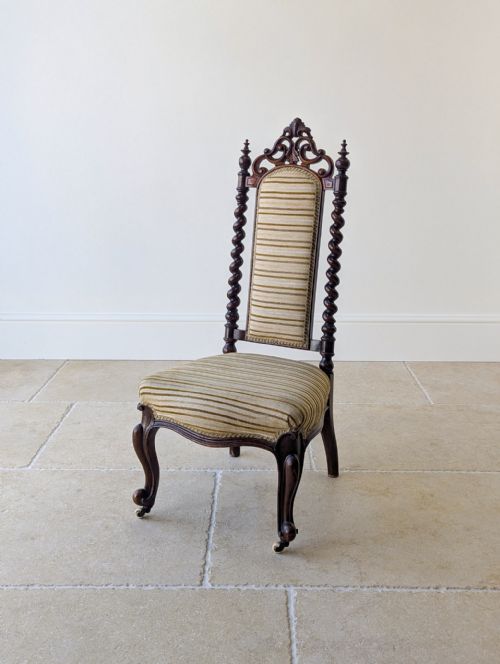
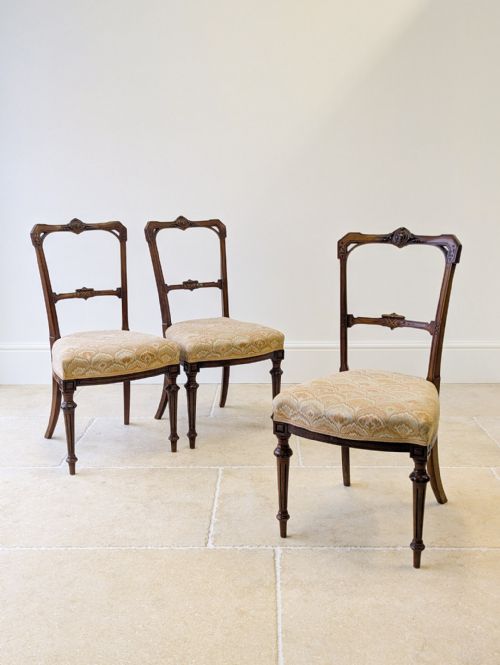
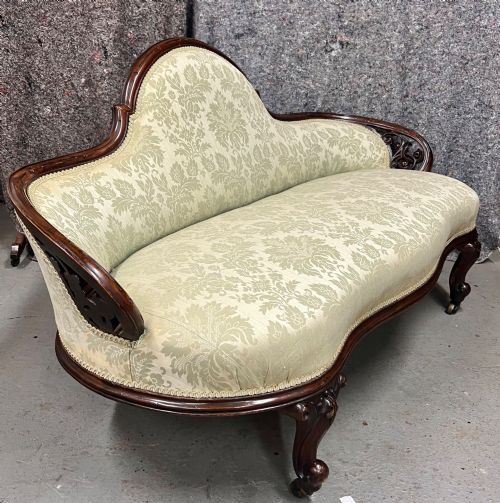
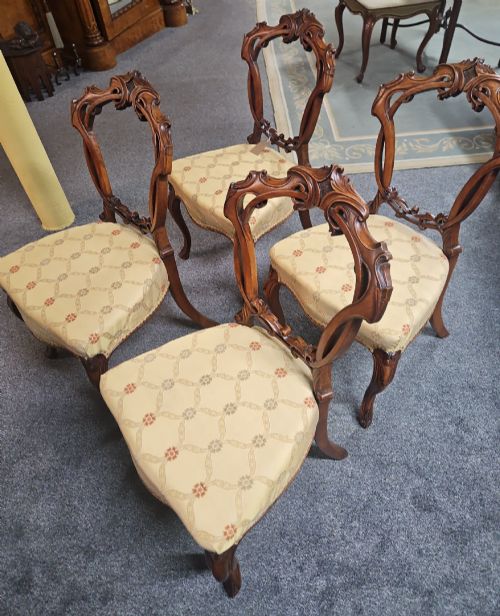
Antique Upholstered Parlour Chairs
These antique upholstered parlour chairs, ranging from Victorian walnut to Edwardian mahogany, bring nineteenth-century reception rooms directly into modern sitting spaces.
Antique Upholstered Parlour Chairs
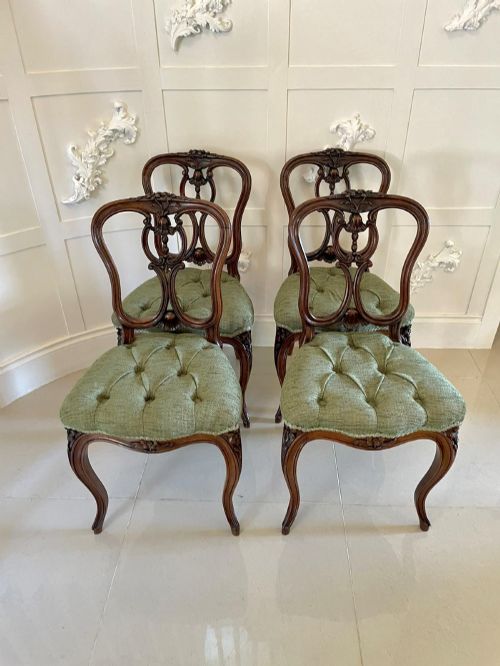
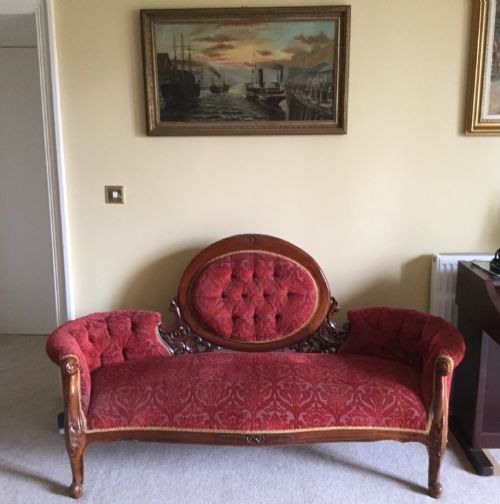
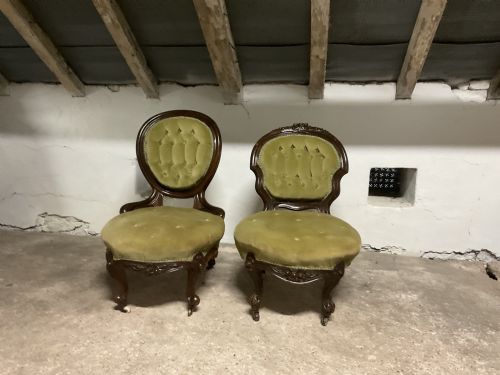
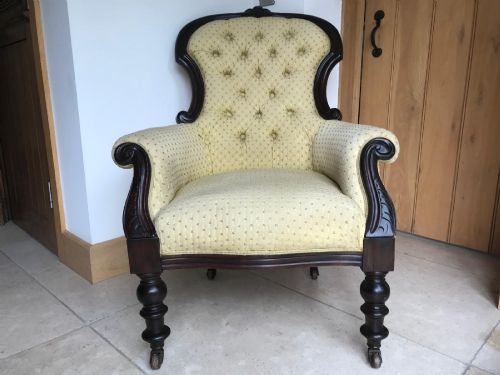
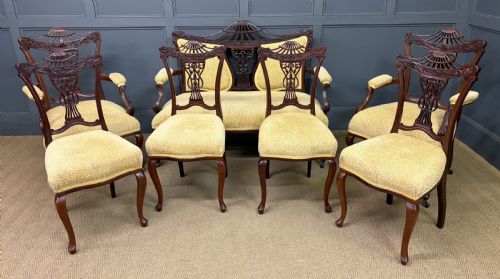
When you search for antique upholstered parlour chairs, you encounter seating designed for the formal reception rooms of the nineteenth and early twentieth centuries. The pieces on this page span the Victorian and Edwardian eras, encompassing walnut, mahogany, and rosewood frames paired with diverse textile coverings. You will find single parlour chairs, matched dining sets, library chairs, and substantial salon suites complete with matching settees.
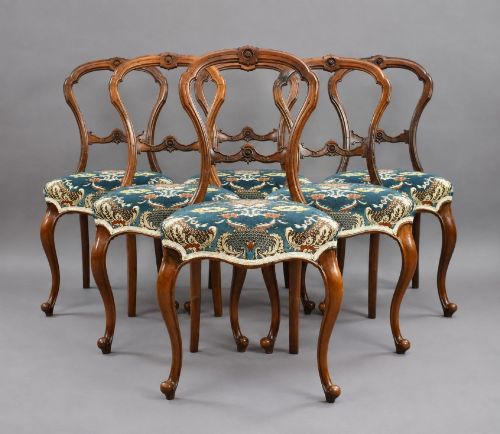
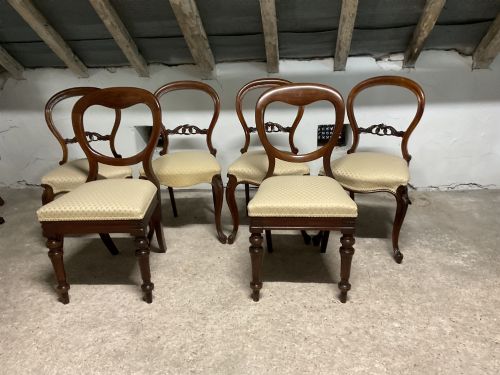
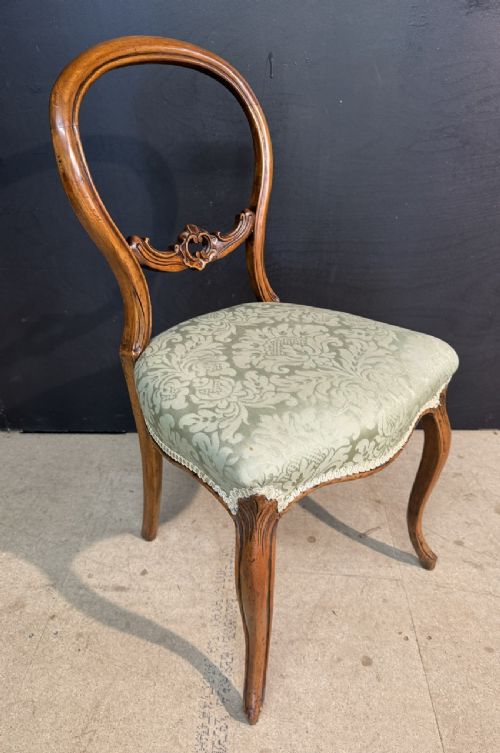
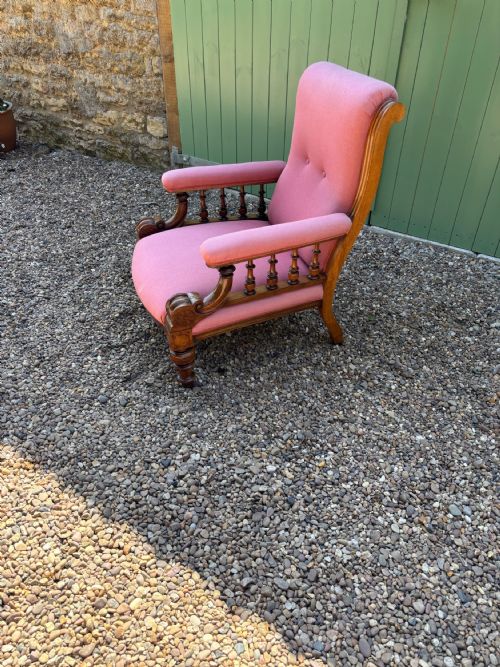
The most common forms on this page are walnut and mahogany balloon back chairs, side chairs, and carved armchairs originating in the mid to late nineteenth century. Many feature showwood frames where polished timber surrounds the upholstered sections, displaying styles from Rococo Revival and Neoclassical to Sheraton Revival. These seating options served both social functions in drawing rooms and private utility in bedrooms and dressing areas.
How they were made
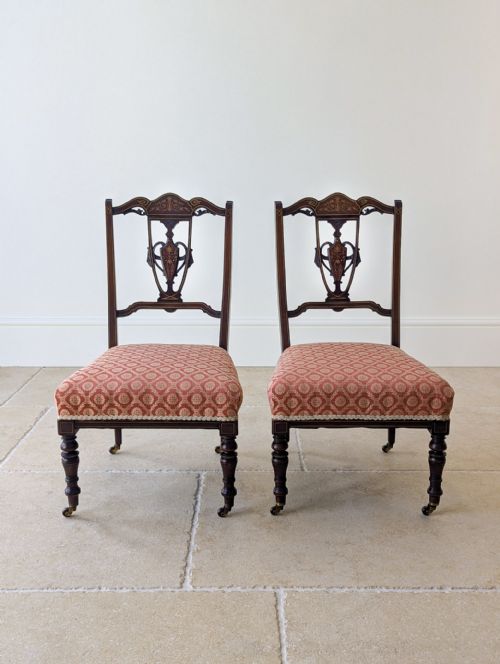
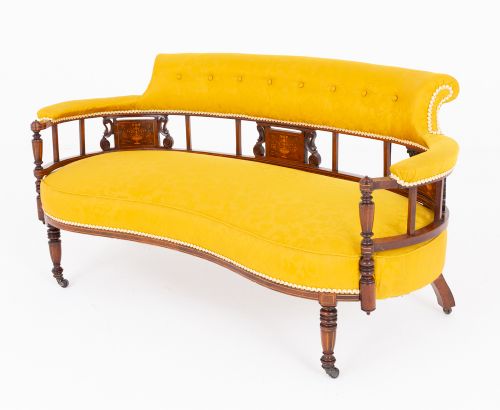
Craftsmen shaped solid hardwoods, predominantly walnut, mahogany, and rosewood, using hand-carving techniques for the showwood frames and cabriole legs. Frame construction frequently involved mortise and tenon joints to withstand daily weight and movement. Inlays of marquetry and decorative woodwork appear on selected Sheraton Revival and Victorian pieces, adding surface detail to the timber.
Upholstery methods relied on traditional stuffing materials secured over sprung bases or webbed frames, finished with textile coverings such as brocade, velvet, and needlepoint. Brass elements occasionally appeared in castors or decorative fittings on heavier armchairs and settees. Showwood frames were polished to highlight the natural grain of the dense tropical and European timbers.
The listings span the Victorian and Edwardian periods, featuring mahogany, walnut, and rosewood frames upholstered in velvet, brocade, and needlepoint.
What varies in quality
Quality in these chairs rests upon the crispness of the timber carving and the architectural proportion of the frame. Pieces designated as exhibition quality or fine quality display deeply carved showwood details, balanced cabriole or tapered legs, and substantial timber sections rather than thin mouldings. The integration of the upholstery with the wooden frame dictates the visual harmony of the finished seat.
The distinction between standard parlour seating and top-tier salon pieces lies in the complexity of the woodwork and the matching consistency within sets. Sets of six or more chairs maintaining identical carved splats, showwood frames, and harmonious timber grain represent higher workshop output. Subtle touches like marquetry inlay or complex balloon back curves elevate individual parlour chairs above plain utilitarian forms.
The Antique Upholstered Parlour Chairs Glossary
- Parlour chair
- A comfortable seat designed for nineteenth-century reception rooms and entertaining spaces. These chairs often feature decorative showwood frames and upholstered seats or backs.
- Balloon back
- An oval or loop-shaped wooden chair back resembling a balloon outline. This form became prevalent in Victorian walnut and mahogany dining and parlour chairs.
- Showwood
- Exposed polished timber frame surrounding the upholstered areas of a chair or settee. Walnut, mahogany, and rosewood are typical timbers treated in this manner.
- Cabriole leg
- A furniture leg that curves outward at the knee and tapers inward toward the foot, ending in a pad or scroll. It appears frequently on Victorian parlour and salon seating.
- Needlepoint
- Stitched textile work using wool or yarn on canvas mesh, commonly utilised for seat covers on Victorian rosewood and walnut chairs.
- Salon suite
- A matching grouping of parlour furniture typically comprising a settee and several armchairs or side chairs. These suites share uniform timber, carving, and upholstery styles.
Antique Upholstered Parlour Chairs: Frequently Asked Questions
What is a parlour chair?
A parlour chair is a nineteenth-century seat designed for formal reception rooms and domestic entertaining.
These pieces combine decorative wooden frames with upholstered seats or backs, serving both social and decorative roles in the home.
How do I identify Victorian chairs?
Victorian chairs typically display dark hardwoods like walnut or mahogany, often featuring carved balloon backs or showwood frames.
Stylistic markers range from mid-century Rococo Revival curves to later Neoclassical and Sheraton Revival straight lines and inlay.
Were these chairs used for dining?
Many chairs on this page functioned as dining chairs, particularly the sets of four, six, or more in mahogany and walnut.
Others served as occasional chairs, library seats, or bedroom nursing chairs depending on their height and arm configuration.
How do I live with antique parlour chairs?
Antique parlour chairs integrate easily into modern sitting rooms as occasional seating or desk chairs.
Their compact proportions and detailed timber frames allow them to function alongside contemporary furniture without overwhelming a room.
What is a salon suite?
A salon suite is a matched group of drawing room furniture comprising a settee and multiple armchairs or side chairs.
These suites feature identical timber, upholstery, and decorative carving designed to unify the appearance of a large reception room.