
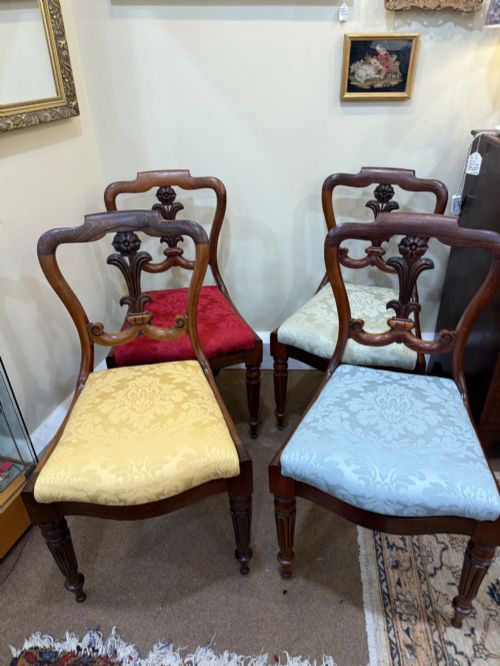

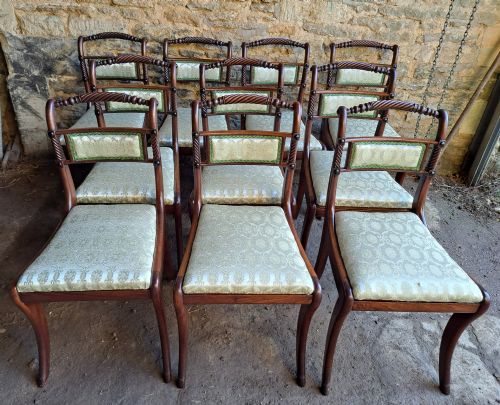
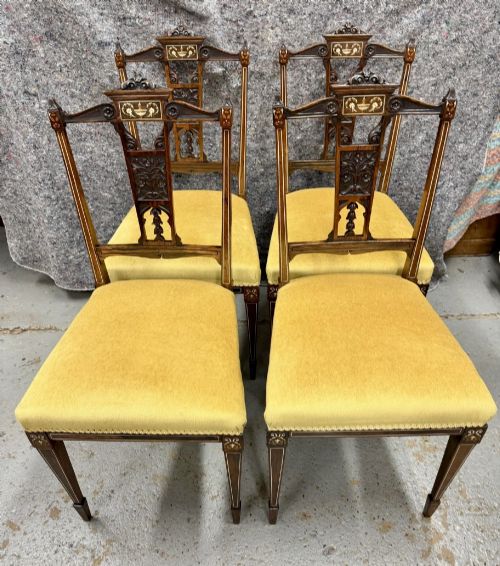
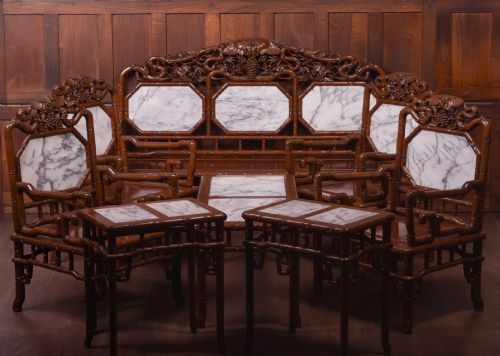
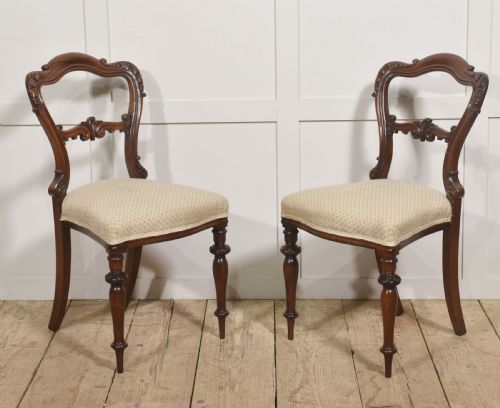


Dark Rosewood Salon Chairs
These dark rosewood salon chairs bring rich timbers and classical forms into domestic seating, offering solid construction for daily use.
Dark Rosewood Salon Chairs
Dark rosewood salon chairs encompass formal seating pieces produced primarily across the nineteenth century, including Victorian, Regency, and Edwardian eras. These chairs frequently appear as pairs or larger sets intended for reception rooms and parlours.
The selection ranges from balloon back dining chairs and side chairs to open arm chairs and specialised music or harpists chairs. Makers utilised dense timbers and decorative inlay to suit formal interior spaces.
How they were made
Craftsmen shaped dense rosewood into curved frames and serpentine seats, employing traditional joinery to ensure structural stability. Selected pieces feature intricate carved rails and cabriole legs.
Makers applied boxwood inlay and marquetry directly onto the timber surfaces. Upholstery fabric and velvet were then secured over traditional padding to complete the seat.
What varies in quality
The sophistication of the carved details and the precision of the boxwood inlay distinguish standard output from finer workshop productions. Timber selection also plays a role, with deeply grained rosewood indicating superior stock.
Original structural integrity and the crispness of the carved rails determine the standing of individual chairs within a set. Consistency across multi-piece sets maintains their overall cohesion.
The Dark Rosewood Salon Chairs Glossary
- Rosewood
- A dense, dark timber valued for its distinct grain pattern and rich colour. It provides a durable foundation for nineteenth-century formal seating.
- Marquetry
- Decorative patterns formed by fitting together thin veneers of wood and other materials. Craftsmen applied this technique to chair backs and rails.
- Balloon Back
- A rounded, oval chair back profile popular during the Victorian period. This design offers ergonomic support alongside decorative appeal.
- Cabriole Leg
- A furniture leg featuring a double curve, typically bowing outward and then inward. This classical form appears frequently on nineteenth-century seating.
- Serpentine Seat
- A seat with a wavy front edge curving outward in the centre and inward at the corners. It softens the geometric lines of the frame.
Dark Rosewood Salon Chairs: Frequently Asked Questions
How do I date these chairs?
Dating relies on stylistic shifts in the wood frame, such as the transition from Regency classical lines to Victorian balloon backs and Edwardian inlay. Examining the construction methods underneath provides further confirmation of the period.
Matching the carved details and timber finish against known nineteenth-century design patterns helps narrow the decade of manufacture.
Can I use these for dining?
Many pieces within this category function well as dining or hall seating, provided the frame remains structurally sound. Sets of four, six, or ten chairs were frequently produced for formal dining rooms.
Checking the seat height and upholstery support ensures they remain comfortable for extended sitting around a table.
How should I clean the wood?
Maintenance involves dusting the dark rosewood surface gently with a dry, soft cloth to prevent particulate buildup. Avoiding harsh chemical polishes preserves the original timber finish.
Applying a traditional beeswax occasionally helps nourish the dense grain without damaging any delicate boxwood inlay.
What is a salon chair?
A salon chair is a lightweight, decorative seat designed for formal reception rooms rather than heavy daily lounging. These chairs prioritised elegant profiles and ornamental wood carving.
They were easily moved around a room to accommodate guests during social gatherings.