

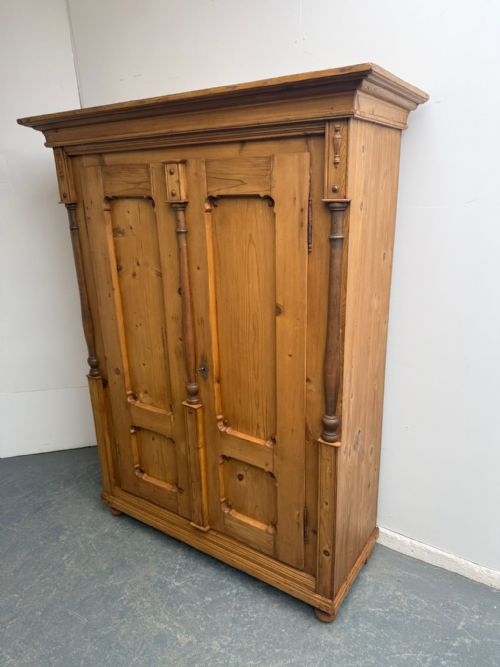


Antique Two Piece Armoire
An antique two piece armoire offers monumental storage in two separable sections, making it practical for modern spaces without losing period character.
Antique Two Piece Armoire
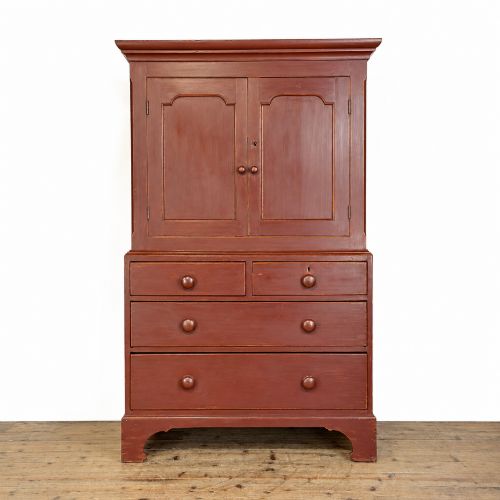
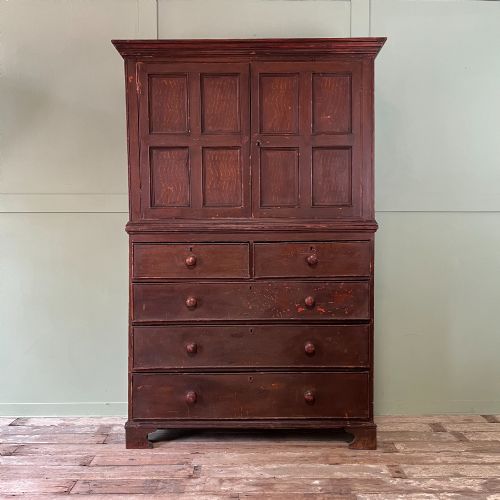
When you search for an antique two piece armoire, you find substantial storage furniture designed to dismantle into sections for transport and installation. The pieces appearing here span the eighteenth and nineteenth centuries, taking forms such as linen presses, buffets à deux corps, and two piece commodes and vitrines.
Originating across various regions, these wardrobes and storage cabinets reflect distinct local cabinet-making traditions, from French provincial oak to Irish painted pine and English mahogany. They combine architectural presence with functional internal shelving or hanging space.
Most examples found on this page lean towards country and vernacular styles, including Georgian country, Victorian country, and French provincial interpretations. These regional variations offer a less formal aesthetic than high-court furniture while retaining robust traditional construction.
How they were made
Makers utilised solid timbers such as oak, pine, mahogany, and walnut, often constructing the carcasses in separate upper and lower sections to ease movement in large houses. Panels were traditionally panelled-in to accommodate wood movement across seasons.
Hardware played a functional and decorative role, with iron and brass hinges, locks, and handles securing the heavy doors and drawers. Surface finishes varied widely from natural wax and golden polished oak to painted finishes and bare pine awaiting treatment.
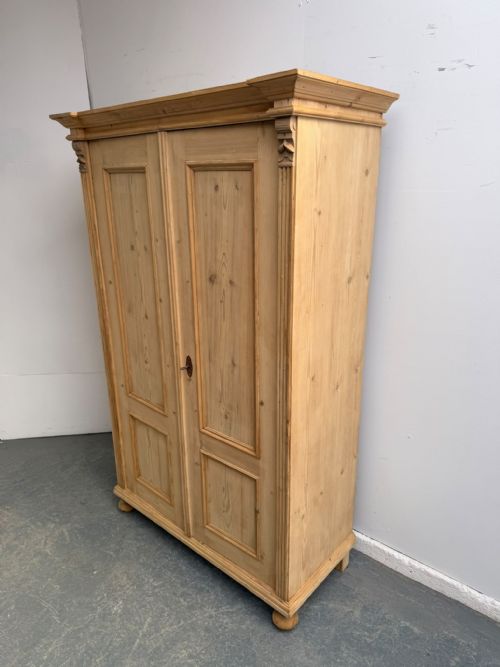
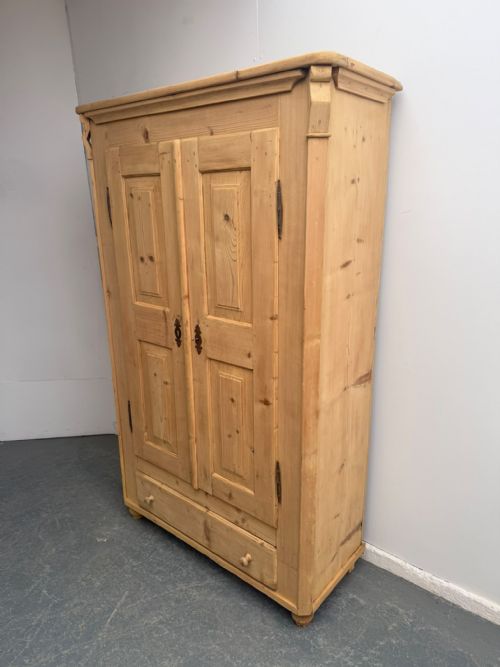
Several listings note that the pine cupboards arrive ready to wax or paint, offering a blank canvas for interior decorators.
What varies in quality
The architectural proportion and crispness of moulding detail set finer examples apart from simpler vernacular items. Timber selection also dictates grade, with figured mahogany or well-chosen oak commanding greater refinement than utilitarian pine.
Originality of iron and brass hardware, intact internal fittings, and the preservation of early painted or waxed surfaces heavily influence the integrity of each piece. The cleverness of the two-piece joinery ensures stability when assembled.
The Antique Two Piece Armoire Glossary
- Buffet à deux corps
- A traditional French two-body cupboard featuring a lower sideboard section surmounted by an upper display or storage cabinet.
- Linen press
- A tall storage piece traditionally used for flat textiles, usually combining sliding trays in the upper section with drawers below.
- Vernacular
- Furniture made by local craftsmen for everyday regional use, relying on traditional local styles rather than metropolitan pattern books.
- Chippendale style
- Cabinet-making influenced by the designs of Thomas Chippendale, characterised by classical motifs and balanced proportions.
- Vitrine
- A glass-fronted cabinet designed for the display of objects, often forming the upper stage of a two-piece storage unit.
Antique Two Piece Armoire: Frequently Asked Questions
What is the difference between an armoire and a linen press?
An armoire typically provides vertical hanging space behind tall doors for garments, whereas a linen press traditionally houses horizontal sliding trays for folded textiles.
Both forms frequently utilise a two-body construction to make heavy timber storage cabinets manageable to transport and assemble in rooms.
How should I care for waxed pine furniture?
Maintain waxed pine surfaces by periodically applying a traditional beeswax polish and buffing with a soft cloth to nourish the timber.
Keep these storage cabinets away from direct heat sources and strong sunlight to prevent the dry wood from splitting or warping over time.
Can these wardrobes fit modern clothes hangers?
Some period wardrobes and armoires feature shallow depths or fixed wooden peg rails rather than modern metal hanging rails for contemporary coat hangers.
Check the internal depth dimensions carefully if you intend to use the piece as a primary wardrobe for modern clothing.