


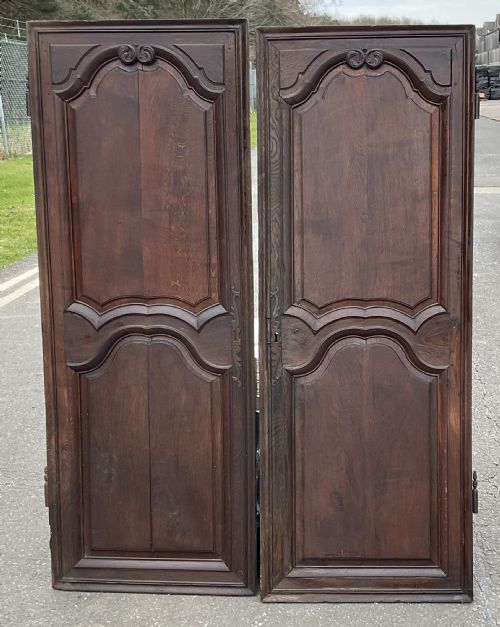


Dark Wood French Armoire
These dark wood french armoire pieces bring substantial presence and period storage to a room through centuries of continental cabinetry.
Dark Wood French Armoire
A dark wood french armoire represents large-scale storage furniture originating from continental workshops, spanning periods from the eighteenth century through the late nineteenth century. These items include substantial wardrobes, food cupboards, and glass door cabinets produced in regional styles.
The selections available on this page most commonly showcase eighteenth-century oak construction and nineteenth-century rosewood or walnut examples. Pieces take forms such as low armoires, two-piece commode and vitrine combinations, and cabinets adapted from traditional enclosed bed fronts.
Regional diversity shapes these objects, incorporating French Provincial, French Chateau, Breton Folk Art, and French Empire aesthetics. Buyers encounter everything from rustic Breton cupboards to grand rosewood wardrobes fitted with brass and metal hardware.
What varies in quality
Construction depth separates standard regional utility items from grander chateau commissions. The choice of dense hardwoods like rosewood and walnut, combined with deeply carved sculptural panels rather than plain timber surfaces, elevates a piece within its period.
Proportion and scale dictate the visual impact of an armoire. Tighter joinery integration, original brass or iron hardware, and well-preserved glass doors or commode combinations distinguish the finest cabinetwork from more utilitarian food cupboards.
Current listings feature eighteenth and nineteenth-century periods, utilising oak, walnut, rosewood, mahogany, chestnut, brass, iron, and glass.
The Dark Wood French Armoire Glossary
- Armoire
- A large wardrobe or cupboard used primarily for hanging clothes or storing household goods. These pieces typically feature heavy panelled doors and substantial timber construction.
- Vitrine
- A glass-fronted cabinet designed for the display of ceramics, books, or precious objects. They frequently sit upon commode bases in two-piece configurations.
- Lit-clos
- A traditional enclosed box bed from Brittany whose structural wooden fronts are occasionally repurposed into cabinets. This construction method retains distinctive regional folk carving.
- Buffet de cour
- A formal sideboard or court cupboard originating from French domestic traditions. These items display superior joinery and prominent decorative carving.
- Commode
- A low chest of drawers or cabinet piece. Eighteenth-century examples often pair with upper vitrine sections to form combined storage furniture.
Dark Wood French Armoire: Frequently Asked Questions
What periods do these armoires come from?
The listings span from the eighteenth century through the late nineteenth century, capturing distinct eras of French and continental cabinetmaking. Pieces range from early eighteenth-century oak constructions to 1880s rosewood and 1890s Victorian Breton items.
Each period exhibits specific regional preferences in timber choice and decorative carving, reflecting local craft traditions across provinces like Brittany and broader provincial France.
How were these cabinets originally used?
These large pieces served fundamental domestic storage roles in continental homes, holding provisions, textiles, and garments. Food cupboards preserved dry goods, while wardrobes and armoires managed clothing storage before built-in closets became standard.
Finer glass-door cabinets and vitrines functioned as display furniture in reception rooms for valued household possessions and books.
What woods are commonly found?
Oak is the predominant timber in eighteenth-century pieces, offering strength for heavy provincial cupboards and armoires. Walnut, rosewood, and mahogany appear frequently in nineteenth-century examples, providing richer grain patterns for grander urban and chateau commissions.
Chestnut also occurs in regional joinery, while secondary woods and metals like brass and iron support the structural hardware and glazing.
How do regional styles differ?
Regional aesthetics vary from rustic Breton folk art featuring heavy carved motifs to refined French Empire and Chateau designs. French Provincial items prioritize sturdy utility and traditional joinery, whereas grand rosewood armoires emphasise imported timbers and imposing proportions.
Some unusual items incorporate architectural elements salvaged from closed bed fronts, creating entirely distinct local forms.
How do I fit a large armoire into a room?
Due to their substantial height and depth, these armoires demand careful measurement of ceiling clearance and access doorways before placement. Many eighteenth-century and nineteenth-century pieces arrive as heavy single units or two-piece modular combinations.
Positioning them against major structural walls allows the imposing timber mass and decorative carved doors to anchor the room's proportions.