
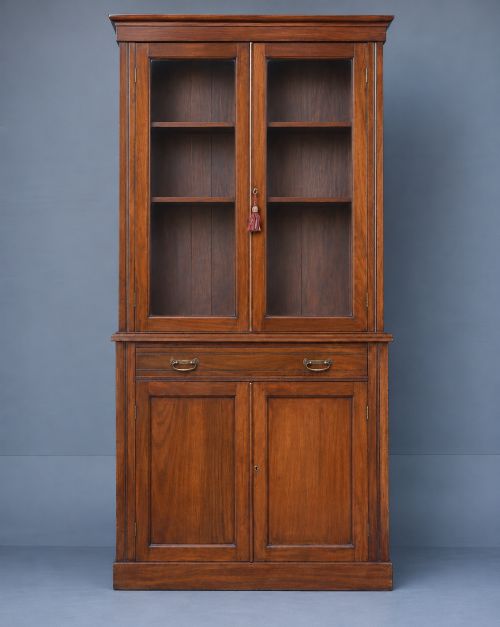
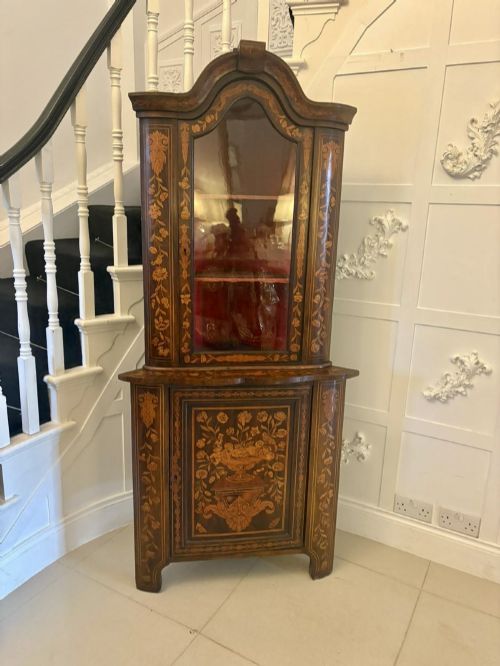
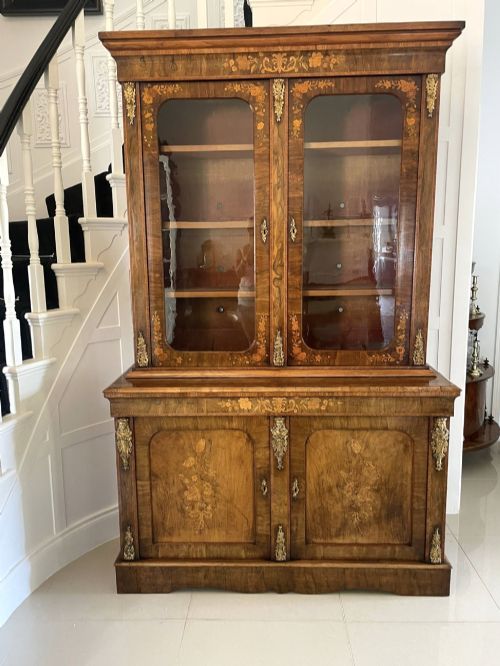
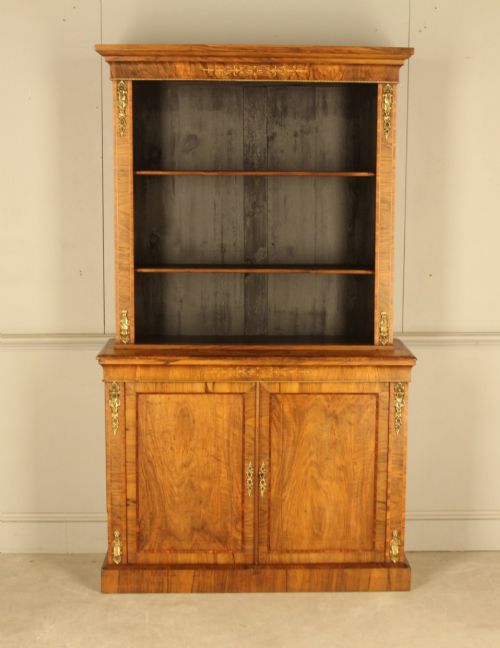
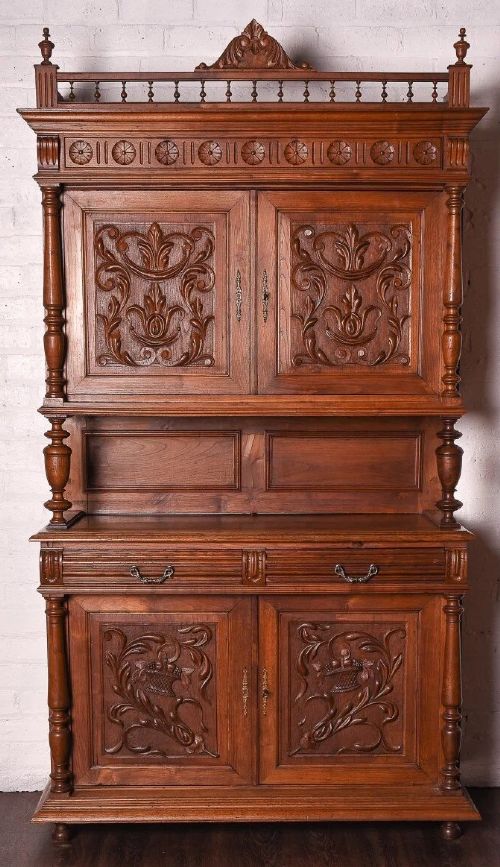
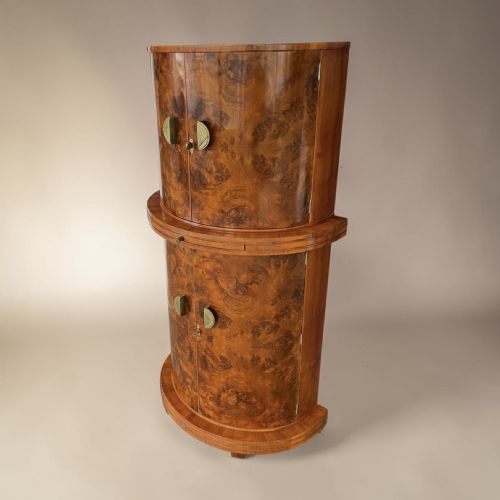


Two Tier Walnut Cupboard
These two tier walnut cupboard pieces combine practical storage with rich timber figure, offering a functional centrepiece for the home.
Two Tier Walnut Cupboard
A two tier walnut cupboard typically presents as a multi-level storage unit, encompassing forms like corner cabinets, buffet de corps, and bookcase cupboards spanning from the 18th century to the Art Deco period. These pieces divide their storage into distinct upper and lower sections, often combining display shelving with enclosed cupboard space.
The selection here ranges from Dutch marquetry corners and Victorian burr walnut bookcases to 1930s cocktail cabinets and French provincial buffets. Buyers seeking this phrase encounter timber construction dominated by rich walnut veneers and solid carcases configured for books, drinks, or general display.
Materials and construction
Cabinet makers utilised solid walnut and figured burr walnut veneers applied to secondary woods, creating dramatic grain patterns across the primary facades. Ormolu mounts, brass hardware, and glass panels frequently accent the woodwork, while marquetry inlay adds intricate botanical or geometric decoration.
Construction techniques include traditional joinery adapted to two-part forms such as the buffet deux corps, where an upper cabinet rests upon a lower sideboard base. Carved elements, gilt highlights, and leaded or clear glass doors complete the structural assembly of these multi-tiered storage items.
Some cocktail cabinets hide dry bars designed to make guests feel like 1930s film stars.
Determining quality
The calibre of a two tier walnut cupboard rests primarily on the selection and matching of the timber figure, particularly where burr walnut veneers create mirrored patterns across large doors. Superior examples display restrained, harmonious carving and precision in the inlay rather than heavy-handed surface ornamentation.
Structural integrity in the division between the upper and lower tiers dictates the overall refinement of the piece. Fine hardware, original or period-appropriate glass, and well-balanced proportions separate exceptional workshop output from standard commercial production.
Gordovil Spain
The Two Tier Walnut Cupboard Glossary
- Burr walnut
- A prized timber harvested from the irregular growths of walnut trees, yielding complex, swirling grain patterns. It is sliced into fine veneers and applied to cabinet surfaces for decorative impact.
- Marquetry
- The art of applying small pieces of veneer to a structure to form decorative patterns and pictures. Craftsmen use various tinted woods to achieve tonal contrast.
- Buffet deux corps
- A large two-tier storage piece originating in France, consisting of an upper cupboard section sitting atop a deeper lower buffet base. It provides substantial storage capacity.
- Ormolu
- Gilded bronze mounts and decorative trimmings applied to the exterior of fine furniture. It provides metallic contrast against dark walnut timber.
Two Tier Walnut Cupboard: Frequently Asked Questions
What is a two tier walnut cupboard?
A two tier walnut cupboard is a sectional storage piece featuring an upper section mounted above a lower base, constructed predominantly from walnut timber.
These units serve functions ranging from library bookcases and corner displays to cocktail cabinets and buffets.
How do I date a walnut cabinet?
Dating relies on observing structural characteristics, hardware styles, and the predominant design movement associated with the piece, such as Victorian or Art Deco.
Secondary woods and assembly methods inside the cupboard also offer clues to the manufacturing period.
Where should I place a large cupboard?
Large multi-tiered pieces require stable wall space, often suiting dining rooms, drawing rooms, or wide hallways where their height can be accommodated.
Corner variations fit naturally into architectural angles to maximise floor space while offering display capacity.
How do I care for burr walnut?
Burr walnut benefits from stable room environments away from direct sunlight and dramatic humidity shifts, which can cause veneer to lift.
Regular dusting with a dry cloth and occasional application of appropriate furniture wax helps maintain the lustre of the polished surface.