




Antique Twist Leg Console
An antique twist leg console brings architectural strength and turned movement into a room through rich timber and historic craftsmanship.
Antique Twist Leg Console
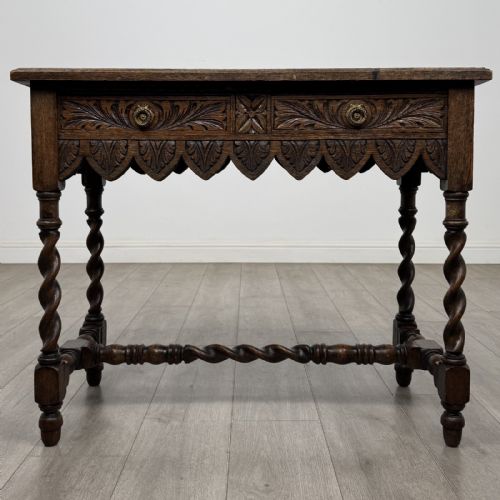
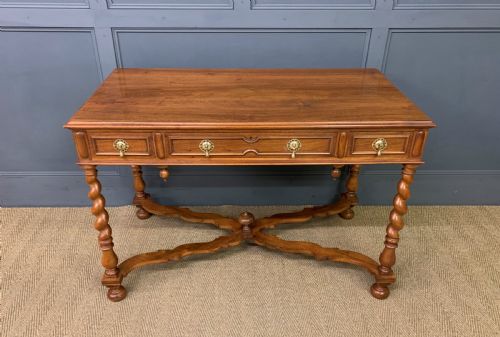
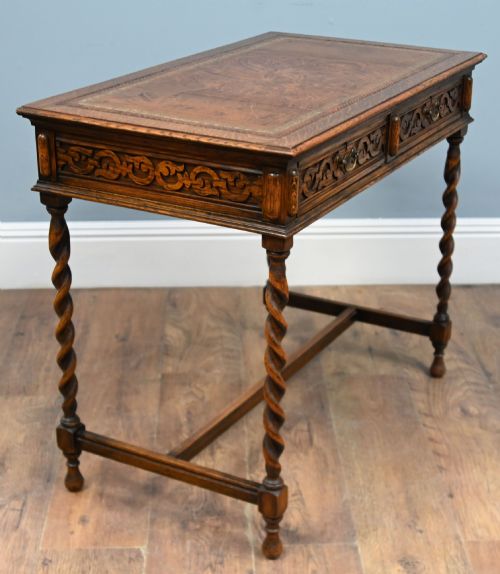
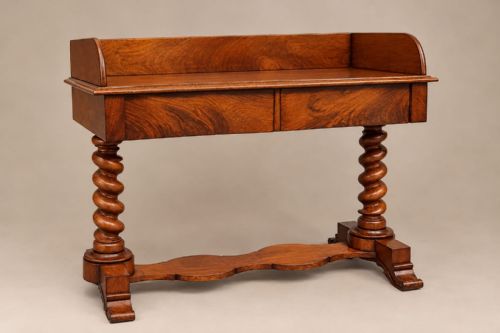
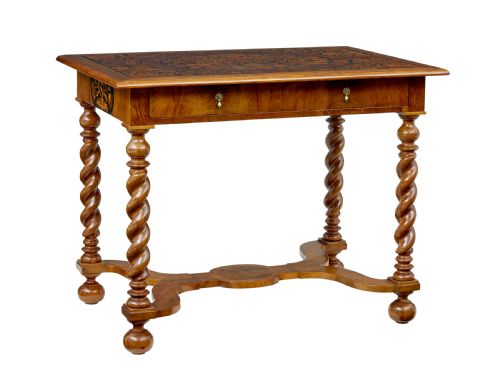
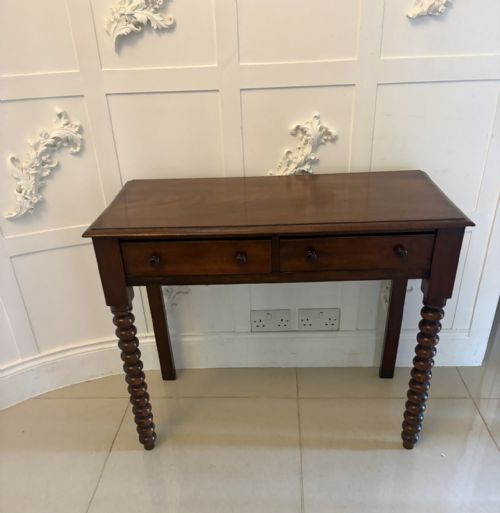
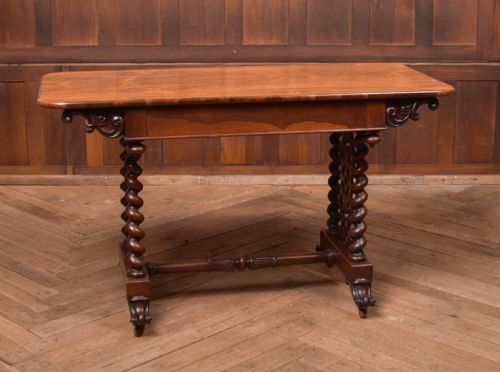
When you search for an antique twist leg console, you are looking at sturdy tables and serving surfaces characterised by carved spiral uprights. The pieces on this page span several centuries, including Victorian, Georgian, and Regency eras, with forms ranging from side tables and writing tables to console tables.
The most common interpretations you will meet here lean heavily into nineteenth-century revivals of earlier Baroque styles. Alongside these, you find walnut, oak, and mahogany timber frames, often paired with drawers or marquetry detailing depending on the regional origin.
How they were made
Cabinet makers utilised dense hardwoods such as walnut, oak, mahogany, and rosewood to construct the structural frames and table tops. Turning lathes shaped the characteristic twist legs from solid sections of timber.
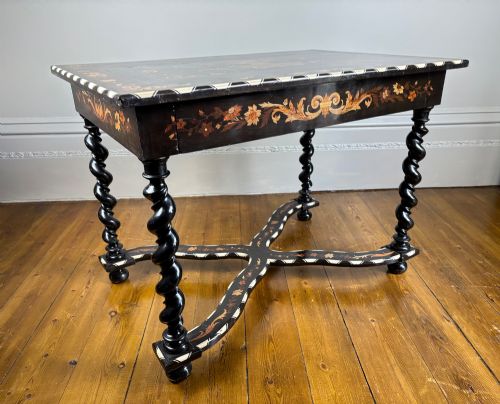
Finishing techniques involved polishing the grain of the wood, while more decorative examples incorporated ebonised surfaces, brass mounts, or bone inlay to highlight the joinery and enrich the visual texture.
Antique Twist Leg Console Retail Price Guide 2026
Typical asking prices for twist leg console among the pieces listed under this phrase on Sellingantiques today, from the lower quarter to the upper quarter. They describe what is for sale here now, not the wider market.
The current listings feature pieces spanning the eighteenth, nineteenth, and early twentieth centuries, constructed in oak, walnut, mahogany, and rosewood.
What varies in quality
The standard of the carving on the spiral legs defines the upper tier of these tables. Crisp, deeply undercut twists demand greater skill than shallow machine-cut or heavily worn examples.
Material selection and structural integrity separate simpler utility furniture from high-status pieces. The choice of figured walnut or solid mahogany combined with precise dovetailing in the drawers indicates superior workshop origin.
The Antique Twist Leg Console Glossary
- Barley twist
- A type of woodturning that creates a spiral column resembling a twisted rope or stalk of barley. This decorative form appears frequently on seventeenth-century revival furniture and later Victorian pieces.
- Console table
- A table designed to stand against a wall, traditionally supported by brackets or legs at the front. These pieces often served decorative purposes in grand hallways or reception rooms.
- Marquetry
- The art of applying pieces of veneer to a structure to form decorative patterns and pictures. Craftsmen used various tinted woods and bone inlay to create contrast.
- Ebonised
- Wood treated with a dark stain or finish to imitate ebony. This technique was popular in nineteenth-century revivals to provide a stark contrast against lighter inlay materials.
Antique Twist Leg Console: Frequently Asked Questions
What is a twist leg console?
A twist leg console is a wall-standing table featuring spiral-turned wooden legs. These pieces combine flat table tops with decorative vertical supports.
They function well in hallways and living spaces as display surfaces or writing areas, offering both stability and distinct visual texture.
How do I date a twist leg table?
Dating relies on examining the timber species, construction joints, and stylistic revival cues. Oak and walnut predominate in earlier periods, while mahogany gains traction later.
Secondary woods inside drawers and the sharpness of the hand-turned spirals also offer clues to whether a piece originates in the seventeenth, eighteenth, or nineteenth century.
Were these tables used for writing?
Many examples on this page double as writing tables or desks equipped with drawers. They provided a stable platform for correspondence in period homes.
The inclusion of drawers beneath the top surface distinguishes functional writing tables from purely decorative console or side tables.
How do I care for antique wood furniture?
Maintain these tables by keeping them away from direct sunlight and sudden temperature changes. Consistent indoor climates prevent the timber from warping or cracking.
Apply a traditional wax polish occasionally to nourish the grain and protect the historic finish without building up heavy chemical layers.