



Inlaid Dark Wood Sideboard
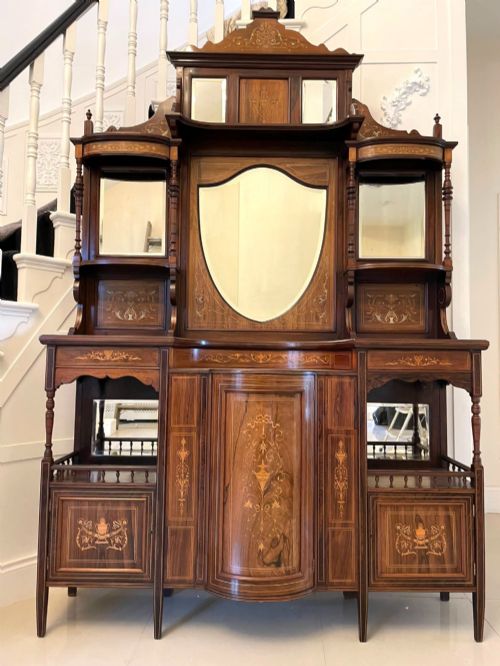
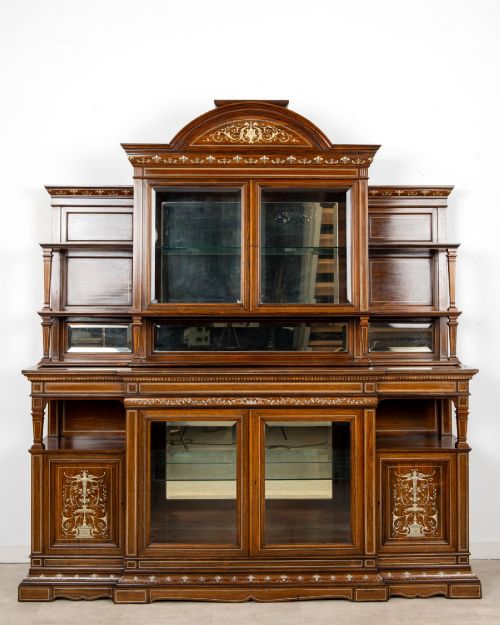
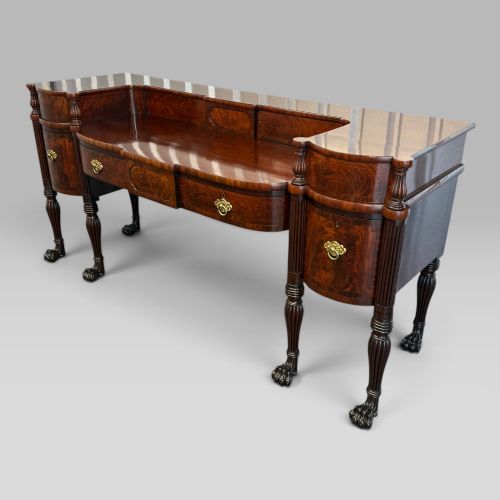
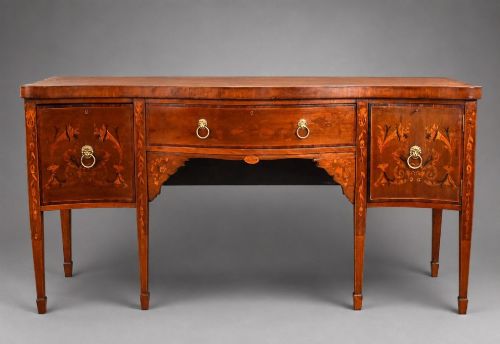
An inlaid dark wood sideboard brings together deep timber and precise contrast, offering generous storage alongside the quiet geometry of period marquetry.
Inlaid Dark Wood Sideboard
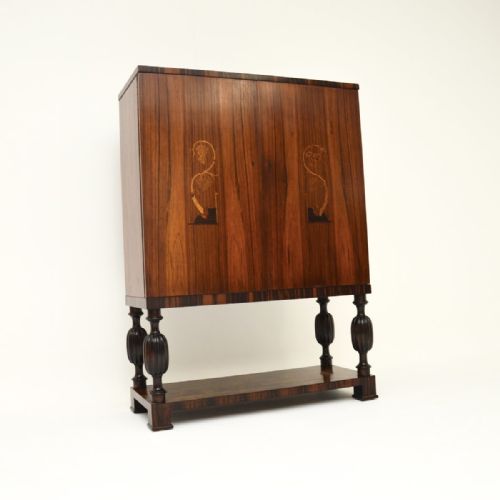
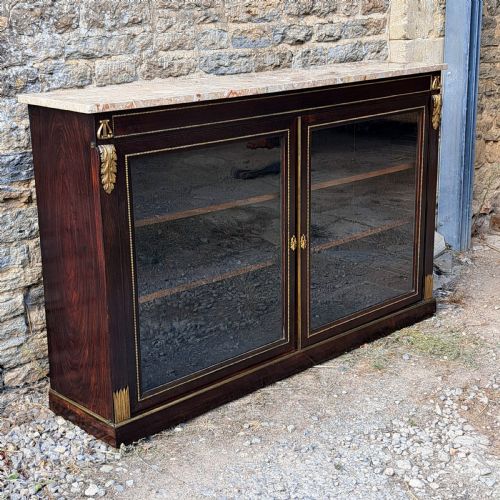
When you search for an inlaid dark wood sideboard, you encounter case furniture designed for dining rooms and parlours across the eighteenth, nineteenth, and early twentieth centuries. These pieces combine deep timbers such as mahogany, rosewood, walnut, and teak with lighter contrasting stringing or pictorial motifs.
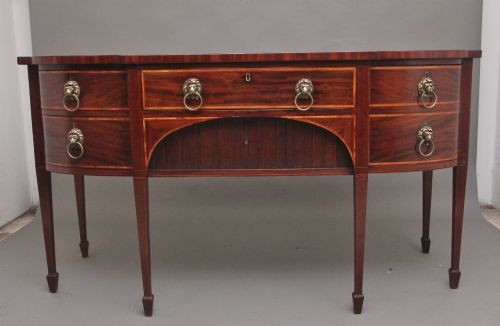
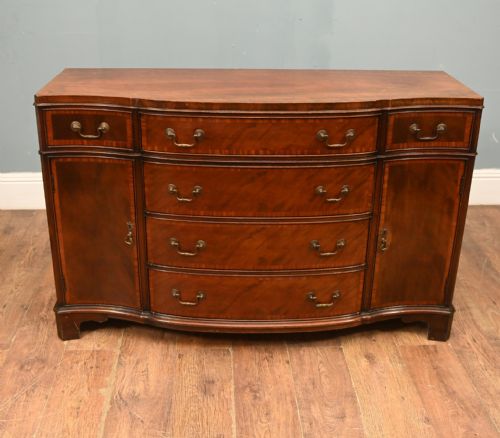
The selection here draws primarily upon Georgian, Regency, and Victorian periods, alongside Edwardian revivals and later international works. You will frequently find bow-fronted or serpentine shapes, alongside breakfront cabinets and low servers equipped with drawers and cupboards.
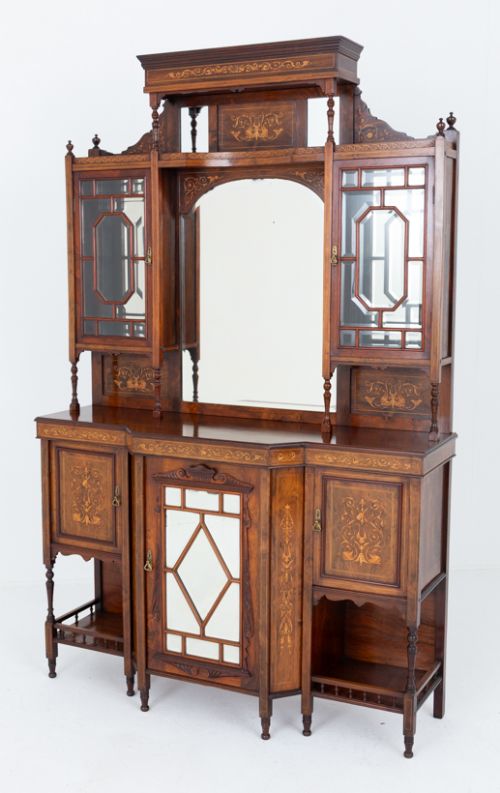
Makers and workshops of the nineteenth century frequently turned to rosewood and figured mahogany fitted with boxwood inlay, brass stringing, and marquetry. These forms served to display silver and porcelain while concealing dining linen and service items within substantial pedestals.
How they were made
Cabinet makers constructed these pieces using solid and veneered timbers including mahogany, rosewood, walnut, and teak over sturdy structural carcases. Surfaces were then enriched with contrasting stringing and geometric or floral motifs rendered in boxwood and lighter exotic woods.
Interiors often feature secondary woods alongside hand-cut dovetail joints in drawer construction, paired with brass handles, lion paw feet, or mirror-back superstructures. Marquetry panels relied on precise veneer placement, cutting contrasting woods together to achieve tight, flush patterns across doors and friezes.
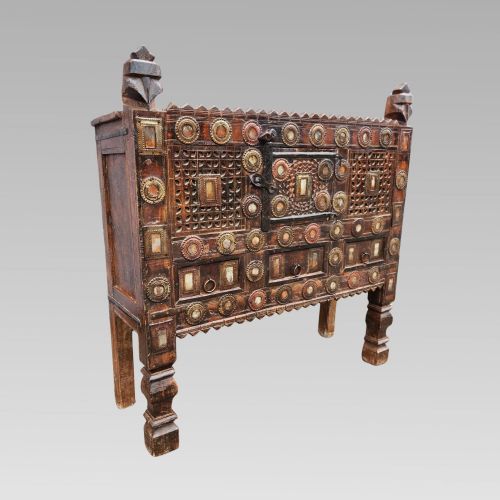
A dowry chest from 1920 sits among the dining sideboards, reminding us that storage for future households took many global forms.
What varies in quality
The standard of a piece rests heavily on the crispness of the boxwood inlay and the choice of timber figure, such as flame mahogany or burr walnut. Finer examples display meticulous symmetry in their marquetry and grain alignment across multiple doors and drawers.
Construction methods also separate workshop output, visible in the precision of the dovetailing, the weight of the brass mounts, and the stability of serpentine or bow fronts. Subtleties in proportion and the integration of mirror-back or credenza superstructures denote more ambitious commissions.
Collinson & Lock·Gordovil Spain
The Inlaid Dark Wood Sideboard Glossary
- Marquetry
- The art of forming decorative patterns from pieces of veneer applied to a timber structure. It relies on contrasting colours of wood to create pictorial or geometric designs.
- Serpentine
- A curved furniture front characterised by a convex centre flanked by concave ends. This shape requires advanced cabinet-making skill to execute cleanly.
- Stringing
- Thin lines of contrasting wood inlaid into grooves on the surface of a cabinet. It outlines drawers, tops, and doors to frame the darker field timber.
- Breakfront
- A piece of furniture whose central section projects forward from the flanking wings. It adds architectural depth to large sideboards and display cabinets.
- Credenza
- A sideboard or buffet, frequently featuring glass doors or marquetry panels. Victorian examples often incorporate mirror backs for displaying ceramics.
Inlaid Dark Wood Sideboard: Frequently Asked Questions
What is an inlaid dark wood sideboard?
An inlaid dark wood sideboard is a storage piece made from timbers like mahogany, rosewood, or walnut, decorated with contrasting boxwood lines or marquetry.
These forms served dining rooms and reception spaces from the Georgian period through the Edwardian era, providing functional surface area and enclosed shelving.
How do I date an inlaid sideboard?
Dating relies on observing structural characteristics, timber selection, and the style of the inlay work. Georgian pieces tend towards architectural restraint, whereas Victorian examples frequently employ dense marquetry and burr veneers.
Secondary woods inside drawers and the presence of hand-cut joints offer further clues to the decade of manufacture.
Where were sideboards placed?
These pieces traditionally stood against the dining room wall to assist with serving meals and storing cutlery, linens, and glassware.
Later Victorian and Edwardian variations often appeared in drawing rooms and parlours as display cabinets or credenzas with mirror backs.
How do I care for rosewood and mahogany?
Maintenance involves keeping the timber away from direct heat sources and strong sunlight to prevent the grain from drying and fading. Regular dusting with a soft, dry cloth preserves the polish without building up wax residues.
Applying a light feed suited to antique finishes helps maintain the moisture balance of the wood.