


Antique Turquoise Brooch
An antique turquoise brooch brings together vibrant blue cabochons and warm gold or silver settings, offering a tangible piece of Victorian and Edwardian craftsmanship.
Antique Turquoise Brooch
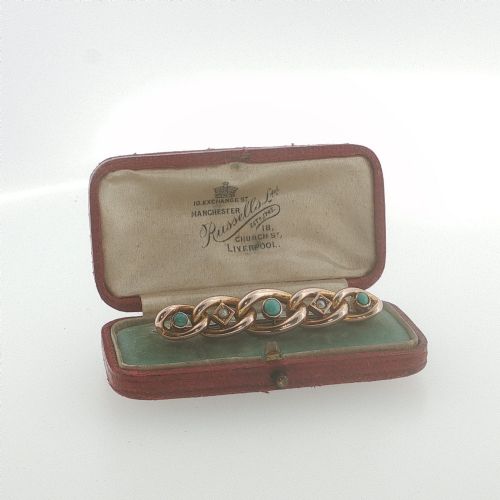
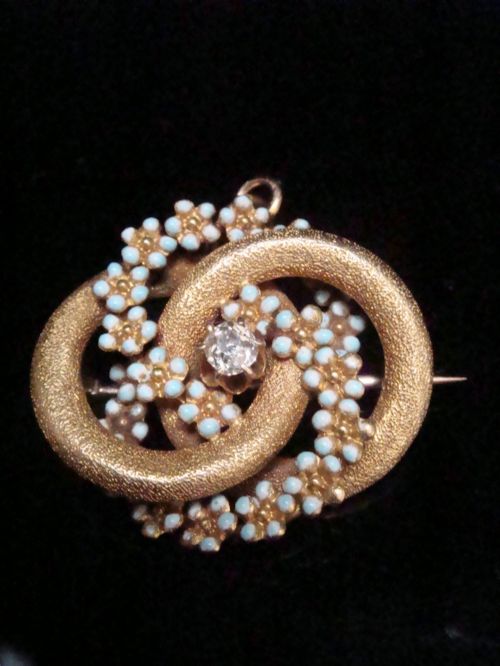
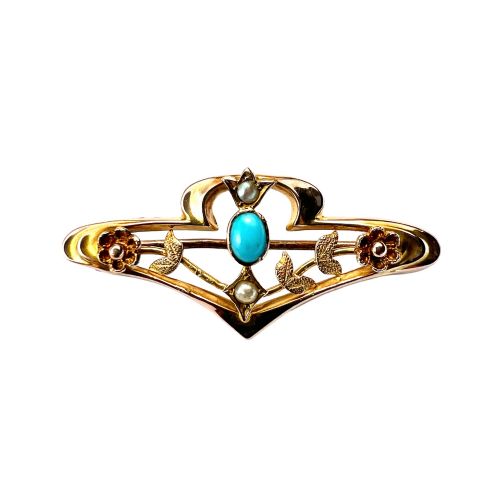
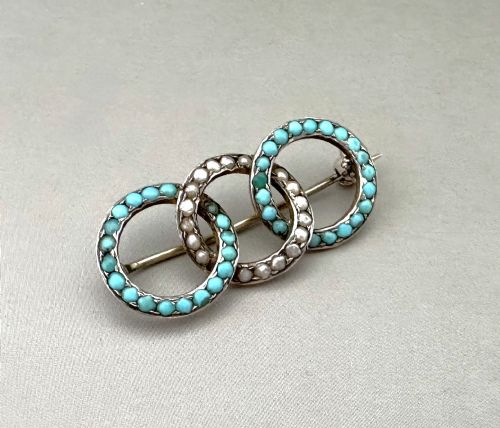
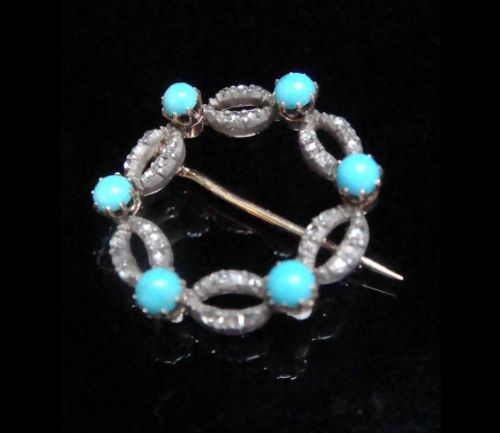
When you search for an antique turquoise brooch, you encounter pieces that span the Victorian and Edwardian eras, alongside items from around 1900 and 1910. The forms vary from delicate bows and horseshoe shapes to intricate crescent moons, lover's knots, clover designs, and figurative insect motifs.
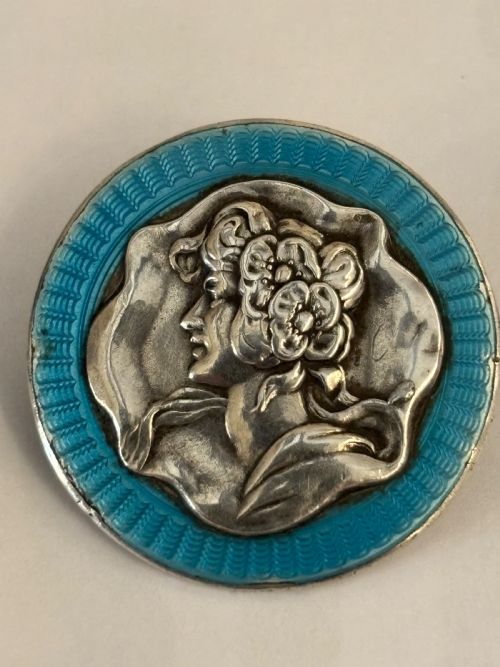
You are most likely to meet gold settings, frequently in fifteen carat or eighteen carat variations, often paired with seed pearls and occasionally diamonds or rubies. Silver gilt, silver, and enamelled examples also appear, reflecting the diverse material choices of nineteenth and early twentieth-century jewellers.
How they were made
Maker workshops utilised turquoise cabochons set into metals such as fifteen carat gold, eighteen carat gold, silver gilt, and standard silver. Stones were frequently arranged alongside seed pearls, rose cut diamonds, and enamel work to create textured surfaces and colourful contrasts.
Techniques ranged from ornate engraving and Etruscan revival wirework to structural elements like heart drops and convertible pendant mountings. Artisans constructed secure bezels and claw settings to hold the softer turquoise stones firmly within gold and silver frameworks.
Antique Turquoise Brooch Retail Price Guide 2026
Typical asking prices for turquoise brooch among the pieces listed under this phrase on Sellingantiques today, from the lower quarter to the upper quarter. They describe what is for sale here now, not the wider market.
Materials recorded include turquoise, seed pearls, diamonds, rubies, enamel, silver, and gold up to eighteen carats.
What varies in quality
The sophistication of the design sets finer examples apart, particularly where turquoise is combined with supplementary gems like diamonds, rubies, and pearls in complex pictorial motifs such as insects or clover leaves. Metalwork intricacy, including detailed engraving and Etruscan revival granulation, also indicates higher workmanship.
The condition and colour consistency of the turquoise stones influence the overall standing of a piece, as does the weight and purity of the gold mount, whether fifteen or eighteen carat. Convertible pieces that function as both a brooch and a pendant demonstrate greater structural versatility.
Marius Hammer
The Antique Turquoise Brooch Glossary
- Cabochon
- A gemstone shaped and polished with a smooth, rounded surface rather than faceted. This cut displays the natural robin's-egg blue colour and matrix of turquoise stones effectively.
- Seed pearl
- A very small, naturally small pearl often used in Victorian and Edwardian jewellery as a delicate border or accent. These tiny pearls frequently surround turquoise clusters in bow and crescent designs.
- Silver gilt
- Silver that has been coated with a thin layer of gold. This technique offered the bright appearance of gold while utilising silver as the underlying base metal.
- Etruscan revival
- A nineteenth-century design style inspired by ancient Etruscan goldwork, featuring granulation and fine wirework. Pieces in this style often incorporate turquoise within elaborate archaeological revival settings.
Antique Turquoise Brooch: Frequently Asked Questions
How do I wear an antique turquoise brooch?
These pieces pin securely to heavy fabrics such as wool coats, velvet lapels, or thick knit scarves. Many examples also feature hidden loops that allow them to be hung from a chain as a pendant.
Because turquoise is a softer gemstone, take care to avoid catching the brooch on delicate silks or lace. Removing the pin before storing helps protect both the setting and the pin stem.
How can I tell a Victorian brooch from an Edwardian one?
Victorian brooches often feature heavier gold weights, deeper engraving, and Etruscan revival motifs or sentimental themes like lover's knots and horseshoe shapes. They tend to have a warmer, more robust presence.
Edwardian pieces, by contrast, frequently employ lighter platinum or white and yellow gold settings, often incorporating diamonds and seed pearls in airier, more delicate configurations like bows and garlands.
Did antique turquoise brooches have special meanings?
Jewellery from the nineteenth century frequently relied on a shared vocabulary of symbols and stones. Horseshoes represented good luck, bows symbolised tied affection, and forget-me-not or clover forms carried sentiments of remembrance and fortune.
Turquoise itself was often associated with protection and fidelity. Combining turquoise with pearls or diamonds added layers of personal significance to gifts and tokens of regard.