
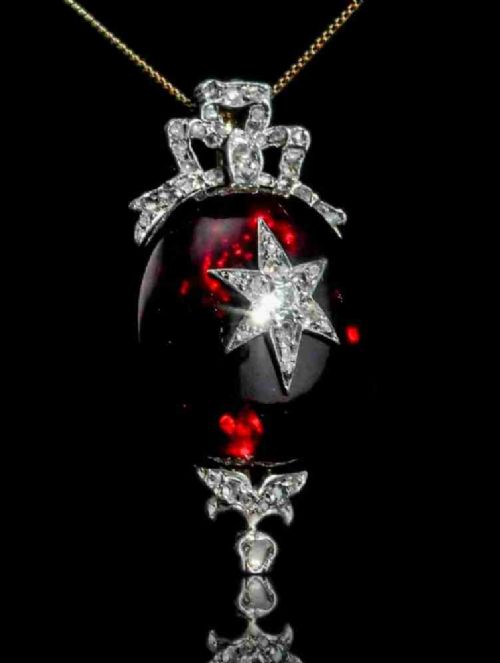


Victorian Bow Brooch
These Victorian bow brooch pieces are charming ribbon-form ornaments worked in gold, silver and gemstones that add period character to any lapel.
What victorian bow brooch means on this page
A victorian bow brooch takes the form of a tied ribbon or bow, executed in metals such as fifteen-carat gold, eighteen-carat yellow gold and silver. These pieces date from the Victorian era and around nineteen hundred, alongside items from eighteen-eighty and eighteen-sixty.
The selections include double collar brooches, ribbon designs featuring heart drops, and pendant brooches set with natural pearls and diamonds. Scottish Revival examples incorporate pebble agate and jasper within their silver frames.
Buyers frequently encounter variations that combine gold with turquoise and seed pearls, or incorporate tassels and Reynolds angel plaques alongside garnet stones. These ornaments function both as traditional brooches and as convertible pendants.
Materials and construction
Goldsmiths shaped fifteen-carat and eighteen-carat yellow gold into flowing ribbon loops, often mounting natural pearls, turquoise cabochons and brilliant-cut diamonds by hand. Silver was similarly utilised, particularly in Scottish Revival pieces that showcased polished native hardstones like agate and jasper.
Makers integrated articulating elements such as heart drops, tassels and pin stems directly into the metalwork. Stone settings relied on traditional collet and claw techniques to secure garnets, diamonds and pearls within the intricate knotwork.
Retail Price Guide 2026
Typical UK retail prices for victorian bow brooch, calculated from the Sellingantiques database of over a million retail prices indexed since 2003. This retail price guide relies exclusively on Sellingantiques data; no external sources or auction records are used, so the figures do not describe the wider market.
Some bows come with tiny swinging hearts that refuse to stay still, ensuring your lapel has a pulse of its own.
Judging the work
Quality rests upon the crispness of the ribbon folds and the articulation of suspended elements like tassels and heart drops. Superior examples display meticulous gemstone matching, particularly in turquoise clusters, natural pearl selection and diamond weight.
The distinction between standard production and finer output lies in the integration of regional styles, such as precise stonemasonry in Scottish pebble agate work. Original boxes and convertible pendant fittings further elevate the standing of a piece.
The Victorian Bow Brooch Glossary
- Collar brooch
- A wider pin format designed originally to fasten at the high neckline of Victorian collars. These often feature double bars or interconnected ribbon motifs.
- Pebble agate
- Scottish hardstones cut and polished into geometric or smooth cabochons for nineteenth-century jewellery. They reflect regional geological interest popularised during the Victorian period.
- Cabochon
- A gemstone shaped and polished with a smooth convex surface rather than faceted. This style was favoured for turquoise and opaque hardstones in nineteenth-century settings.
- Double collar brooch
- A specific configuration featuring two parallel pins or linked sections intended to span a wider area of fabric. This form provides greater stability when worn on heavy woollens.
Frequently Asked Questions
How do I wear a victorian bow brooch?
These pieces pin securely onto lapels, heavy coat collars, or thick scarves using their original pin stems. Convertible versions also accept chains to transform into pendants.
Position the bow slightly angled on a jacket or centered beneath a high neckline to mirror nineteenth-century placement.
Are these brooches made of solid gold?
The evidence shows items fashioned from fifteen-carat gold, eighteen-carat yellow gold, and sterling silver. These solid precious metal components form the structural ribbon framework.
Gemstones such as diamonds, turquoise, pearls, and agate are then set directly into these precious metal mounts.
What is Scottish Revival jewellery?
Scottish Revival pieces draw upon traditional Celtic motifs and native materials like jasper and pebble agate set in silver. This aesthetic gained immense popularity during the Victorian era.
Such items often celebrate regional British geology and craft traditions alongside conventional bow designs.
Can I hang a pendant from my brooch?
Certain examples feature integrated loops or dual-purpose mountings designed specifically for pendant use. Items listed as pendant brooches include hidden bails or loops for chains.
Check the reverse of the piece to see if a loop accommodates a chain alongside the pin mechanism.