



Victorian Turquoise Pin
A victorian turquoise pin brings together vibrant blue cabochons and warm gold or silver gilt, offering a charming touch of nineteenth-century sentiment.
Victorian Turquoise Pin
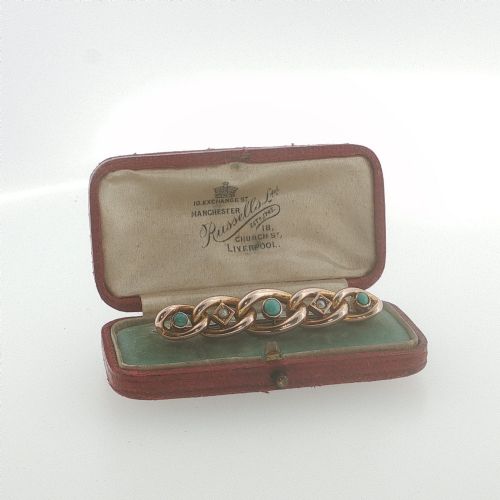
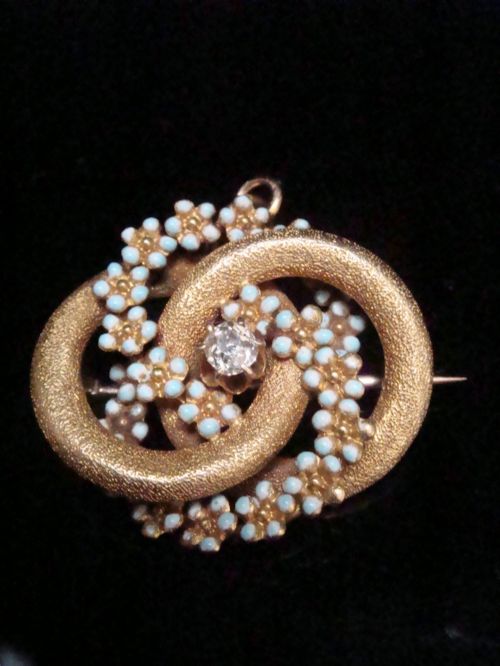
When searching for a victorian turquoise pin, collectors encounter a focused selection of brooches, lockets, and stick pins spanning the Victorian and Edwardian eras. These jewels take familiar nineteenth-century forms such as hearts, knots, horseshoes, crescents, and bows.
The version most commonly met on this page is the gold brooch, frequently paired with seed pearls or diamonds. Many pieces serve multiple functions, operating as both pendants and brooches or forming part of matching jewellery sets.
Makers utilised various gold standards alongside silver gilt and rolled gold to mount the stones. The resulting objects range from delicate stick pins to substantial collar brooches and multi-gem pendants.
How they were made
The construction relies on precious metals such as fifteen-carat gold, nine-carat rose gold, and silver gilt to form the settings for the gemstones. Goldsmiths shaped these metals into intricate bows, knots, and horseshoe frames.
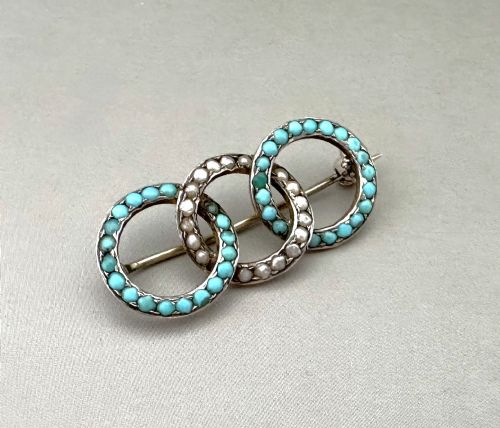
Turquoise cabochons are regularly accented with seed pearls, diamonds, and occasional multi-gem arrangements. Jewelers secured these smaller stones closely around the central turquoise elements to enhance the visual texture of the brooch.
Victorian Turquoise Pin Retail Price Guide 2026
Typical asking prices for victorian turquoise pin among the pieces listed under this phrase on Sellingantiques today, from the lower quarter to the upper quarter. They describe what is for sale here now, not the wider market.
Swallows and dragonflies occasionally join the turquoise horseshoe pins, bringing winged insects into the nineteenth-century menagerie.
What varies in quality
The refinement of the metalwork and the weight of the gold define the upper tier of these pieces. Heavier fifteen-carat gold mounts display crisper casting in motifs like hearts and lover's knots compared to simpler rolled gold or silver gilt versions.
The selection and matching of the turquoise stones also separate standard examples from finer ones. Uniformity in the vibrant blue colour and the careful integration of seed pearls or diamonds indicate higher workshop standards.
The Victorian Turquoise Pin Glossary
- Cabochon
- A gemstone shaped and polished with a smooth, rounded surface rather than faceted. This cut is standard for turquoise in nineteenth-century jewellery.
- Seed pearl
- A very small, natural or saltwater pearl, often roughly spherical or slightly irregular. These tiny pearls form delicate borders around turquoise centres.
- Silver gilt
- Sterling silver that has been coated with a thin layer of gold. This technique provided a rich golden appearance over a silver base.
- Suffragette chain brooch
- A piece of jewellery incorporating the colours green, white, and violet, or turquoise and seed pearls, associated with the early twentieth-century movement. These designs combine historical significance with period craftsmanship.
- Lovers knot
- A decorative motif formed by two interlaced overhand knots symbolising attachment. It frequently appears in Victorian brooches set with turquoise and pearls.
Victorian Turquoise Pin: Frequently Asked Questions
How were these pins worn?
Victorian ladies pinned these jewels directly to collars, cravats, and the lapels of walking jackets. They also fastened lace collars and secured draped chains.
Heavier examples functioned doubly as pendants suspended from chatelaines or neck chains. Smaller stick pins secured hats and neckties in place.
Can I wear a brooch as a pendant?
Many nineteenth-century pieces were designed with hidden loops or fold-down bale attachments specifically for this dual purpose. This allows the wearer to thread a chain through the reverse of the pin.
Checking the back of the mount reveals whether a hinged loop or safety catch accommodates a chain.
How do I care for turquoise jewellery?
Turquoise is a porous gemstone that absorbs oils, cosmetics, and water easily. Cleaning requires only a soft, dry cloth rather than liquid dips or ultrasonic baths.
Storing the piece away from direct sunlight and harsh chemicals preserves the original blue hue and prevents discoloration.
How do I distinguish Victorian from Edwardian pieces?
Victorian designs tend to feature heavier gold weights, such as fifteen-carat settings, alongside romantic motifs like hearts and serpents. The materials often reflect deep mourning or sentimental themes.
Edwardian pieces generally present lighter lace-like filigree work, platinum elements, and specific political associations like suffragette colour combinations.