

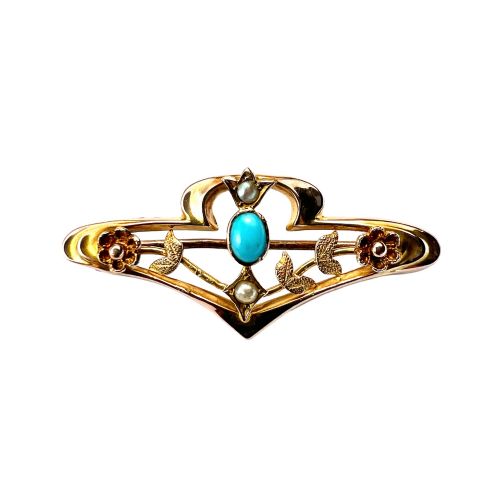


Pearl and Turquoise Brooch
These pearl and turquoise brooch designs combine rich Victorian and Edwardian goldwork with bright blue stones.
Pearl and Turquoise Brooch
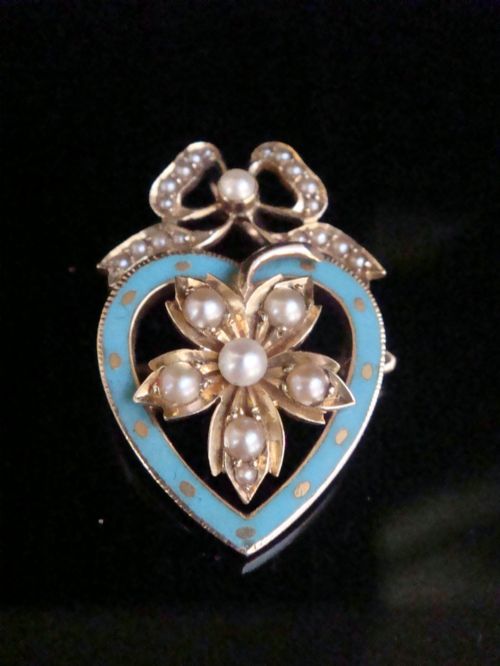
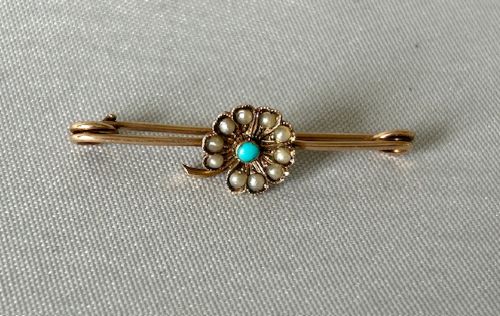
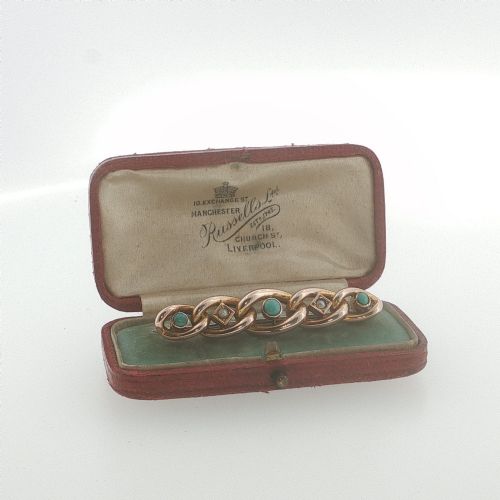
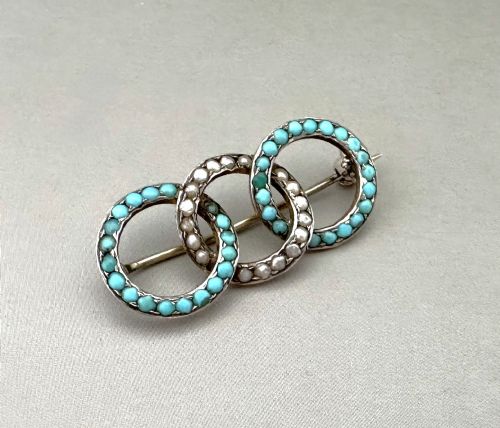
A pearl and turquoise brooch brings together vibrant blue stones and lustrous pearls within Victorian and Edwardian gold settings. The selection on this page centres on period pieces ranging from the late nineteenth century through to the early twentieth century.
Buyers frequently encounter floral sprays, crescent shapes, hearts, bows, and winged designs alongside versatile pieces that double as pendants. These jewels span a timeline covering the Victorian era, the Edwardian period, and the early nineteen-hundreds.
Materials and construction
Workshops built these jewels using nine-carat and fifteen-carat gold, alongside silver gilt and rolled gold settings. Selected examples incorporate diamonds to accent the primary cluster of turquoise and pearls.
Goldsmiths arranged seed pearls and turquoise cabochons into intricate floral, geometric, and zoomorphic motifs. Many mountings allow the piece to function as both a brooch and a pendant on a chain.
Pearl and Turquoise Brooch Retail Price Guide 2026
Typical asking prices for pearl and turquoise brooch among the pieces listed under this phrase on Sellingantiques today, from the lower quarter to the upper quarter. They describe what is for sale here now, not the wider market.
Several pieces feature winged hearts and hovering dragonflies, proving that Victorians loved insects as much as romance.
Standards of craftsmanship
Quality rests upon the precision of the stone setting and the integrity of the goldwork. Finer examples display secure claw or bezel settings that hold tiny seed pearls and turquoise cabochons firmly without excess adhesive.
The sophistication of the design dictates the upper tier, seen in balanced crescent, bow, and winged heart configurations. Heavier gold weight and well-preserved metal colour separate standard productions from superior workshop output.
The Pearl and Turquoise Brooch Glossary
- Turquoise
- An opaque blue to green mineral valued in jewellery for its distinct robin-egg hue. It appears frequently in Victorian and Edwardian cluster designs.
- Seed Pearl
- A very small natural or cultured pearl, often un-drilled or half-drilled, used in tight clusters or borders. These tiny pearls define the delicate outlines of period brooches.
- Crescent Brooch
- A piece shaped into a rising or waning moon, highly popular during the late nineteenth century. Makers often set these with alternating turquoise and pearls.
- Pendant Brooch
- A versatile jewel fitted with a concealed loop or bail allowing it to be worn on a chain or pinned to fabric. This dual function is common in Edwardian examples.
- Suffragette Jewellery
- Pieces incorporating green, white, and violet stones to signal support for the women's suffrage movement. In these brooches, green peridot or turquoise pairs with white pearls.
Pearl and Turquoise Brooch: Frequently Asked Questions
How do I wear a convertible brooch pendant?
Many period brooches feature a fold-down loop or a hidden bail on the reverse side. This allows the piece to transition easily from a lapel pin to a pendant suspended on a chain.
Ensure the pin stem is securely latched when wearing it fastened to fabric. When hanging it from a chain, tuck the pin safely behind the safety catch to prevent snagging.
How do I care for turquoise and pearls?
Turquoise is a porous gemstone that absorbs oils, cosmetics, and water easily. Wipe the stones gently with a soft, dry cloth after wearing and avoid submerging them in liquid cleaning solutions.
Pearls are similarly delicate and vulnerable to household chemicals and perfumes. Store these jewels in a separate fabric pouch to prevent the harder gold settings from scratching the pearl surfaces.
How do I tell Victorian from Edwardian pieces?
Victorian brooches often utilise heavier fifteen-carat yellow or rose gold with dense cluster formations. Motifs like crescents, locket backs, and sentimental symbols dominate this earlier nineteenth-century phase.
Edwardian pieces tend to display lighter nine-carat gold or platinum-topped settings with open, airy designs. Bows, garlands, and pastel turquoise stones paired with bright seed pearls characterise this later period.
What is rolled gold?
Rolled gold involves a sheet of solid gold mechanically bonded to a base metal core under heat and pressure. This technique provides a durable layer of genuine gold at a more accessible production cost.
It differs from modern plating through its thicker gold content, which resists wearing through to the base metal over time. Pieces utilising this method remain sturdy and retain their warm colour.