


Victorian Turquoise Brooch
A victorian turquoise brooch brings together vibrant robin egg blue stones and warm gold or silver settings, offering a tangible piece of nineteenth century sentiment.
Victorian Turquoise Brooch
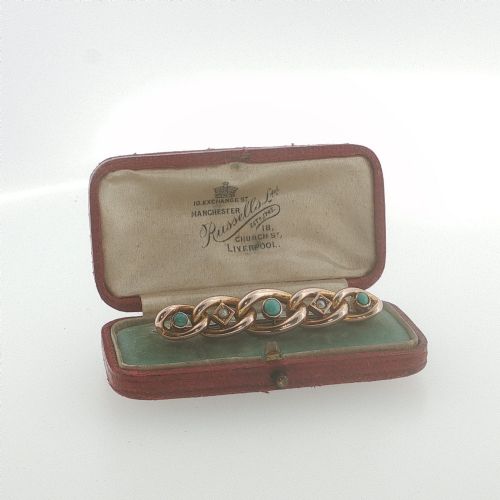
A victorian turquoise brooch encompasses a range of ornamental pins, pendants, and convertible pieces designed to be worn on collars, lapels, or chains. These jewels emerge primarily from the Victorian and Edwardian periods, stretching from eighteen seventy into the early nineteen hundreds.
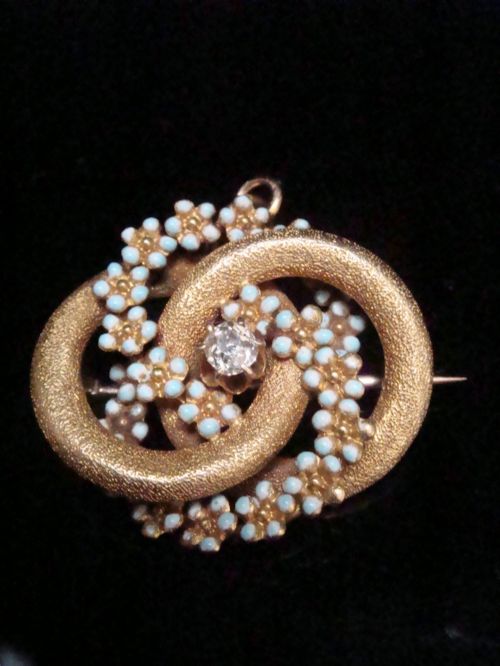
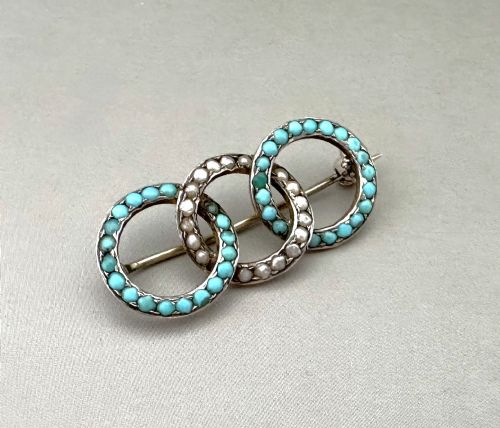
The commonest forms met here include heart motifs, lover knots, crescents, horseshoes, and insects, frequently paired with seed pearls, diamonds, or silver gilt. Many examples function as both brooches and pendants, providing dual utility that makers of the period favoured.
The materials span nine carat and fifteen carat gold, silver gilt, and rolled gold, carrying polished turquoise cabochons alongside pearls and occasional rose cut diamonds. These pieces reflect the sentimental and symbolic tastes of nineteenth century jewellers who turned to nature and devotion for their motifs.
How they were made
Makers shaped these jewels using yellow and rose gold in nine, fourteen, and fifteen carat standards, alongside silver gilt and rolled gold bases. Stones were set into bezels or arranged in pavé formations to cover the surface with blue cabochons.
Seed pearls and diamonds frequently accompany the turquoise, secured with fine wirework, collet settings, or granulation typical of Etruscan revival designs. Convertible mechanisms were engineered into the frames, allowing a brooch pin to tuck away while a bail held a chain.
Listings feature periods from eighteen seventy through the Edwardian era, utilising fifteen carat gold, silver gilt, and seed pearls.
What varies in quality
Quality rests in the matching and stability of the turquoise stones, where uniform colour and secure flush settings separate superior work from simpler productions. Higher tier examples employ solid fifteen carat or eighteen carat gold rather than rolled gold or silver gilt.
The finesse of the supplementary elements, such as perfectly matched seed pearls, hand chased engraving, or the inclusion of rose cut diamonds, defines the upper range of these jewels. Construction details like sturdy pin hinges and well concealed conversion loops reveal the care taken by the maker.
The Victorian Turquoise Brooch Glossary
- Cabochon
- A gemstone with a smooth, rounded, convex top and a flat or curved base, standard for turquoise in this period. This cut displays the natural colour and matrix of the stone without facets.
- Seed pearl
- A very small, natural or saltwater pearl, often half drilled and glued or pegged onto gold settings. These tiny pearls form delicate borders and floral clusters around central turquoise stones.
- Etruscan revival
- A nineteenth century design style inspired by archaeological discoveries, featuring fine granulation and wirework. This aesthetic appears on gold brooch frames with applied wire patterns.
- Silver gilt
- Sterling silver covered with a thin layer of gold, providing a warm metallic hue over a silver base. This technique was used to achieve a golden appearance on silver brooch mounts.
- Lover knot
- A decorative motif formed by intertwined ribbons or cords of metal, symbolising attachment and fidelity. These knots frequently incorporate turquoise stones and seed pearls within the design.
Victorian Turquoise Brooch: Frequently Asked Questions
What is a convertible brooch?
A convertible brooch is a piece of jewellery designed to serve multiple functions, typically operating as both a pendant on a chain and a pin on clothing.
These items feature hinged pins and hidden loops or bails on the reverse, allowing the wearer to adapt the jewel to different outfits.
How can I date my brooch?
Dating relies on examining the metal standards, pin mechanisms, and stylistic motifs recorded across the Victorian and Edwardian eras. Pieces marked with lower gold purities or incorporating specific revival designs point to distinct decades between eighteen seventy and nineteen hundred.
Clues also reside in the fastener types, where older C clasps give way to safety pins in later variants.
How were these brooches worn?
Victorians wore these pins fastened at the neck of high collars, centred on bodices, or pinned to lapels and sashes. Convertible versions were often suspended from chains as pendants when not worn pinned to fabric.
They served as daily personal adornments or sentimental gifts exchanged between loved ones.
Are turquoise stones durable?
Turquoise is a softer gemstone that requires careful handling to prevent scratching, moisture absorption, and discolouration from oils or cosmetics. Historic pieces benefit from gentle cleaning with a dry cloth rather than liquid immersion.
Keeping them away from direct sunlight and harsh chemicals preserves their distinct blue hue.