





Victorian Equestrian Jewellery
Victorian equestrian jewellery captures the spirit of the nineteenth-century hunting field through miniature gold horseshoes, pearl-set bugles and crystal fox heads.
Victorian Equestrian Jewellery
Victorian equestrian jewellery comprises brooches, stick pins, pendants and lockets created during the nineteenth century and the early twentieth century. These pieces celebrate horses, hounds and rural sports through direct motifs such as horseshoes, hunting bugles and jockey caps.
The version most commonly met on this page is the horseshoe brooch, rendered in fifteen-carat gold, nine-carat gold or sterling silver. They frequently incorporate turquoise, seed pearls or diamonds to highlight the metalwork.
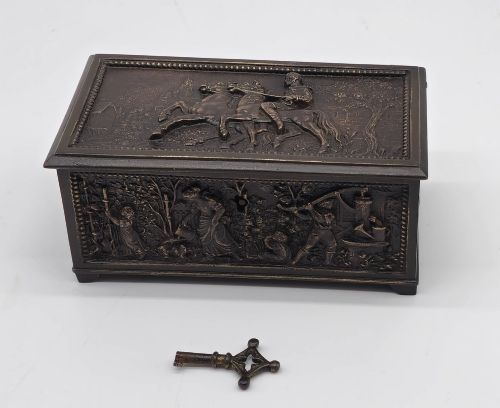
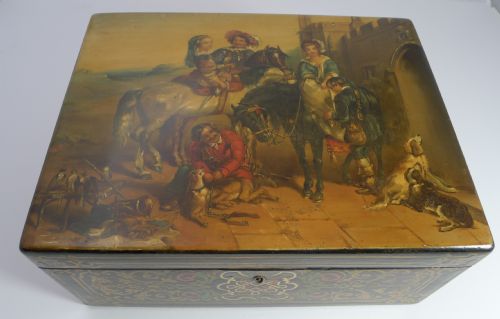
Beyond brooches, the selection includes pendants, earrings and stick pins featuring Essex crystal animal subjects and compass charms. Occasional larger items like bronze jewellery caskets and papier-mâché boxes extend the theme into desk accessories.
Materials and Techniques
Goldsmiths worked primarily in nine-carat, fifteen-carat and eighteen-carat gold, alongside sterling silver and silver gilt, to construct the foundational shapes of horseshoes and bugles. These metals were shaped, cast and engraved to mimic equestrian hardware.
Gemstone setting played a central role, utilising turquoise cabochons and natural seed pearls closely clustered along the metal rails. Specialised techniques such as Essex crystal painting brought three-dimensional animal portraits beneath a convex rock crystal dome.
Victorian Equestrian Jewellery Retail Price Guide 2026
Typical asking prices for victorian equestrian jewellery among the pieces listed under this phrase on Sellingantiques today, from the lower quarter to the upper quarter. They describe what is for sale here now, not the wider market.
What Varies in Quality
Quality rests upon the fineness of the metalwork and the complexity of the design, moving from simple silver brooches to heavy fifteen-carat gold pieces set with garnets and diamonds. Higher-tier examples display crisp casting and secure claw or bezel settings for every stone.
The precision of miniature hand-painting separates ordinary work from exceptional pieces, particularly in Essex crystal portraits where the subject must retain depth and realism under magnification. Integration of hallmarks and specific makers adds documented provenance to the construction.
The Victorian Equestrian Jewellery Glossary
- Stick pin
- A long pin topped with a decorative motif designed to secure a cravat or lapel. The pin shaft is frequently made of base metal with a precious metal head.
- Essex crystal
- A technique where rock crystal is carved into a dome and painted on the flat underside to create an illusion of a three-dimensional subject.
- Seed pearl
- A very small natural pearl, often round or slightly irregular, used in clusters to edge horseshoe motifs in nineteenth-century pieces.
- Cabochon
- A gemstone shaped and polished with a smooth, convex surface rather than faceted. Turquoise is commonly cut this way in equestrian brooches.
Victorian Equestrian Jewellery: Frequently Asked Questions
What materials were used?
Goldsmiths utilised nine-carat, ten-carat, fifteen-carat and eighteen-carat gold, alongside sterling silver, bronze and silver gilt. Gemstones such as turquoise, seed pearls, garnets and diamonds complete the settings.
Non-metal objects incorporate papier-mâché and painted rock crystal, reflecting the diverse manufacturing techniques of the nineteenth and early twentieth centuries.
How do I wear a stick pin?
Stick pins slide directly through heavy fabrics like lapels, cravats or scarves, held in place by a small clutch or cap at the pointy end. They were originally designed for gentlemen's riding attire and formal wear.
Today, they function equally well secured to collars, hats or the lapels of contemporary jackets.
What is an Essex crystal?
An Essex crystal is a piece of rock crystal shaped into a convex dome with a flat back, hand-painted with a miniature subject underneath. The domed top magnifies the painted animal or scene, creating a lifelike depth.
Fox heads and hunting dogs are frequent subjects in equestrian pieces.
Are these pieces fragile?
While gold and silver settings endure daily wear well, seed pearls and turquoise require careful handling because softer stones absorb moisture and cosmetics. Secured clasps and pin stems should be checked gently before wearing.
Storage in dedicated boxes prevents surface scratching on crystal components.