




Antique Turned Wooden Container
An antique turned wooden container is a small vessel shaped on a lathe, prized for its tactile warmth and functional history.
Antique Turned Wooden Container
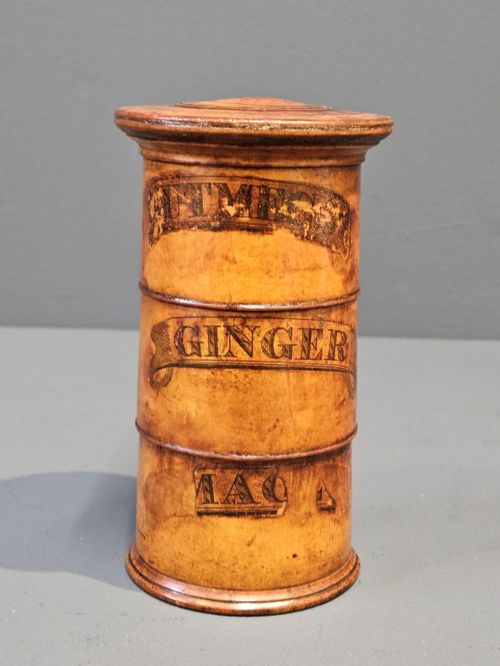
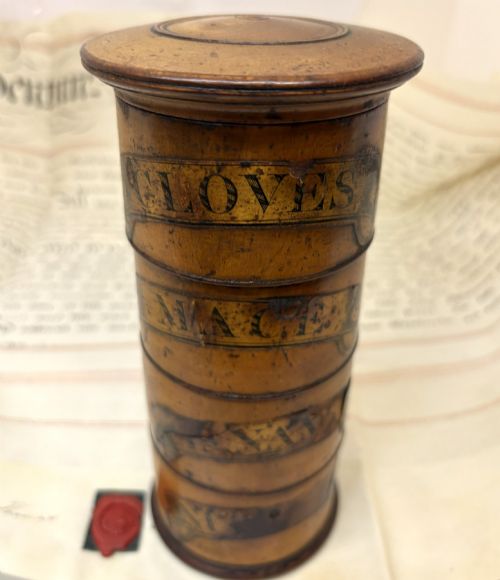
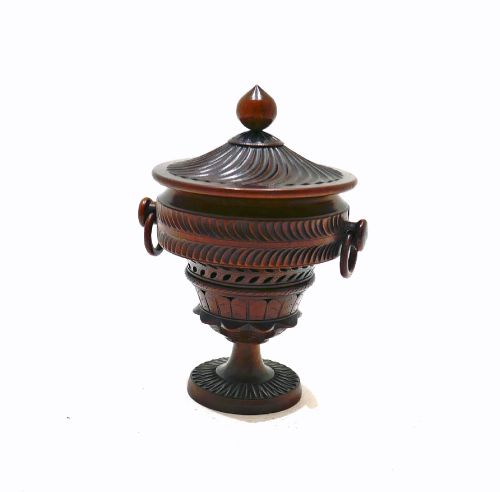
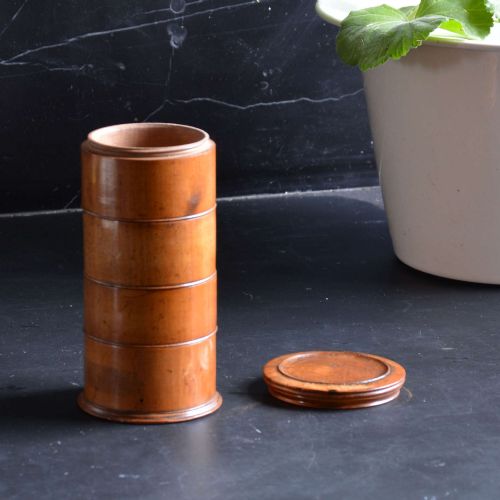
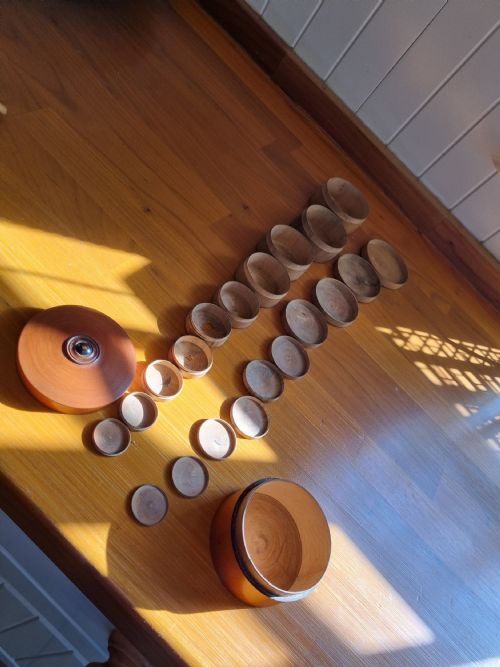
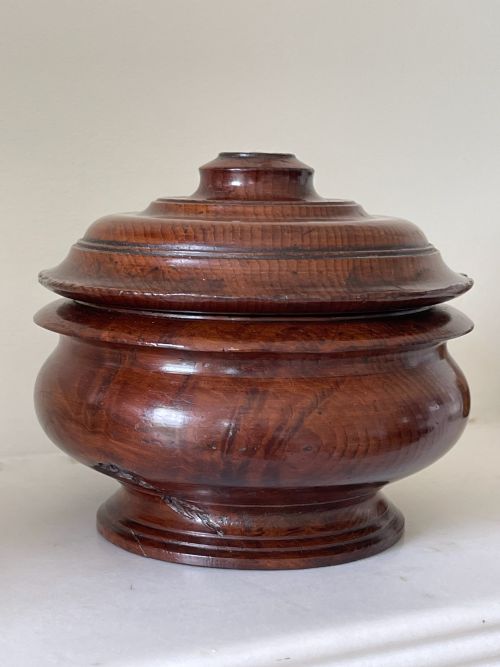
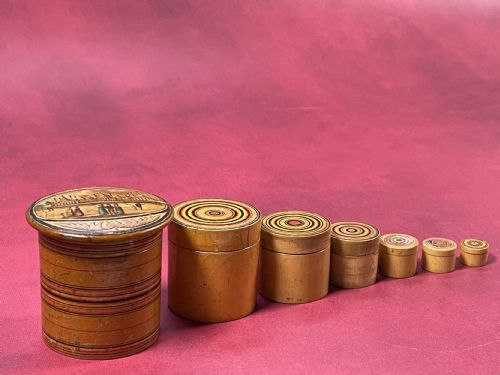
When searching for an antique turned wooden container, you are looking at items shaped on a lathe for domestic, decorative, or storage use. These objects range from multi-tiered spice towers and lidded pomanders to simple jars, barrels, and string holders.
Forms include stacking pots, spill vases, saltboxes, and small circular boxes designed for snuff or spices. Each piece demonstrates the lathe worker's skill in creating practical household objects from dense native timbers.
Materials and lathe techniques
Craftsmen utilised dense, close-grained hardwoods such as boxwood, fruitwood, yew wood, sycamore, oak, and lignum vitae to hold crisp lathe turnings without splitting. These specific timbers allowed for thin walls on vessels like spice towers and smooth, rounded profiles on barrels and jars.
The primary technique involved mounting a green or seasoned block of timber on a pole lathe or foot-powered lathe, then shaping the rotating wood with gouges and chisels. Lids, tiers, and fitted covers were turned to precise tolerances so they sat flush on their corresponding bases.
Assessing quality in turned wood
Quality rests upon the crispness of the lathe work and the selection of the timber. A superior piece displays sharp mouldings, balanced proportions, and tight-fitting lids that have not warped severely over time.
The choice of wood dictates the finish and durability, with highly figured timbers like yew, boxwood, and burr walnut commanding attention for their natural grain patterns. Simpler primitive items rely entirely on robust proportions and honest tool marks rather than decorative flourish.
The Antique Turned Wooden Container Glossary
- Treen
- Small handmade wooden objects of domestic use. This broad category covers everything from utilitarian kitchenware to decorative boxes.
- Spice tower
- A vertical stack of turned wooden compartments fitting one above the other. They were used to store various culinary spices in the kitchen.
- Pomander
- A perforated container used for holding aromatic substances or perfumes. In wood, these feature pierced lids or bodies to release scent.
- String holder
- A hollow turned vessel designed to dispense ball string through a central aperture. They often feature a heavy base to prevent tipping during use.
- Lignum vitae
- A dense, heavy tropical hardwood prized for its oily nature and durability. Makers utilised it for heavy-wear items like string barrels.
Antique Turned Wooden Container: Frequently Asked Questions
What were wooden spice towers used for?
These stacked containers held a selection of costly dried spices close at hand in Georgian and Victorian kitchens. Each tier rotated or lifted off independently to access a different seasoning.
Their compact vertical design saved precious counter space while keeping volatile spice aromatics relatively contained within the fitted wooden layers.
How do I date an old turned box?
Dating relies on combining the timber species, the tool marks left by the lathe, and the overall form. Georgian and early nineteenth-century pieces often display hand-wrought interior hollows and denser native woods like boxwood or fruitwood.
Later Victorian examples sometimes incorporate busier decorative elements or softer secondary timbers. Comparing the wear patterns around the lid seating also helps establish age.
Can I still use these containers today?
Most antique turned vessels serve well for storing dry trinkets, small desk supplies, or modern bits and pieces. Porous old wood is generally unsuitable for holding moist foods or liquids directly.
Placing them away from direct sunlight and heavy radiator heat prevents the timber from drying out, shrinking, or cracking at the joints.
What is the difference between treen and turned wood?
Treen encompasses all small wooden household objects, whether carved, coopered, or turned on a lathe. Turned wood specifically describes items shaped on a lathe, resulting in circular profiles and rotational symmetry.
Every turned wooden container is a piece of treen, but not all treen is lathe-turned.