







Antique Turkmen Kilim Rug
An antique turkmen kilim rug brings flatweave tribal geometry into a modern room, prized for its saturated palette and nomadic history.
Antique Turkmen Kilim Rug
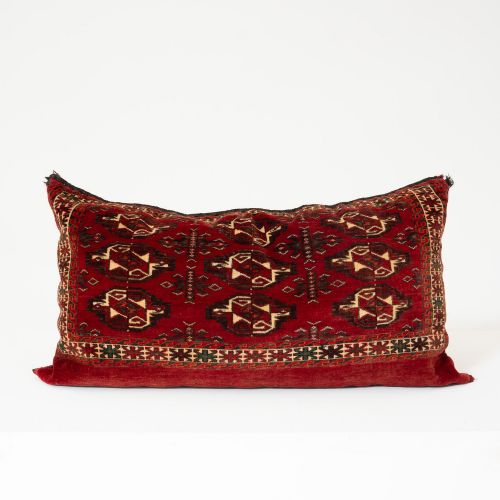
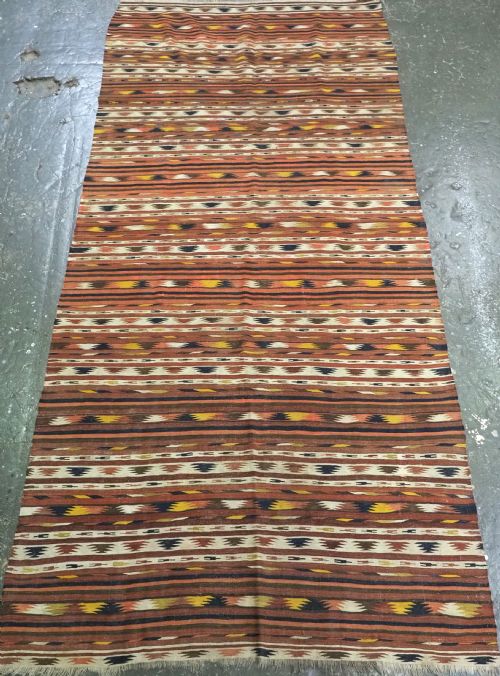
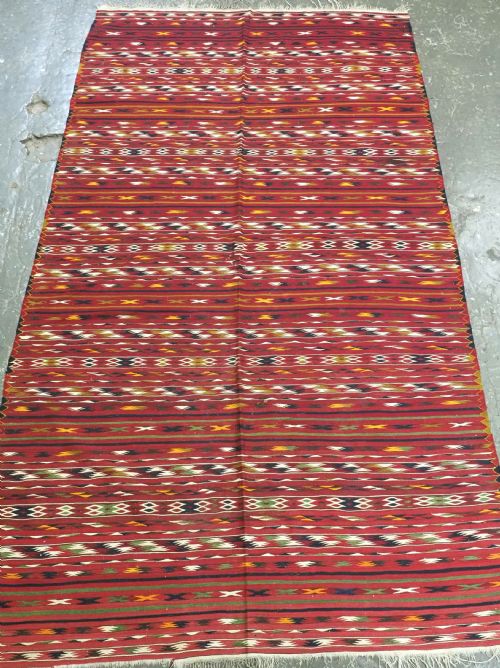
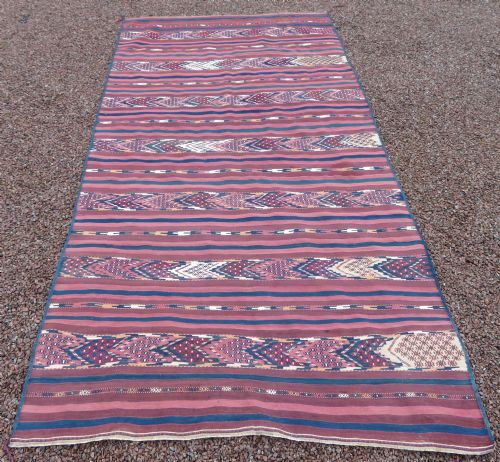
When you search for an antique turkmen kilim rug, you encounter flatwoven textiles produced by nomadic and tribal groups across Central Asia. These pieces span utility items such as tent bands, storage bags, and floor coverings created for daily life within tribal communities. The most frequent examples appearing here are Yomut and Tekke pieces featuring banded flatweave designs and structured geometric motifs.
The format varies from compact chuval cushion faces and long torba fragments to expansive palas kilims complete with original ends. Dating generally ranges from the mid nineteenth century through the early twentieth century, capturing the period before synthetic colourants altered traditional production. Each object reflects the specific visual vocabulary of tribes residing in Turkmenistan and the broader region.
Materials and construction
These textiles rely primarily on hand spun wool dyed with natural substances to achieve deep reds, browns, and contrasting accents. Cotton occasionally appears in foundation structures or supplementary details, adding structural stability to the flatweave fabric.
Weavers utilised intricate flatweave techniques including soumak wrapping, cicim brocade work, and simple slit tapestry weave. The resulting cloths lack a piled surface, presenting instead a smooth, durable structure that served nomadic households on the steppe.
Antique Turkmen Kilim Rug Retail Price Guide 2026
Typical asking prices for turkmen kilim rug among the pieces listed under this phrase on Sellingantiques today, from the lower quarter to the upper quarter. They describe what is for sale here now, not the wider market.
Several nomadic storage bags survive with their original wool backs and swinging tassels still attached, ready for desert transit.
Markers of distinction
The upper tier of these flatweaves is distinguished by exceptionally fine weave density and precise geometric execution. Such pieces demonstrate meticulous control over the flatweave structure, allowing complex diamond patterns and banded layouts to remain sharp and balanced.
Preservation of original structural elements elevates certain examples above standard specimens. The presence of complete long kilim ends, tassels, and original backs indicates an intact survival of objects that typically endured heavy domestic handling in tribal tents.
The Antique Turkmen Kilim Rug Glossary
- Kilim
- A flatwoven textile produced without a pile, created by tightly interweaving warp and weft threads to form geometric patterns. This method produces a thin, durable fabric historically used for floor coverings and tent furnishings.
- Chuval
- A large nomadic storage bag face intended for household possessions within a tent. These pieces often feature compartmentalised guls or banded designs.
- Torba
- A smaller storage bag format utilised by Turkmen tribes, frequently wider than it is tall. They display refined banded flatweave patterns across the face.
- Soumak
- A supplementary weft wrapping technique where coloured threads are wound over and under warp threads. This method creates a textured, durable surface with a braided appearance on the face.
- Palas
- A term describing a utilitarian flatweave textile or rug produced across Central Asian tribal regions. These textiles serve as versatile coverings without pile depth.
Antique Turkmen Kilim Rug: Frequently Asked Questions
What is an antique turkmen kilim rug?
An antique turkmen kilim rug is a flatwoven textile created by nomadic tribes in Central Asia during the nineteenth or early twentieth centuries. These pieces utilise wool and natural dyes to form geometric patterns designed for domestic utility.
Unlike piled carpets, these flatweaves lack knotting, relying instead on structural interweavings such as slit tapestry and soumak work. They represent the daily artistic output of distinct tribal groups including the Yomut, Tekke, and Ersari.
How were these rugs used originally?
Nomadic communities utilised these textiles as floor coverings, animal trappings, and functional storage containers inside tents. Items like torbas and chuvals held household goods, while palas kilims covered living spaces.
Due to their portable and durable nature, these flatweaves were integral to nomadic existence, serving both decorative and highly practical roles on the Central Asian steppe.
How do I style a flatweave in a modern home?
These textiles function well as floor rugs in low traffic areas, wall hangings, or surface covers on furniture. Their geometric patterns and rich natural wool tones complement both minimalist and traditional interiors.
Because they lie flat without a heavy pile, they slip easily beneath furniture or mount securely onto walls as textile art without overwhelming a room.
How can I tell different tribal groups apart?
Tribal attribution relies on observing specific colour palettes, geometric motifs, and weaving structures unique to each group. Yomut pieces often display distinct banded flatweave designs and diamond patterns.
Tekke and Ersari flatweaves employ their own characteristic layout arrangements and secondary ornamentation, reflecting distinct regional traditions within Turkmenistan.