


Antique Turkish Mat
When you search for an antique turkish mat, you are looking at hand-woven pile floor coverings from Anatolia and the wider Ottoman world.
Antique Turkish Mat
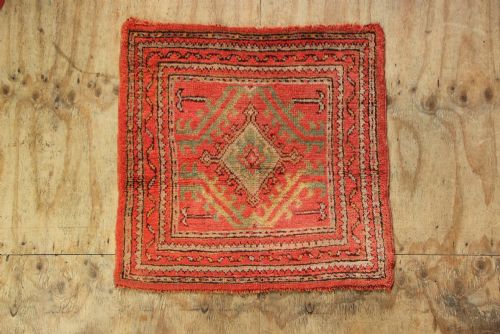
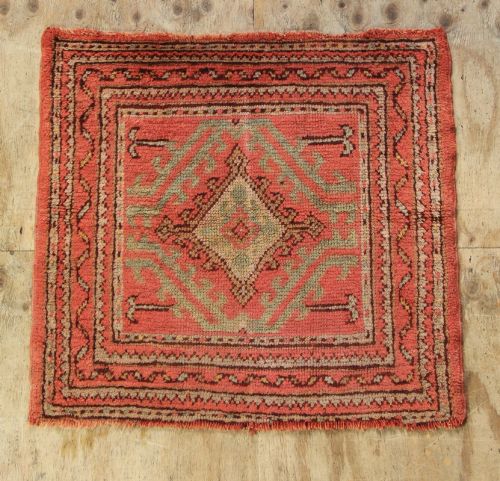
An antique turkish mat encompasses regional village and town weaving traditions from across Anatolia, frequently encountered as smaller format floor coverings, area rugs, and specific prayer formats. The pieces on this page span from the eighteenth century through the early twentieth century, taking in formats like the small square, the accent rug, and the compact village mat.
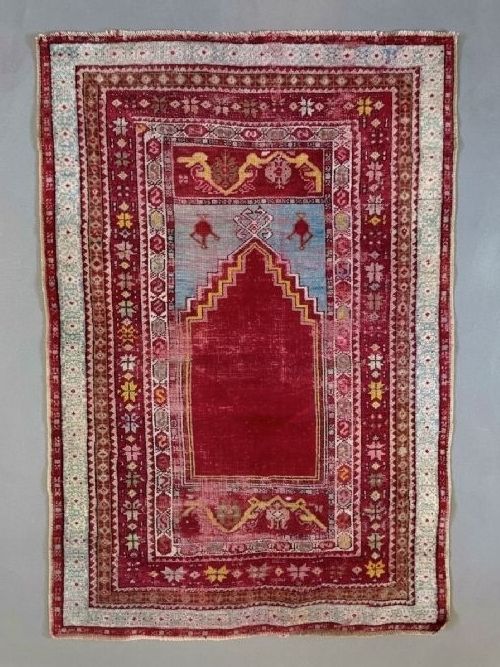
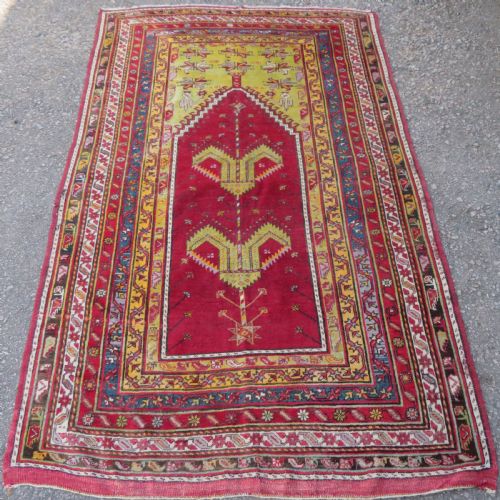
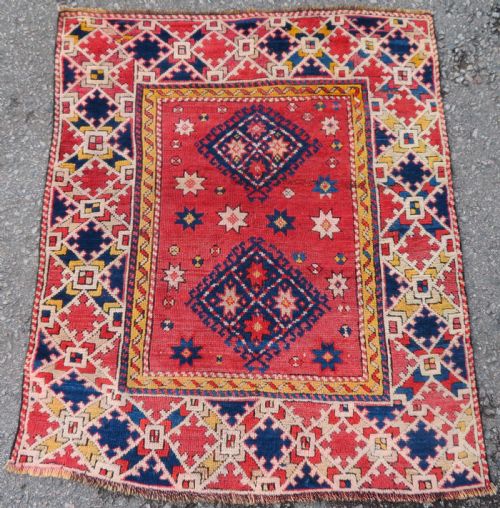
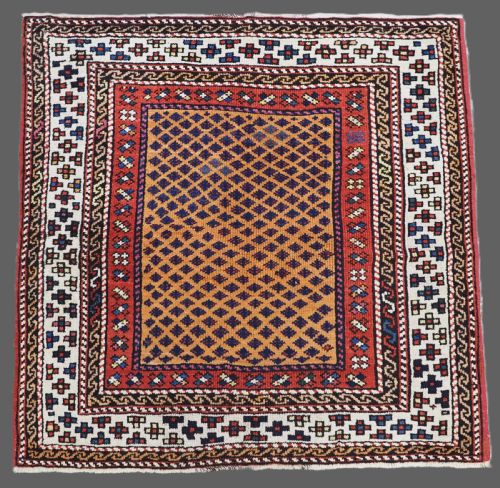
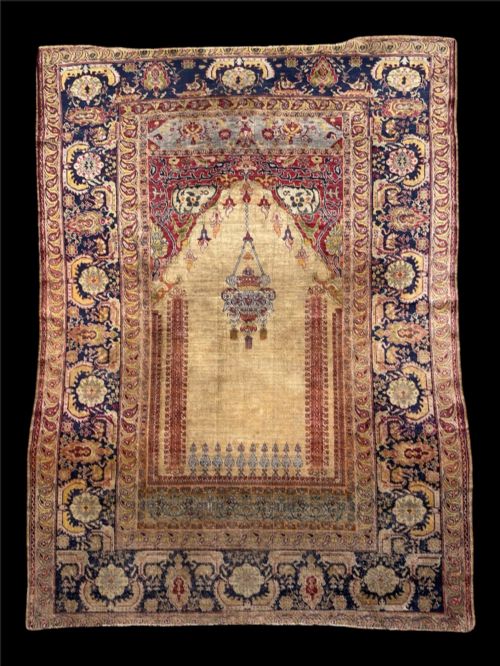
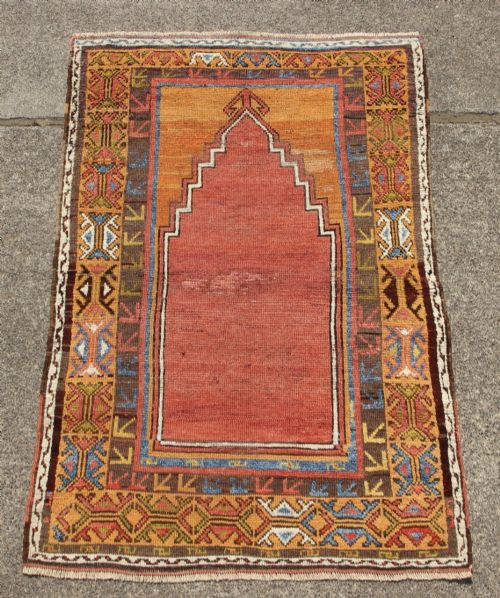
Many examples are traditional prayer rugs defined by architectural mihrab niches, while others display medallions, lattice motifs, and star borders associated with specific weaving centres. These textiles served functional roles within Ottoman homes and village spaces, carrying designs passed down through generations of weavers.
Origins stretch across distinct Anatolian locations such as Konya, Bergama, Kirsehir, Oushak, Ghiordes, Ladik, and Milas. Each production area developed characteristic palette combinations and structural traits that distinguish village weaving from city workshop output.
How they were made
Weavers constructed these textiles predominantly using wool and hand-spun wool pile on cotton or wool foundations, alongside occasional examples executed in silk. The yarn was dyed using natural dyes and vegetable dye sources, yielding rich patination and varied tonal depths over decades of use.
The rugs are hand-woven, incorporating specific knotting techniques native to Anatolian workshops and nomadic or village households. This manual fabrication method results in dense pile structures capable of withstanding heavy daily wear.
What varies in quality
Quality in an antique turkish mat is determined by the purity and saturation of the natural dyes, alongside the fineness and consistency of the hand-spun wool. Superior examples exhibit vibrant yet harmonious vegetable dye colours that have mellowed gracefully over time.
Structural integrity, knot density, and the precision of the tribal or regional design execution also separate standard village pieces from finer workshop or master-weaver productions. The clarity of geometric or floral motifs within the field and borders indicates the skill of the original maker.
Kirsehir·Bergama·Oushak·Ghiordes·Konya·Ladik·Milas·Mudjur
The Antique Turkish Mat Glossary
- Mihrab
- The arched niche design found on prayer rugs, symbolising a gateway or prayer focal point. It typically points toward Mecca in Islamic tradition.
- Natural Dyes
- Colourants derived from plants, insects, and minerals used before the introduction of synthetic aniline dyes. They produce complex, shifting tones that age with distinct character.
- Yastic
- A small rectangular format originating in Anatolia, traditionally utilised as a cushion face or small bolster rug. These pieces share the palette and knotting of larger regional carpets.
- Medallion
- A central ornamental design motif placed in the middle of the carpet field. It often anchors the surrounding geometry and secondary borders.
Antique Turkish Mat: Frequently Asked Questions
How do I identify a prayer rug?
Prayer rugs are typically distinguished by a prominent arched mihrab motif at one end, designed to direct the placement of the rug during daily devotions. They often feature compact dimensions suited for individual use.
These formats frequently incorporate spandrels and columns within the field, reflecting the architecture of mosques translated into textile form.
Where were these rugs made?
The pieces originate primarily from Anatolia, encompassing various towns, villages, and nomadic regions across modern-day Turkey. Major production centres include Konya, Bergama, Oushak, and Kirsehir.
Each region developed distinct design vocabularies, border arrangements, and colour palettes associated with local weaving families and guilds.
What materials were used?
Most examples utilise hand-spun wool for the pile, set upon foundational warps and wefts of wool or cotton. Certain finer town rugs are woven entirely in silk.
The colouring agents rely on natural dyes and vegetable dye extracts, which account for the nuanced fading and organic variations seen across the surface.
How should I care for an antique mat?
Protect the textile by placing a quality non-slip underlay beneath it to prevent shifting and reduce friction against the floor. Vacuum gently with low suction, avoiding the fringe areas to prevent unravelling.
Keep the piece out of direct, continuous sunlight to preserve the natural vegetable dyes and prevent uneven fading over the years.