




Antique Trunk Wall Clock
An antique trunk wall clock brings precision timekeeping and rich timber grain to domestic interiors.

Antique Trunk Wall Clock
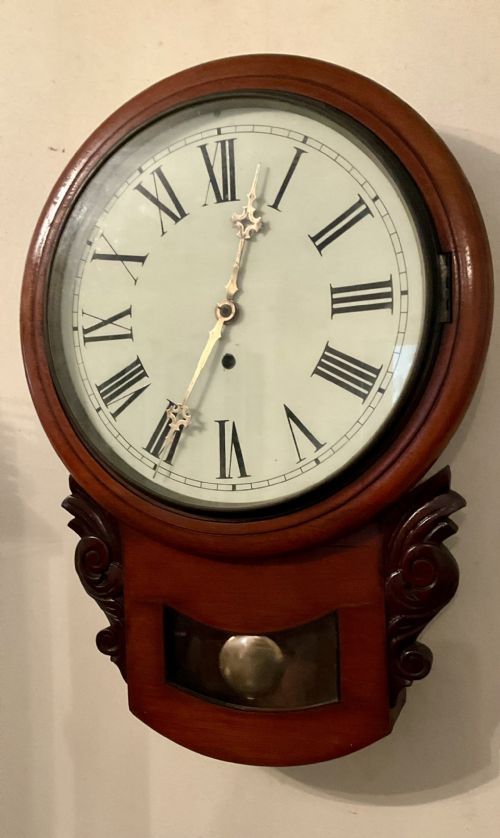
An antique trunk wall clock is a timekeeper designed to mount directly onto a wall, most commonly taking the form of a drop-dial clock with a short wooden case beneath the face. These pieces originate across the nineteenth and twentieth centuries, spanning Victorian, Regency and Georgian periods.
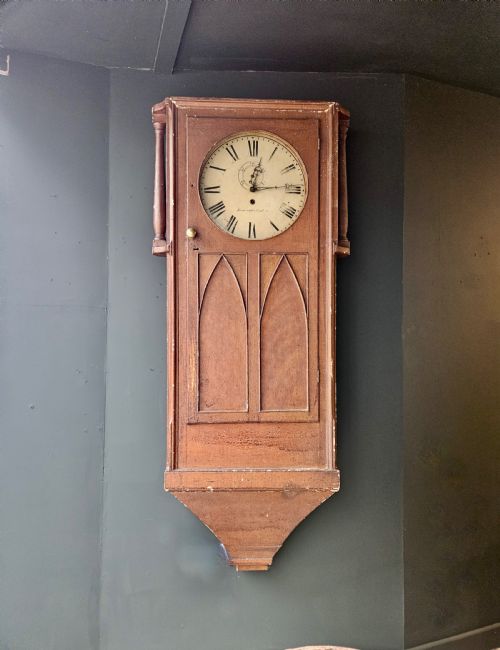
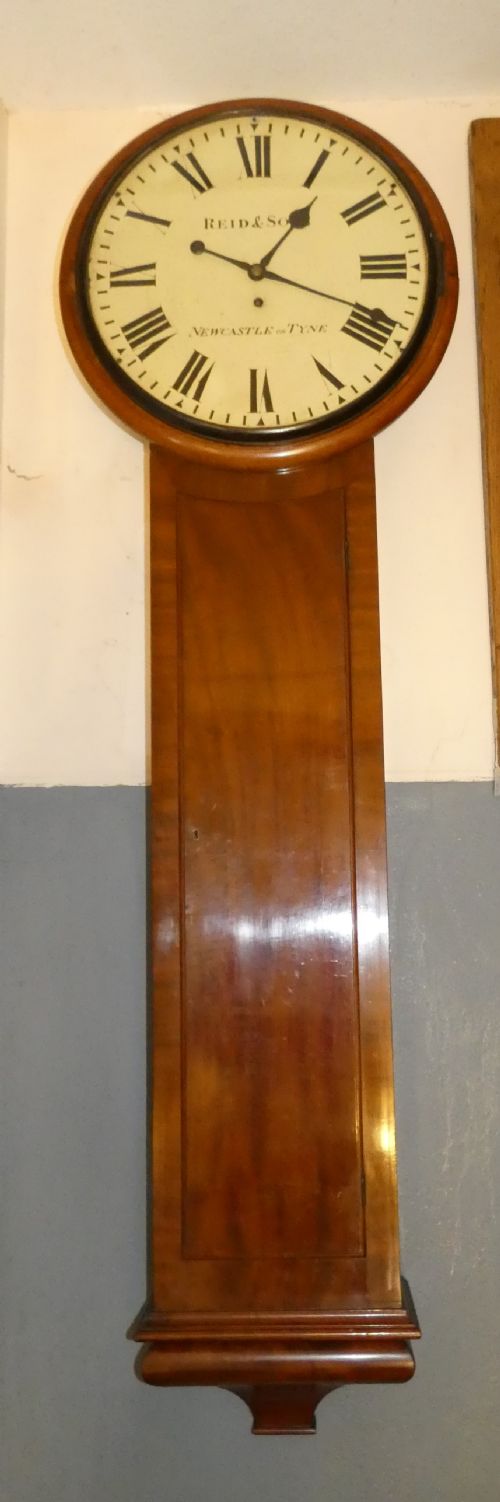
The version most frequently encountered on this page is the mahogany or rosewood drop-dial wall clock, often housing a fusee movement inside a trunk case. Variations also include tavern clocks, Vienna wall clocks, and regulator wall clocks featuring glass-fronted cases.
Originating from English and continental workshops alike, these timepieces served practical roles in public houses, offices and domestic halls. Their distinct trunk format protects the pendulum and weights while presenting a clear dial to the room.
Materials and construction
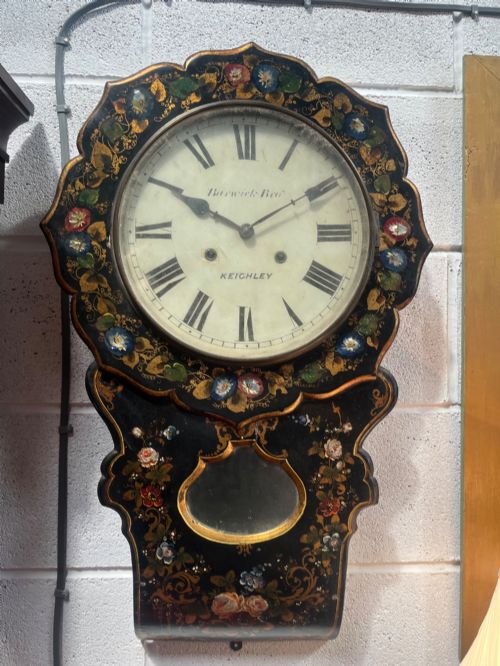
Cabinetmakers constructed the cases of these wall clocks using dense hardwoods such as mahogany, rosewood and walnut, sometimes incorporating mother of pearl inlay or painted decoration on the timber. Pine and oak appear primarily in regional tavern clocks and utilitarian pieces.
The mechanical heart relies on brass gear trains, often driven by a single or double fusee movement that maintains even tension as the mainspring unwinds. Dials are fashioned from wood, painted metal, or enamel, protected behind glazed brass bezels.
Antique Trunk Wall Clock Retail Price Guide 2026
Typical asking prices for trunk wall clock among the pieces listed under this phrase on Sellingantiques today, from the lower quarter to the upper quarter. They describe what is for sale here now, not the wider market.
Several clocks carry the names of provincial makers in Bristol and Bridgwater who timed the daily business of bustling market towns.
Distinctions in quality
The standard of a movement defines its standing, where twin fusee setups or bell-striking mechanisms demonstrate superior clockmaking compared to standard timepieces. Signed dials bearing the names of notable London or provincial makers indicate higher workshop status.
Cabinetwork separates ordinary examples from exceptional ones through crisp carving, well-figured timber veneers, and original painted decoration on wooden dials. The integrity of the case and the retention of original components dictate the piece's historical weight.
Halliday & Rich·John Walker·R. Roberts·John Thwaites·J.W. Enock·C. Coleman·Mark Bartley
The Antique Trunk Wall Clock Glossary
- Drop-dial
- A wall clock featuring a circular face at the top with an extended wooden trunk case hanging below. This configuration houses the pendulum and allows for weight-driven or spring-driven movements.
- Fusee
- A conical pulley connected to the mainspring by a cord or chain, designed to equalise the torque as the spring unwinds. This mechanism improves timekeeping consistency throughout the winding cycle.
- Tavern clock
- A large, pendulum-driven wall clock with a prominent round dial and a long trunk, historically hung in public spaces. These clocks often feature plain wood or original paint.
- Regulator
- A precision wall clock built for exceptional accuracy, typically housed in a long glass-fronted case to observe the pendulum and weights. These movements often include seconds sub-dials.
- Bezel
- The brass or metal ring that holds the glass protecting the clock face. It usually hinges open to allow hand-setting and winding.
Antique Trunk Wall Clock: Frequently Asked Questions
How do fusee movements work?
A fusee movement uses a conical pulley attached to the mainspring barrel via a chain or gut line. As the spring loses tension, the chain moves to a wider part of the cone to maintain steady power.
This clever mechanical device ensures the clock maintains consistent timekeeping accuracy from a full wind down to the final hours before rewinding.
Where were wall clocks hung?
These clocks hung in domestic hallways, commercial offices, railway stations, and public taverns where clear time visibility was essential. Their wall-mounted design saved valuable floor space in busy rooms.
Domestic models typically graced living spaces and stairwells, while larger regulator and tavern variants served public and institutional buildings.
How do I date an antique wall clock?
Dating relies on examining the case style, timber choice, dial materials, and signature engravings on the movement backplate. Regency and Georgian examples often feature wooden dials and robust fusee movements.
Later Victorian and Edwardian pieces frequently incorporate mahogany veneers, brass bezels, and more standardised dial treatments. Maker signatures help narrow down the active workshop decades.
What is a drop dial clock?
A drop dial clock combines a prominent circular face at the top with a shorter trunk case hanging underneath. This shape accommodates the swing of the pendulum while keeping the overall depth compact against the wall.
Cabinetmakers utilised mahogany, rosewood and walnut for these cases, often adding side access doors for easy movement maintenance.