


Antique Tripod Lectern
An antique tripod lectern is a sturdy, adjustable stand designed for reading and music, bringing classic form and utility to any room.
Antique Tripod Lectern
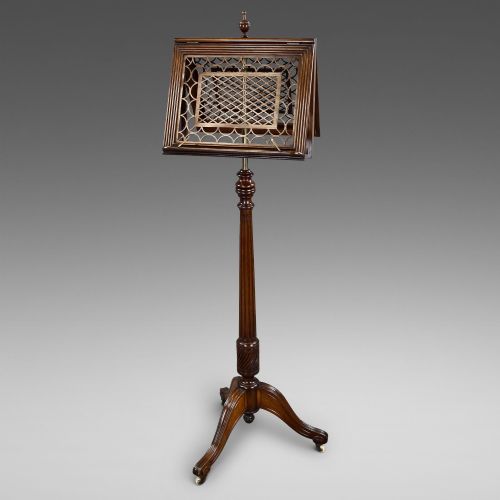
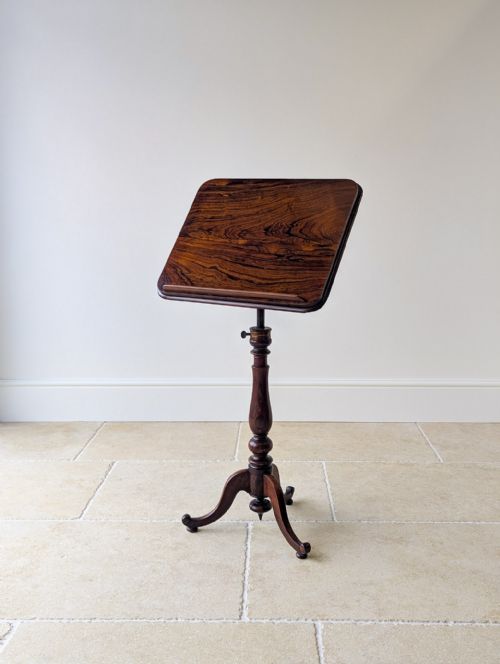
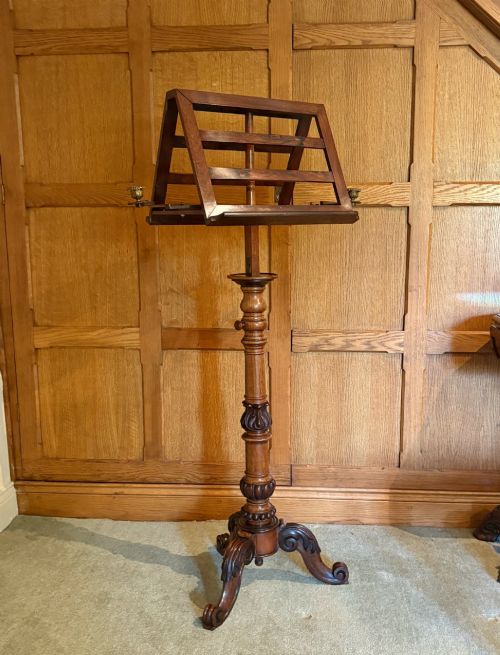
An antique tripod lectern combines a supporting pillar and three-footed base with an adjustable platform for books or sheet music. Buyers searching for an antique tripod lectern encounter various forms, including music stands, reading tables, and duet stands.
The pieces on this page span several periods, with Victorian examples and mahogany reading tables appearing frequently alongside Regency and William IV pieces. Many designs serve a dual purpose as occasional tables or adjustable stands.
Origins stretch from the Georgian era through the 19th century into the early 20th century. Oak, walnut, rosewood, and mahogany provide the primary structures for these functional pieces.
How they were made
Cabinet makers constructed these pieces primarily from solid timbers like mahogany, walnut, oak, and rosewood, occasionally incorporating burr walnut, satinwood inlay, and ebonising. Turning, carving, and fretting shaped the pillars, legs, and reading surfaces.
Mechanisms for adjustment allowed users to alter the height and angle of the desk or music stand. Brass fittings often secured these adjustable elements, while tripod bases provided stability.
Carved wooden eagle lecterns provide an avian perch for your reading material.
What varies in quality
The choice of timber and the complexity of the grain determine much of the visual appeal, particularly in figured mahogany, rosewood, and burr walnut examples. Inlay work and carved details require skilful execution to elevate a piece from plain utility.
The precision and smoothness of the adjustment mechanisms separate standard production from finer workshop output. Robust tripod construction and thoughtful proportions ensure the stand remains stable at various heights.
GILLOWS
The Antique Tripod Lectern Glossary
- Tripod base
- A three-legged support structure designed to keep the central pillar and reading platform steady.
- Duet stand
- A wider music stand designed to accommodate two musicians reading sheet music simultaneously.
- Gonçalo Alves
- A dense, exotic tropical hardwood with distinctive figuring, sometimes utilised for nineteenth-century furniture.
- Fretting
- Ornamental openwork carved or pierced through wood to create decorative patterns on panels or music racks.
Antique Tripod Lectern: Frequently Asked Questions
How do I adjust the height?
Most period stands utilise a sliding central wooden shaft secured by a brass thumbscrew, pin, or clutch mechanism. Loosening this fixture allows the user to raise or lower the desk to the desired level.
Care should be taken when adjusting older mechanisms to avoid straining the wood or damaging the internal sliding surfaces.
Can these hold heavy books?
Sturdier examples made from dense timbers like oak or mahogany easily support heavy volumes, dictionaries, or ledgers. The stability largely depends on the width of the tripod base and the condition of the central column.
Lighter music stands with delicate fretted racks suit sheet music or smaller books better than massive reference tomes.
Where should I place one?
These stands fit well beside armchairs, in home libraries, or as feature pieces in corners holding open art books. Because many double as reading tables or occasional tables, they function effectively beside seating areas.
Keeping them away from direct heat sources prevents the timber from drying out and protects any inlaid surfaces.