



Antique Tribal Saddle Rug
An antique tribal saddle rug brings the nomadic artistry of Persian, Caucasian, and Central Asian weavers directly into a modern interior.
Antique Tribal Saddle Rug
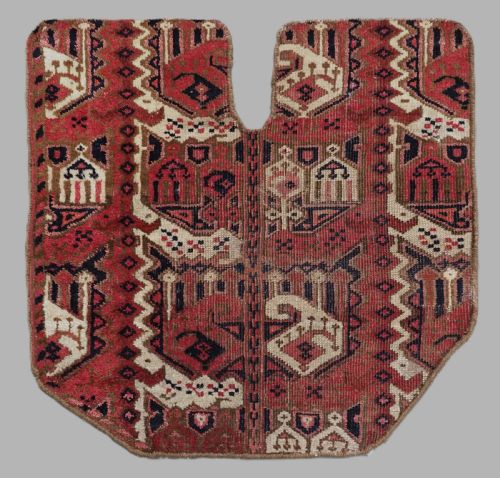
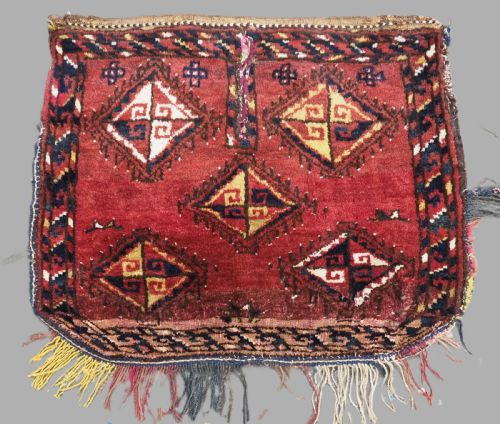
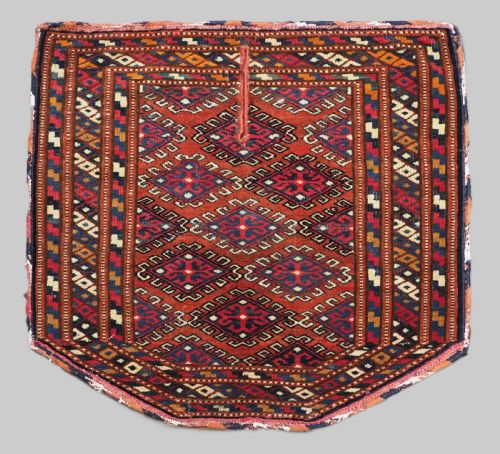
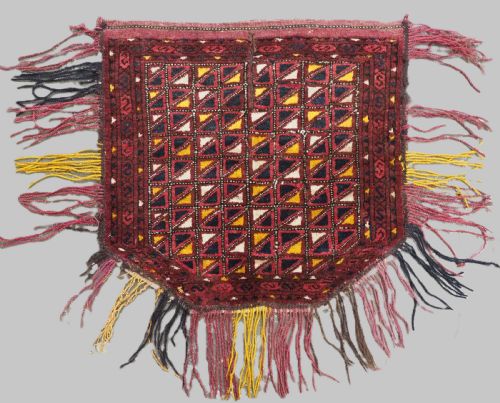
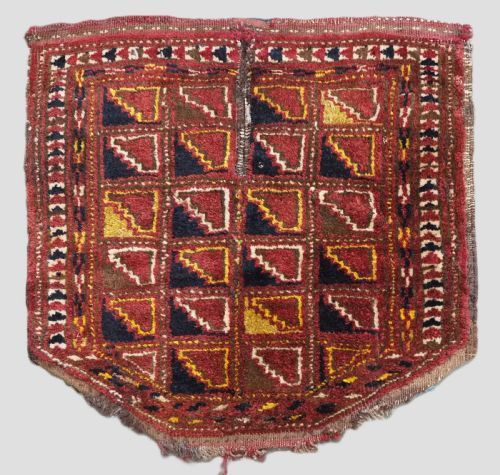
An antique tribal saddle rug encompasses functional equestrian trappings, utility bags, and animal covers created by nomadic and village weavers across Persia, Anatolia, the Caucasus, and Central Asia during the nineteenth and early twentieth centuries. These textiles served practical purposes for transport and camp storage before evolving into distinct collector items prized for their tribal iconography.
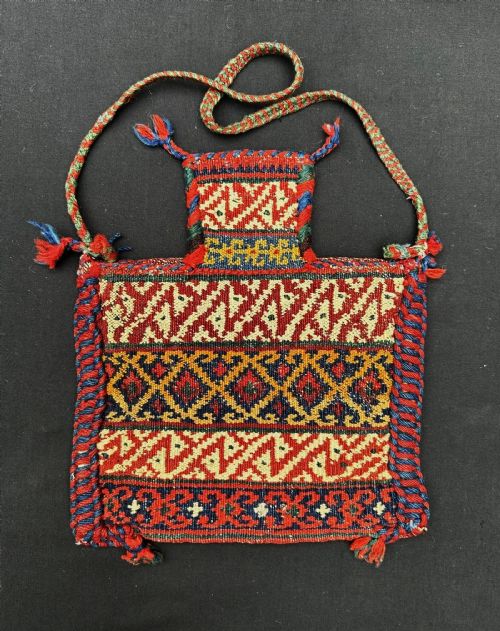
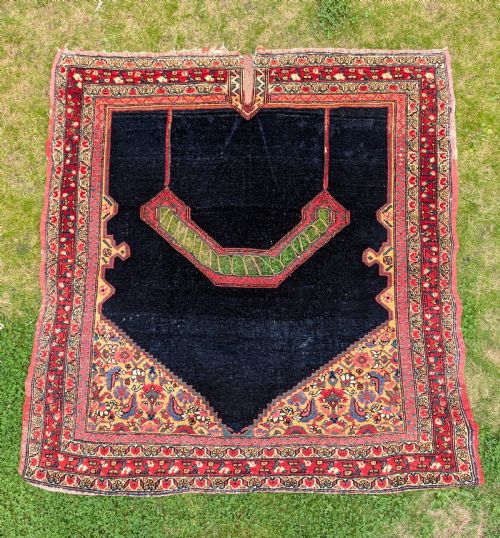
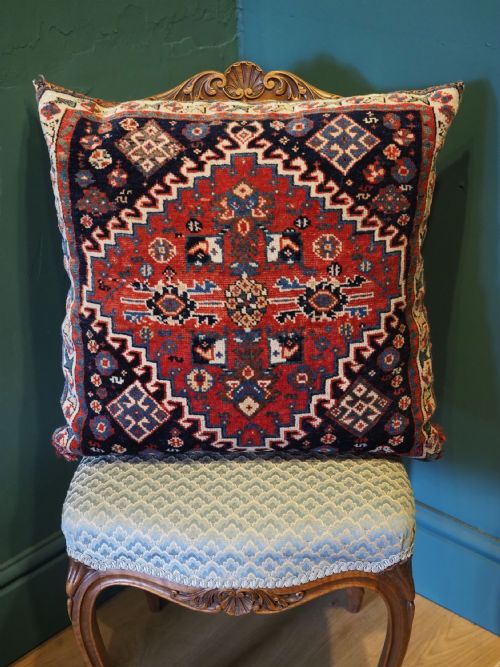
Buyers browsing this selection encounter various specific formats, including complete double saddlebags known as khorjin, single bag faces, ceremonial horse covers, and specialised saddle rugs. Pieces originating from Turkmen groups, Qashqa'i confederations, Afshar nomads, and Uzbek Lakai tribes dominate the available offerings from this era.
How They Were Made
Weavers constructed these pieces predominantly using hand-spun wool for the pile and foundation, occasionally incorporating cotton, silk, metal thread, and leather elements for structural reinforcement or decorative contrast. Natural dyes provided the saturated palette, yielding deep madder reds, indigos, and earth tones that developed rich patinas over decades of use.
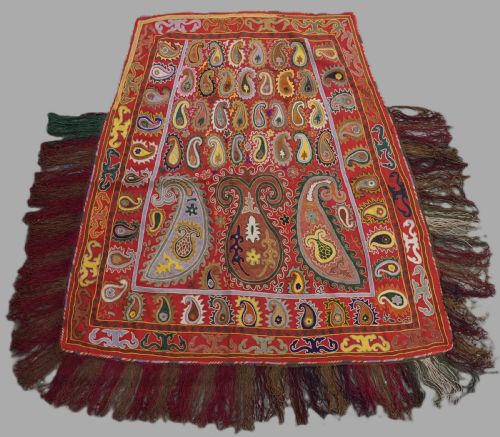
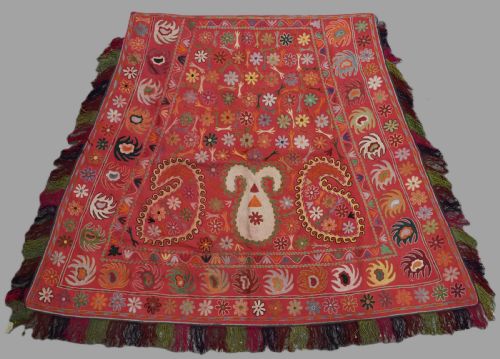
Techniques varied between piled weaving and flat-woven structures such as soumac, brocade, and embroidery. Lakai examples utilise dense silk and wool embroidery on fabric grounds, while Turkmen, Persian, and Caucasian pieces rely on precise knotting and supplementary weft-wrapping.
Many surviving saddle bags bear the marks of brisk camel travel, retaining tiny wool tassels meant to ward off the evil eye.
What Varies in Quality
Quality in these nomadic textiles rests primarily on the integrity and handle of the wool, where high lanolin content produces a lustrous, resilient pile that responds well to natural ageing. Finer knot density and precise execution of traditional geometric or pictorial motifs separate standard utility pieces from exceptional tribal examples.
The survival of original elements such as flat-weave plain backs, closing mechanisms, tassels, and complete side pairings heavily influences the desirability of a saddle bag or cover. Cohesion in the natural dye palette and clarity of drawing across the field further distinguish superior nomadic work.
The Antique Tribal Saddle Rug Glossary
- Khorjin
- A traditional double saddlebag woven by nomadic groups for carrying possessions on horseback. These pieces feature two pockets joined by a central web, often surviving today as separated bag faces.
- Gul
- A repeating octagonal or medallion-like motif found extensively in Turkmen tribal weaving. Each distinct design often identifies the specific clan or subtribe that produced the textile.
- Soumac
- A flat-weave technique involving wrapping weft threads over the warp threads in a herringbone pattern. This method creates a sturdy, textured surface without a cut pile.
- Boteh
- An ancient almond-shaped or paisley motif representing a floral shoot or cypress tree. Weavers across Persia and the Caucasus adapted this symbol in various stylized forms.
- Pile
- The vertical or diagonal loops of yarn that form the soft surface of a rug. In antique nomadic weaving, the staple length and spinning method of this wool dictate how the surface catches the light.
Antique Tribal Saddle Rug: Frequently Asked Questions
How were these bags used originally?
Nomadic groups utilised these textiles draped over pack animals to store household goods, clothing, and provisions during seasonal migrations.
Complete double bags hung across the animal's flanks, while specialised covers and rugs provided comfort and ceremonial display during tribal gatherings.
How do I style a saddle rug at home?
These smaller formats adapt easily to modern interiors as compact wall hangings, table runners, or accent pieces on benches and chairs.
Their rich natural dyes and geometric patterns complement both contemporary minimalist spaces and traditional rustic décors.
How can I tell different tribal designs apart?
Tribal attribution relies on recognising specific structural traits, palette choices, and signature motifs unique to each weaving group.
For instance, Turkmen pieces often display repeated guls in deep reds, while Shahsavan and Afshar works frequently incorporate intricate field geometry or distinct boteh arrangements.