



Antique Turkmenistan Weaving
These antique turkmenistan weaving pieces bring bold nomadic geometry and rich natural tones straight from the Central Asian steppes into modern interiors.
Antique Turkmenistan Weaving
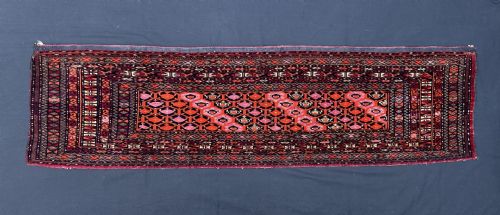
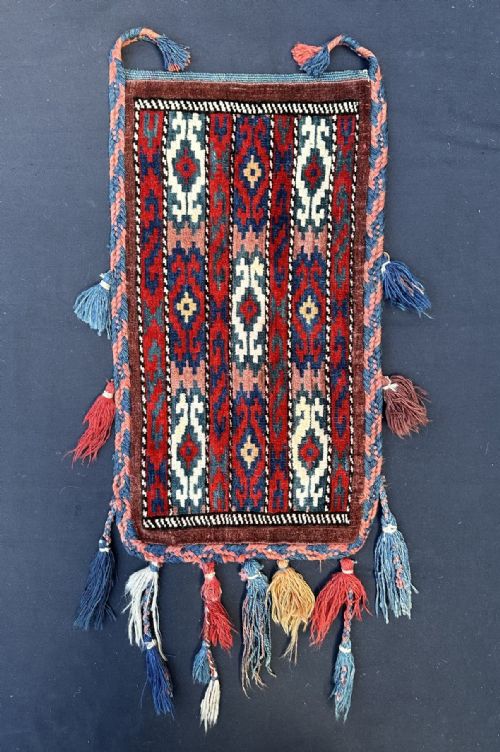
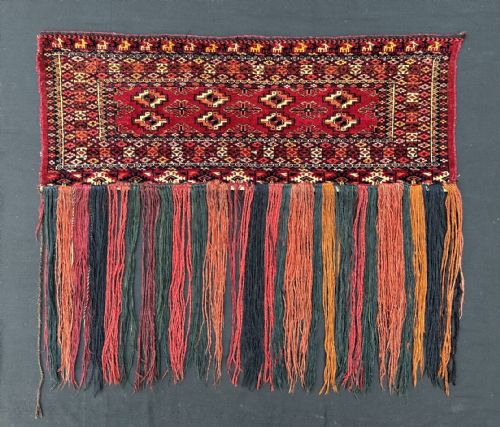
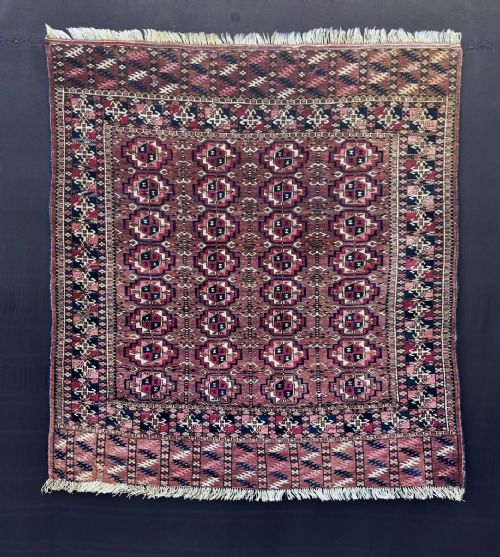
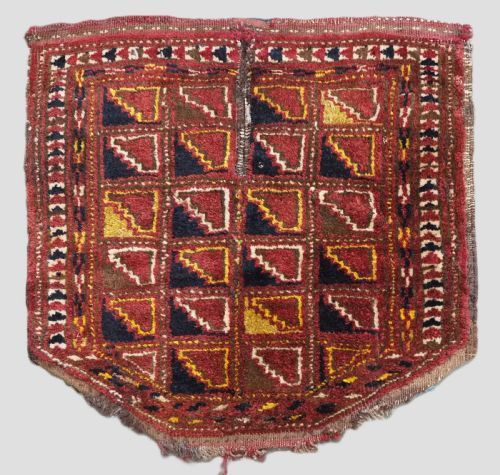
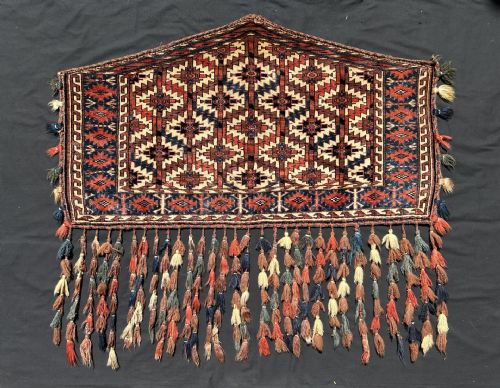
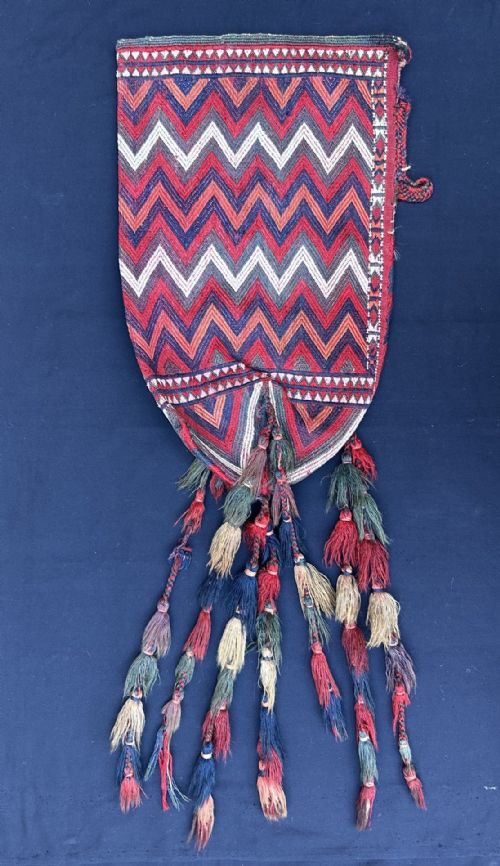
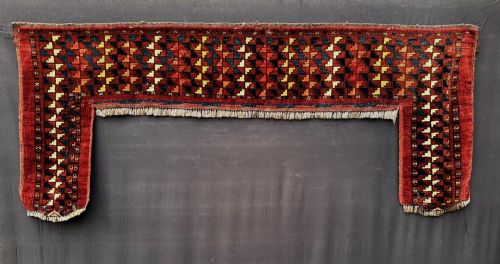
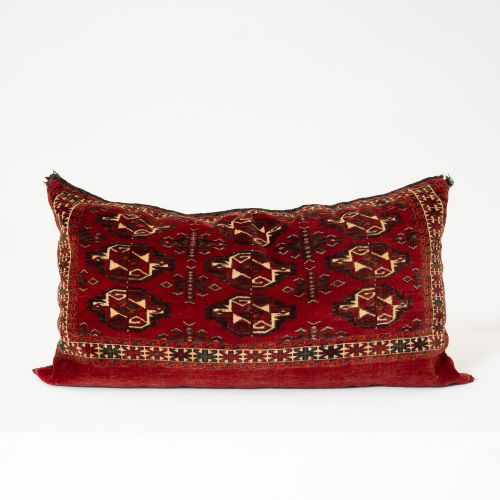
When you search for antique turkmenistan weaving, you encounter tribal artefacts created by nomadic groups such as the Yomut, Tekke, Ersari, and Sariq tribes across the Central Asian steppes and oases. The selection on this page centres on functional household and ceremonial items ranging from small storage bags and tent bands to large wedding camel trappings and rugs.
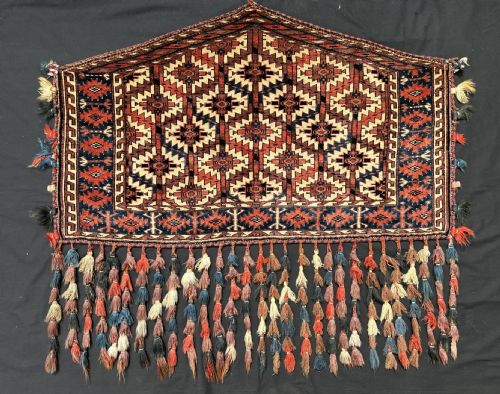
You meet specific forms like the asmalyk, kap, torba, and chuval, which served distinct roles within tribal life, often tied to marriage customs or nomad tent architecture. These textiles date from the eighteenth century through to the early twentieth century, reflecting traditional tribal patterns passed down through generations.
Materials and construction
Makers utilised hand-spun wool and natural dyes to produce durable textiles that retained their structural integrity and visual depth over decades of nomadic use. Cotton and linen also appear in the construction, supporting foundation weaves and subsidiary details.
Weavers employed specialised techniques including flat weave palas kilim structures, soumak wrapping, and cicim work alongside pile knots to construct robust storage bags, tent furnishings, and horse trappings.
The listings span from the eighteenth century to the early twentieth century, incorporating wool, cotton, and linen materials.
Assessing quality
Quality rests on the precision of the tribal motifs, the saturation of the natural dyes, and the fineness of the wool preparation. Pieces with tight, even knotting or crisp flat-weave structures display greater technical mastery by the weaver.
The preservation of original backs, tassels, and complete borders distinguishes superior examples from fragments or heavily restored pieces, altering the historical integrity of the textile.
The Antique Turkmenistan Weaving Glossary
- Asmalyk
- A large pentagonal trapping used on the flanks of a bride's wedding camel during tribal processions. These pieces display intricate regional motifs.
- Chuval
- A large tent storage bag utilised by nomadic families for domestic goods and bedding. They often feature multiple rows of guls.
- Ensi
- A tribal door hanging placed at the entrance of a felt yurt. These textiles typically feature a Candelabra design dividing the field into four quarters.
- Torba
- A smaller wall-hanging storage bag placed inside the nomadic tent. Collectors prize these for their compact and balanced tribal compositions.
- Soumak
- A flat-weave technique where coloured weft threads wrap around the warp threads in a continuous brocade-like manner. This method creates a sturdy textile with a textured surface.
Antique Turkmenistan Weaving: Frequently Asked Questions
What is an antique turkmenistan weaving?
These pieces are handmade tribal textiles originating from nomadic and settled groups in Central Asia, including the Yomut, Tekke, and Ersari tribes.
They encompass utilitarian and ceremonial items such as storage bags, tent door hangings, and camel trappings created from wool using natural dyes.
How were these bags used originally?
Nomadic families utilised items like chuvals and torbas inside felt tents for storing household possessions, clothing, and blankets off the ground.
Other specialised items served as ceremonial trappings during tribal weddings, decorating the animals and the interior of the dwelling.
How do I live with a tribal textile?
Smaller pieces such as torbas, kap, and spindle-bags work well mounted on walls as textile art or displayed flat on tables and benches.
Larger rugs, asmalyks, and tent bands can be placed in low-traffic areas of a home to protect the wool pile and flat-weave structures from excessive wear.
How do I identify different tribal groups?
Tribes are distinguished through characteristic palette choices, distinct secondary motifs, and specific structural forms like the Yomut asmalyk or Tekke ensi.
Examining the weave type, wool quality, and regional design traditions helps attribute pieces to makers such as the Ersari or Sariq.