

Antique Tribal Rug Panel
When you search for an antique tribal rug panel, you are looking at fragments of nomadic and village textile heritage intended for daily utility or ceremonial display.
Antique Tribal Rug Panel
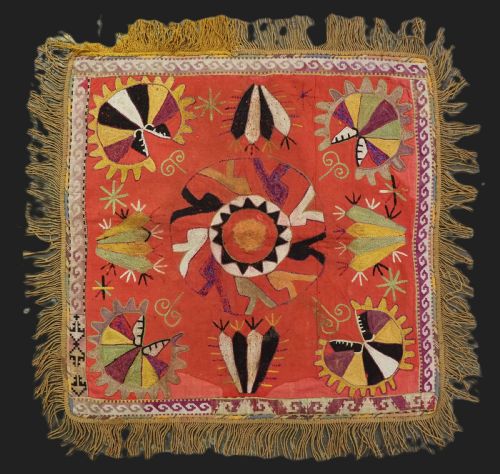
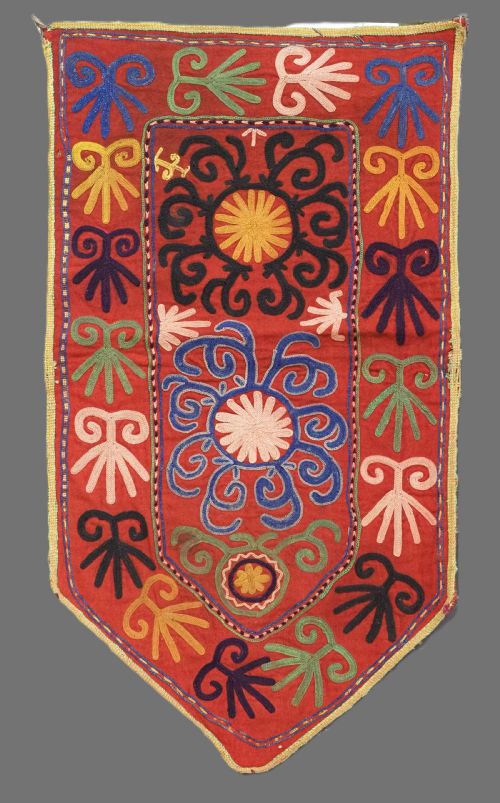
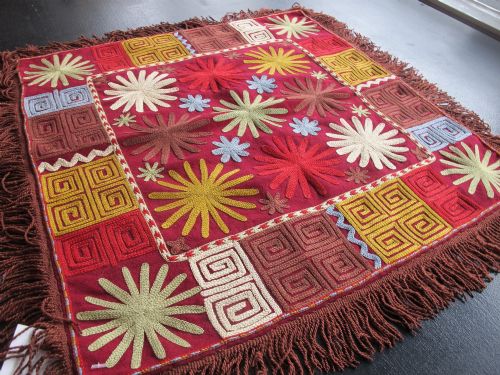
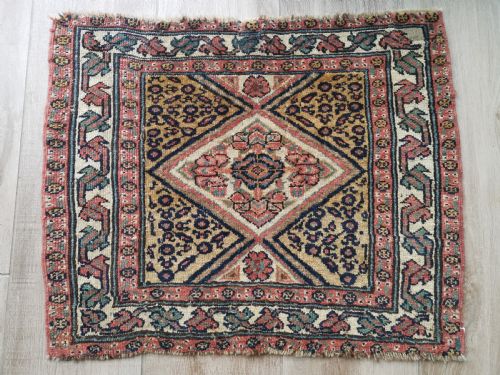
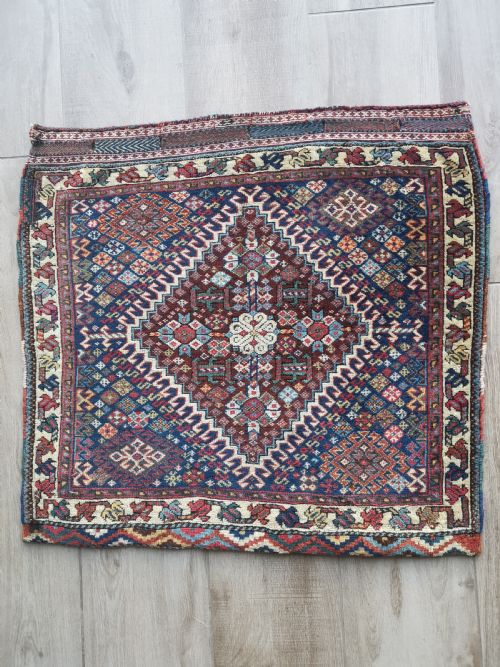
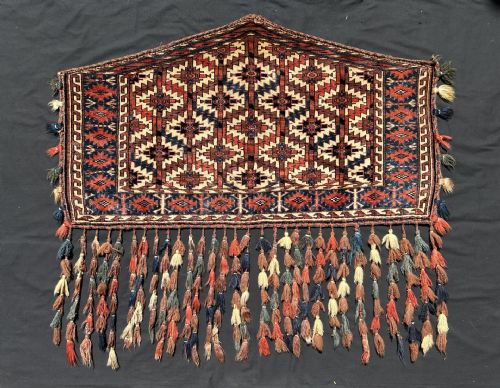
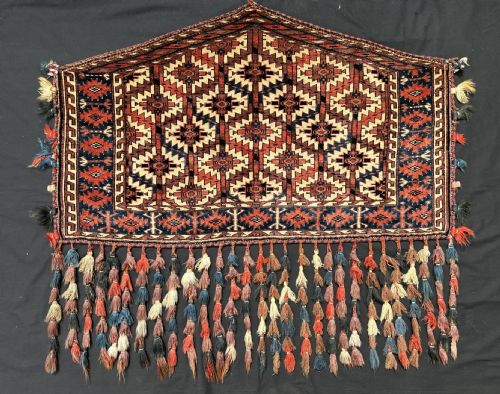
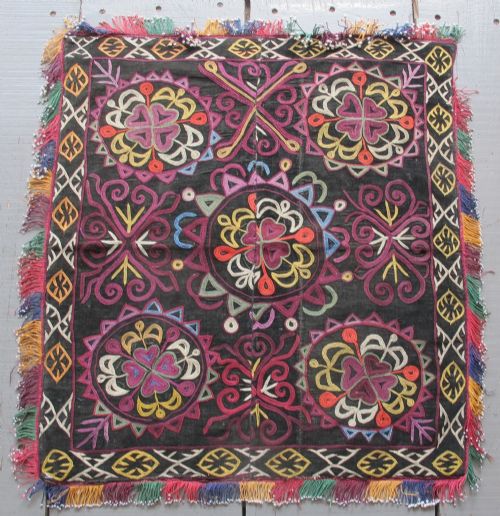
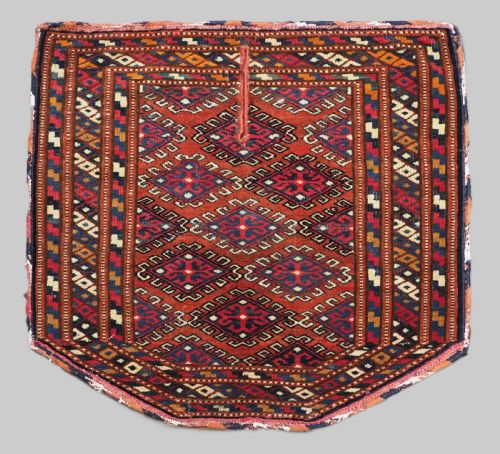
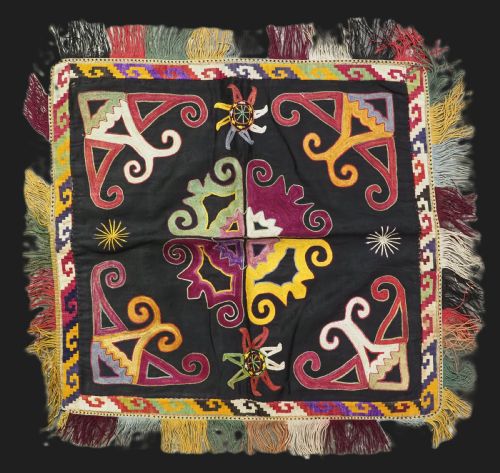
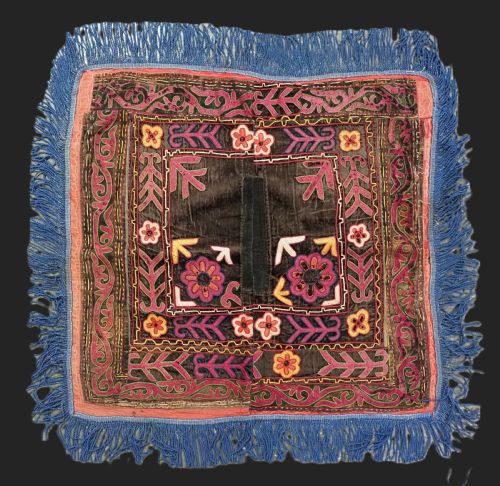
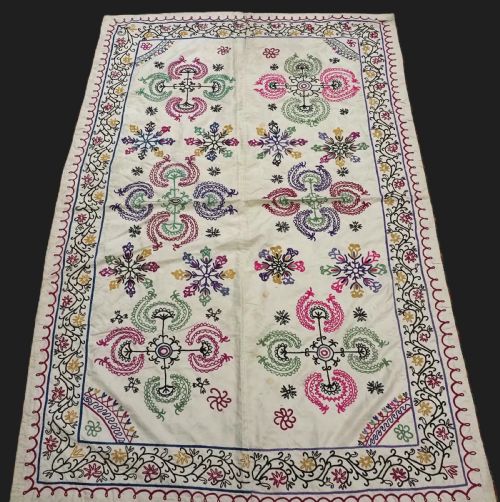
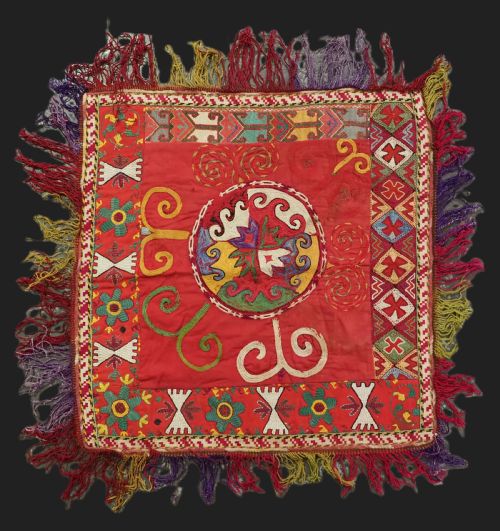
An antique tribal rug panel typically originates from the nomadic and village cultures of Central Asia and Persia, created by groups such as the Turkmen, Uzbek, Qashqai, and Shahsavan. Buyers searching this phrase encounter practical textile components separated from larger trappings, including bag faces, dowry embroideries, storage sacks, and wall hangings.
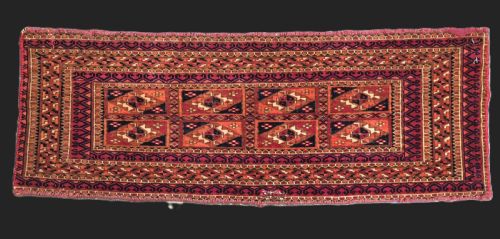
The material forms on this page range from pile-woven saddle covers and torba faces to silk embroideries, felt wall panels, and flatwoven mafrash bands. Most surviving examples date from the nineteenth century up to the early decades of the twentieth century, reflecting the traditional tribal designs of their respective regions.
Materials and construction methods
These textiles rely principally on wool, cotton, and silk foundations worked with natural dyes derived from plants and minerals. Artisans utilised techniques such as pile weaving, embroidery, sumac flatweave, and ikat resist-dyeing to create structured geometric or curvilinear motifs.
Secondary elements like felt, velvet, glass beads, and wood occasionally supplement the primary textile structures, particularly in nomadic wall hangings and dowry items from Central Asia.
Listings feature works from nineteenth and early twentieth-century Central Asian and Persian tribal groups, encompassing wool, silk, and felt materials.
Evaluating textile quality
Quality in these panels depends upon the tightness of the weave, the precision of the knotting or embroidery, and the depth and saturation of the natural dyes used. Finer examples display meticulous handling of traditional tribal motifs such as guls, accompanied by resilient structural integrity in the wool or silk foundation.
Artistic expression also dictates worth, separating standard utility items from exceptionally detailed dowry pieces or uncommon regional formats that exhibit superior composition and creative execution.
The Antique Tribal Rug Panel Glossary
- Ilgich
- An embroidered wall hanging or dowry piece traditionally produced by Uzbek and Lakai groups in Central Asia. These items often feature dynamic stitched designs intended for domestic decoration.
- Torba
- A small storage bag or bag face used within nomadic tents for household possessions. Turkmen tribes wove these with characteristic tribal guls.
- Asmalyk
- A large, pentagonal trapping produced by Turkmen groups, particularly the Yomut tribe, used to decorate camel flanks during wedding processions.
- Suzani
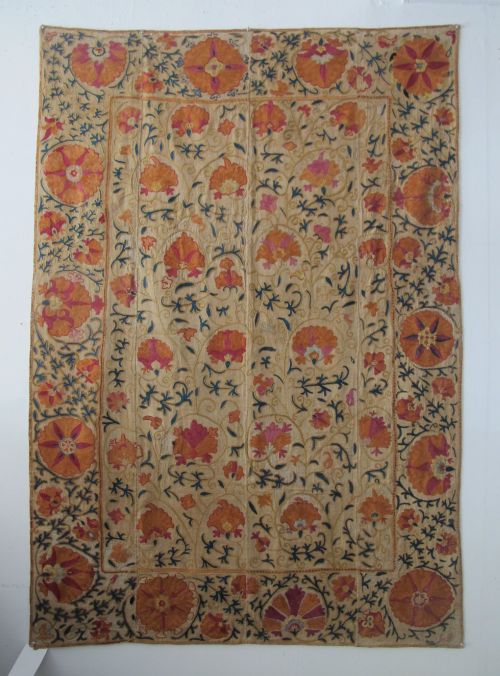
- A large, embroidered textile panel from Uzbekistan, worked in silk or cotton on a fabric ground. They were traditionally stitched by brides as part of their dowry.
- Gul
- A repetitive medallion or floral-like motif used extensively in Turkmen and Central Asian rug design. Each pattern often identifies a specific tribe or clan.
Antique Tribal Rug Panel: Frequently Asked Questions
How were tribal panels used originally?
Nomadic families utilised these woven and embroidered pieces to store household goods, furnish tents, and decorate camels during festive wedding processions. Items like torbas and bag faces served practical functions while displaying tribal identity.
Other textiles, such as suzanis and ilgich embroideries, functioned as dowry components and decorative wall hangings within traditional dwellings, marking significant milestones in family life.
How do I care for an antique textile panel?
Keep textile panels out of direct sunlight to prevent natural dyes from fading over time. Gentle vacuuming through a mesh screen can help remove surface dust without disturbing fragile fibres.
Avoid hanging heavy panels by single points of tension to prevent distortion of the foundation weave. Consult a professional textile conservator for cleaning or mounting.
How can I tell different tribal designs apart?
Tribal attribution relies on specific structural motifs, colour palettes, and regional weaving techniques. Turkmen pieces frequently feature distinct guls, whereas Uzbek embroideries display bold silk stitching on cotton or silk grounds.
Geographic origins such as the Trans-Caspian steppes, Khorassan, or Uzbekistan dictate the characteristic patterns, dyes, and formats associated with each distinct weaving group.