


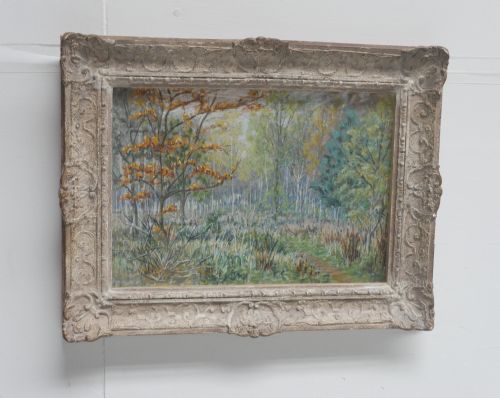
Antique Tree Painting
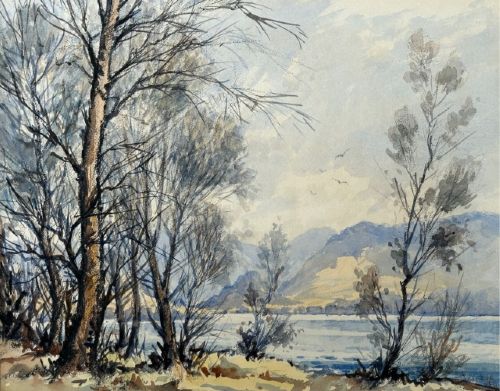
When you search for an antique tree painting, you are looking at centuries of artists capturing woodlands, orchards and solitary boughs in oil, watercolour and pastel.
Antique Tree Painting
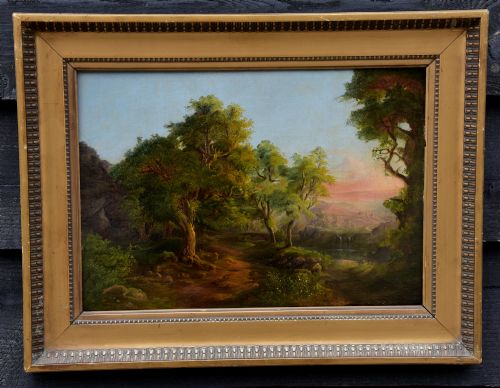
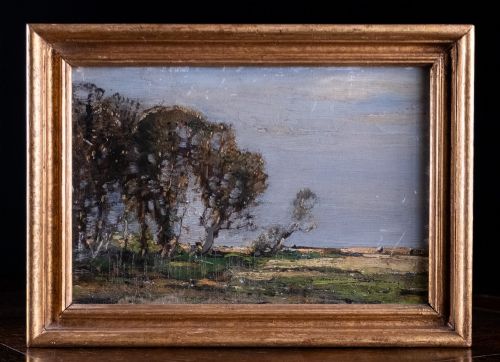
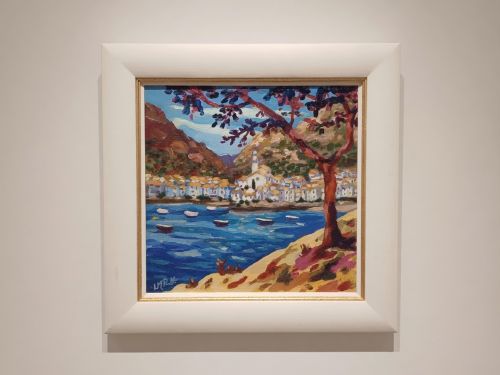
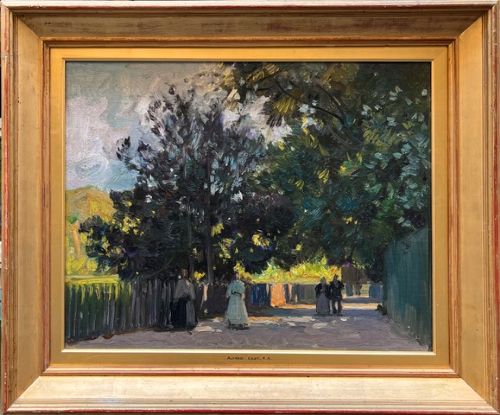
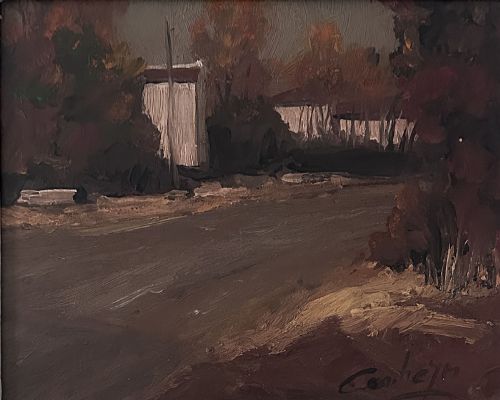
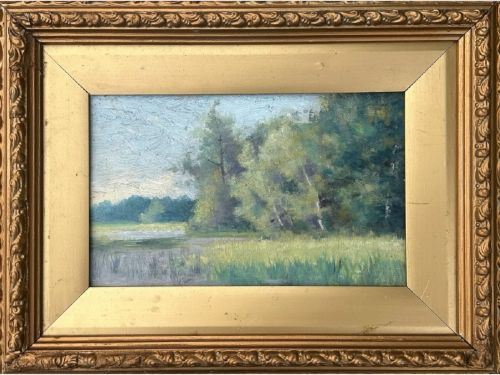
An antique tree painting captures woodland scenes, country lanes and pastoral views created primarily during the eighteenth, nineteenth and early twentieth centuries. These works range from intimate watercolour studies of individual trunks to large oil paintings of forested landscapes.
The pieces on this page span British Impressionism, Victorian academic art and post-impressionist experimentation. You will encounter rural scenes featuring ancient oaks, blossoming orchards and quiet forest paths rendered by both named artists and skilled amateurs.
How They Were Made
Artists applied oil paint or watercolour to canvas, wood panels, paper and board using traditional brushes and mixing techniques suited to their era. Canvas and sturdy wooden panels supported heavier oil pigments, while lighter watercolours and gouache captured delicate atmospheric effects on paper.
Framing often involved carved and gilded wood or simple painted mouldings that preserved the fragile surfaces. Pigments varied from earth tones mixed in the studio to newly available hues employed by late nineteenth and early twentieth-century painters.
The selection spans eighteenth-century classical landscapes through to mid-twentieth-century post-impressionist and expressionist woodland studies.
What Varies in Quality
The standard of a painted tree study depends on the artist's command of light, shadow and natural form, distinguishing a lively composition from a stiff or formulaic rendering. Brushwork that reveals an assured, direct observation of foliage and bark elevates a piece.
Condition plays a central role, with well-preserved surfaces retaining their original colour vibrancy without excessive retouching, flaking pigment or heavy darkening of the varnish. The harmony of the original frame also contributes to the overall integrity of the artwork.
William H Myers·George Graham·Alfred Young Nutt·Kershaw Schofield·Sydney Yates Johnson·William Hoggatt·John Linnell·Henri Joseph Harpignies·Herbert Royle·Rowland Henry Hill·Edmund George Warren·Berthe des Clayes·Arthur Wardle·William Greaves·Viggo Pedersen·Hugo Carlberg·John Ward Knowles
The Antique Tree Painting Glossary
- Canvas
- A heavy woven fabric stretched across a wooden frame to serve as a durable support for oil painting. It provides a textured surface that interacts with layered paint applications.
- Watercolour
- A paint consisting of pigment suspended in a water-soluble binder, traditionally applied to paper. It allows for translucent washes and delicate atmospheric effects.
- Gouache
- An opaque water-based paint similar to watercolour but mixed with a white pigment to create solid, flat areas of colour. Artists used it to add highlights and sharp details to landscapes.
- Board
- A rigid wooden or pasteboard sheet used as a solid painting support instead of woven fabric. Painters frequently utilised small panels for rapid outdoor sketches.
- Impressionism
- A style of painting focusing on the visual impression of the moment, especially the shifting effects of light and colour. Practitioners favoured visible brushstrokes and outdoor subjects.
Antique Tree Painting: Frequently Asked Questions
How do I date an antique tree painting?
Examine the materials, including the type of canvas, paper or board, along with any handwritten labels, stretcher marks or artist signatures on the reverse. Style and clothing if figures are present also offer clear chronological clues.
Framing can provide additional dating evidence, though many older works were reframed later. Comparing the technique to known dated works by the same school helps narrow the period.
Where should I hang these paintings at home?
Keep these artworks away from direct sunlight, high humidity and temperature fluctuations, which can damage canvas, paper and pigments over time. Placing them on interior walls ensures stable conditions for delicate watercolours and oils alike.
Pairing smaller tree studies with traditional wooden furniture or placing a larger canvas as a focal point above a mantelpiece allows the natural subject matter to complement domestic interiors.
What is the difference between oil and watercolour tree paintings?
Oil paintings utilise pigments suspended in drying oils on canvas or board, offering rich textures, deep colour saturation and a robust surface. Watercolours use water-soluble binders on paper, creating luminous, transparent effects that require protective glass framing.
Oils were traditionally used for more substantial, finished gallery works, whereas watercolours often began as rapid plein-air field studies or delicate finished illustrations.
Did artists paint trees outdoors or in studios?
Many nineteenth and twentieth-century artists carried portable sketching materials outdoors to paint trees directly from life, capturing transient effects of light and weather. These open-air studies were often brought back to the studio to inform larger finished compositions.
Studio painting allowed artists to work on grander scales using preliminary sketches, combining observed natural elements with classical compositional rules.