




Antique Tray Top Cupboards
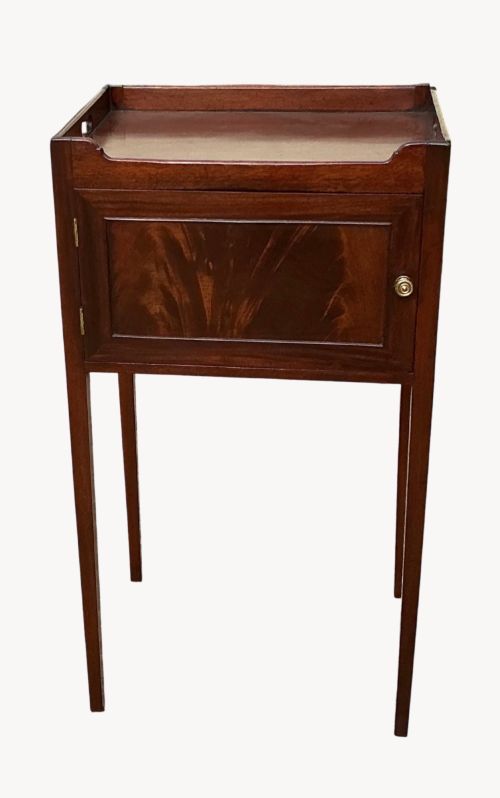
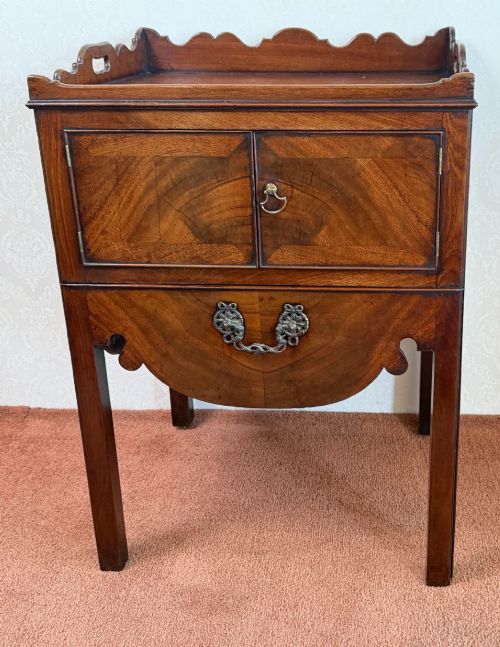
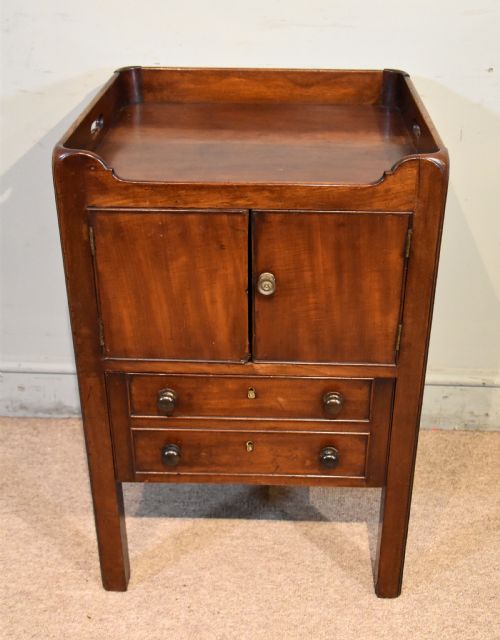
Antique tray top cupboards are practical bedside pieces defined by raised galleries, appearing most frequently in Georgian and Regency mahogany.
Antique Tray Top Cupboards
When you search for antique tray top cupboards, you encounter pieces primarily from the Georgian, Regency, and Victorian periods, alongside later Revival interpretations. These items function predominantly as bedside tables, nightstands, and pot cupboards, offering enclosed storage alongside a defined upper surface.
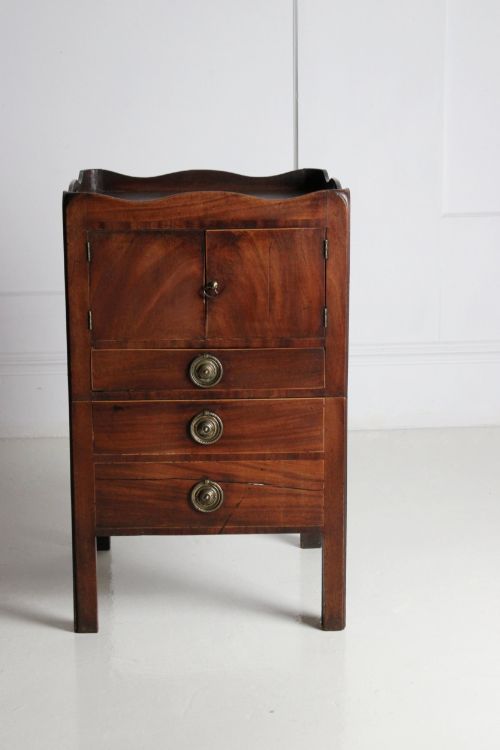
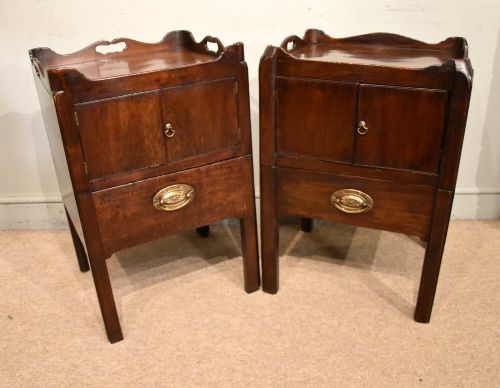
The version you are most likely to meet on this page is the mahogany bedside cabinet or commode dating from the eighteenth century. These pieces combine compact proportions with a raised tray top designed to prevent items from rolling off the edge.
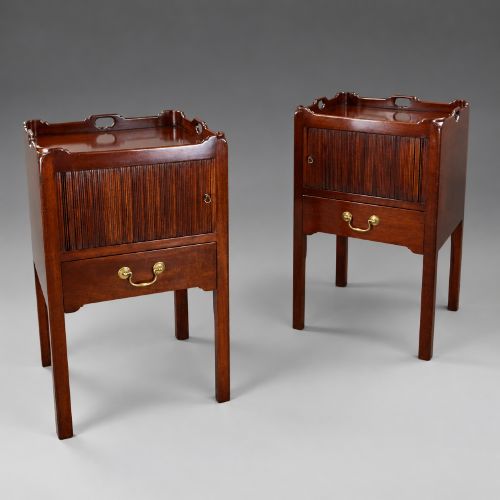
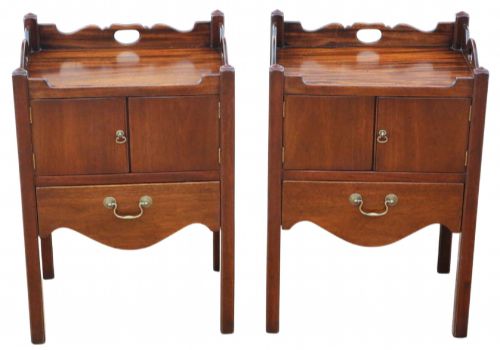
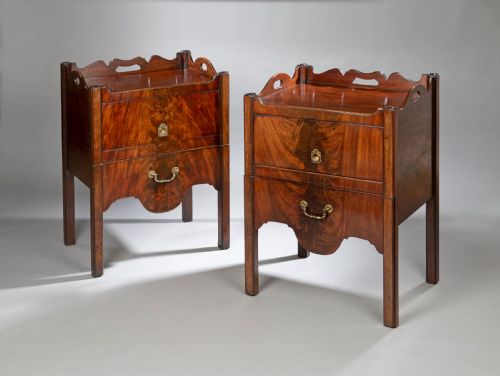
Makers designed these cupboards for domestic utility in bedrooms and dressing rooms, resulting in forms that range from simple functional nightstands to pairs with tambour fronts or inlaid boxwood details. Their survival in matched pairs reflects their original deployment flanking a bed.
How they were made
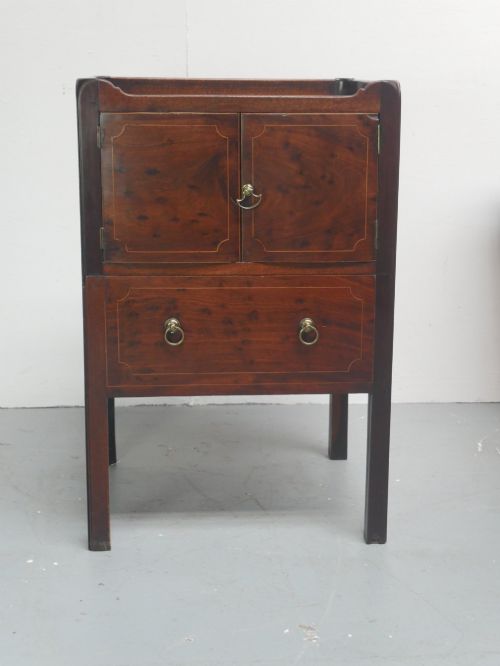
Cabinetmakers constructed these cupboards predominantly using solid mahogany and flame mahogany veneer, often incorporating secondary timbers. Workshops applied boxwood inlay and hand-painted detailing to later Sheraton Revival pieces to create decorative contrast.
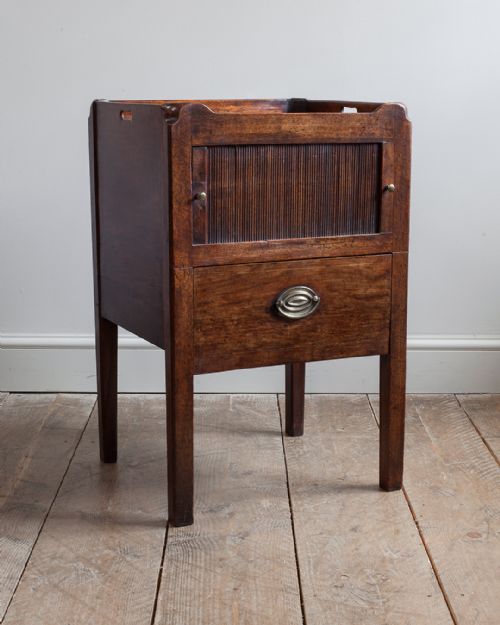
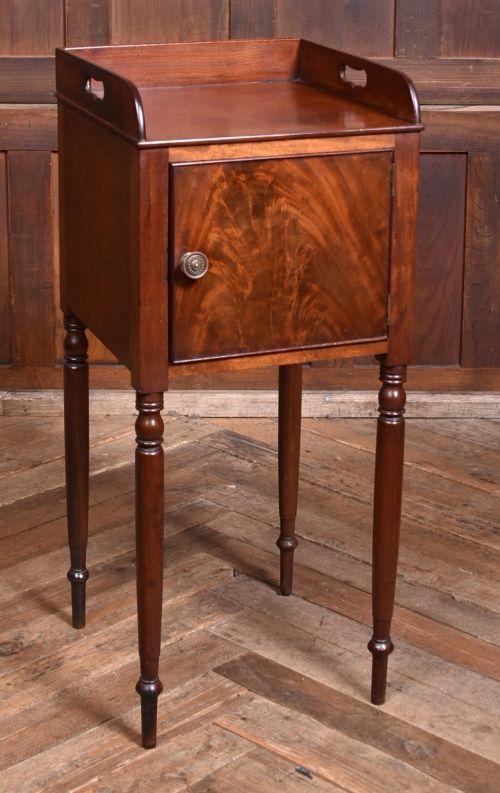
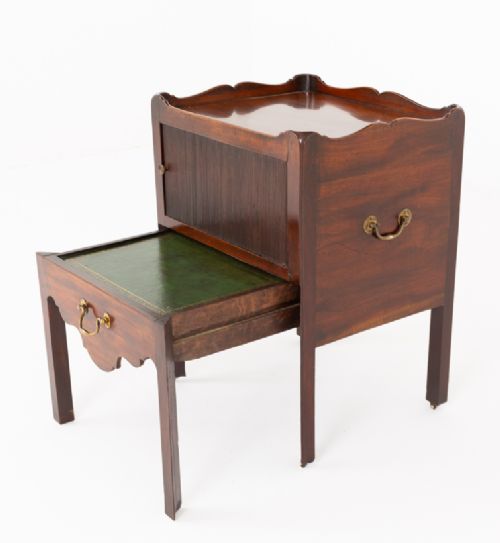
The characteristic tray top was shaped directly from solid timber or assembled with mitred joints to form a secure gallery around the upper surface. Some variations include leather inserts on the top or brass hardware for handles and fittings.
Several pairs survive intact from the eighteenth century, proving that matching your bedside table is a tradition older than the United States.
What varies in quality
The distinction between standard examples and the finest pieces lies in the selection of timber and the crispness of the joinery. Mahogany with rich flame figure and subtle boxwood inlay indicates a higher grade of manufacture than plain utility timber.
Proportion and execution define the upper tier of these cupboards, particularly in serpentine forms and tambour fronts that demand advanced cabinetmaking skills. The integration of the tray top with the carcass demonstrates the maker's precision.
The Antique Tray Top Cupboards Glossary
- Tray top
- A raised rim or gallery surrounding the upper surface of a table or cabinet. This feature prevented chamber items or night lamps from sliding off.
- Pot cupboard
- A small bedside cabinet originally designed to house a chamber pot. These pieces frequently feature a cupboard door above a lower enclosed section.
- Tambour
- A flexible shutter constructed from narrow vertical strips of wood glued to a canvas backing. This mechanism allowed smooth operation on curved bedside commodes.
- Commode
- A term used in the eighteenth and nineteenth periods for a decorative enclosed storage cabinet. In the context of bedroom furniture, it frequently refers to bedside cupboards with tray tops.
- Serpentine
- A furniture front curving inward centrally and outward at the sides in a continuous wave. This undulating contour required specialist woodworking skill.
Antique Tray Top Cupboards: Frequently Asked Questions
What is a tray top cupboard?
A tray top cupboard is a small antique cabinet featuring a raised gallery or rim around its top surface. This design kept items secure when placed beside a bed or in a dressing room.
Most examples date from the Georgian and Regency periods, constructed in mahogany with a cupboard door enclosing storage space below.
How were antique tray top cupboards used?
These cabinets served primarily as bedside tables or nightstands in bedrooms. Their enclosed lower compartments held chamber pots or personal items, while the flat top held lighting or washing equipment.
Many survived as matched pairs because bedrooms of the period often utilised symmetric furniture arrangements flanking the bed.
How do I date a mahogany bedside cupboard?
Dating relies on observing timber selection, construction methods, and stylistic details. Eighteenth-century pieces typically exhibit solid mahogany construction and restrained proportions.
Later Victorian and early twentieth-century Revival pieces often incorporate veneer techniques and decorative elements like satinwood or boxwood inlay characteristic of Sheraton revivals.
Are bedside cupboards and commodes the same thing?
In the context of eighteenth and nineteenth-century furniture, the terms frequently overlap. Period cabinetmakers often described bedside cupboards and pot cupboards as commodes.
Both forms provided enclosed storage with a raised surface, though some commodes featured specific internal fittings for chamber utensils.