
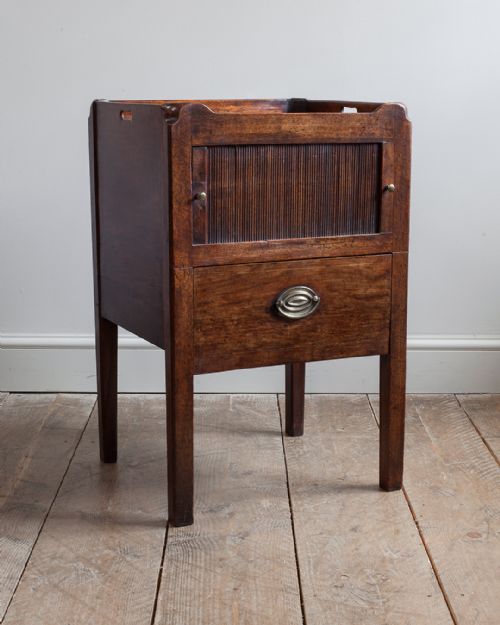
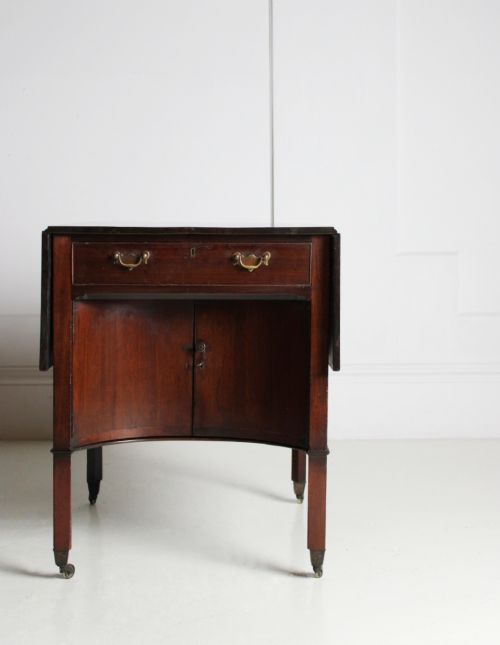
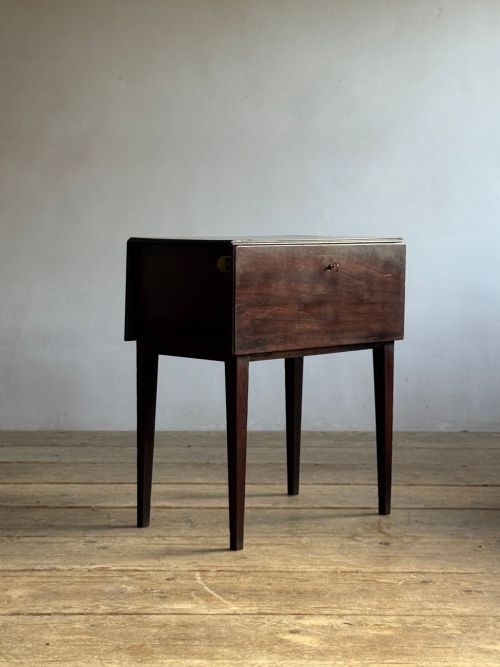
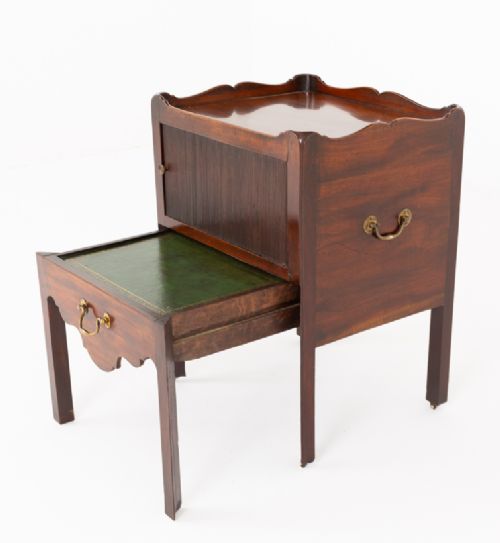
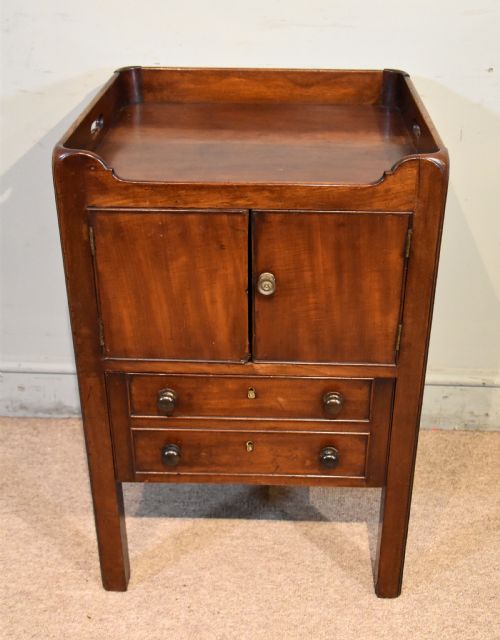


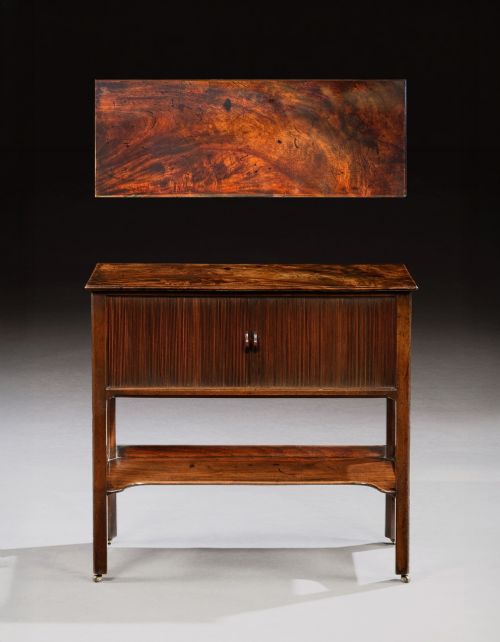


George III Bedside Commode
These Georgian pieces unite discreet utility and fine cabinet-making, serving as the definitive george iii bedside commode.
George III Bedside Commode
A george iii bedside commode is primarily a cabinet or nightstand designed for the Georgian bedroom, frequently appearing with a tray top, tambour front, or enclosed cupboard.
The versions most commonly met on this page span the 18th century and around 1800, sharing the characteristic proportions and enclosed storage typical of the period.
Beyond standard bedside cabinets, the records show related forms including nightstands, side tables, and step commodes built to serve similar domestic functions.
Materials and Construction
Makers relied heavily on solid mahogany and flame mahogany veneer, often pairing them with secondary woods and subtle boxwood inlay or boxwood stringing.
Functional hardware relied on brass fittings, while specialised internal compartments occasionally incorporated leather or canvas elements for practical use.
Step commodes offered polite Georgian discretion, disguising personal ascent as ordinary library steps.
Evaluating the Pieces
Distinctions in quality rest upon the crispness of the cabinet-making, the selection of figured mahogany veneer, and the survival of original details like tambour mechanisms and brass handles.
Pieces bearing specific attribution or maker stamps demonstrate higher workshop distinction, whereas standard domestic examples prioritize simple utility.
Gillows Lancaster
The George III Bedside Commode Glossary
- Commode
- A small enclosed cabinet or chest. In this context, it refers specifically to bedside storage units of the period.
- Tambour
- A flexible sliding shutter formed of narrow strips of wood glued to canvas. It conceals the upper compartment of the cabinet.
- Tray top
- A raised rim surrounding the top surface of the table. This feature prevented items from rolling off the edge.
- Chippendale period
- A stylistic designation reflecting the design vocabulary associated with Thomas Chippendale. It guides dating and aesthetic context.
George III Bedside Commode: Frequently Asked Questions
What is a george iii bedside commode?
A george iii bedside commode is an enclosed wooden cabinet designed for the bedroom during the Georgian era, combining decorative woodwork with concealed utilitarian storage.
These pieces typically feature cupboard doors, tambour fronts, or tray tops above a compartment that originally housed a chamber pot.
How were these commodes used originally?
They functioned as private bedside furniture in upper-class bedrooms, serving both to hold nighttime necessities and to conceal sanitary equipment.
Many designs incorporated pull-out sections, sliding shelves, or specialised tops to accommodate washing and dressing routines.
How do I date a george iii bedside commode?
Dating relies on secondary wood analysis, handle styles, construction methods, and overall stylistic traits associated with the late 18th century.
Details such as boxwood inlay, serpentine drawer fronts, and specific leg configurations help narrow the period of manufacture.
How do I place one in a modern room?
These cabinets adapt easily to contemporary interiors as bedside tables, lamp tables, or small storage units in living spaces.
Their enclosed compartments offer practical hidden storage while maintaining traditional proportions and warm mahogany tones.