



Antique Travel Vanity Case
An antique travel vanity case carries the personal grooming kit of a past traveller in wood, leather or silver.
Antique Travel Vanity Case
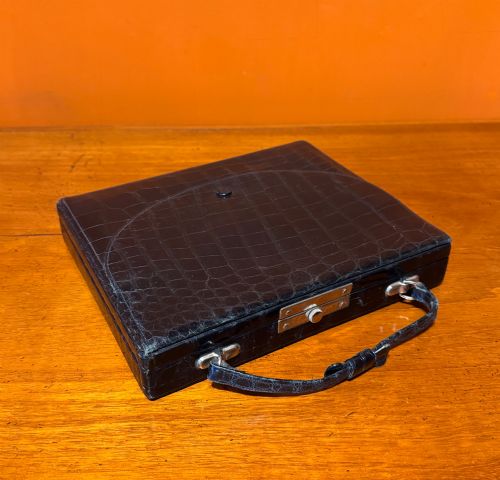
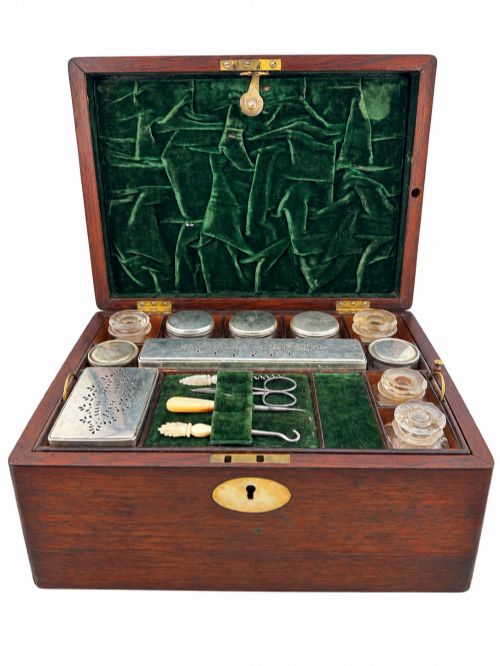
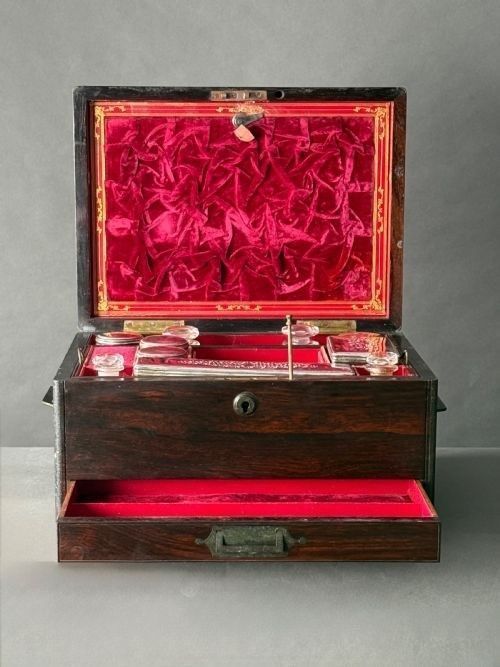
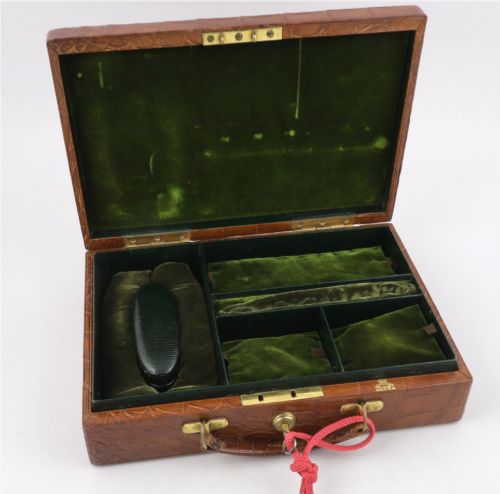
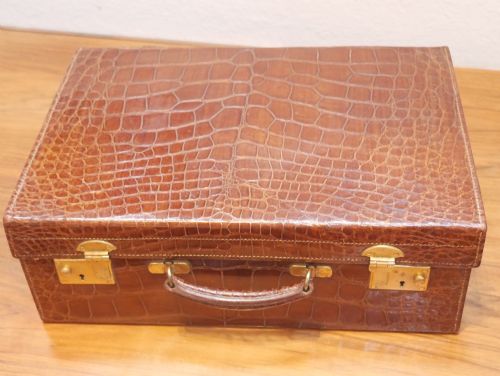
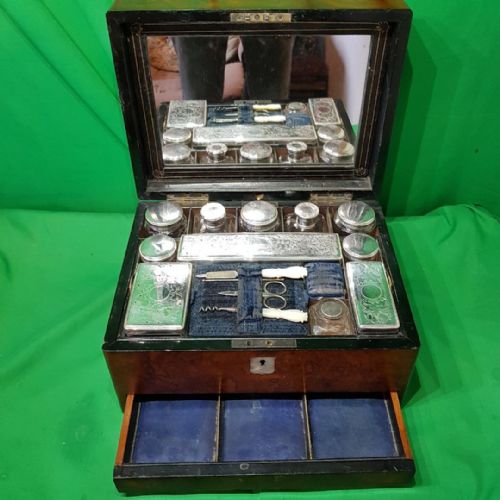
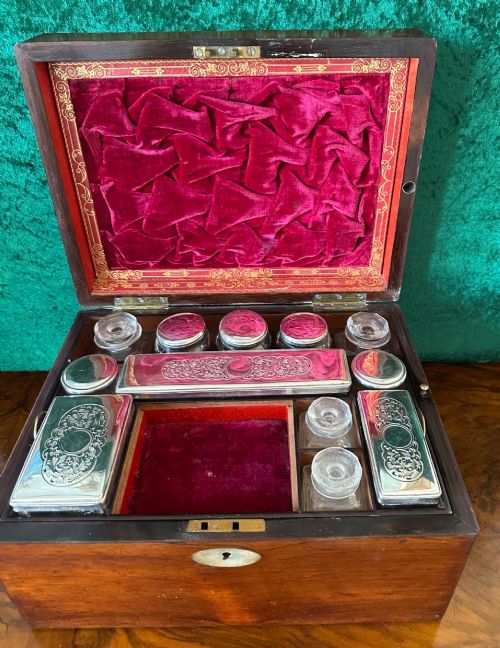
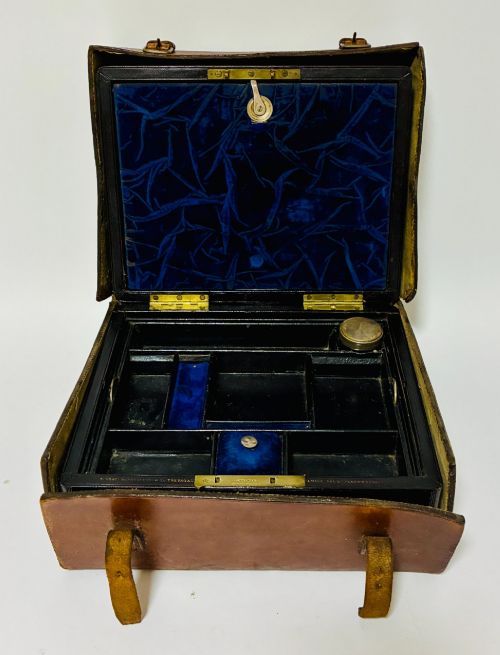
When you search for an antique travel vanity case, you encounter fitted boxes, leather luggage, and small folding sets designed for personal care on the move. These items span periods from the Georgian and Regency eras through the Victorian decades and into the Art Deco style of the 1920s and 1930s. The Victorian examples dominate, often taking the form of substantial wooden boxes or leather cases housing glass bottles and silver fittings.
Makers and retailers such as Asprey, J C Vickery, F. West, Drew & Sons, John Pound, and Harrods signed many of the finest containers. The objects serve multiple functions, doubling as jewellery boxes, writing slopes, and grooming stations with compartments for cologne bottles, shaving brushes, and manicure tools. You will find both ladies' dressing cases lined in velvet and gentleman's valeting suitcases equipped for the road.
Materials and Construction
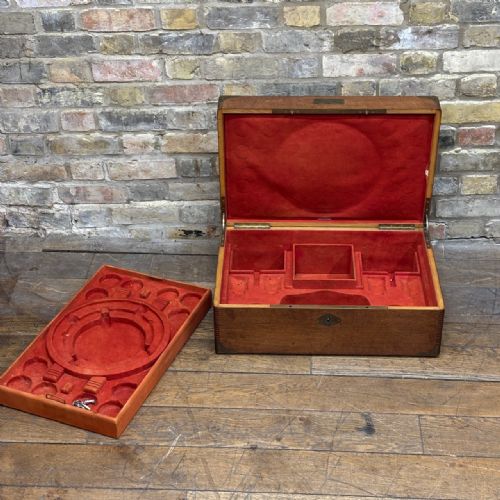
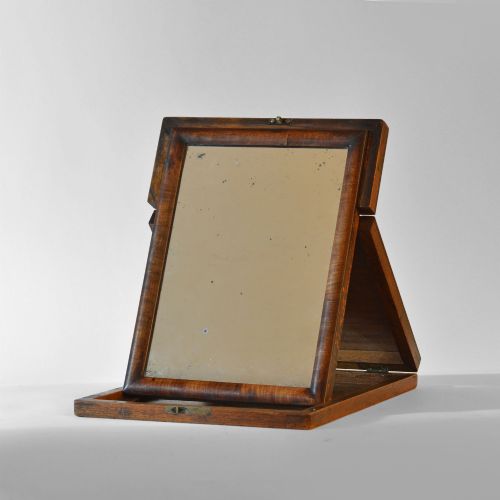
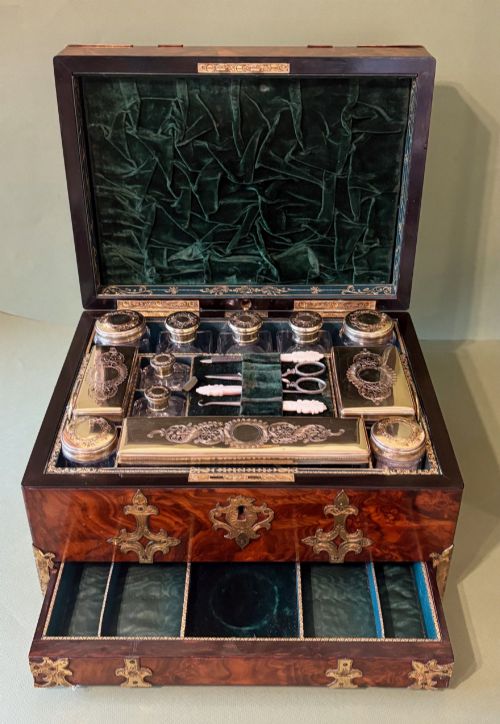
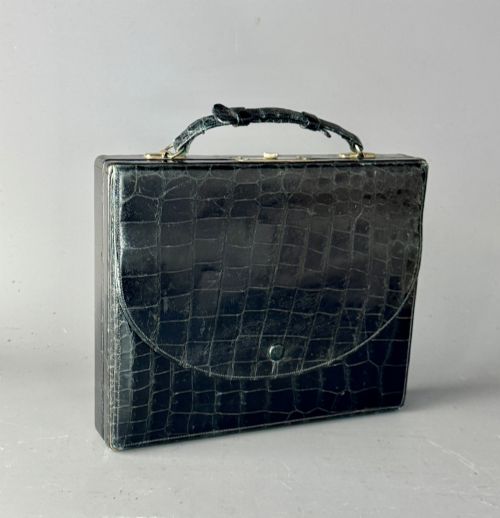
Craftsmen built these containers using dense hardwoods like rosewood, coromandel, and burr walnut, frequently reinforcing the edges with brass banding and lock plates. Leather options utilise cowhide, vellum, and crocodile or alligator skin stretched over rigid frames. Interiors feature velvet linings, fitted trays, and compartments tailored to hold glass scent bottles with sterling silver lids.
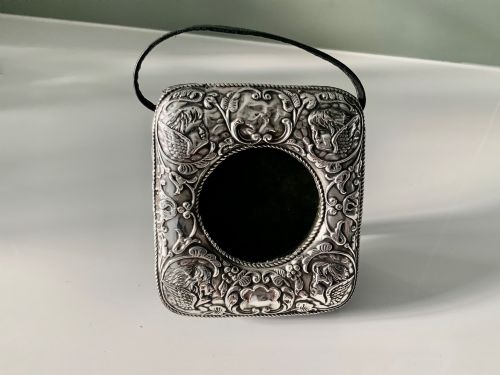
Metal components include cast silver, silver-gilt, and enamel, alongside steel instruments for manicure sets and shaving gear. Woodworkers joined corners with dovetail joints and fitted intricate brass locks to secure valuables during transit. Glass bottles and cologne containers inside feature hand-cut crystal patterns designed to withstand carriage journeys.
Antique Travel Vanity Case Retail Price Guide 2026
Typical asking prices for travel vanity case among the pieces listed under this phrase on Sellingantiques today, from the lower quarter to the upper quarter. They describe what is for sale here now, not the wider market.
Cleric's swing-out cases let busy Victorians reach their grooming gear without tipping the tea.
Judging Quality
The distinction between ordinary boxes and exceptional pieces lies in the completeness of the original fitted interior and the quality of the internal mechanisms. Top-tier examples retain every matched glass bottle, silver-gilt lid, and specialised tool without replacements. The choice of exotic woods like coromandel or solid silver mounts also elevates a piece above standard mahogany or plated brass versions.
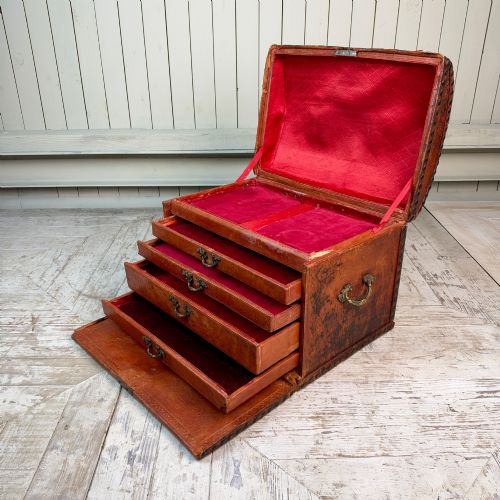
Maker provenance marks considerable differences in desirability, with signed pieces by established London retailers commanding higher regard. The complexity of the internal engineering - such as swing-out trays, hidden jewellery drawers, and secret spring mechanisms - separates standard travelling cases from masterwork vanity boxes.
Dunhill London·F. West·J C Vickery·Drew And Sons·John Pound·Harrods·Jane Brownett Alexander Jones·Asprey
The Antique Travel Vanity Case Glossary
- Coromandel
- A dense, heavily grained timber from Asia used for luxury Victorian boxes. It is prized for its dark stripes and warm reddish-brown tones.
- Dressing Case
- A portable box containing fitted compartments for cosmetics, brushes, and jewellery. These pieces were essential for maintaining personal grooming during nineteenth-century travel.
- Guilloche
- An intricate mechanical engraving technique producing precise geometric patterns on metal. It frequently appears beneath translucent enamel on compacts and travel clock cases.
- Silver-Gilt
- Sterling silver coated with a thin layer of gold. This treatment protected the underlying metal from tarnishing when exposed to cosmetics and liquids.
- Writing Slope
- A desk accessory built into a travelling box that folds open to an angled writing surface. Many Victorian vanity cases combined this feature with jewellery storage.
Antique Travel Vanity Case: Frequently Asked Questions
What is an antique travel vanity case?
These pieces are portable containers designed to hold grooming implements, cosmetics, and jewellery during journeys. They range from leather suitcases to wooden boxes fitted with glass bottles and silver tools.
Craftsmen built them in various sizes, from compact pocket watch cases to large gentleman's valeting trunks. Their interiors feature custom compartments for every daily necessity of the traveller.
How were dressing cases used?
Travellers used them on trains, carriages, and steamships to keep personal care items organised away from home. They allowed Victorians and Edwardians to maintain their daily toilette routines in hotels or country houses.
Many cases stayed open on a dressing table during a stay, functioning as a static vanity station. The removable trays allowed owners to carry only the necessary grooming tools to the wash basin.
How do I date a vanity case?
Dating relies on materials, lock stamps, and hallmarks on the silver fittings. Victorian pieces often use burr walnut and coromandel, while 1920s examples favour crocodile leather and Art Deco styling.
Silver hallmarks provide the most precise indication, recording the exact year and assay office. Maker signatures and patent numbers stamped on the locks offer further chronological clues.
Are fitted interiors usually original?
Many retain their original fitted interiors, though missing bottles or replaced utensils occur due to the age and use of the pieces. Complete sets with matching crystal and silver lids remain highly sought after by collectors.
When a box was repurposed over the decades, glass inserts might show slight variations in pattern or size. Examining the velvet contours helps determine if the current contents match the original layout.