
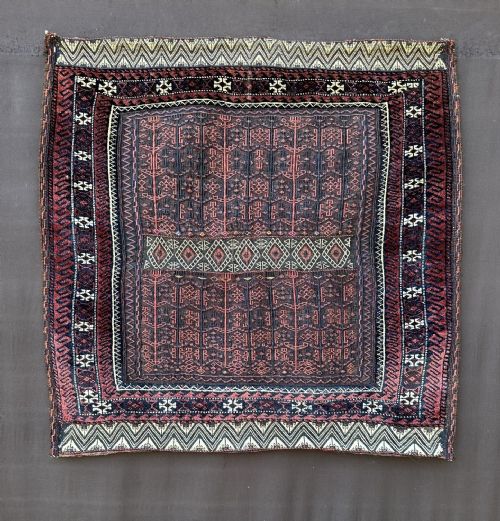


Antique Timuri Rug
These antique timuri rug pieces are nomadic tribal textiles originating from the borderlands of Persia and Afghanistan, prized for rich vegetable dyes and distinctive geometric motifs.
Antique Timuri Rug
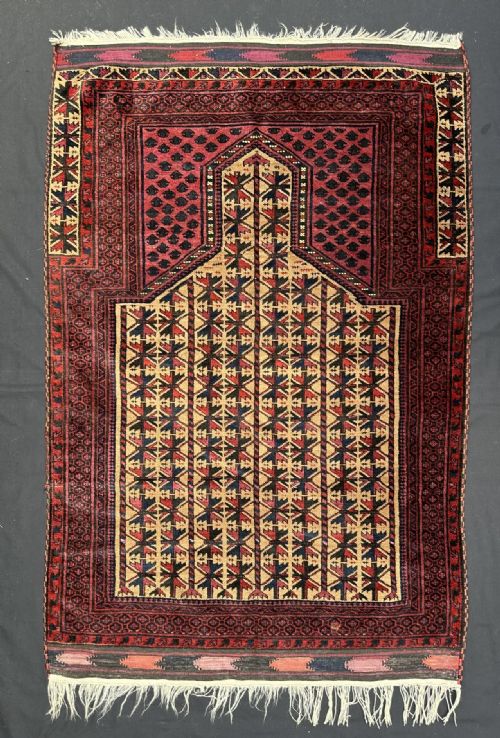
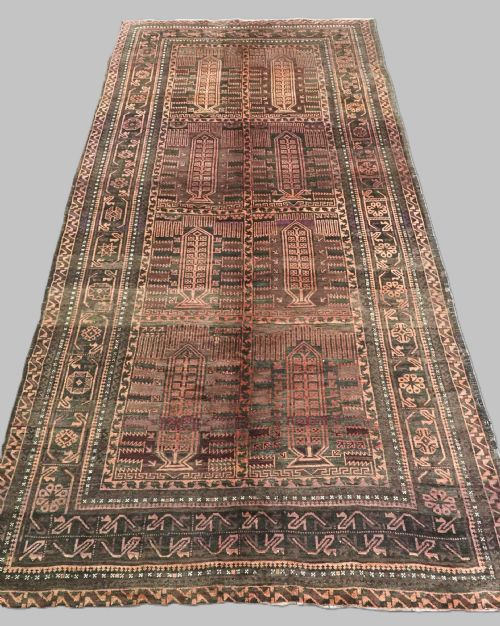
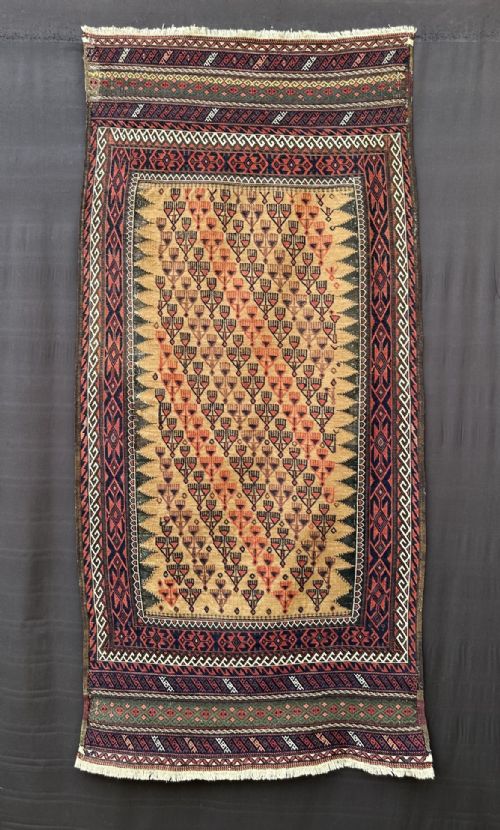
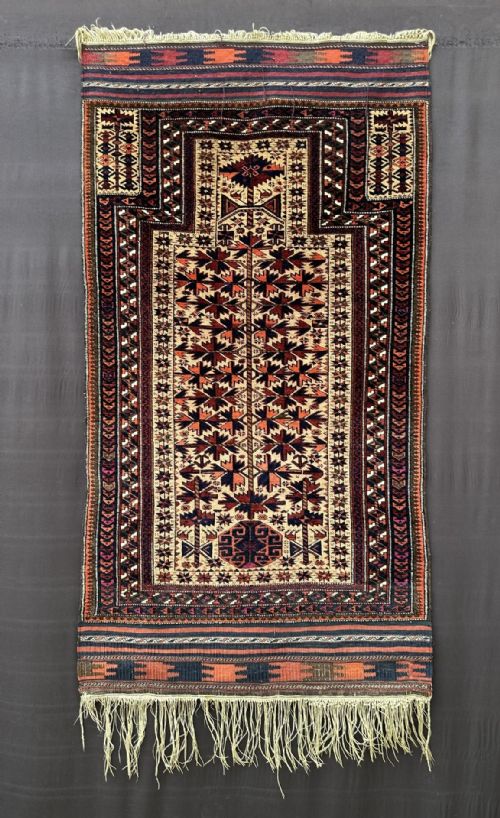
An antique timuri rug represents the weaving traditions of nomadic and semi-nomadic tribes inhabiting the borderlands of north-east Persia and western Afghanistan. When exploring this page, buyers frequently encounter prayer rugs, main carpets, and smaller utility formats carrying traditional tribal iconography.
Many examples originate from specific sub-tribes such as the Dokhtar-e-Qazi, Yaqoub Khani, Sangtshuli, and Boruti. These pieces reflect a distinct heritage rooted in the Khorassan province and surrounding valleys, often shared closely with Baluch weaving traditions.
Forms range from floor carpets and prayer formats to utilitarian objects like sofreh dining cloths, bread covers, salt bags, and ru korssi hearth covers. Each format displays the dense geometric layouts and symbolic vocabulary typical of nineteenth-century tribal production.
How They Were Made
Weavers utilised locally sourced hand-spun wool for the pile, frequently incorporating goat hair and camel hair for structural durability and natural tonal contrast. Cotton also appears in foundations and highlights, providing structural stability to the finer weaves.
The characteristic deep palette relies entirely on natural dyes, yielding saturated blues, rich aubergine shades, and warm camel grounds. Artisans occasionally integrated silk highlights to accentuate specific motifs within the field.
Listings feature pieces dated across the nineteenth and early twentieth centuries, spanning from eighteen-seventy to nineteen-ten.
What Varies In Quality
Quality depends upon the fineness of the knotting and the precision executed in rendering complex repeat patterns like the pencil box or small shrub designs. Tighter structures and better-balanced proportions distinguish more accomplished weaving.
The depth, clarity, and saturation of the natural dye work heavily influence the visual impact of each piece. Secondary materials like camel hair or silk accents also indicate greater care taken by the nomadic weaver.
The Antique Timuri Rug Glossary
- Prayer rug
- A smaller textile featuring a mihrab or arch design used by Muslims for daily ritual worship. These items often display a tree of life motif.
- Sofreh
- A flatweave or piled cloth used traditionally for food preparation, serving meals, or storing bread within the nomadic tent. Dining and bread versions appear frequently in tribal corpuses.
- Kalam donner
- A classic repeating geometric pattern often described as a pencil box design. It forms a structured grid across the central field of main carpets.
- Ru korssi
- A decorative cover designed to drape over a traditional low heating table used in Persian and Afghan homes. They share the same wool and dye palette as floor rugs.
- Mihrab
- The arched niche depicted on prayer rugs that indicates the direction of Mecca. Its shape varies distinctively between different sub-tribes.
Antique Timuri Rug: Frequently Asked Questions
What is a timuri rug?
An antique timuri rug is a tribal textile woven by nomadic groups residing in the border regions between Persia and Afghanistan. These pieces date predominantly to the late nineteenth and early twentieth centuries.
They are characterised by durable wool foundations, vegetable dyes, and intricate geometric patterns often linked with Baluch and related sub-tribes.
How were these rugs used?
Nomadic families utilised these textiles for multiple practical and ritual purposes within daily camp life. Formats include floor carpets, hearth covers, salt bags, and specific prayer rugs.
Dining and bread sofrehs served functional roles in food preparation, while prayer rugs fulfilled spiritual requirements during daily devotions.
How do I identify a prayer rug?
Prayer rugs are readily identified by their distinct architectural motif known as a mihrab, which forms an arched niche at one end of the field. They frequently incorporate tree of life designs or repeating leaf patterns.
These formats are generally smaller in scale to accommodate individual daily use rather than covering a large floor space.
Where were these pieces made?
The pieces originate primarily from the borderlands of north-east Persia and western Afghanistan, specifically encompassing the Khaf region and Khorassan province. Sub-tribes such as the Dokhtar-e-Qazi and Yaqoub Khani lived and worked across these territories.
Weaving styles often overlap with neighbouring Baluch populations inhabiting the same geographical corridor.