


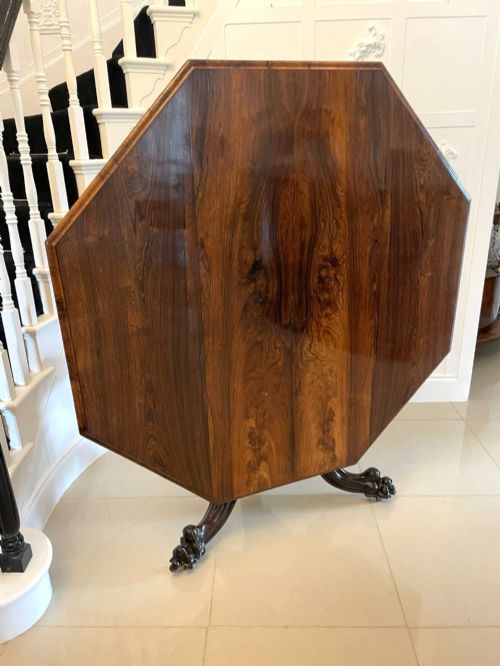
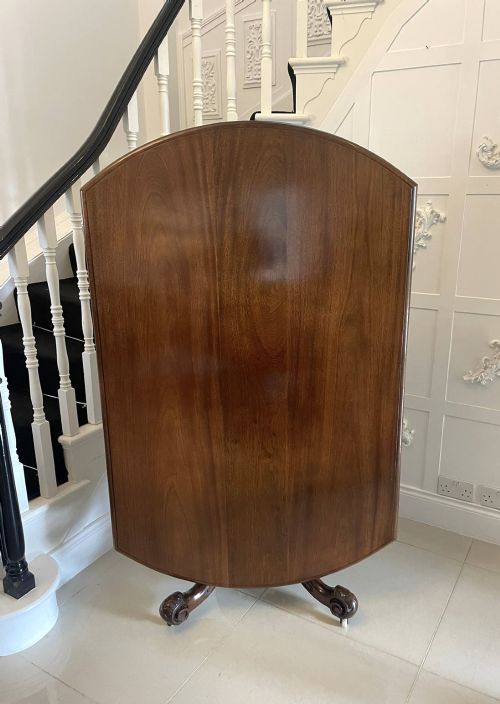
Antique Tilting Dining Table
An antique tilting dining table combines daytime versatility with formal dining capability through a clever hinged mechanism.
Antique Tilting Dining Table
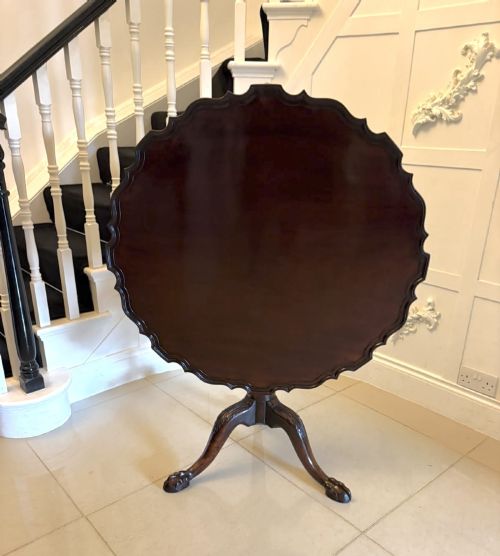
An antique tilting dining table is primarily designed to save space in domestic interiors when not in use for meals. By releasing a catch, the heavy timber top pivots vertically against the pillar, allowing the furniture to stand neatly against a wall. The forms span circular, oval, and occasional formats spanning the Georgian, Regency, William IV, and Victorian periods.
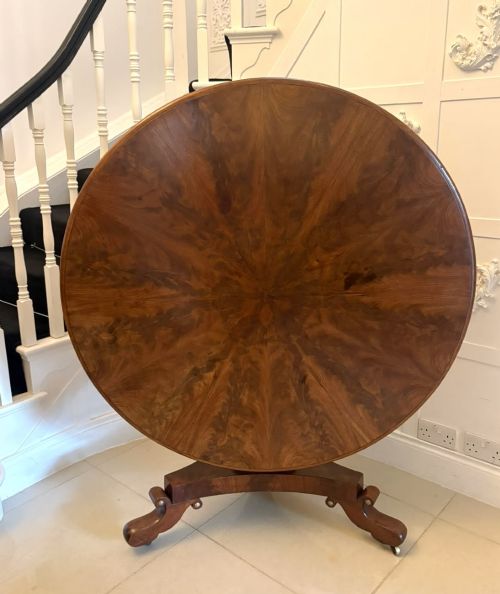
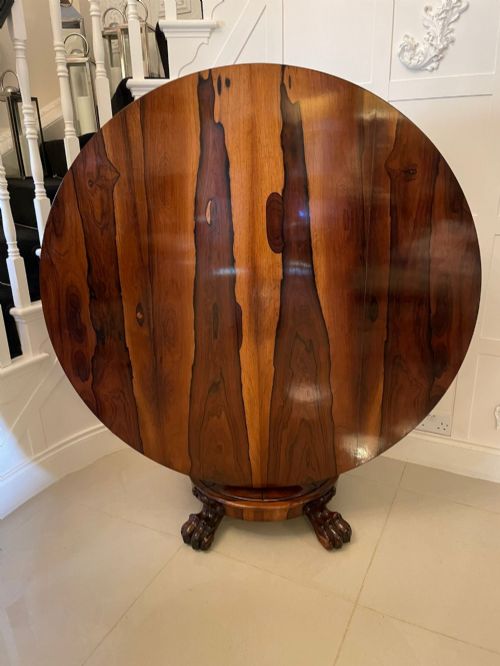
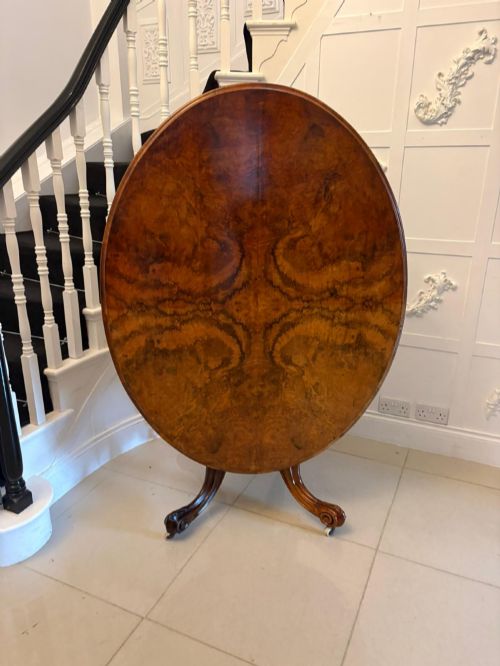
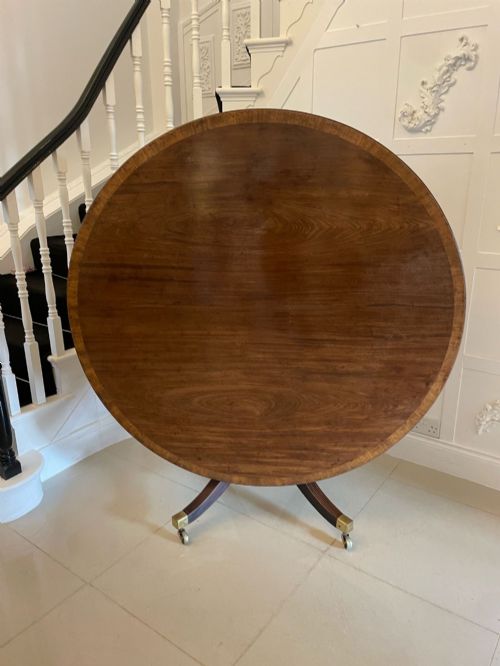
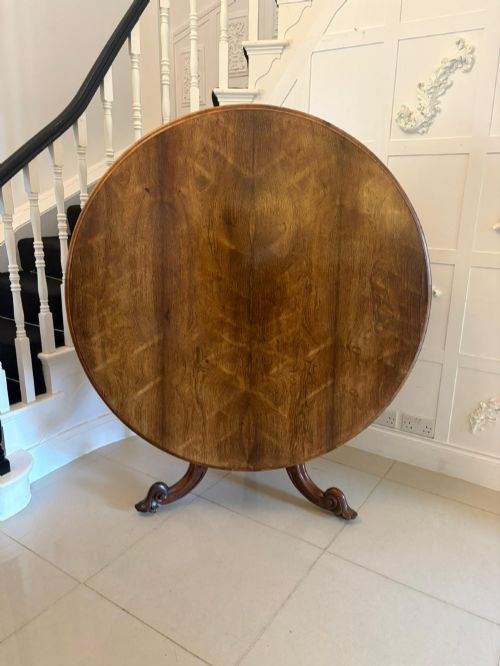
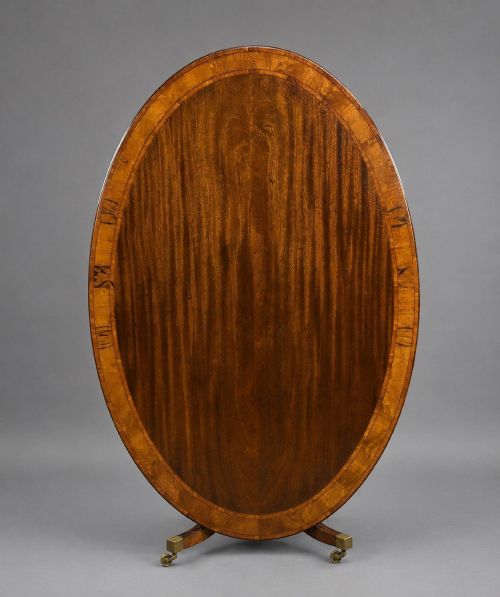
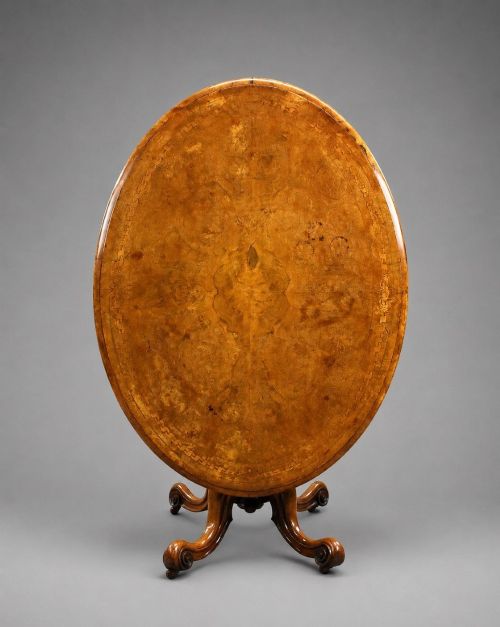
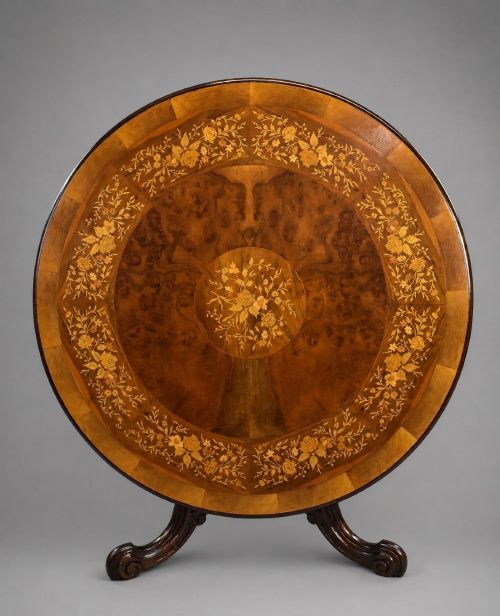
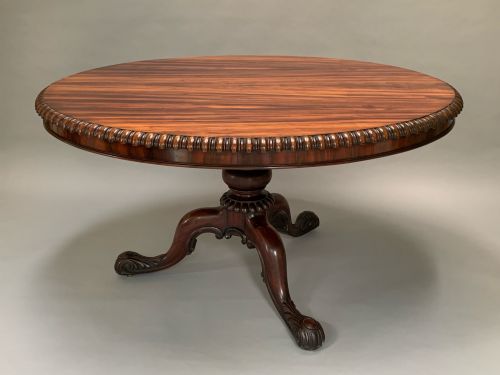
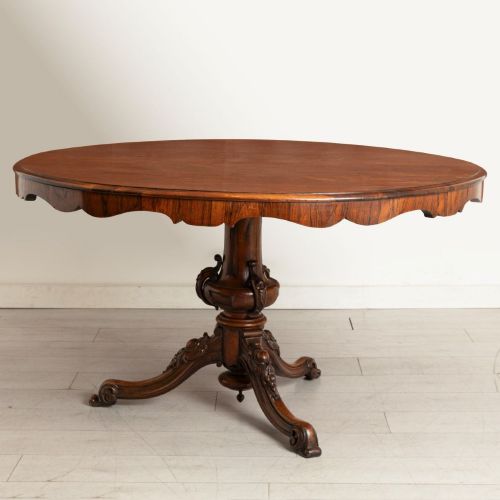
The version most commonly met on this page is the circular or oval rosewood, mahogany, or burr walnut breakfast or centre table from the nineteenth century. These pieces typically rest upon a central pillar supported by a triform or quadrapod base, often fitted with brass castors to ease movement across a room.
What varies in quality
Quality rests in the choice of timber figure, such as richly grained flame mahogany or intricately patterned burr walnut, and how cleanly the grain is matched across the expanse of the top. Superior pieces display crisp, deep carving on the pillar and base rather than softened or mass-produced detail.
The integrity of the pivoting mechanism and the stability of the central column dictate functional excellence. Well-made examples maintain a firm lock when horizontal without wobble, while lesser specimens show slackness in the hinge and wear in the floor castors.
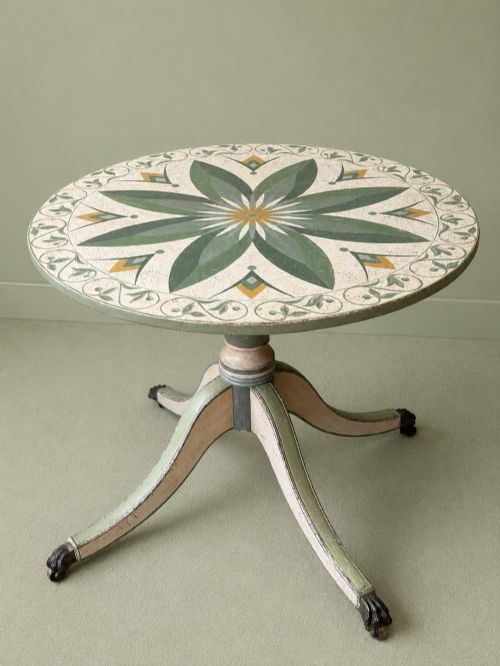
Painted supper tables hint at late-night feasts where guests risked spilling wine upon delicate floral brushwork.
Gillows
The Antique Tilting Dining Table Glossary
- Tilt top table
- A table with a hinged top that pivots to a vertical position for storage or display when not in service. This clever engineering allowed large dining surfaces to occupy minimal floor space in historic homes.
- Breakfast table
- A smaller dining or centre table originating in the Georgian and Regency periods, commonly used for morning meals or informal gatherings. They frequently feature circular tops supported by a single central pillar.
- Triform base
- A three-sided pedestal support beneath the central column, often resting on carved scroll feet or castors. This formation provides balanced weight distribution for heavy pivoting table tops.
- Albuera wood
- A dense exotic timber associated with high-end Regency and William IV cabinet making. It yields a rich grain pattern highly prized in formal centre tables.
Antique Tilting Dining Table: Frequently Asked Questions
Can I use a tilt top table for everyday dining?
These tables served primarily for dining and social gatherings in period homes, making them entirely suitable for daily meals. Their sturdy pillar construction provides ample legroom around the perimeter.
Protect the polished timber surface from hot dishes and moisture using heat mats and coasters. Tilting the table away after meals frees up considerable floor space in smaller rooms.
How do I distinguish a Regency table from a Victorian one?
Regency tables generally display cleaner classical lines, often featuring brass inlay, rosewood veneers, and restrained pedestal carvings inspired by ancient Greek and Roman forms. The timber choice frequently leans towards rich flame mahogany.
Victorian pieces, particularly from the 1850s and 1860s onwards, tend towards heavier proportions, burr walnut veneers, elaborate marquetry, and deep, ornate carving on the legs and pillar. Loo tables are particularly characteristic of this later era.
What is the difference between a breakfast table and a dining table?
Breakfast tables were originally intended for informal morning use or smaller sitting rooms, featuring a single central pillar and a tilt top. They are typically circular or oval and designed to seat fewer people.
Large dining tables often incorporate multiple pedestals or non-tilting formats to accommodate extended gatherings. However, many nineteenth-century pieces served interchangeable purposes depending on the household needs.