
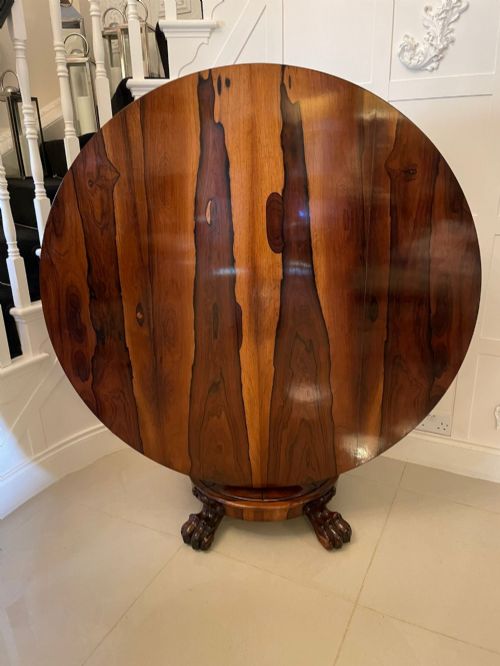
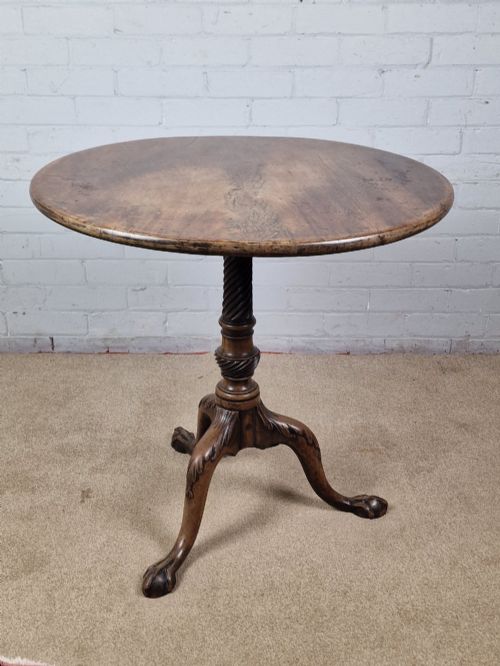
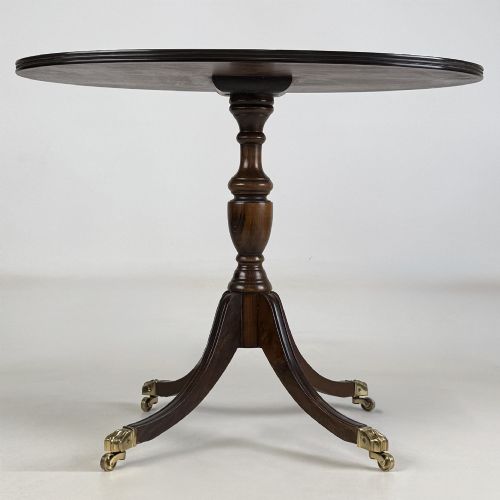
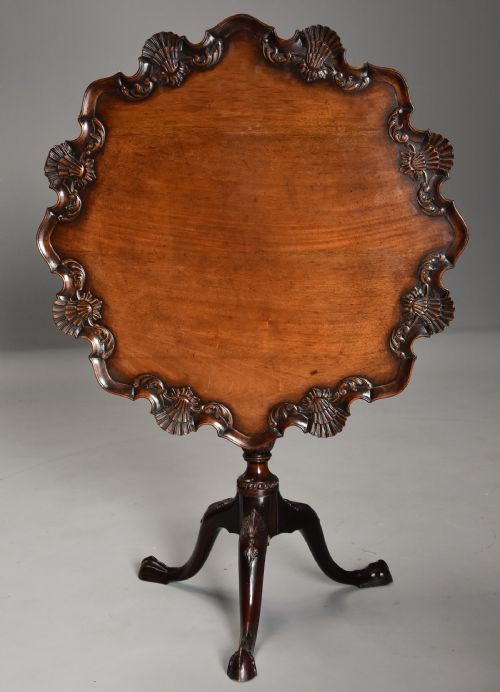

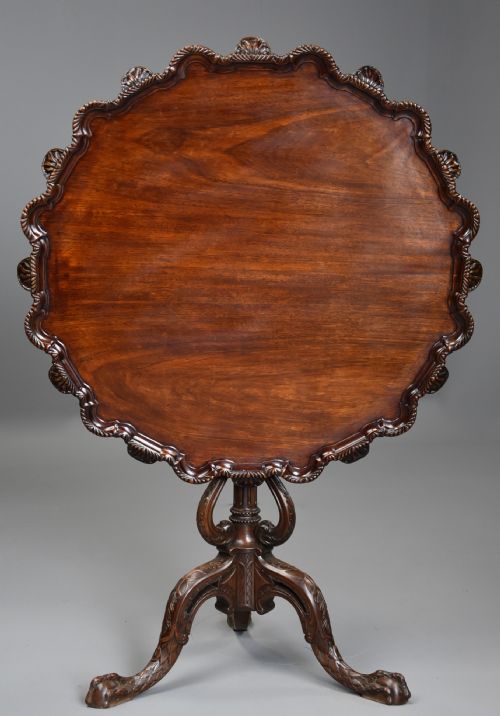


Claw Foot Tilt Top Table
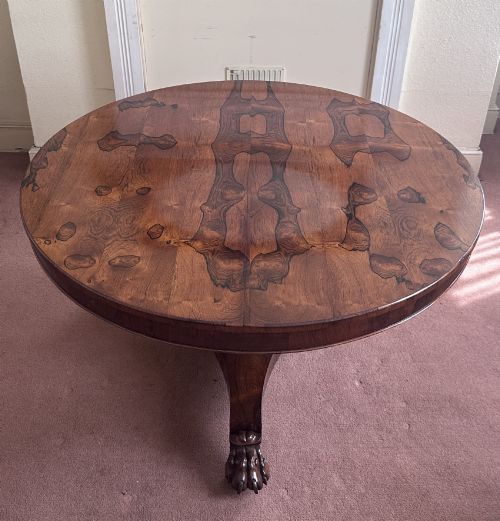
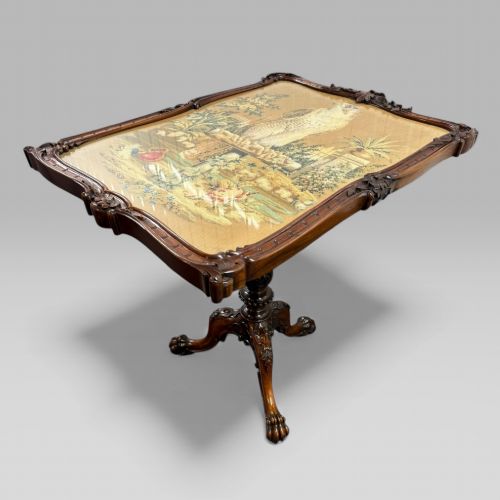
A claw foot tilt top table is a versatile surface designed to save space when stowed against a wall, appearing across Georgian and Victorian periods in mahogany and rosewood.
Claw Foot Tilt Top Table
A claw foot tilt top table combines a folding mechanism with a pivoting surface, allowing the top to tilt vertically when not in use. You encounter examples primarily from the Georgian, Regency, and Victorian eras, alongside Edwardian and early twentieth century interpretations.
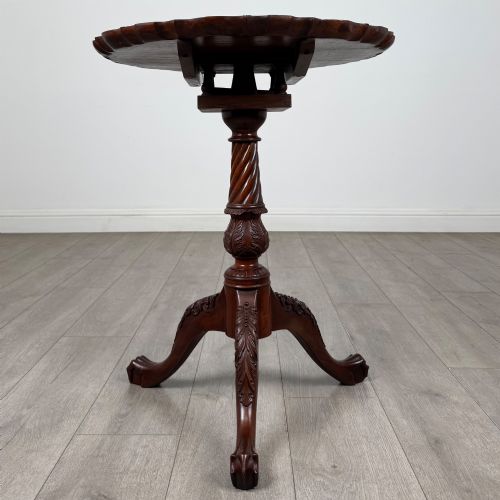
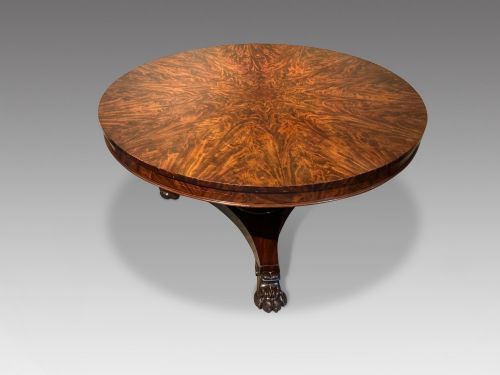
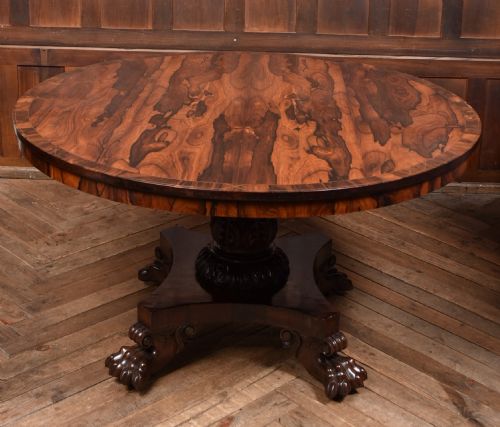
The form appears in various domestic functions, ranging from wine tables and occasional pieces to larger breakfast and dining tables. Mahogany and rosewood dominate the selection, often supported on tripod bases with carved animal feet.
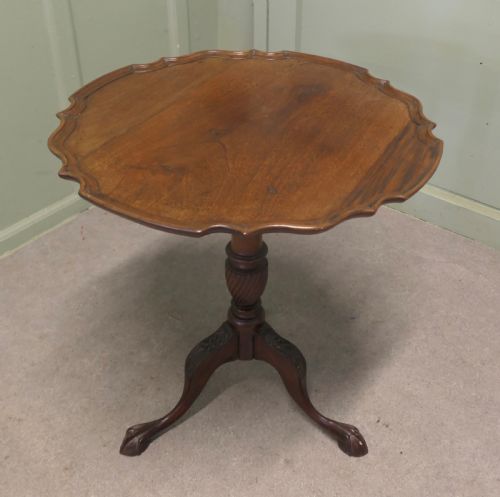
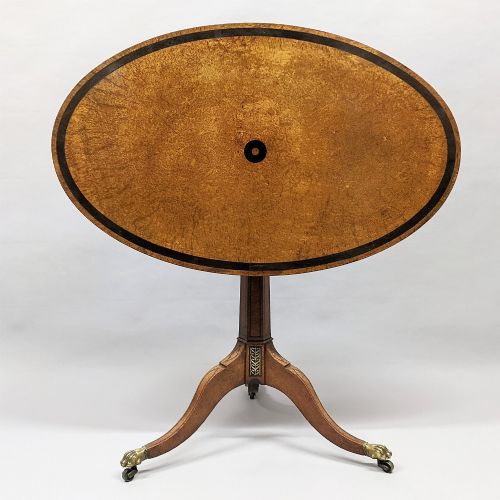
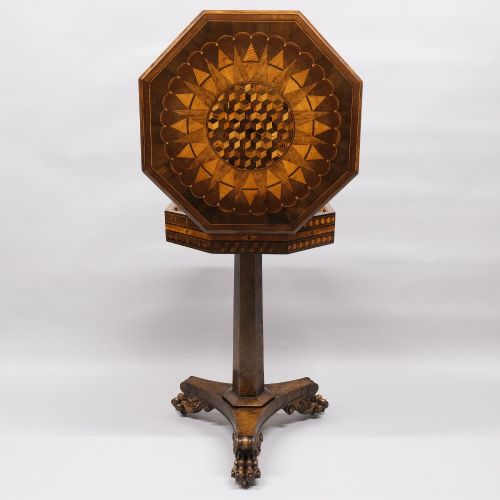
Makers utilised different top designs, including circular, rectangular, oval, piecrust, and segmented formats. Mechanisms vary from simple hinges to birdcage assemblies that permit both tilting and rotation.
How they were made
Tripod bases were turned on lathes and joined to central pillars, while cabriole legs terminated in carved claw and ball or similar foot designs. Joinery relied on traditional tenon and dowel methods to support the weight of the pivoting top.
Object types on this page include wine tables, work tables, breakfast tables, and centre tables alongside standard tilt top designs.
What varies in quality
The refinement of the carving on the tripod legs and claw feet distinguishes standard pieces from superior examples. Crisp detailing in the acanthus leaves or talon work indicates skilled hand craftsmanship.
Timber selection and veneer matching dictate visual appeal, particularly on segmented or highly figured rosewood and burr oak tops. The stability and smoothness of the tilting mechanism, whether standard or birdcage, reflect the precision of the original construction.
Ralph Turnbull·S and H Jewell·Gillows
The Claw Foot Tilt Top Table Glossary
- Tilt top
- A table mechanism that allows the surface to pivot from horizontal to vertical for compact storage. This design was common in domestic parlours and dining rooms.
- Birdcage
- A framework beneath the table top that permits the surface to rotate as well as tilt. It consists of small wooden spindles resembling a cage.
- Tripod table
- A freestanding table supported by a central pillar resting on three legs. The base design provides stability on uneven floors.
- Piecrust table
- A table with a raised, carved decorative edge shaped in undulating curves. This style gained popularity during the Georgian and Chippendale periods.
- Snap top
- A table top secured to its base by a spring catch lock. It prevents the surface from tipping unexpectedly during use.
Claw Foot Tilt Top Table: Frequently Asked Questions
What is a claw foot tilt top table used for?
These tables served as flexible furnishings in historic homes, functioning as wine tables, breakfast surfaces, or occasional stands. When not in use, the top tilted flat to save floor space.
Today, they suit living rooms and reception spaces as accent pieces. Their dual nature makes them practical for modern rooms where space is limited.
How do you operate the tilt mechanism?
A release catch or pin beneath the top disengages the surface from the pedestal base. The table top then pivots upright on its hinge.
Older examples may include a birdcage mechanism that allows the top to spin horizontally as well as tilt. Care should be taken when releasing the catch on heavy rosewood or mahogany tops.
What is the difference between a tilt top and a snap top?
A tilt top describes any table surface that pivots on a horizontal axis for storage. The mechanism often relies on a simple peg or catch.
A snap top specifically incorporates a spring-loaded latch that locks the surface firmly in the horizontal position. Both terms frequently overlap in historic listings.
How do I identify the period of these tables?
Georgian and Regency examples tend to feature solid mahogany or rosewood with refined tripod carving. Victorian pieces often incorporate heavier rosewood, marquetry, or walnut veneers.
Edwardian and later twentieth century versions often copy earlier Chippendale styles. Examining the timber species and leg construction helps determine the era of manufacture.