

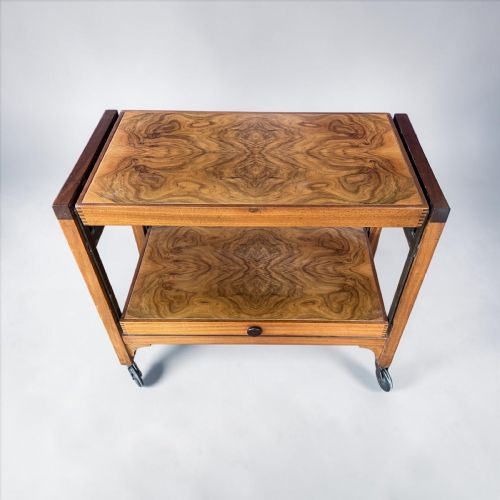
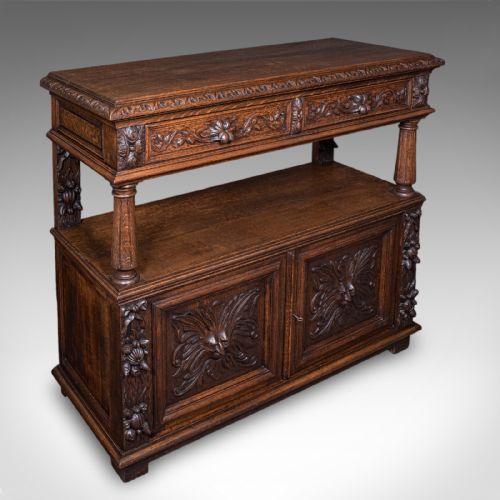
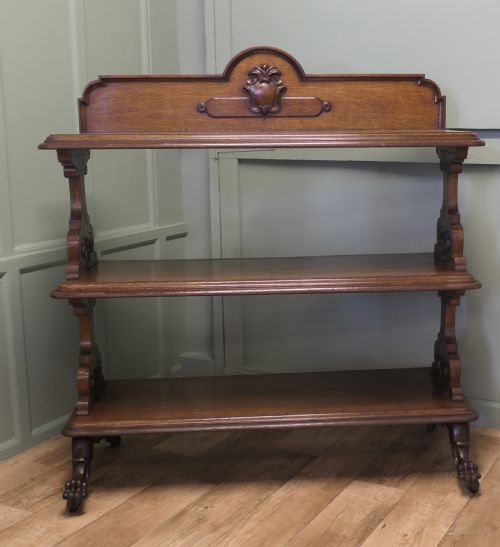
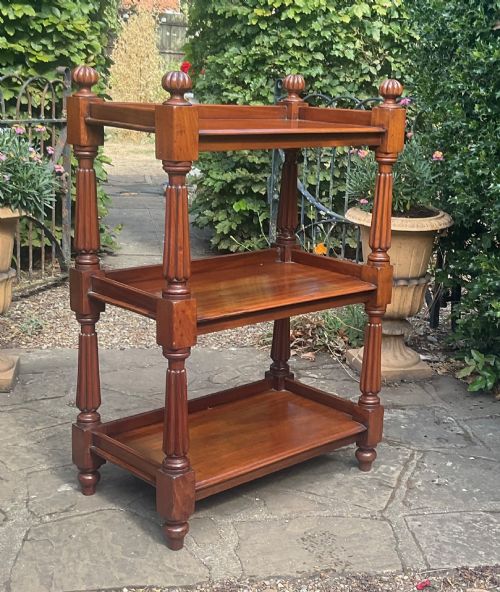
Antique Tier Server
An antique tier server brings tiered practical elegance to dining spaces, offering layered surfaces in rich timber for display and service.
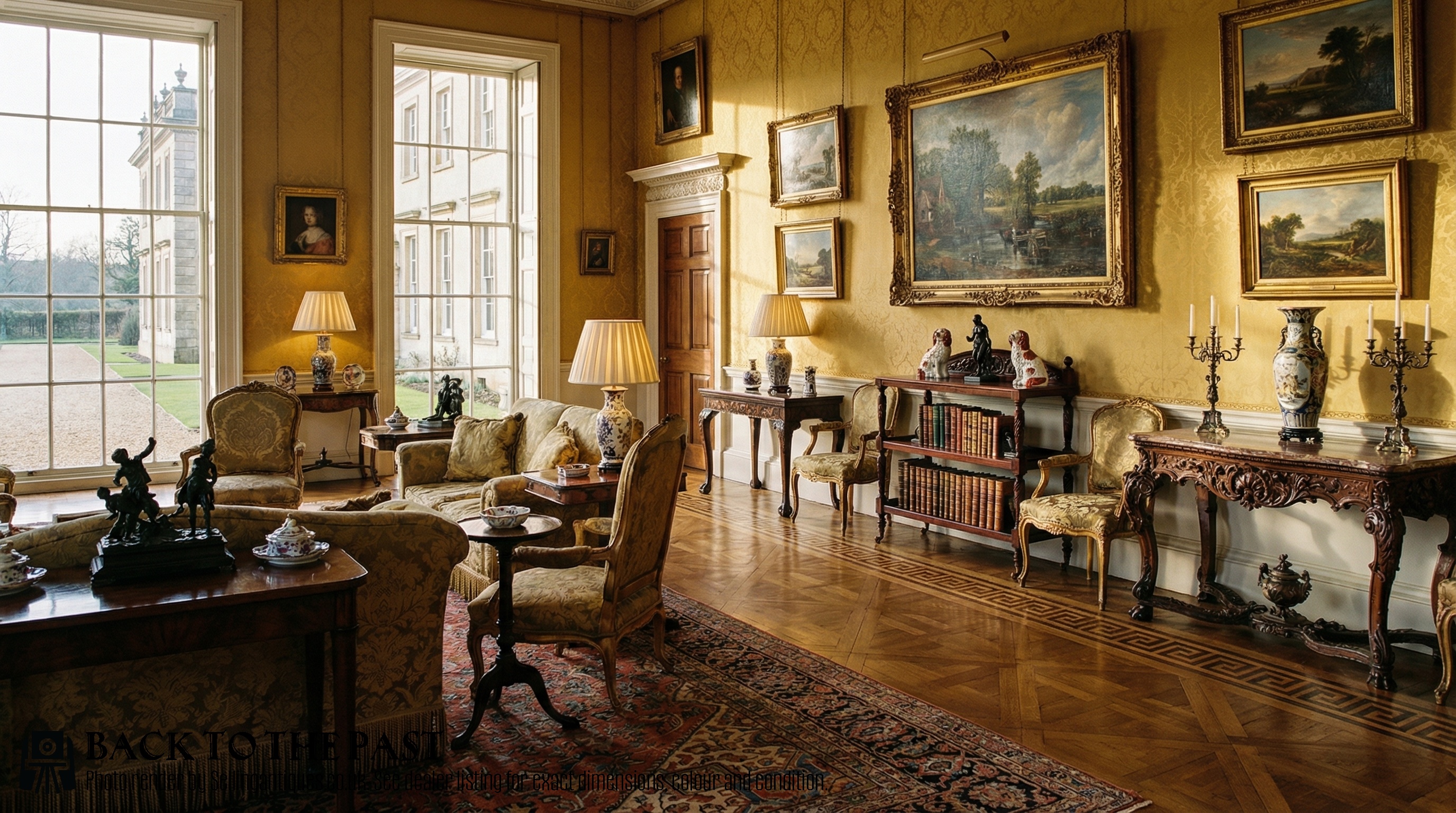
Antique Tier Server
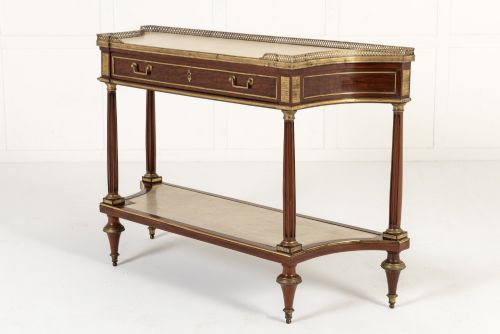
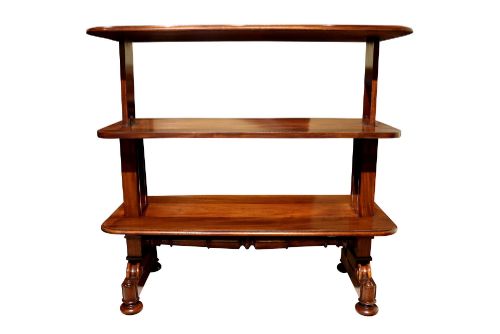
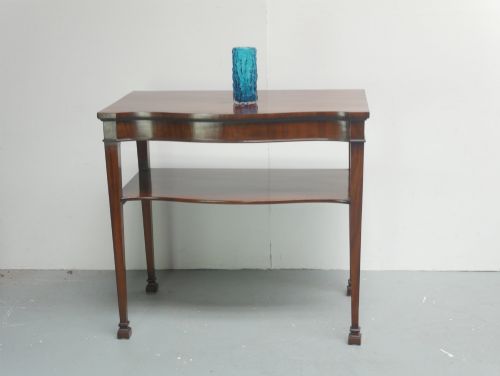
When searching for an antique tier server, buyers encounter diverse tiered forms spanning the Georgian, Regency, Victorian, and later periods. These multifunctional pieces operate under various historic names including dumb waiters, etageres, buffets, and sideboards.
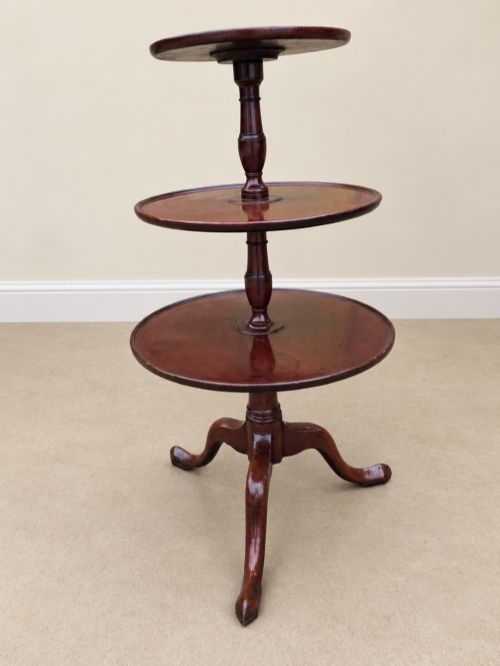
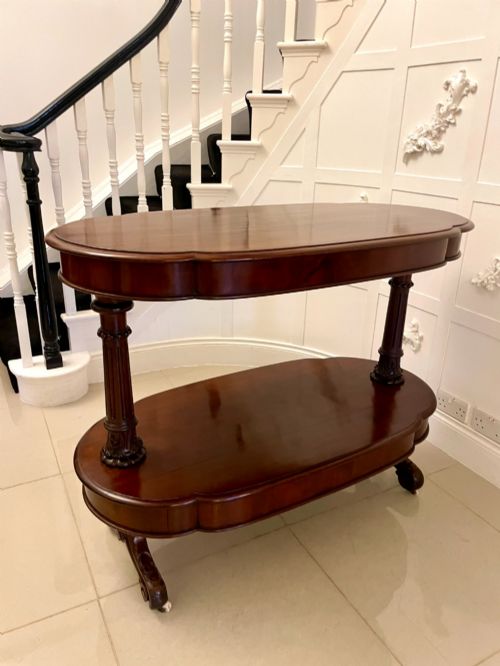
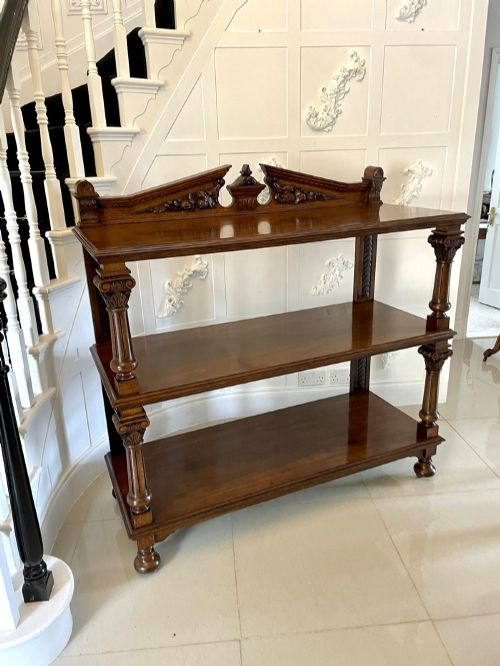
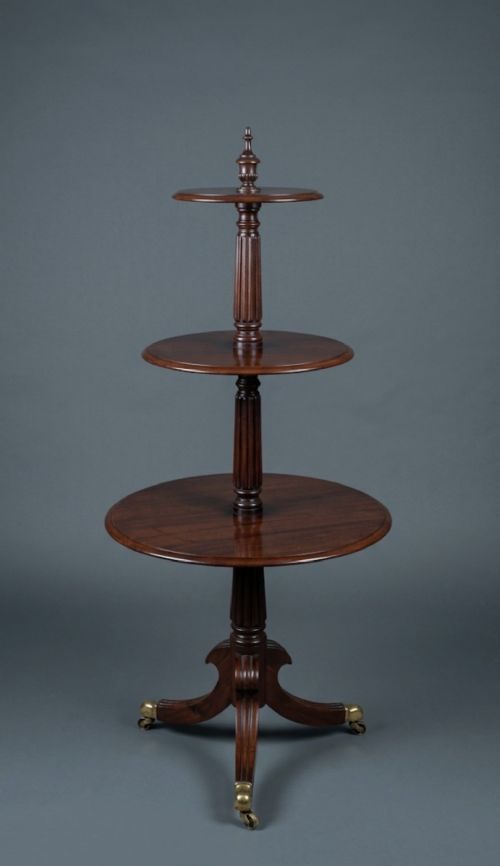
Mahogany and oak dominate the selection, often taking circular, rectangular, or revolving configurations across two or three tiers. Such pieces frequently sit upon tripod bases or original castors, reflecting their original purpose as movable serving assistants in dining rooms.
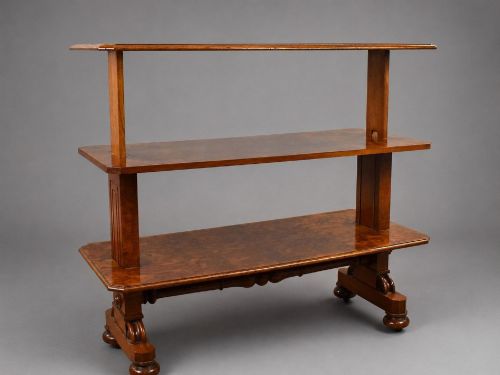
The most common versions met on this page are Victorian and Georgian mahogany or oak pieces, ranging from simple two-tier tables to complex metamorphic and rise-and-fall designs.
How they were made
Cabinet makers utilised dense hardwoods such as mahogany, oak, and walnut, frequently selecting figured veneers like burr walnut or pollard oak to add visual depth to prominent surfaces. Brass and cast-iron components provided structural support for revolving mechanisms, castors, and adjustable tiers.
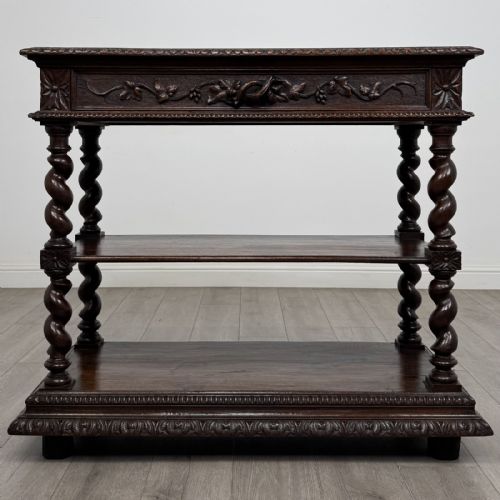
Construction techniques relied on traditional joinery alongside functional mechanical engineering for items featuring telescopic actions or drop leaves. Carving appeared on stylistic iterations including Gothic Revival and Aesthetic Movement examples, while simpler pieces depended on clean turned columns and polished timber grains.
Antique Tier Server Retail Price Guide 2026
Typical asking prices for tier server among the pieces listed under this phrase on Sellingantiques today, from the lower quarter to the upper quarter. They describe what is for sale here now, not the wider market.
Listings feature timbers including mahogany, oak, walnut, pollard oak, burr walnut, and giltwood, paired with brass and glass.
What varies in quality
The degree of craftsmanship shows in the selection of timber veneers and the smooth operation of mechanical elements such as revolving tiers or rise-and-fall mechanisms. Finer examples display precise turning on central columns and seamless integration of brass hardware.
Proportion and structural integrity distinguish superior pieces from standard utility furniture, particularly where tiered platforms must remain balanced under weight. The refinement of hand-carved detailing, especially within Gothic Revival and Renaissance Revival styles, dictates the upper tier of the range.
The Antique Tier Server Glossary
- Dumb waiter
- A multi-tiered freestanding piece designed to hold dishes or drinks near a dining table. These items typically feature circular graduating trays supported by a central pillar.
- Etagere
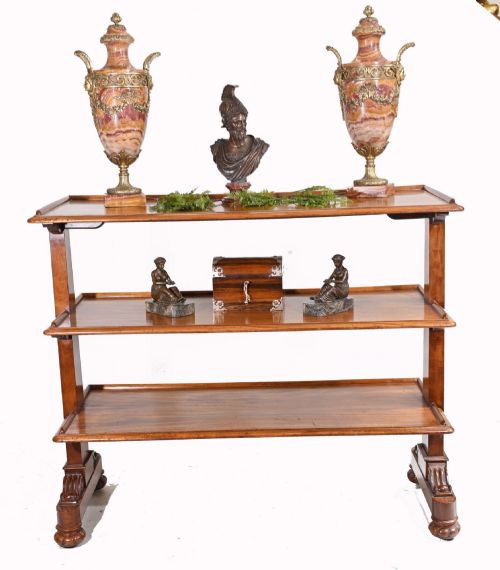
- A piece of furniture consisting of a set of open shelves for displaying small objects. These tiered stands appeared frequently during the Victorian and Aesthetic Movement eras.
- Metamorphic
- A descriptive term for furniture that transforms from one form to another through hinges, ratchets, or sliding parts. Such designs allowed serving tables to adjust in height or expand their surface area.
- Pollard oak
- Oak timber taken from trees that have been pollarded, resulting in a dense, highly figured grain pattern. Cabinet makers valued this wood for decorative drawer fronts and panel inserts.
- Tripod base
- A three-legged support structure commonly found beneath circular dumb waiters and occasional tables. This configuration ensured stability on uneven historic floorboards.
Antique Tier Server: Frequently Asked Questions
What is an antique tier server used for?
These pieces served historically as auxiliary serving surfaces in dining rooms, holding dishes, bottles, and tableware near the main table during meals. They allowed households to dine with fewer attending staff.
Today, buyers utilise them in living spaces and dining rooms as display stands for plants, books, or decorative objects, taking advantage of their vertical shelving.
What is a metamorphic server?
A metamorphic server contains built-in mechanical actions that allow the piece to alter its shape, height, or configuration. These ingenious designs include rise-and-fall mechanisms or extending leaves.
Cabinet makers of the Regency and Victorian eras produced these items to maximise utility in formal entertaining spaces.
How do I care for a wooden tier server?
Maintain timber surfaces by dusting with a soft dry cloth and applying natural beeswax periodically to nourish the grain. Avoid placing furniture in direct sunlight or near heat sources to prevent timber splitting.
Protect the polish from moisture by using coasters beneath glasses or plants placed on the upper shelves.