


Antique Terracotta Portrait
An antique terracotta portrait captures human likeness in fired clay, offering enduring character through modelled features and earthy tones.
Antique Terracotta Portrait
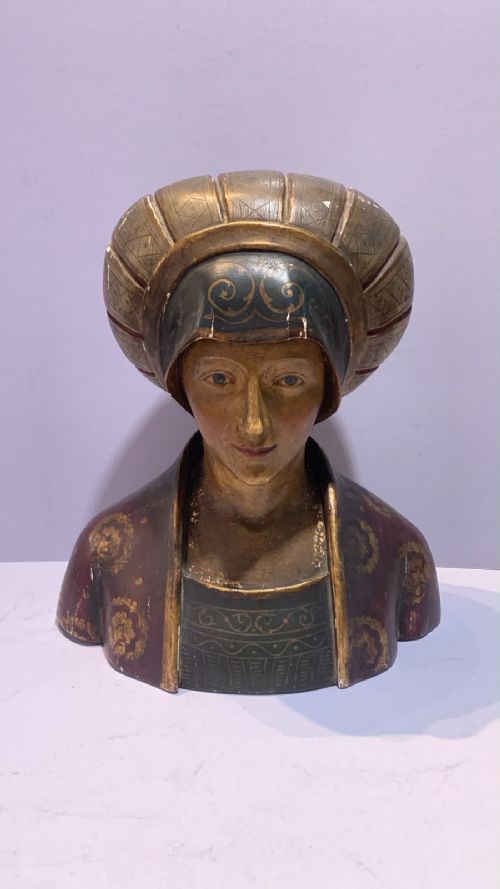
An antique terracotta portrait presents sculptural likenesses of historical figures, noblewomen, emperors, and classical subjects modelled in fired clay. When searching for an antique terracotta portrait, buyers most frequently encounter nineteenth-century busts influenced by classical antiquity, the Renaissance, and Art Nouveau aesthetics. These sculptures range from grand tour souvenirs and decorative Italian pieces to signed works by noted European sculptors.
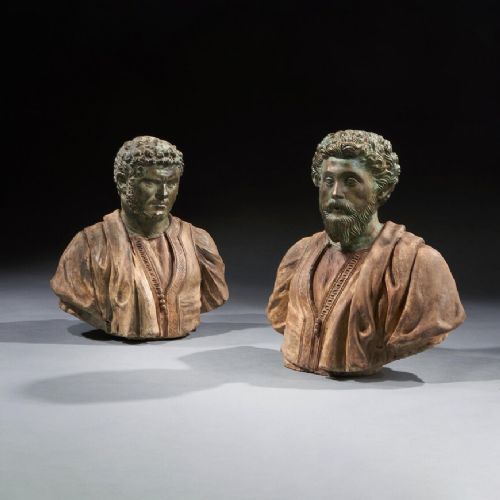
The forms span individual portrait busts, pairs of historical Caesars, and female figures resting on pedestals or integrated into wall sculptures. Makers during the nineteenth and early twentieth centuries utilised terracotta to achieve fine facial expressions and tactile surface detail that rivalled carved marble or bronze. Pieces often bear patination, paint finishes, or bronzed treatments applied to simulate older metals or stones.
How they were made
Sculptors shaped refined clay by hand or pressed it into moulds before firing the material at high temperatures to achieve a durable ceramic body. Artists frequently enhanced the finished terracotta with applied paint, gesso, or metallic bronzing to accentuate drapery, hair, and facial contours. Many works required wooden or plaster supports to stabilise the sculpted form during and after the drying process.
Roman emperors Marcus Aurelius and Caracalla keep stern watch over the collection alongside delicate ladies and classical deities.
What varies in quality
The definition of the modelling separates standard decorative casts from superior sculptural interpretations. Master modellers achieved subtle psychological depth in the gaze and precise articulation in hair and garments, whereas lesser pieces relied on soft contours and repetitive commercial moulding. The quality of the surface finish, whether through subtle polychrome painting or careful bronzed patination, dictates the overall visual presence of the portrait.
Ernst Whaliss·Georges Morin·Bohumil Rezl·A Gory·Goldscheider
The Antique Terracotta Portrait Glossary
- Terracotta
- A porous, fired clay body ranging in colour from pale buff to deep reddish-brown. This versatile medium allowed sculptors to capture rapid modelling marks and fine surface details.
- Patination
- The surface treatment or artificial ageing applied to the clay. Makers utilised paints, bronzing powders, and washes to alter the natural terracotta hue.
- Bust
- A sculpted representation of a person from the chest up. This format focuses attention entirely on facial expression, hairstyle, and upper garments.
- Neoclassical
- A style drawing inspiration from the art and culture of classical Greece and Rome. Sculptors working in this manner emphasised restrained emotion, dignity, and classical dress.
Antique Terracotta Portrait: Frequently Asked Questions
How should I clean antique terracotta?
Dust terracotta gently with a soft, dry brush to prevent dirt settling into the porous clay. Avoid water or liquid cleaners, as moisture can soften older finishes and painted surfaces.
Keep the sculpture in a stable environment away from high humidity. Excessive moisture risks damaging the fired clay and any historic patination applied to the surface.
Were these busts meant for display?
Nineteenth-century terracotta portraits served primarily as interior ornaments for libraries, studies, and drawing rooms. They reflected the owner's classical education and refined artistic tastes.
Many pieces were produced as affordable alternatives to carved marble or cast bronze. Grand tour travellers also collected smaller examples as mementos of European journeys.
How do I identify the period?
Examine the style of dress, hairstyle, and the treatment of the base or plinth. Nineteenth-century works frequently display romantic, neoclassical, or art nouveau characteristics. Nursery marks, incised signatures, or factory stamps on the reverse often provide direct evidence of the maker and manufacturing date.
Why are some painted or bronzed?
Makers applied surface paints and metallic patinas to imitate older bronzes, marbles, or antique terracottas. This technique enhanced the visual drama of the portrait and protected the porous clay body.
Some artists preferred polychrome finishes to render lifelike skin tones and fabric colours. Over time, these finishes developed a natural patina that adds to the historical character of the object.