

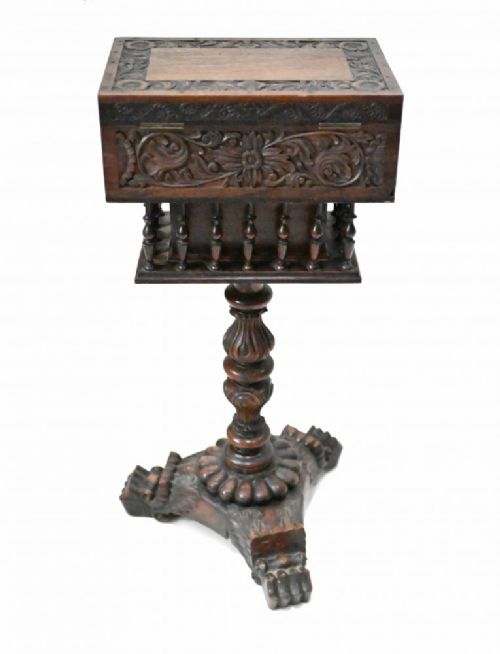


Antique Teapoy Table
An antique teapoy table is a compact storage chest for tea that doubles as a refined occasional table, combining Regency and Victorian craftsmanship.
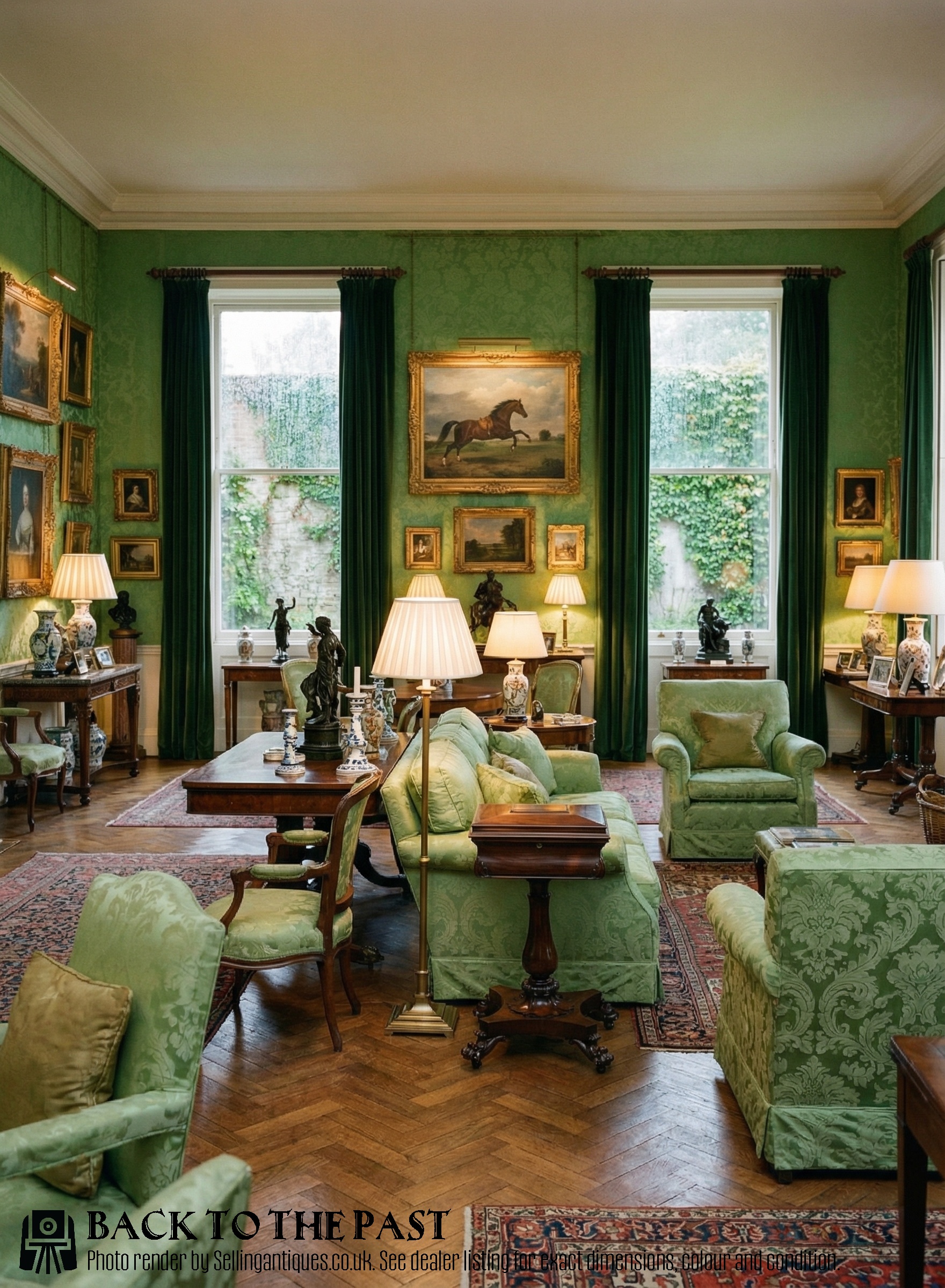
Antique Teapoy Table
When you search for an antique teapoy table, you are looking at specialised tea storage chests raised on pillar supports and pedestals, designed for the Victorian and Regency drawing room. These pieces served to keep expensive tea leaves secure under lock and key, while offering a stable surface beside a chair.
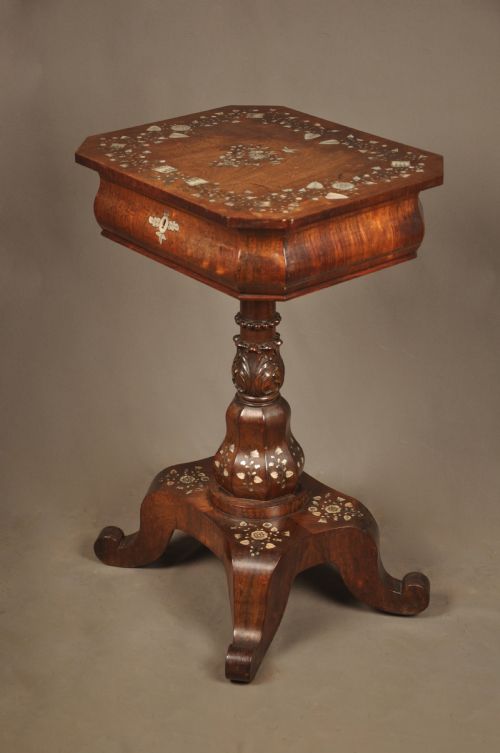
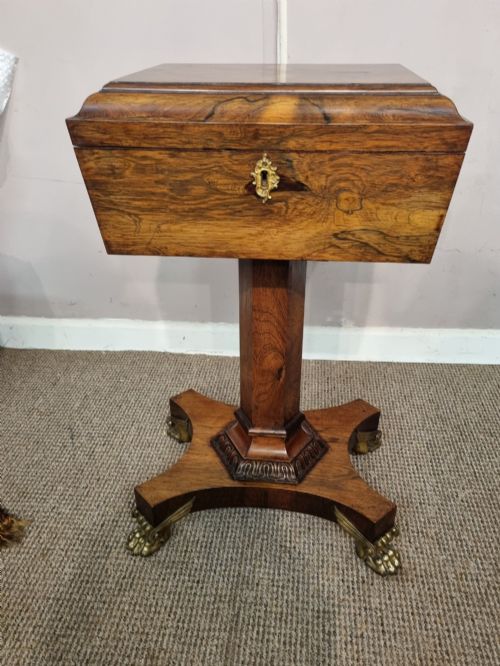
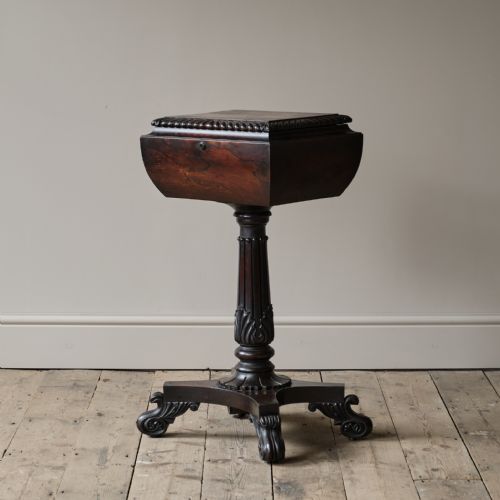
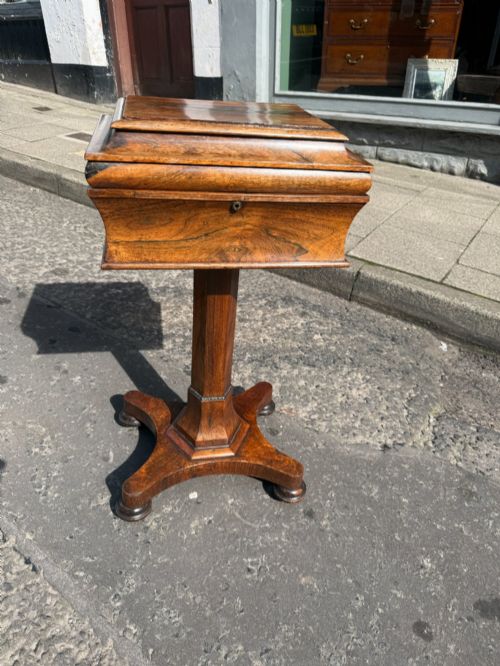
The versions you are most likely to meet on this page span the Regency, William IV, and Victorian periods, often taking the form of a rectangular or sarcophagus-shaped box atop a carved pillar and platform base. Some examples found here also cross over into work tables, retaining their internal compartment structure while functioning as general occasional furniture.
How they were made
Makers built these pieces primarily from rosewood, flame mahogany, and burr elm, utilising rich timber veneers laid over sturdy softwood or hardwood carcasses. The grain patterns on the lids and sides received careful matching to create striking visual panels.
Hardware played an essential structural and decorative role, with cast brass lockplates, hinges, and occasional glass components fitted into the interior compartments. Turned pillars connected the upper box to platform bases supported by carved feet.
Antique Teapoy Table Retail Price Guide 2026
Typical asking prices for teapoy table among the pieces listed under this phrase on Sellingantiques today, from the lower quarter to the upper quarter. They describe what is for sale here now, not the wider market.
Some teapoys doubled as work tables, meaning a Victorian gentlewoman could hide her needlework right where the tea leaves used to live.
What varies in quality
The distinction between ordinary and exceptional examples rests in the selection of timber veneers and the crispness of the secondary carving on the pillar and base. Higher-tier pieces display deeply figured rosewood or burr elm with uninterrupted grain flow across the lid.
Internal fittings also separate standard models from superior ones, as finer teapoys retain their original removable caddy boxes and glass mixing bowls intact beneath the lockable lid.
The Antique Teapoy Table Glossary
- Teapoy
- A small stand or box designed specifically for holding tea leaves, usually fitted with internal compartments and a lock.
- Caddy
- A small inner container or canister, often made of metal or glass, housed within the main teapoy chest to separate different varieties of tea.
- Regency
- A style period dating from the early nineteenth century defined by classical restraint, rosewood veneers, and bold brass mounts.
- Work table
- A multi-purpose piece of occasional furniture featuring internal storage compartments, sometimes adapted from or built similarly to a teapoy.
Antique Teapoy Table: Frequently Asked Questions
What is an antique teapoy table?
An antique teapoy table is a small nineteenth-century box mounted on a pillar stand, originally built to store and lock away expensive loose tea leaves.
Over time, many of these pieces lost their internal tea canisters or were converted for general household use as side tables or work tables.
How were teapoys used in the home?
In the Regency and Victorian drawing room, the mistress of the house used the teapoy to mix different tea leaves before they were brewed by the servants.
The lockable lid kept the valuable leaves secure, while the sturdy pedestal allowed the table to sit beside a sofa or chair during social gatherings.
How do I identify a Regency teapoy?
Regency teapoys typically feature dark rosewood or mahogany timbers, crisp brass fittings, and architectural pillar supports reflecting classical design influences.
They date from the early eighteen-hundreds and often take a sarcophagus or rectangular box form resting on a platform base.
Are all teapoys made of rosewood?
No, while rosewood is the most common timber seen across these listings, makers also utilised flame mahogany and burr elm for the outer veneers.
The choice of wood depended on the prevailing fashion of the period, ranging from early nineteenth-century Regency styles to later Victorian interpretations.