


Antique Teacup Set
When you handle an antique teacup set, you touch centuries of social ritual cast in fine porcelain, bone china, and enamel.
Antique Teacup Set
An antique teacup set brings together matching vessels designed for the formal serving of tea or coffee across dining and drawing rooms. When searching for an antique teacup set, a buyer encounters everything from single cabinet trios comprising a teacup, coffee cup, and saucer to extensive multi-person afternoon services.
The selections span English, continental, and Asian origins, crossing periods from the eighteenth century through the 1930s. Forms range from individual breakfast sets and demitasse cups to large services featuring teapots, cream jugs, and sugar bowls.
Most examples meet on this page as individual trios, pairs, or larger matched services from the Georgian, Victorian, and Edwardian eras. These domestic forms reflect the changing habits of tea drinking and social hospitality over successive centuries.
Materials and Craftsmanship
Makers shaped these pieces primarily from porcelain, bone china, and hard-paste porcelain, occasionally turning to creamware pottery or glass. These ceramic bodies provided the stable white canvas necessary for detailed hand-painting and transfer printing.
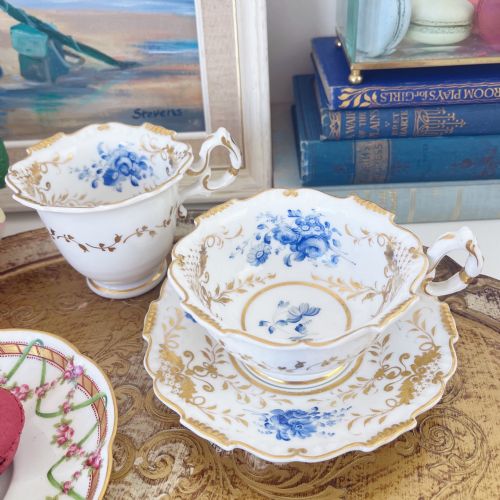
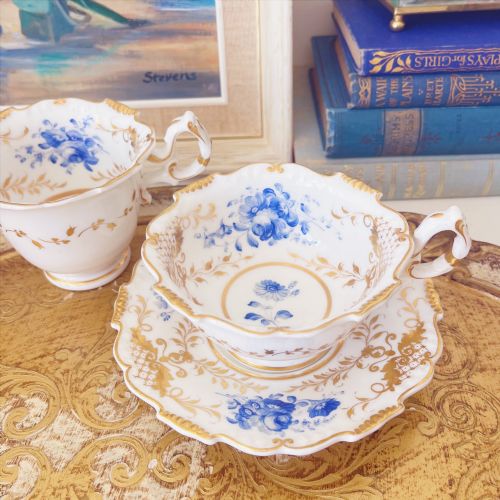
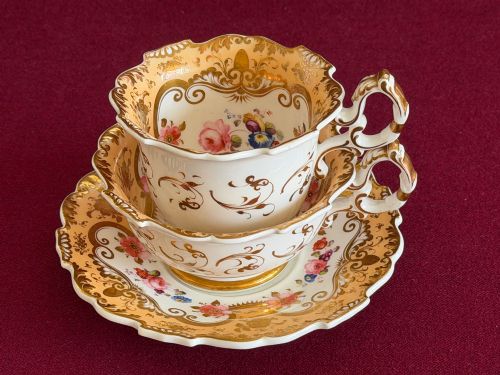
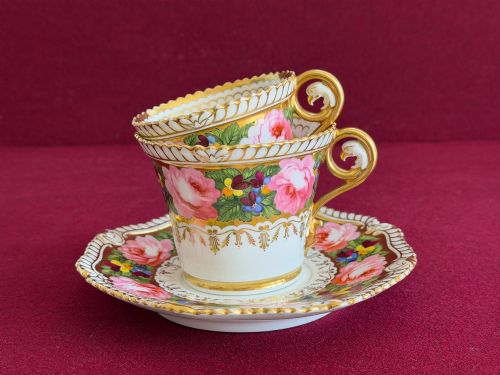
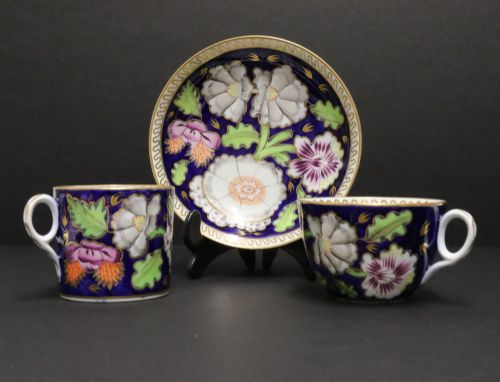
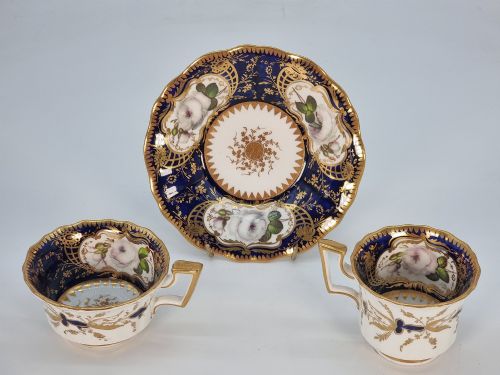
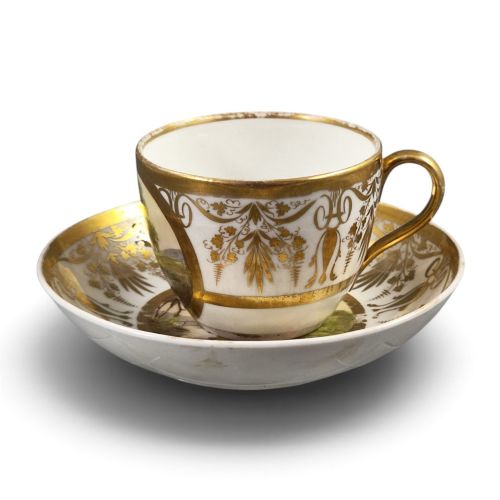
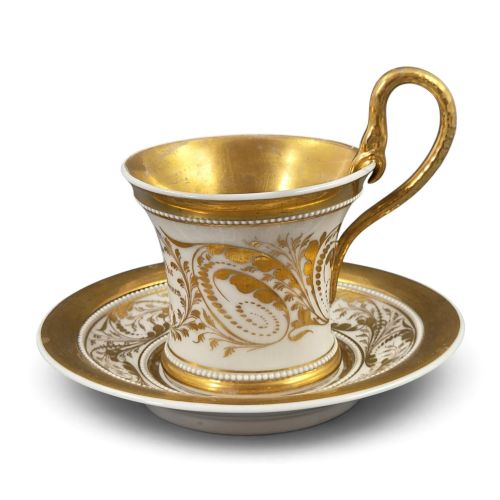
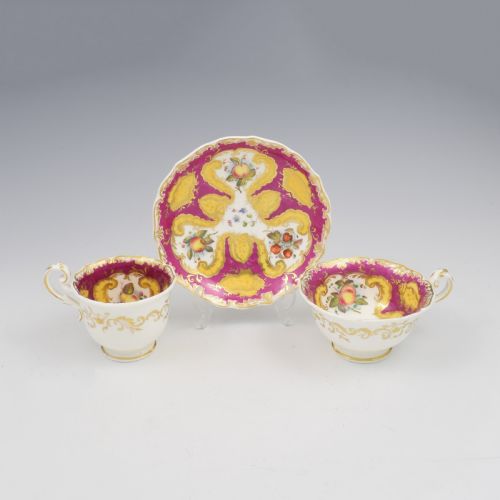
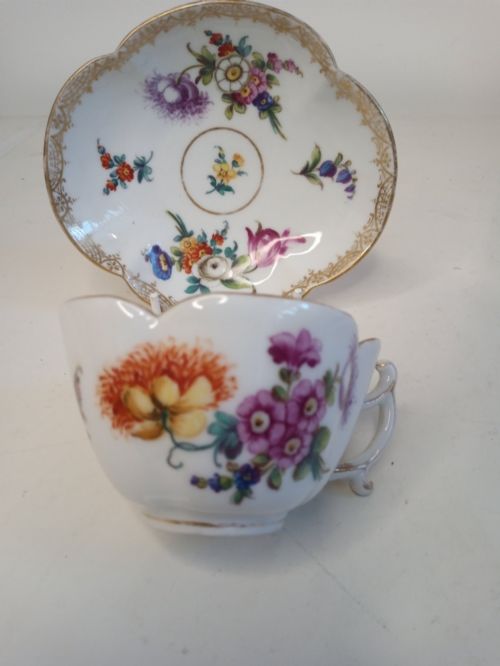
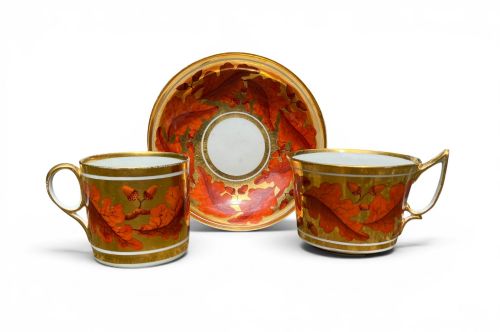
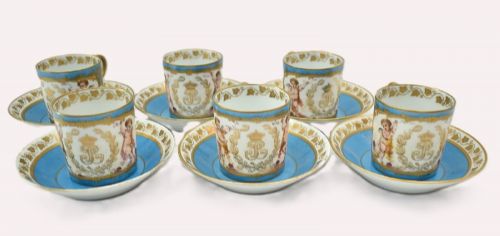
Decoration relied heavily on applied gold leaf, gilding, and enamel work to accent the moulded forms. Artisans added hand-painted motifs, ranging from delicate botanical studies and landscapes to intricate birds and figures, fired securely onto the glaze.
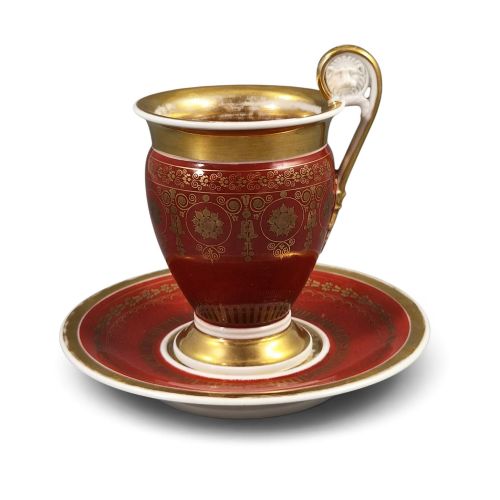
A tiny lion mask handle holds the weight of French Empire history on an Old Paris cup.
Assessing Quality and Execution
The refinement of the ceramic body and the precision of the hand-painting determine the upper tiers of quality. Finer pieces demonstrate superior translucency in the porcelain alongside disciplined brushwork in the enamel and gilding.
Execution of sculptural details, such as moulded foliage shapes, lion mask handles, or applied figures, distinguishes standard production from exceptional cabinet pieces. The integration of design across a complete set reveals the care invested by the factory or workshop.
H & R Daniel·Chamberlain Worcester·Newhall·Coalport·KPM Berlin·Sevres·Royal Worcester·Flight Barr & Barr·Derby·Hicks Meigh & Johnson·Royal Albert Crown China·Doric China·Moser·Meissen·Ridgway·Rockingham
The Antique Teacup Set Glossary
- Trio
- A matched set consisting of a teacup, a coffee cup, and a saucer. This combination appeared frequently in English porcelain production during the Regency period.
- Cabinet Cup
- A decorative cup and saucer intended for display in a cabinet rather than for daily tea service. These pieces often feature painted landscapes or armorial details.
- Gilding
- The application of gold leaf or gold paint to ceramic surfaces for decoration. Artisans used this technique to highlight rims, handles, and painted panels.
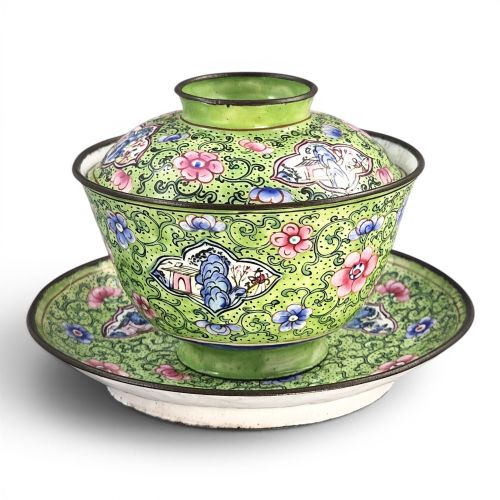
- Gaiwan
- A traditional Chinese lidded bowl used for steeping and drinking tea. Examples often feature hand-painted enamel decoration from the Qing dynasty.
- Demitasse
- A small cup used for serving strong black coffee or espresso. These diminutive vessels frequently accompany larger tea services as part of a multi-piece arrangement.
Antique Teacup Set: Frequently Asked Questions
What is an antique teacup set?
An antique teacup set comprises matching ceramic vessels designed for serving hot beverages, including cups, saucers, and occasionally matching plates or pots.
These collections range from single cabinet trios to large multi-person services spanning the eighteenth to the twentieth centuries.
How were antique teacup sets used?
These sets served a central role in formal domestic hospitality, afternoon tea rituals, and after-dinner coffee service.
Wealthy households displayed them during social gatherings, while finer cabinet pieces remained safely housed in glass display furniture.
How do I care for an antique teacup set?
Hand washing in warm water with mild soap protects the delicate glazes, enamel decoration, and gold leaf gilding.
Harsh detergents and automatic dishwashers quickly degrade the fragile hand-painted surfaces and historical ceramic bodies.
How can I tell the period of a teacup set?
Examining the paste, weight, and translucent quality of the porcelain provides initial clues to the date of manufacture.
Maker marks, stylistic indicators such as Regency shapes or Victorian blush ivory, and painting techniques confirm the exact era.