



Antique Tea Urn Burner
An antique tea urn burner is a self-contained heating vessel designed to keep water hot at the table, combining metalwork with a practical spirit lamp.
Antique Tea Urn Burner
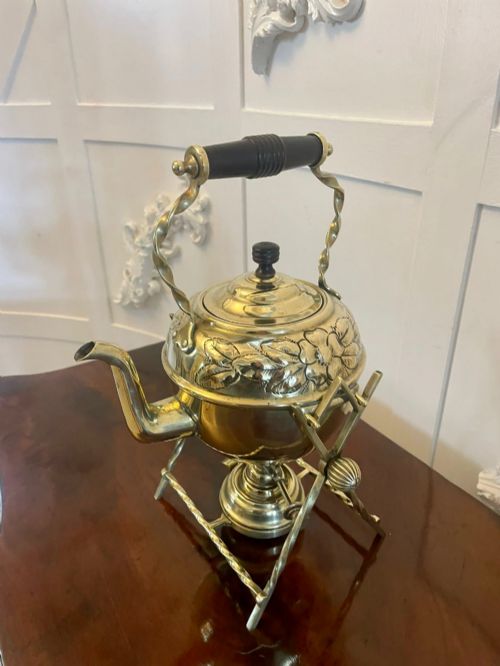
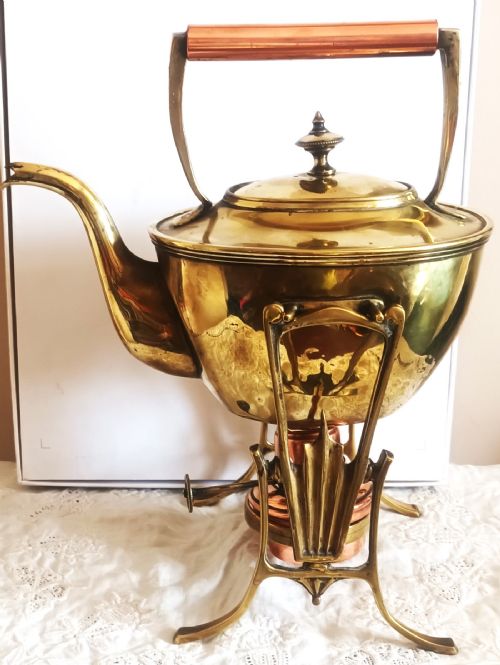
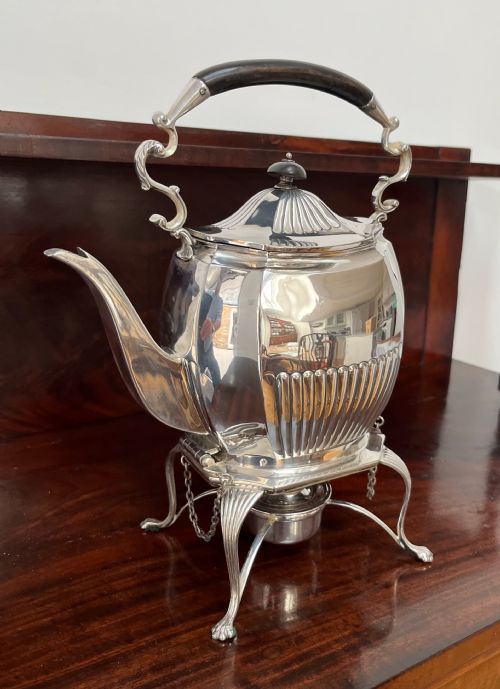
An antique tea urn burner typically takes the form of a spirit kettle or tea urn mounted on a dedicated stand complete with its own small fuel burner underneath. These pieces appear across various periods including the nineteenth century, Victorian era, and Edwardian period.
The most common forms on this page are spirit kettles on stands and tea urns, executed in styles ranging from Victorian and Edwardian to Arts and Crafts, Aesthetic Movement, and Georgian Revival.
Originating largely from British and European workshops, these items served a central role in formal hospitality before the widespread adoption of electric kettles.
Materials and construction methods
Makers utilised metals such as silver plate, brass, copper, and sterling silver, often shaping them through a combination of spinning, hammering, and casting.
Handles and insulators frequently incorporate contrasting materials like wood, ebony, and bone to protect the user's hand from conducted heat.
Several hanging copper kettles on this page invite you to imagine tending a kettle suspended over a hearth fire rather than a formal parlour table.
Assessing quality and execution
The distinction between standard items and superior examples lies in the weight of the metal, the crispness of chased or hammered surface details, and the integrity of the stand's joints.
Makers who invested greater labour in finishing the interior fittings, the burner mechanism, and the insulating mounts produced pieces that retain both structural stability and visual balance.
William Soutter and Sons·Risler and Carré Paris·Fenton Brothers·Frederik Ellis Tim and Co·Paul Storr
The Antique Tea Urn Burner Glossary
- Spirit kettle
- A portable metal kettle mounted on a metal stand housing a small spirit burner beneath it. This setup kept water near boiling point during long tea services.
- Spirit burner
- A small metallic reservoir holding methylated spirit or alcohol with a wick, designed to fit snugly beneath the kettle stand.
- Silver plate
- A thin layer of silver fused or electroplated onto a base metal such as copper or brass. This technique provided the appearance of solid silver at a lower cost.
- Aesthetic Movement
- A late nineteenth-century design style emphasising visual beauty over narrative meaning, often drawing inspiration from Japanese motifs and honest material use.
- Arts and Crafts
- A design movement valuing handcraftsmanship, simple forms, and visible tool marks over mass production.
Antique Tea Urn Burner: Frequently Asked Questions
How do I use an antique tea urn burner?
These pieces are intended primarily as decorative display items in modern homes. Lighting the historical spirit burner is generally discouraged due to the degradation of old wicks and seals.
Instead, polish the metal gently with a suitable cloth and place the kettle and stand safely on a sideboard or tea table to appreciate the craftsmanship.
How do I date an Edwardian spirit kettle?
Edwardian pieces, dating from the early twentieth century, often exhibit lighter silver plating and refined neoclassical or Arts and Crafts influences. Examining the construction of the burner and the style of the mounting legs provides clear clues.
Makers' marks stamped underneath the base or on the rim of the lid also help pinpoint the exact decade of manufacture.
What is the difference between brass and copper kettles?
Brass is an alloy of copper and zinc, yielding a bright golden tone that was widely favoured in Victorian and Edwardian domestic metalwork. Copper contains only the base metal, offering a warmer reddish hue.
Both materials were frequently combined on a single kettle and stand to create visual contrast.
Why do some kettles feature wooden or bone handles?
Wood, ebony, and bone serve as natural thermal insulators. Because these metals conduct heat rapidly from boiling water, insulating spacers prevent the handle from becoming too hot to touch.