
Antique Tea Cup Saucer
When you handle an antique tea cup saucer, you hold domestic history crafted in porcelain, bone china, and earthenware across centuries of dining.

Antique Tea Cup Saucer
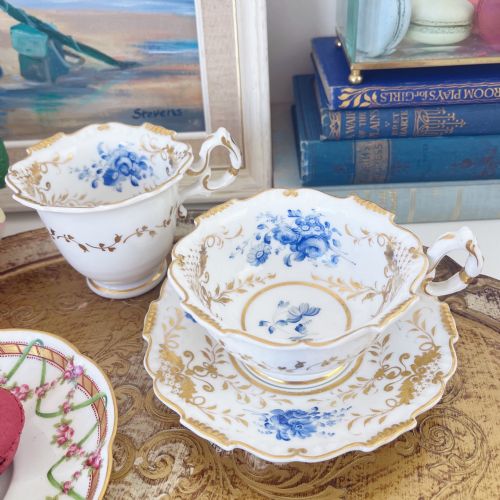
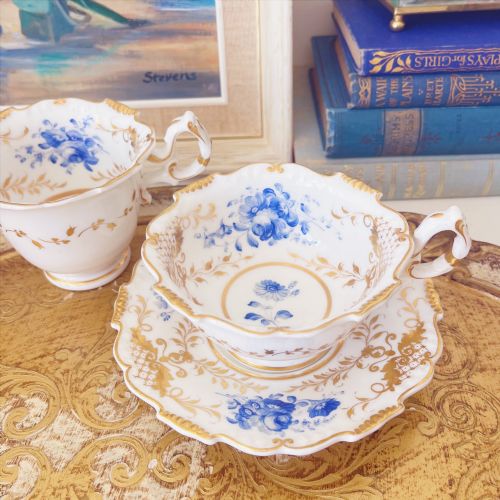
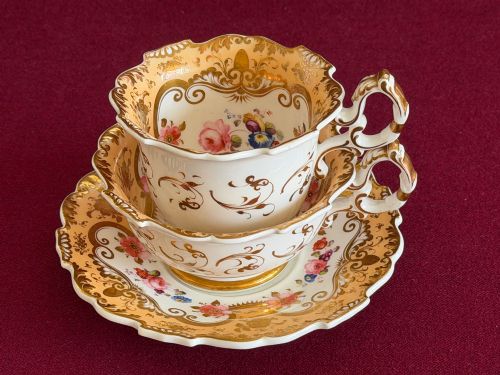
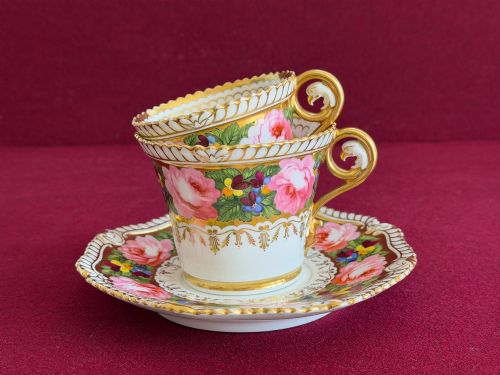
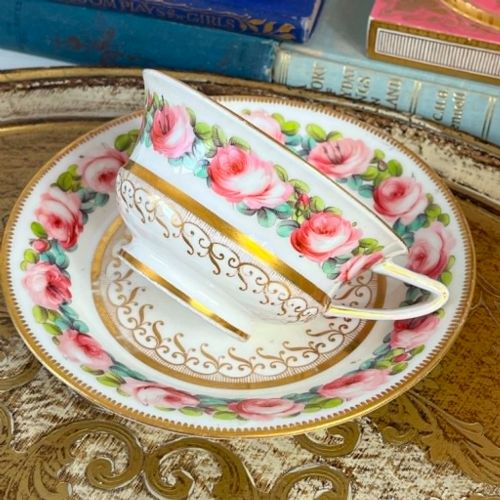
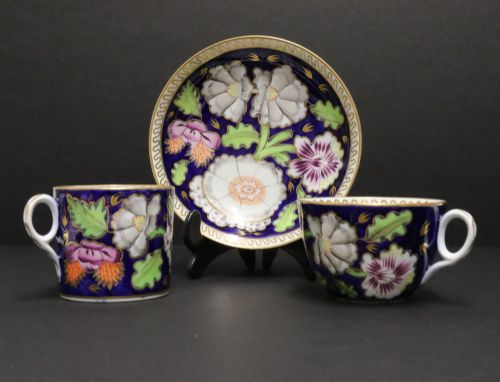
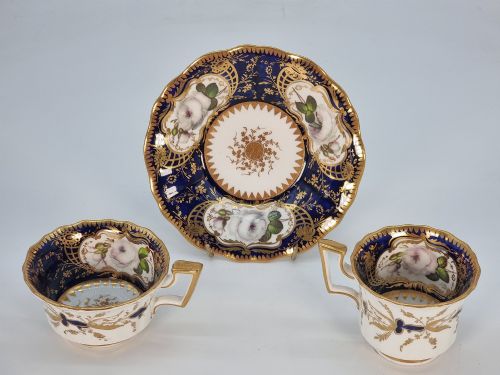
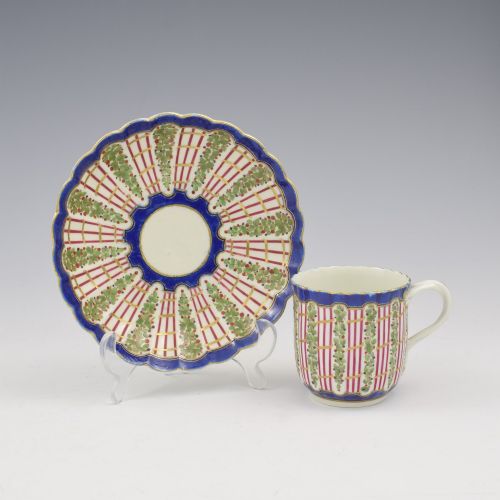
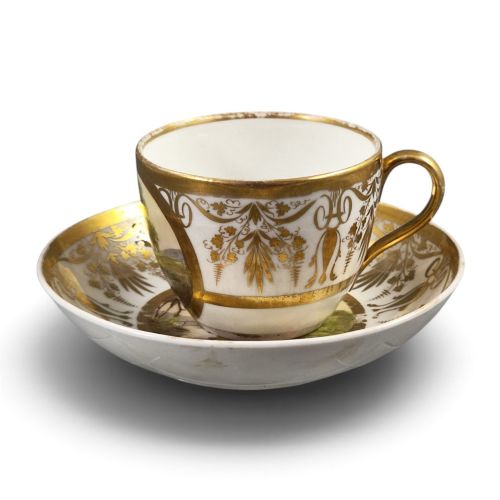
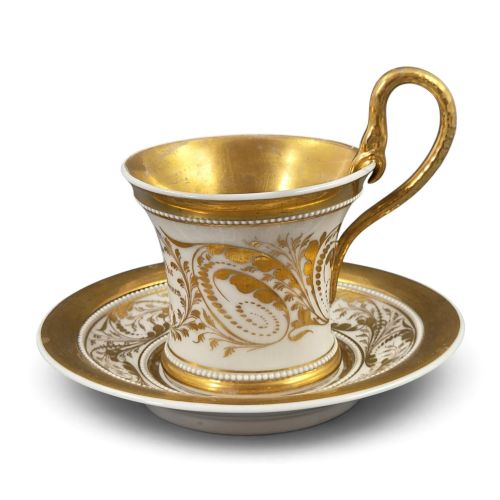
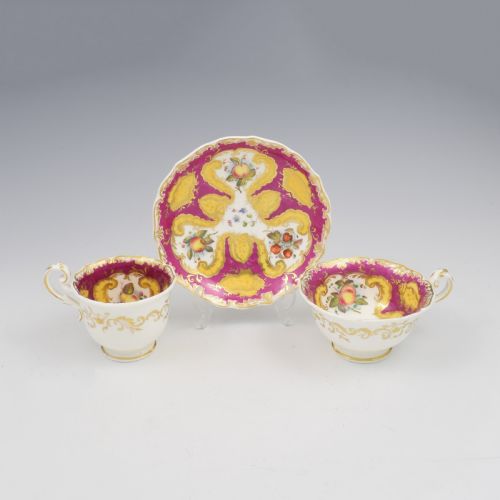
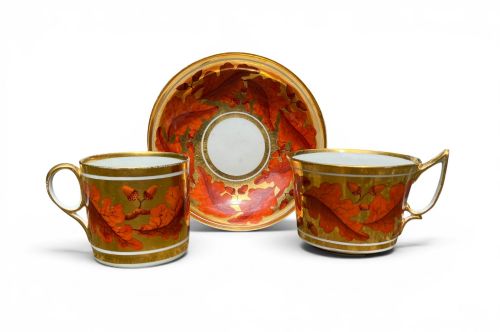
An antique tea cup saucer brings together utilitarian vessels and cabinet pieces originating from Georgian, Regency, Victorian, and early twentieth-century makers. Buyers encounter single duos, cabinet trios featuring matching coffee cups, and larger service sets designed for afternoon tea.
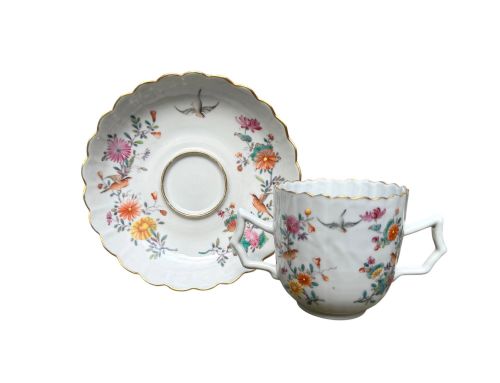
The selections span English porcelain factories, continental European kilns, and Asian export wares created for Western markets. Forms range from simple tea bowls and handleless cups to elaborate gadrooned shapes and bat-wing patterns.
How they were made
Potters utilised hard-paste porcelain, soft-paste porcelain, and bone china, shaping vessels on wheels or casting them in moulds before kiln firing. Decoration relied heavily on handpainted pigments, enamel work, and applied gold leaf or gilding.
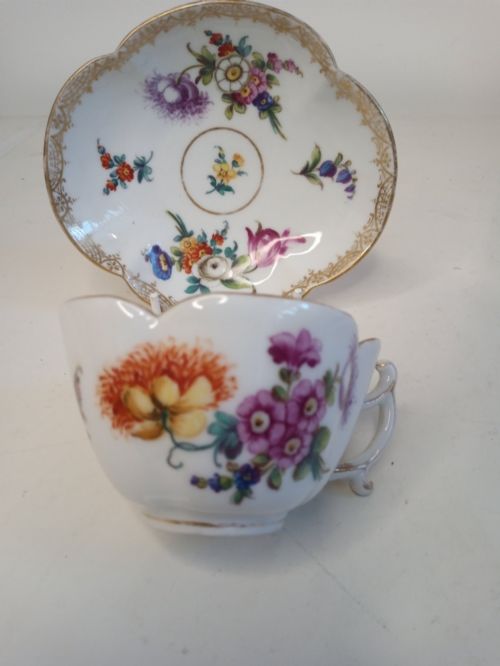
Specialised decorators added landscapes, floral motifs, and birds by hand, sometimes signing individual cabinet pieces or working within established factory patterns.
Listings feature eighteenth-century soft-paste porcelain alongside nineteenth-century bone china and twentieth-century earthenware.
What varies in quality
Quality rests on the fineness of the ceramic body, the translucency of the porcelain, and the precision of the handpainted details. Superior pieces display crisp gilding and sophisticated palettes rather than standard transfer printing.
Provenance and attribution to documented factories or named artists elevate certain duos and trios from everyday tableware to important cabinet displays.
H & R Daniel·Chamberlain Worcester·Newhall·Coalport·KPM Berlin·Derby·Minton·Sevres·Royal Worcester·Flight Barr & Barr·Spode·Rockingham·Ridgway
The Antique Tea Cup Saucer Glossary
- Trio
- A matched set consisting of a teacup, a coffee cup, and a saucer. These combined sets were common in the eighteenth and nineteenth centuries.
- Soft-Paste Porcelain
- An artificial porcelain composition fired at lower temperatures than hard-paste, often showing a warm, creamy body. It was widely utilised by early English factories.
- Bone China
- A porcelain type incorporating animal bone ash, resulting in a strong, highly white and translucent body. It became a staple of nineteenth-century production.
- Imari
- A decorative style inspired by Japanese export wares, typically employing underglaze blue, iron red, and abundant gilding. English factories frequently copied this palette.
- Cabinet Cup
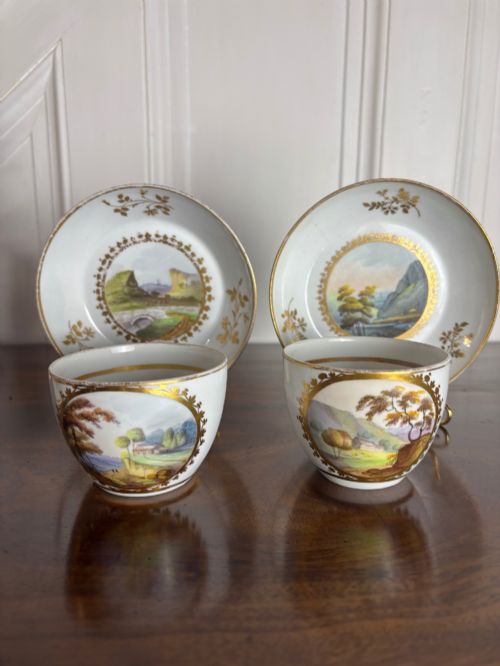
- A decorative cup intended for display in a cabinet rather than for daily consumption of tea. These often feature landscapes or presentation gilding.
Antique Tea Cup Saucer: Frequently Asked Questions
What is a true trio?
A true trio comprises a teacup, a matching coffee cup, and a saucer designed as a single matched set.
Collectors prize these because coffee cups in early periods possessed different heights and handle shapes compared to their teacup counterparts.
How do I date an old cup?
Dating relies on factory marks, paste composition, handle shapes, and stylistic cues such as Regency gilt borders or Victorian blush ivory grounds.
Unmarked pieces require comparison of ceramic bodies and painting techniques with documented factory output from specific decades.
Can I drink tea from them?
Many antique cups remain structurally sound for gentle use, though antique soft-paste porcelain and fragile enamels require careful hand washing.
Valuable cabinet pieces with heavy gilding or delicate overglaze painting are generally reserved for display rather than daily dining.
What is Chinese export porcelain?
Chinese export porcelain refers to wares manufactured in China specifically for the European and American markets during the eighteenth and nineteenth centuries.
These pieces often combine traditional Eastern forms with Western heraldic or floral designs requested by foreign buyers.