


Antique Tea Caddy Spoon
An antique tea caddy spoon measures out loose leaves with a short handle and a wide bowl, formed in silver through two centuries of changing taste.
Antique Tea Caddy Spoon
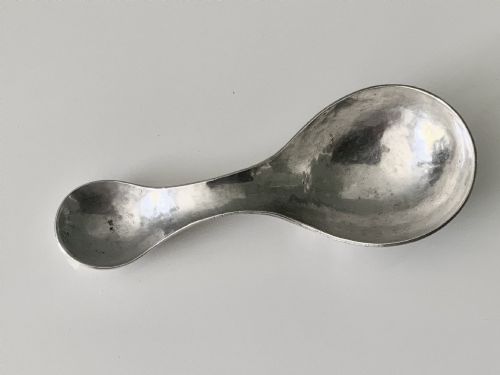
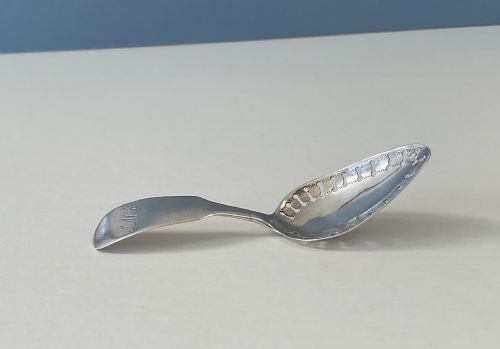
An antique tea caddy spoon is a small scoop designed to transfer loose tea leaves from a canister into a pot. When searching for this phrase, collectors encounter utilitarian shapes alongside whimsical novelties.
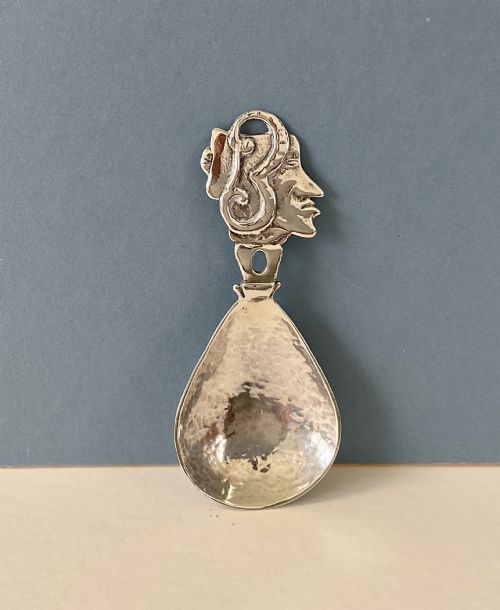
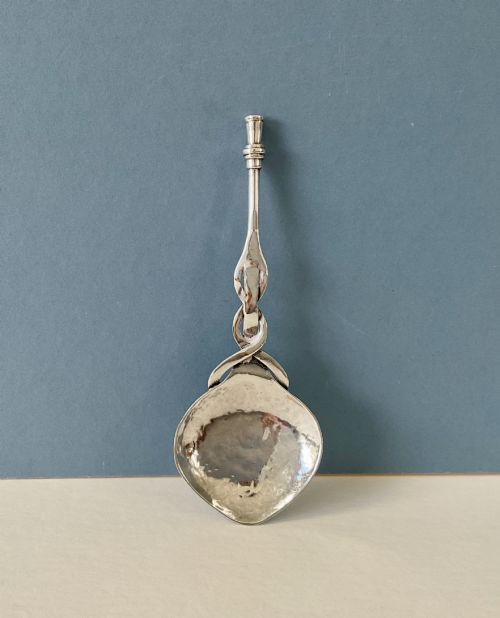
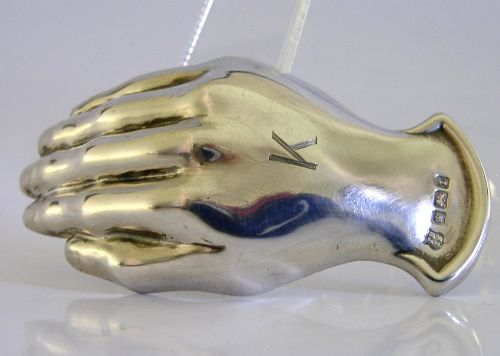
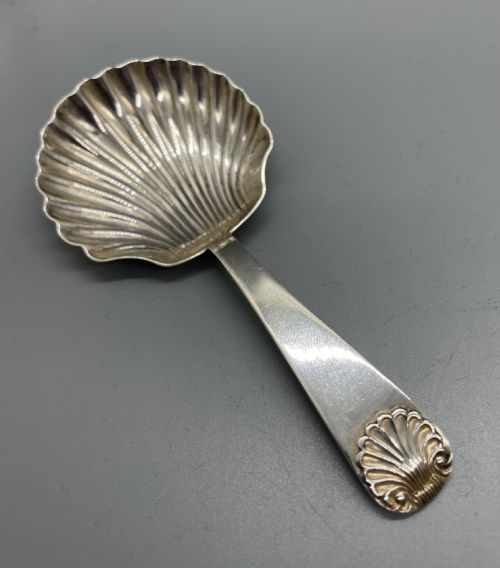
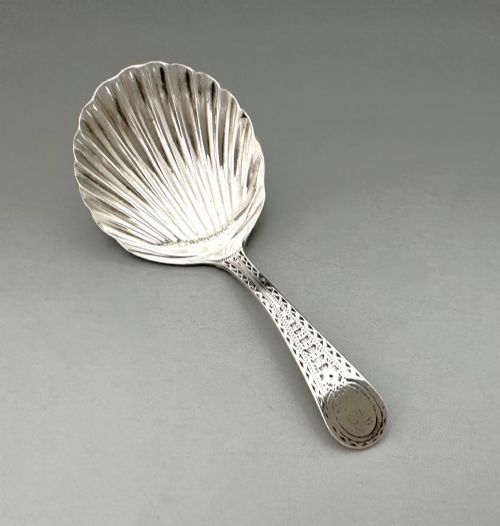
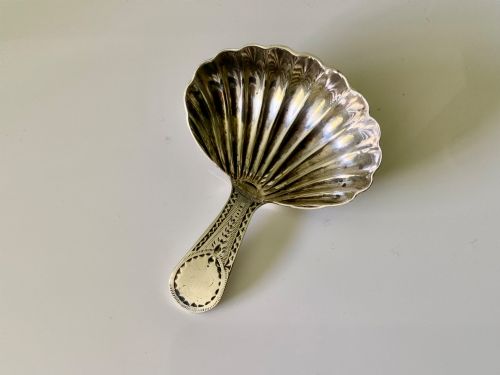
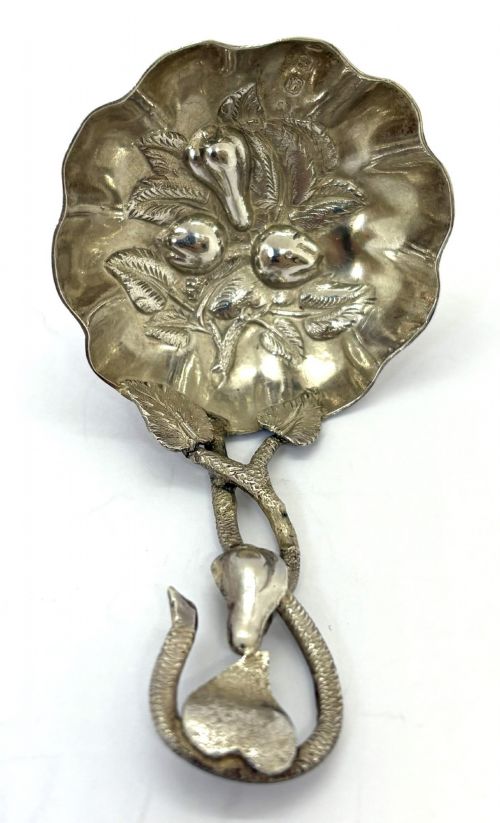
The pieces on this page span the Georgian, Victorian, and Edwardian periods, stretching into the twentieth century with Arts and Crafts, Art Nouveau, and Art Deco examples. Georgian specimens often display shell or leaf bowls, while later decades introduce novelty hands, jockeys' caps, and clean Scandinavian lines.
Sterling silver dominates the selection, accompanied by silver gilt, enamel accents, and occasional carved hardwood. Most examples originate from British silversmiths in London, Birmingham, and Sheffield, alongside continental European makers.
Materials and construction
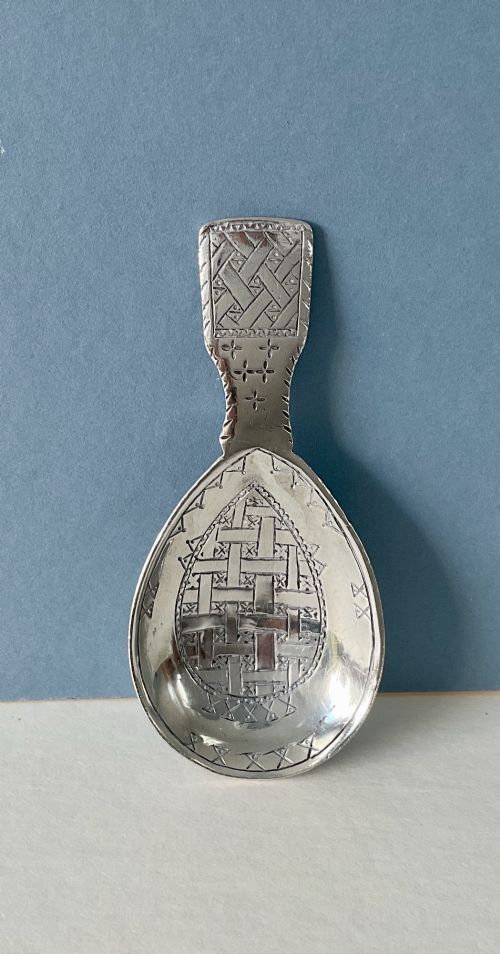
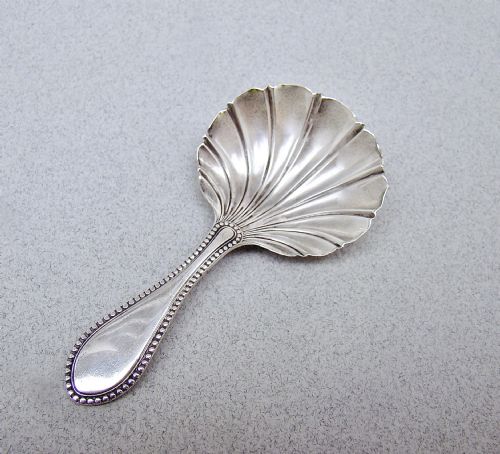
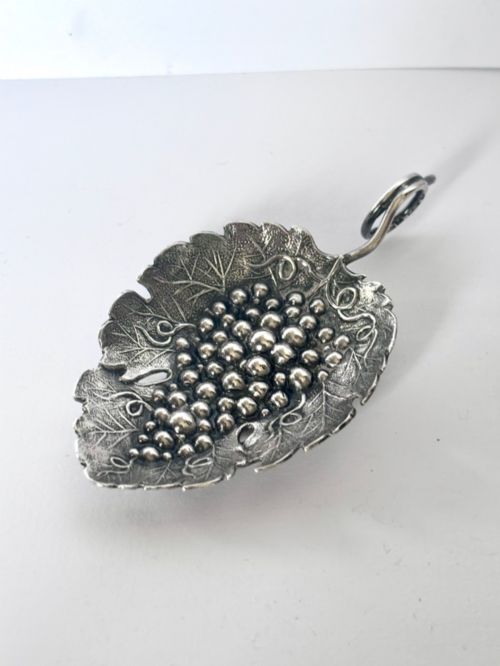
Silversmiths shaped these spoons from sterling silver using techniques of hammering, stamping, and casting. Bowls were frequently chased, engraved, or formed into naturalistic motifs such as vine leaves, acorns, and scallop shells.
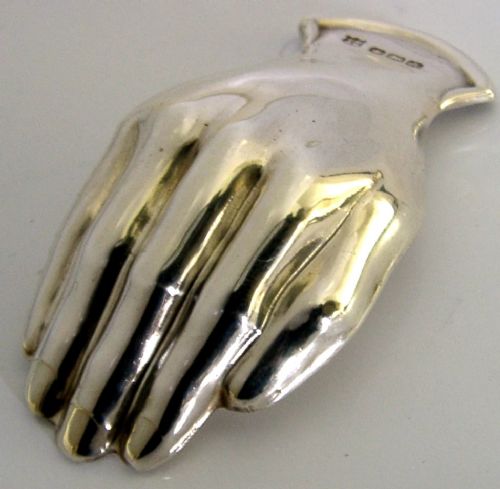
Specialised examples incorporate parcel-gilt finishes to resist the corrosive oils of tea leaves, while enamelled pieces introduce vibrant colour to twentieth-century designs. Novelty items often feature cast components, such as articulated hands or stitched caps, joined securely to short, decorative handles.
Antique Tea Caddy Spoon Retail Price Guide 2026
Typical asking prices for tea caddy spoon among the pieces listed under this phrase on Sellingantiques today, from the lower quarter to the upper quarter. They describe what is for sale here now, not the wider market.
Silver hands reach out from nineteenth-century canisters, offering a pinch of tea with permanent politeness.
Distinctions in manufacture
Quality rests in the crispness of the stamping, the depth of the engraving, and the structural integrity of the join between handle and bowl. Hand-chased details and cast elements demonstrate superior craftsmanship compared to mass-stamped alternatives.
The presence of clear hallmarks adds significant weight to a piece, confirming the maker, assay office, and year of production. Maker attribution to notable workshops elevates the standing of an individual spoon within a collection.
Joseph Willmore·Martin Hall & Co·George Unite·Mappin & Webb·David Andersen·Georg Jensen·William Neale
The Antique Tea Caddy Spoon Glossary
- Hallmark
- A series of stamped marks applied to precious metals indicating the maker, assay office, standard of purity, and year of assay. These stamps provide the primary evidence for dating British silver.
- Silver Gilt
- Silver that has been coated with a thin layer of gold on its surface. This technique protected the metal from tarnishing when exposed to damp tea leaves.
- Novelty Spoon
- A spoon shaped to resemble an everyday object, animal, or figure rather than following traditional flatware geometry. Common motifs include hands, jockeys' caps, and leaves.
- Assay Office
- An official body charged with testing the purity of precious metals and stamping them with statutory hallmarks. Cities such as London, Birmingham, and Sheffield operated prominent offices.
Antique Tea Caddy Spoon: Frequently Asked Questions
What is a tea caddy spoon used for?
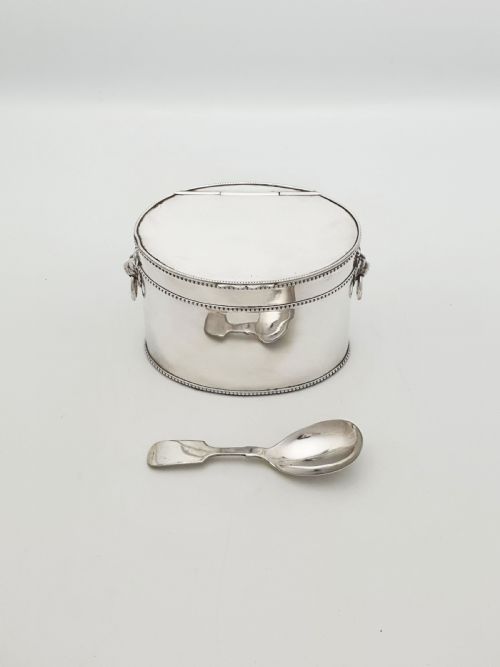
These spoons measure out precise portions of loose-leaf tea from a storage caddy into a teapot. Their short handles allowed them to sit inside or beside the tea canister.
Historically, they formed part of a gentleman or lady's tea service, reflecting the high status and expense of imported tea during the eighteenth and nineteenth centuries.
How do I know the age of my spoon?
Age is primarily determined by examining the hallmarks stamped into the metal, which record the specific year letter and assay office. Stylistic clues, such as the naturalistic vine motifs of the Georgian era or the geometric lines of Art Deco, also indicate the period.
Comparing the manufacturing technique and weight against documented examples helps narrow down the decade of production.
Why are some spoons shaped like leaves or caps?
Silversmiths embraced whimsy during the Georgian and Victorian periods, translating natural forms like vine leaves and scallop shells into functional scoops. Novelty shapes such as jockey caps and hands appealed to Victorian tastes for clever conversation pieces.
These whimsical designs required greater skill in casting and chasing than standard flatware.
How should I display or store these pieces?
These spoons store well in shallow display cabinets, shadow boxes, or lined cutlery drawers designed to prevent surface scratching. Because sterling silver reacts to atmospheric sulphur, keeping them in a stable, dry environment minimises tarnishing.
Occasional gentle cleaning with a soft cloth preserves the original chased detail without wearing away thin silver layers.