


Antique Tazza Centrepiece
An antique tazza centrepiece holds fruit or flowers aloft on a formal pedestal, bringing classical balance and sculptural weight to a dining table.
Antique Tazza Centrepiece
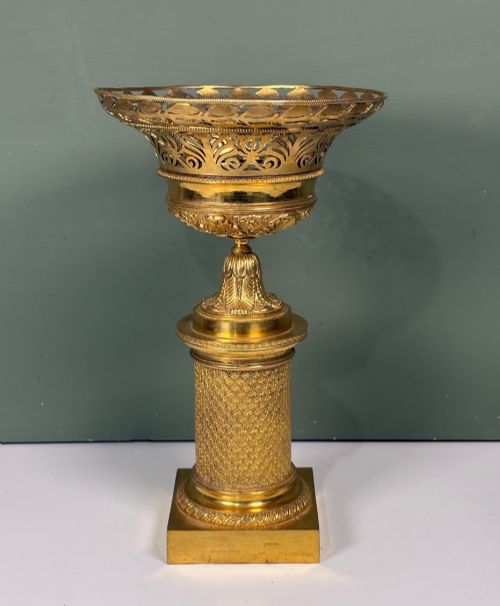
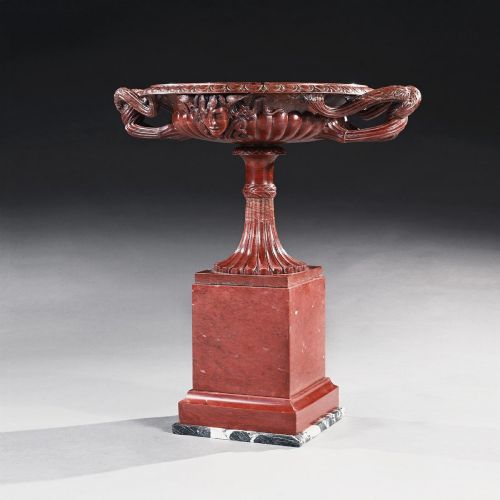
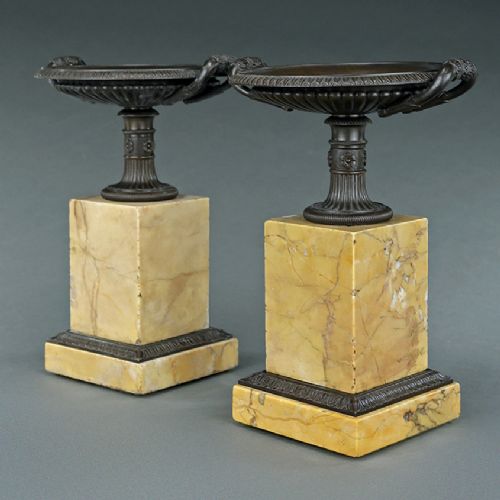
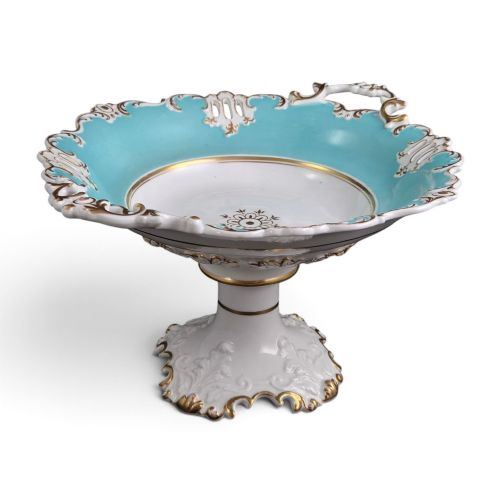
The antique tazza centrepiece appears primarily in nineteenth-century incarnations, drawing heavily on French Empire, Neoclassical, and Rococo Revival vocabularies of form. These pedestal bowls and footed dishes served as formal dining table centrepieces, elevating fruit, sweetmeats, or floral arrangements above the surface of the table.
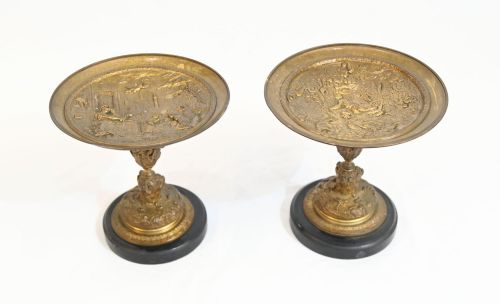
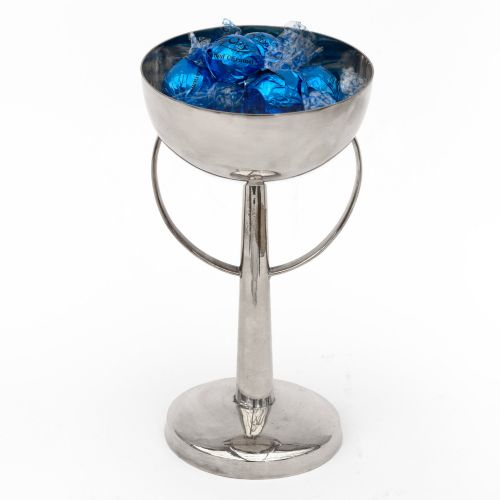
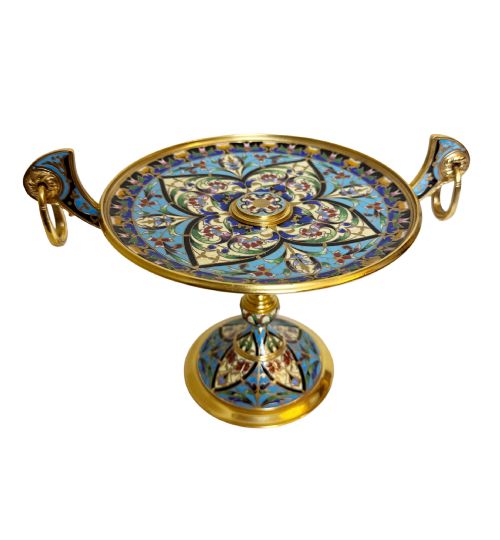
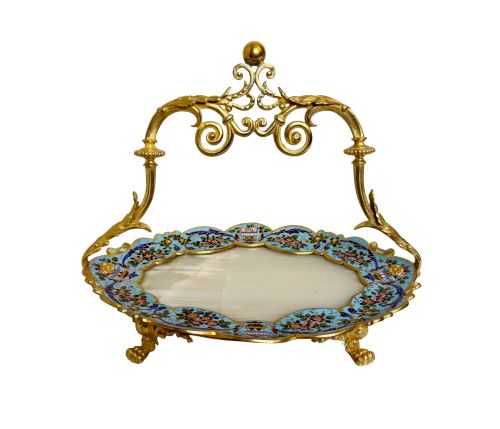
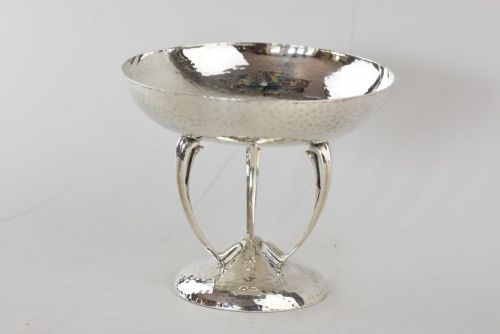
Examples on this page span from George III glass and early nineteenth-century Grand Tour marble through to Edwardian silver and Art Deco designs. Buyers encounter everything from grand gilt bronze and champlevé enamel display pieces to simpler oak fruit bowls and silver-plated bon bon dishes.
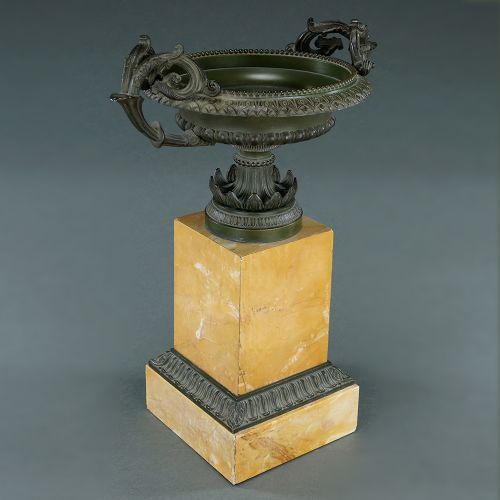
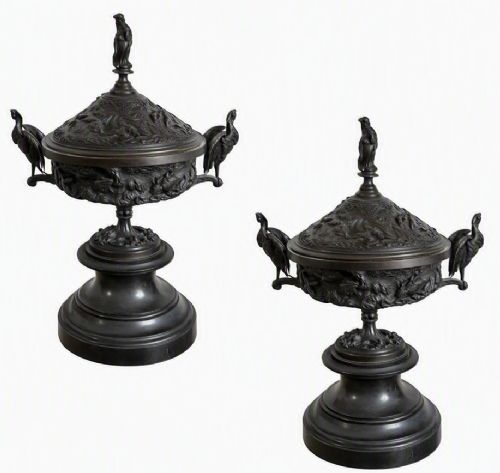
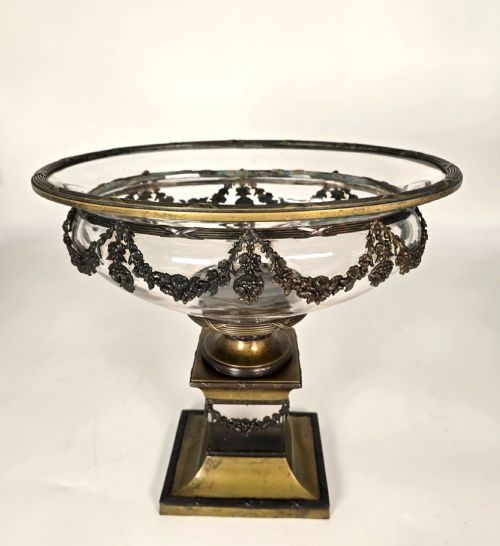
Originating largely from British, French, and Italian workshops, these pieces often incorporate classical motifs such as winged cherubs, fruiting vines, and scrolling handles. Whether rendered in heavy patinated bronze or delicate cut crystal, each piece maintains the elevated profile characteristic of the traditional tazza.
Materials and Construction
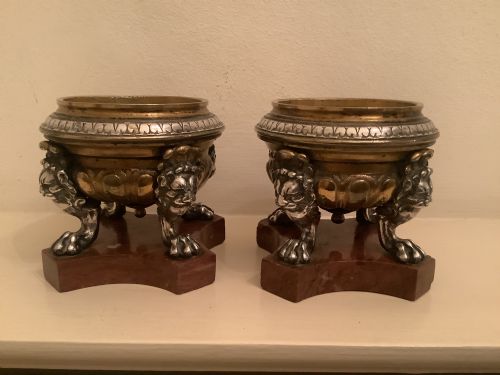
Makers combined rigid structural metals like bronze, ormolu, and sterling silver with contrasting insets of marble, onyx, ruby glass, or porcelain. Metal components were cast, chased, and gilded, while stone bases provided the necessary heft to balance the elevated dish.
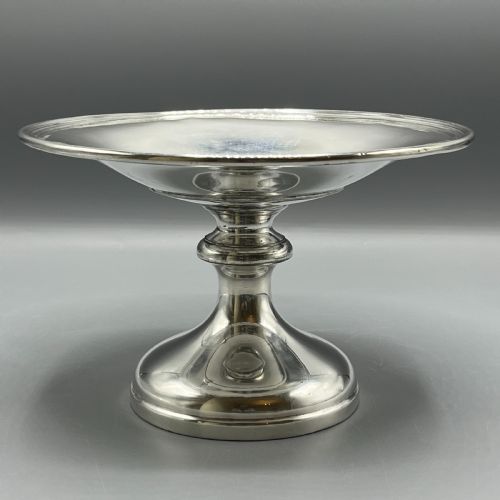
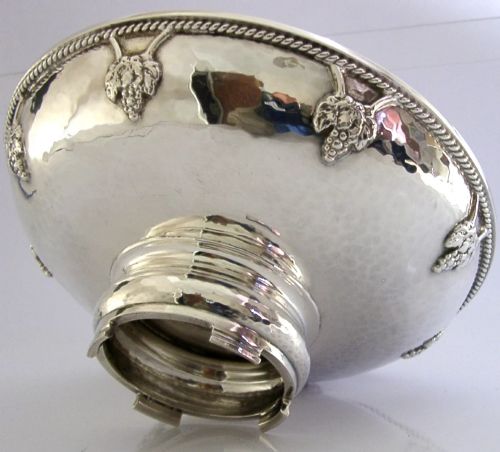
Glass inserts and crystal bowls were frequently hand-cut, etched, or coloured before being secured into metal mounts. Silversmiths utilised hammering and repoussé techniques on precious metals, working sheet silver into deep footed bowls decorated with floral and foliate motifs.
Enamelling techniques such as champlevé added vibrant patches of coloured glass paste into recessed metal channels. Wooden variants relied on careful turning and hand-carved fruiting vine decoration to achieve their sculptural presence.
Antique Tazza Centrepiece Retail Price Guide 2026
Typical asking prices for tazza centrepiece among the pieces listed under this phrase on Sellingantiques today, from the lower quarter to the upper quarter. They describe what is for sale here now, not the wider market.
Several nineteenth-century tazzas come equipped with winged cherubs peering over the rim, seemingly determined to guard the fruit bowl at all costs.
Craftsmanship and Proportion
Quality rests primarily in the crispness of the casting and the harmonious proportion between the shallow bowl and its pedestal base. Superior examples display sharply chased ormolu details and hand-cut crystal free from cloudiness or optical distortion.
The integration of mixed materials dictates the hierarchy of these objects, where finely fitted porcelain panels, genuine hardstone cabochons, or heavy bronze mounts signify ambitious studio production. Lesser pieces rely on standard silver plating over base metals or simpler pressed glass without hand-finishing.
Jules Moigniez·Benedetto Boschetti·Coalport·Sèvres·Goldsmiths and Silversmiths Company·Charles Boyton·Mappin and Webb
The Antique Tazza Centrepiece Glossary
- Tazza
- A shallow pedestal bowl or dish mounted on a foot, used historically for serving food or displaying decorative objects.
- Ormolu
- Gilt bronze, created by applying finely ground gold mercury amalgam to a bronze object before firing.
- Champlevé
- An enamelling technique where troughs or cells are carved into the surface of a metal object and filled with vitreous enamel.
- Grand Tour
- A cultural journey undertaken by wealthy young Europeans in the eighteenth and nineteenth centuries, bringing home souvenirs such as Italian marble tazzas.
- Repoussé
- A metalworking technique where a design is hammered into relief from the reverse side of the object.
Antique Tazza Centrepiece: Frequently Asked Questions
What was a tazza centrepiece used for?
These elevated dishes were placed in the middle of formal dining tables to hold fruit, sweetmeats, or decorative floral arrangements during dinner parties.
Their raised profile ensured they remained visible above tableware while allowing guests to converse underneath the display.
How do I style a tazza at home?
A tazza works well as a focal point on a dining table, sideboard, or entrance hall console, either left empty to showcase the material or filled with seasonal fruit.
Parks of contrasting textures, such as heavy marble paired with delicate glass or polished silver, help anchor the piece within a modern interior.
How can I tell the period of a tazza?
Stylistic clues offer the clearest indication of date, with heavy Neoclassical bronze and ormolu mounts pointing to the nineteenth century, while cleaner geometric lines suggest later periods.
Maker marks, silversmith stamps, and the specific manufacturing techniques used on the glass or ceramic inserts also help narrow down the decade of production.
Are these centrepieces fragile?
While the metal bases and solid marble tazzas are robust, variants featuring delicate cut crystal glass inserts or hand-painted porcelain require careful handling during cleaning and relocation.
Most pieces rely on their own substantial weight to remain stable on a flat surface without requiring permanent fixings.