
Antique Tableware Silver Salts
Antique tableware silver salts bring period dining tables to life, offering small vessels crafted to hold condiments with genuine character.
Antique Tableware Silver Salts
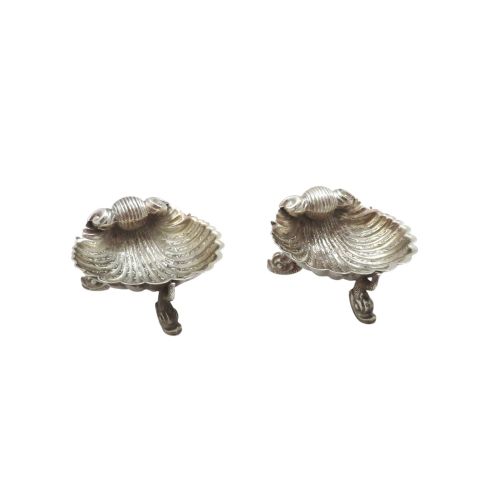
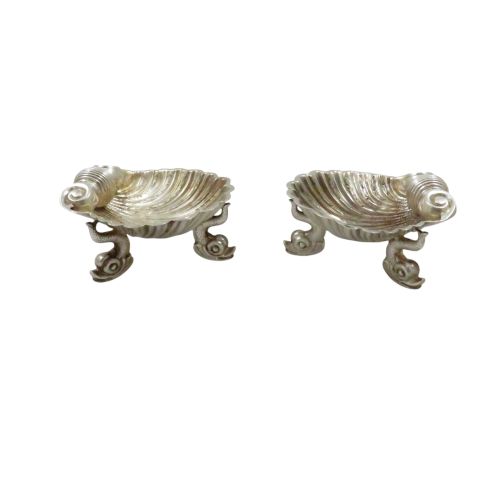
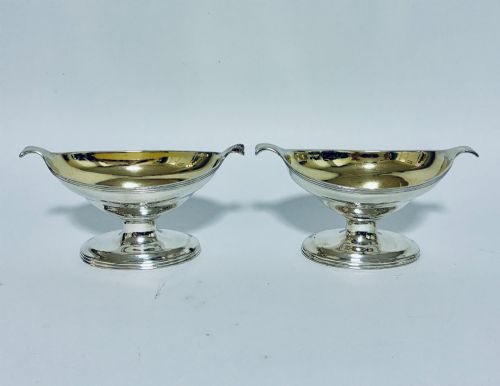
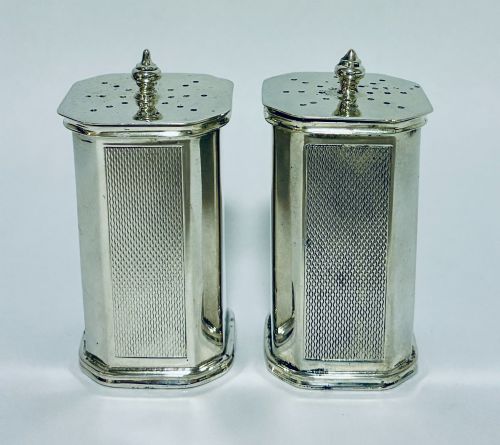
Antique tableware silver salts include open cellars, boat-shaped vessels, and covered pots designed to hold salt and other seasonings for the dining table. These pieces emerge primarily from Victorian, Edwardian, and Georgian periods, spanning simple utilitarian forms to elaborate novelty designs. Buyers searching for antique tableware silver salts encounter items ranging from paired shell-shaped dishes to complete condiment sets with matching spoons.
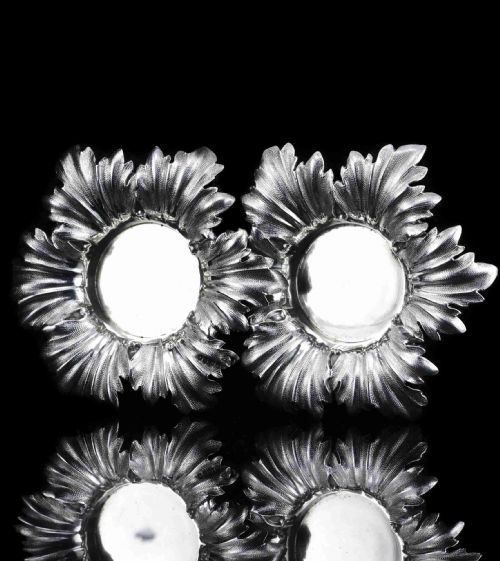
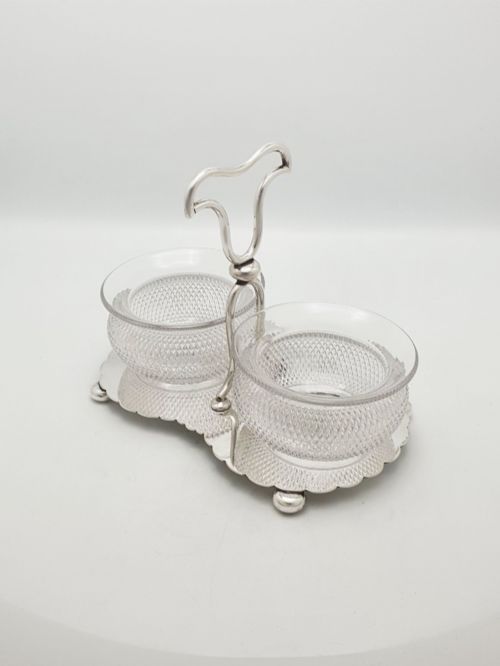
Originating across British and European workshops, these items reflect changing dining fashions across the eighteenth, nineteenth, and twentieth centuries. Pierced silverwork, chased foliage, and wirework frames appear alongside simpler glass bowls held in metal stands.
How They Were Made
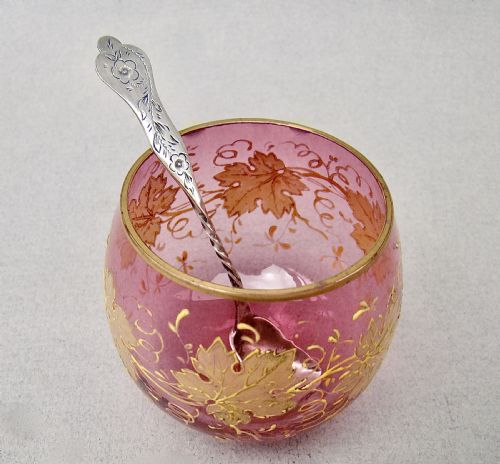
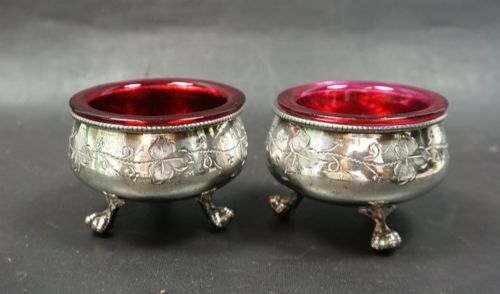
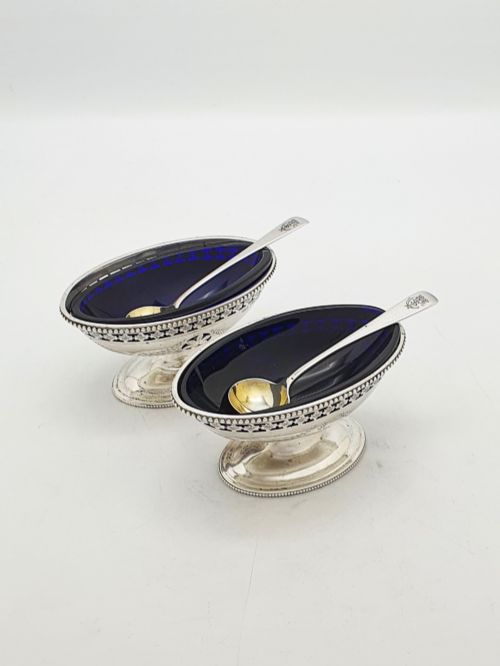
Silversmiths utilised hammering, casting, and piercing techniques to shape sterling silver and silver plate into intricate forms like serpentine edges and dolphin feet. Many pieces incorporate blown or cut glass liners in cobalt blue or cranberry hues, designed to protect the metal from corrosive salt.
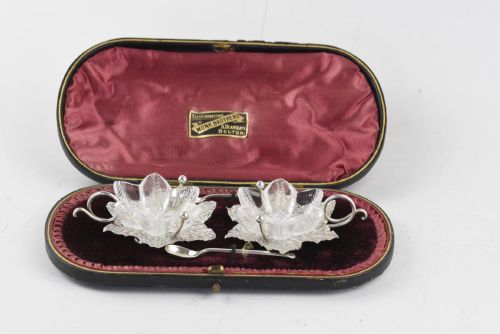
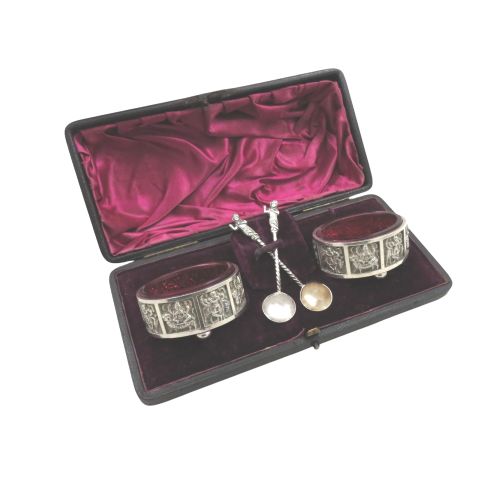
Interiors often featured gilding to prevent tarnishing, while decorative elements relied on hand chasing, engraving, and applied wirework. Makers combined these metals with glass, crystal, and occasionally silk or velvet linings within fitted presentation cases.
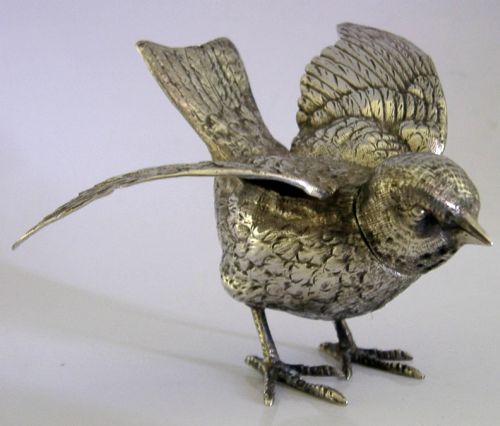
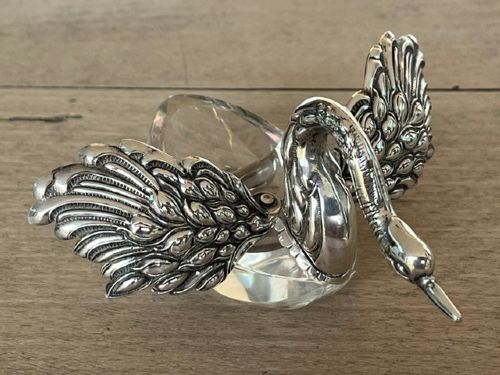
Some Victorian diners seasoned their meals from the backs of silver birds with movable wings.
What Varies in Quality
The distinction between standard production and exceptional work lies in the crispness of chased details, the weight of the metal, and the integration of removable glass liners. Heavy gauge sterling silver maintains structural integrity and sharp ornamentation, whereas plated items show wear down to the base metal over decades of cleaning.
Design complexity also defines the tier of a piece, separating straightforward utilitarian tubs from figural novelties featuring movable wings or cast animal anatomy. The presence of original fitted presentation cases and matched spoons elevates the completeness of a set.
Barnards·William Neale·John Edmonstone
The Antique Tableware Silver Salts Glossary
- Salt cellar
- An open bowl or vessel designed to hold table salt before the invention of the spring-loaded shaker. These often require a small spoon for serving.
- Cruet set
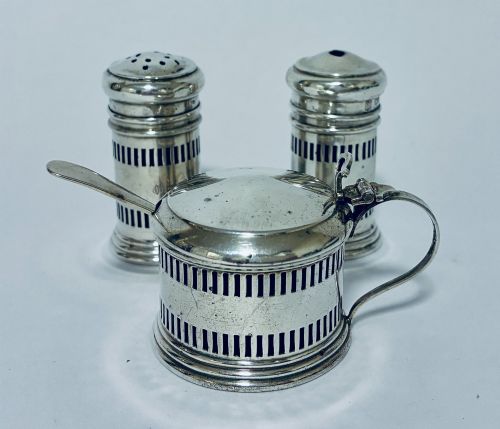
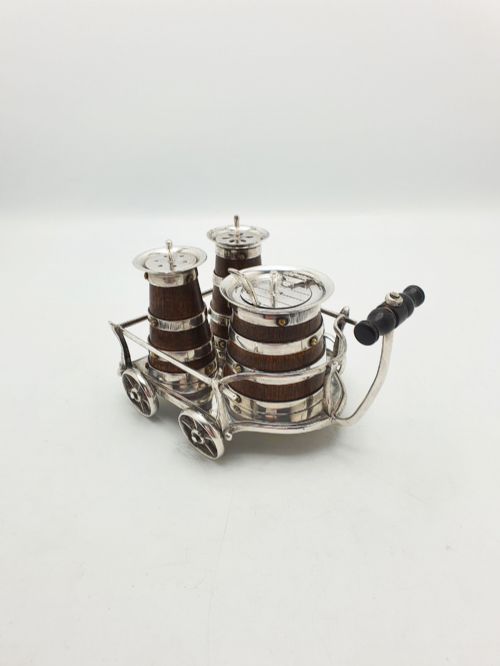
- A collection of glass or ceramic bottles and metal pots mounted on a stand for holding condiments such as oil, vinegar, salt, and pepper.
- Cobalt glass
- Deep blue glass frequently utilised as a contrasting liner inside open silver salt cellars to protect the metal from corrosion.
- Chasing
- A metalsmithing technique where the artisan hammers metal from the front to push and shape decorative motifs like foliage and patterns into relief.
- Cauldron salt
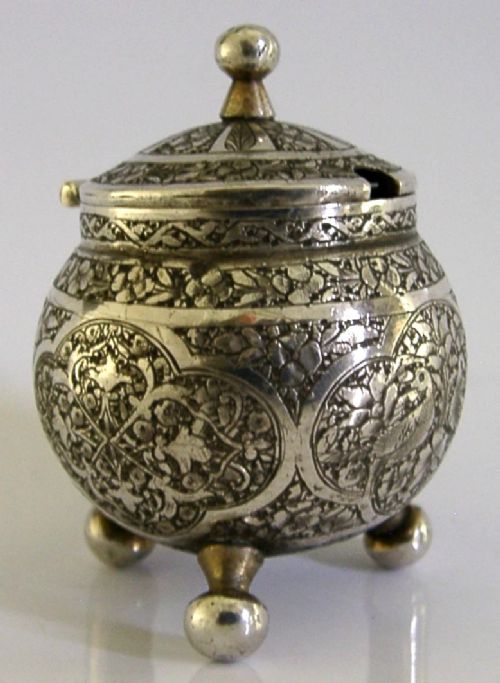
- A small round salt cellar raised on three short feet, echoing the silhouette of a traditional cooking pot.
Antique Tableware Silver Salts: Frequently Asked Questions
How were antique silver salts used on the dining table?
Diners used open salt cellars with small spoons to sprinkle coarse salt onto their plates rather than shaking it directly over food. Wealthy households placed multiple cellars along the length of the table for guests to share.
Servants filled these small vessels from larger master salts before the meal. The removable glass liners protected the silver from the corrosive properties of the salt.
Why do many salt cellars have coloured glass liners?
Salt rapidly corrodes silver if left in direct contact with the metal over extended periods. Inserting glass bowls created a protective barrier while adding vibrant colour to the table.
Cobalt blue and cranberry glass were popular choices that contrasted pleasingly with bright sterling silver or reflective silver plate.
Are matched spoons usually original to the set?
Many antique salt spoons are replacements gathered together over time because small condiments spoons were easily misplaced. Matching silver hallmarks or identical stylistic motifs help confirm whether a spoon belongs to the original manufacturing period.
Even when matched later, appropriate sizing and period style keep the set functional and visually harmonious.
What is a novelty salt cellar?
Novelty salts are figural vessels shaped like animals, birds, or architectural objects designed to amuse guests during formal dinners. Popular Victorian examples depict chicks, swans, and frogs with hinged elements or removable parts.
These whimsical pieces combined conversation-starting sculpture with practical dining utility.