


Antique Tabletop Mirror Drawers
Antique tabletop mirror drawers are compact pieces combining a swing glass and storage boxes, offering practical utility and period character.
Antique Tabletop Mirror Drawers
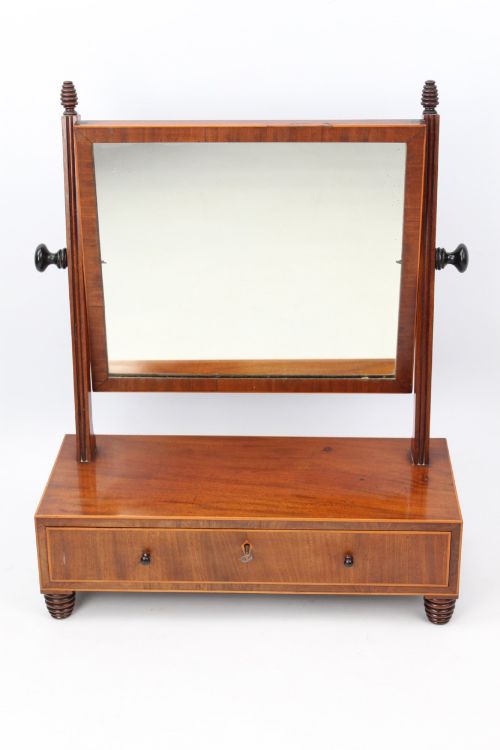
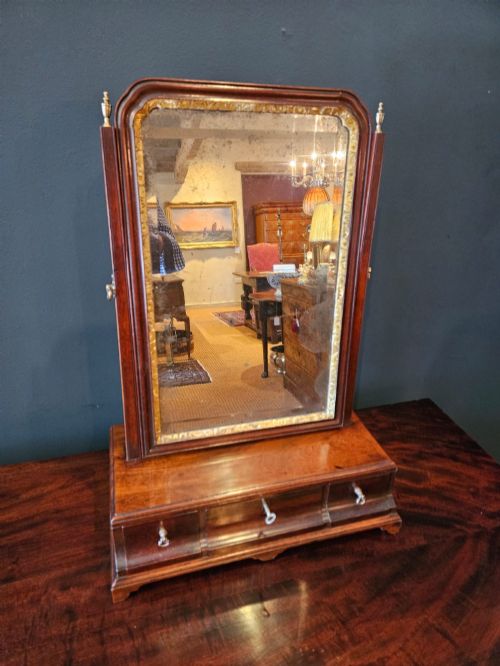
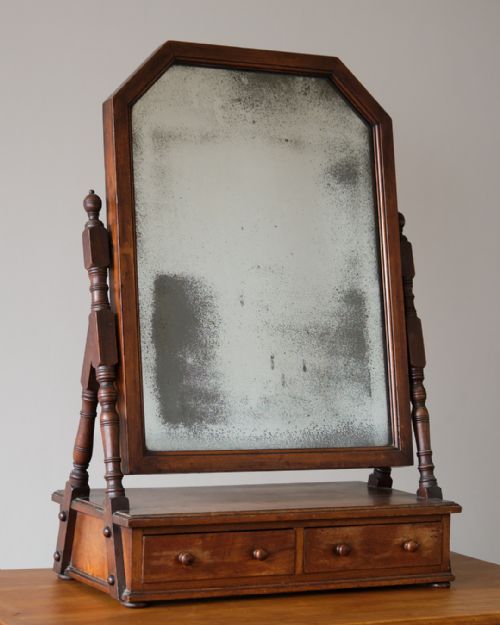
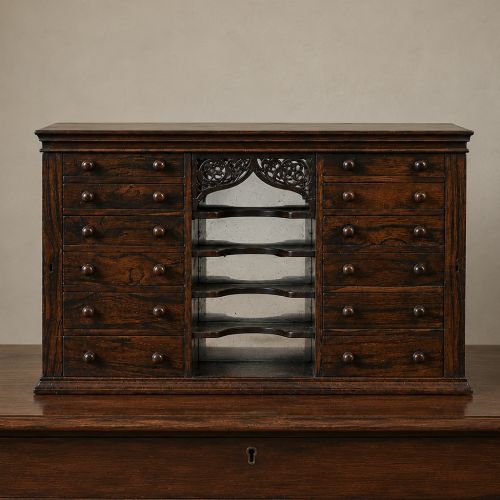
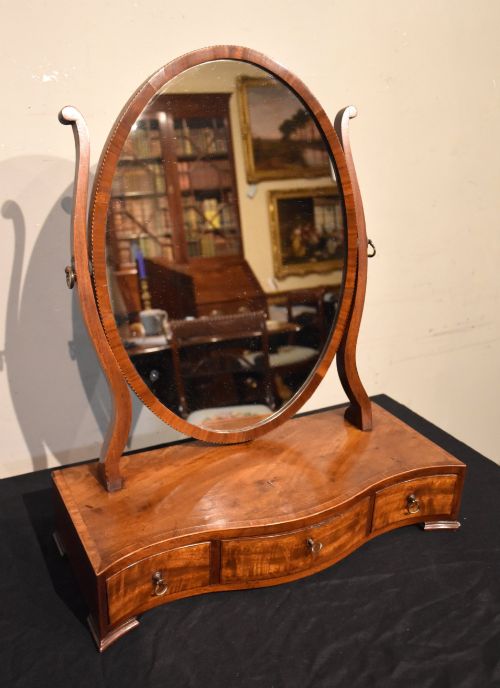
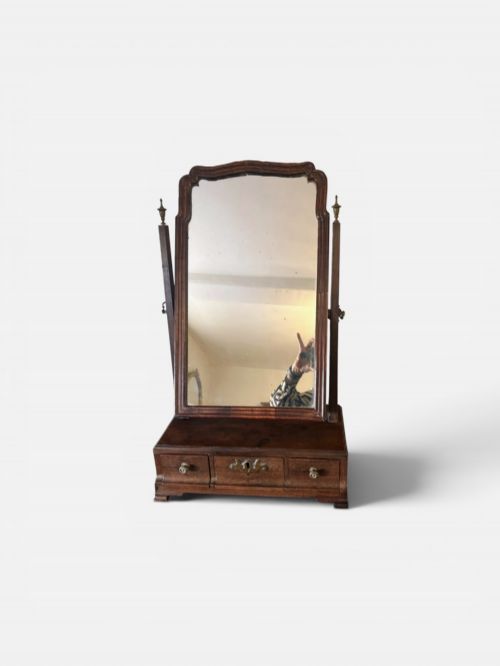
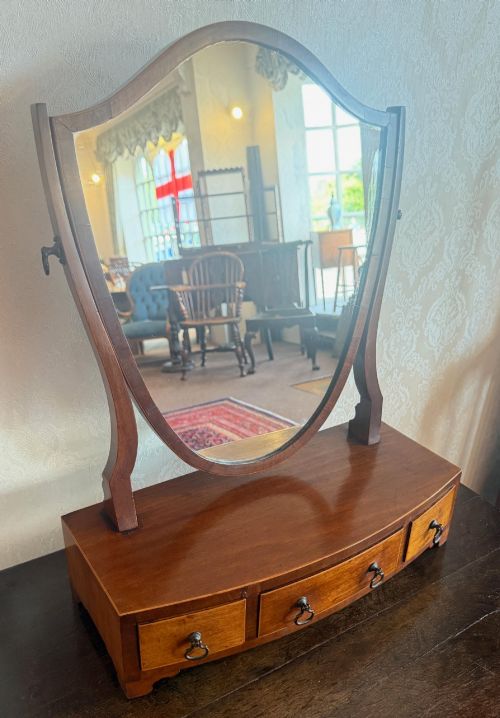
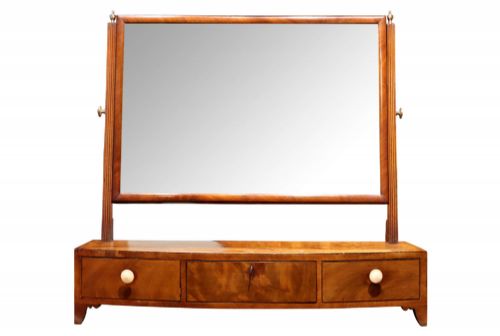
Antique tabletop mirror drawers comprise dressing glasses, toilet mirrors and dressing table mirrors designed for surface placement. These items provide a tilting mirror plate mounted upon a base fitted with small storage compartments or drawers.
The selections span the eighteenth and nineteenth centuries, taking in Georgian, Regency, Victorian and Queen Anne periods. Mahogany and walnut dominate the forms, frequently accompanied by brass hardware and secondary timbers.
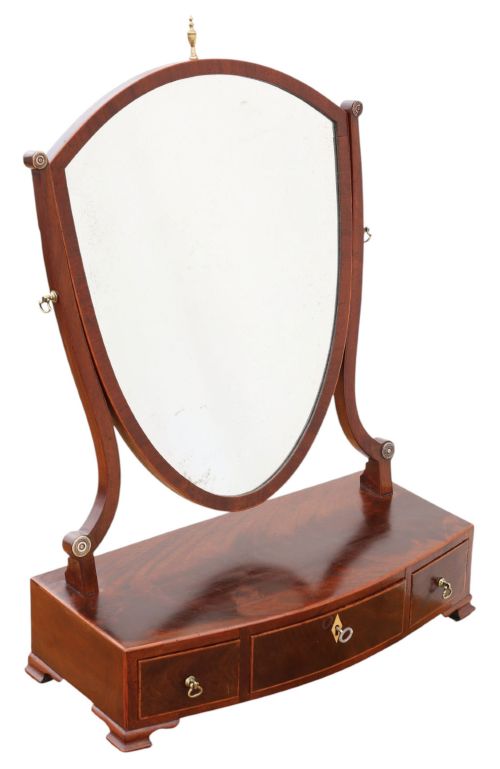
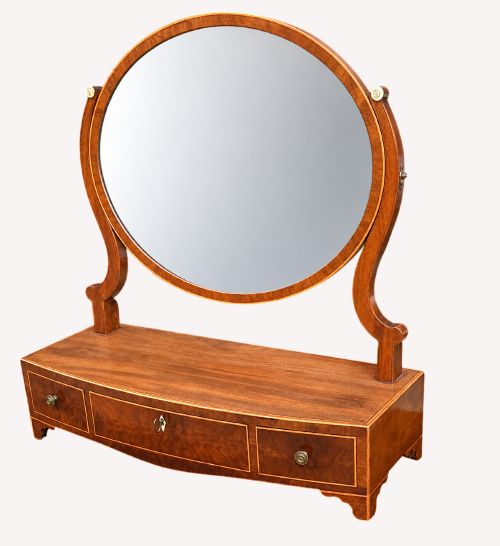
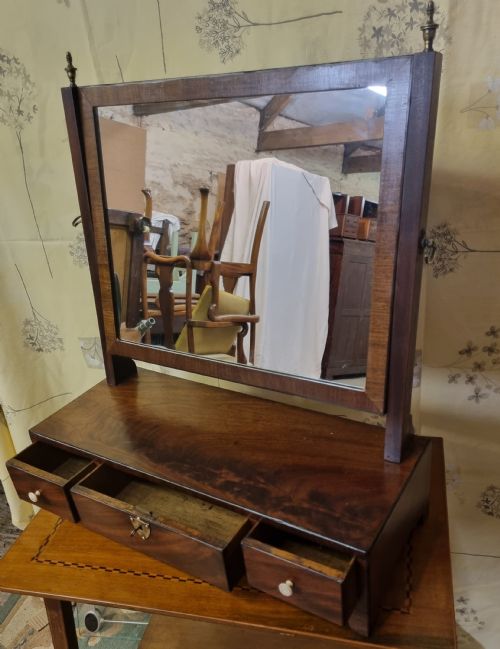
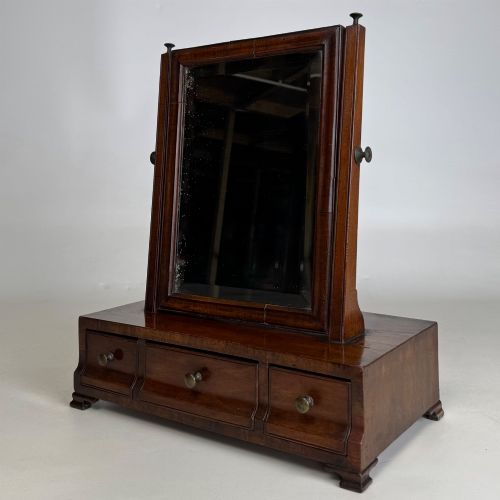
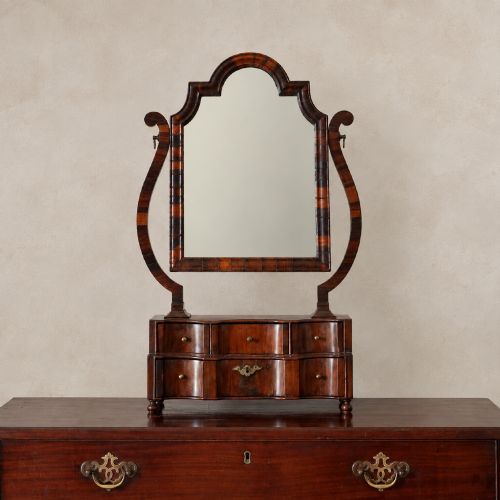
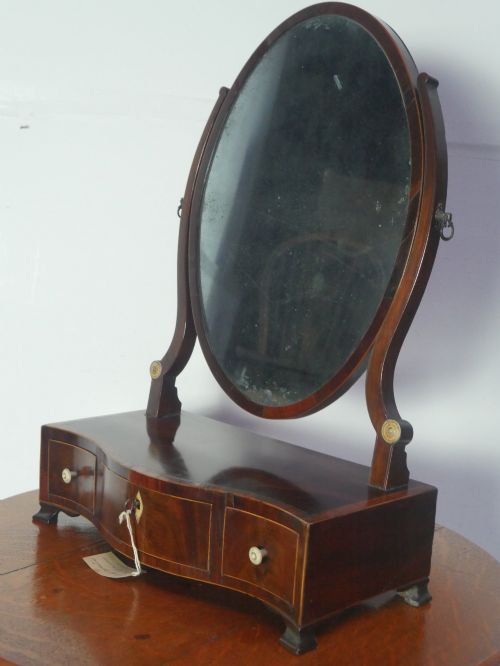
Makers utilised various regional designs, ranging from plain rectangular plates to shield-shaped glasses above serpentine or straight drawer blocks. Bureau fitments and marquetry decoration also appear among the established formats.
How they were made
Cabinetmakers constructed the frames primarily in solid mahogany or walnut, often incorporating fine crossbanding, satinwood inlay or Dutch marquetry. Drawer linings typically utilise secondary woods, assembled with traditional dovetail joints to ensure durability.
The mirror plates utilise historic glass held within adjustable side arms, allowing the user to alter the angle of reflection. Brass knobs, escutcheons and small bone details frequently accent the drawer fronts and support pivots.
Several mirrors sneak secret bureau drawers into the base, proving that eighteenth-century vanity required a place for confidential powder.
What varies in quality
The standard of timber selection largely dictates the rank of a piece, with highly figured mahogany or burr walnut marking out superior examples. Crisp execution of crossbanding and fine inlay work further distinguish better workshops from provincial output.
Proportion and structural integrity play a major role, particularly the balance between the swing frame and the supporting drawer base. Original brass fittings, well-preserved mirror glass and intact drawer construction separate finer survivals from heavily altered items.
Heal And Sons
The Antique Tabletop Mirror Drawers Glossary
- Toilet mirror
- A small mirror designed to sit upon a table or chest, typically incorporating one or more drawers in the base. These pieces served personal grooming needs in bedrooms and dressing rooms.
- Swing mirror
- A glass plate hung on pivoting side screws between vertical upright arms. This mechanism allows the user to tilt the reflection forward or backward.
- Crossbanding
- A decorative border technique where thin strips of veneer are laid across the grain of the primary wood. This method frames the drawer fronts and borders of the mirror base.
- Serpentine front
- A curved shape featuring a convex centre flanked by concave wings. Cabinetmakers applied this undulating profile to the drawer bases of select Georgian dressing mirrors.
- Marquetry
- Elaborate veneer patterns formed from pieces of various tinted woods, floral or geometric in design. Dutch examples often display intricate floral marquetry across the entire surface.
Antique Tabletop Mirror Drawers: Frequently Asked Questions
What is an antique tabletop mirror drawer?
These objects are portable dressing mirrors mounted on miniature bases containing small drawers for storage. They sat upon chests or tables in bedrooms for daily grooming.
The listings show examples spanning the eighteenth and nineteenth centuries in mahogany and walnut.
How do I date a dressing mirror?
Dating relies on timber choice, bracket feet, plate shapes and construction methods. Georgian examples often feature mahogany with ogee bracket feet, while walnut prevails in earlier periods.
Shield-shaped glasses and serpentine drawer fronts point toward the later eighteenth century.
Where were these mirrors placed?
Historical interiors placed these pieces on top of dressing tables, chest of drawers or writing surfaces. Their compact footprint allowed owners to position them near natural light.
Some variants include bureau fitments or collector compartments for specialised storage.
What woods were used for these mirrors?
Mahogany and walnut form the primary structures across most surviving examples. Cabinetmakers also incorporated satinwood, laburnum, rosewood and giltwood.
Inlay work and crossbanding frequently enhance the principal timber surfaces.