
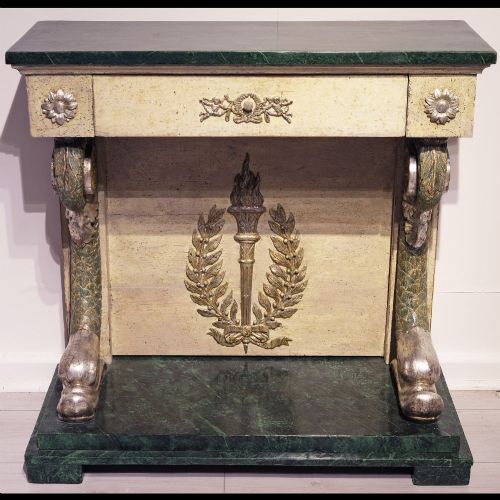


Antique Swedish Wall Table
An antique swedish wall table brings pale painted elegance and space-saving proportion to a hallway, resting flush against plaster.
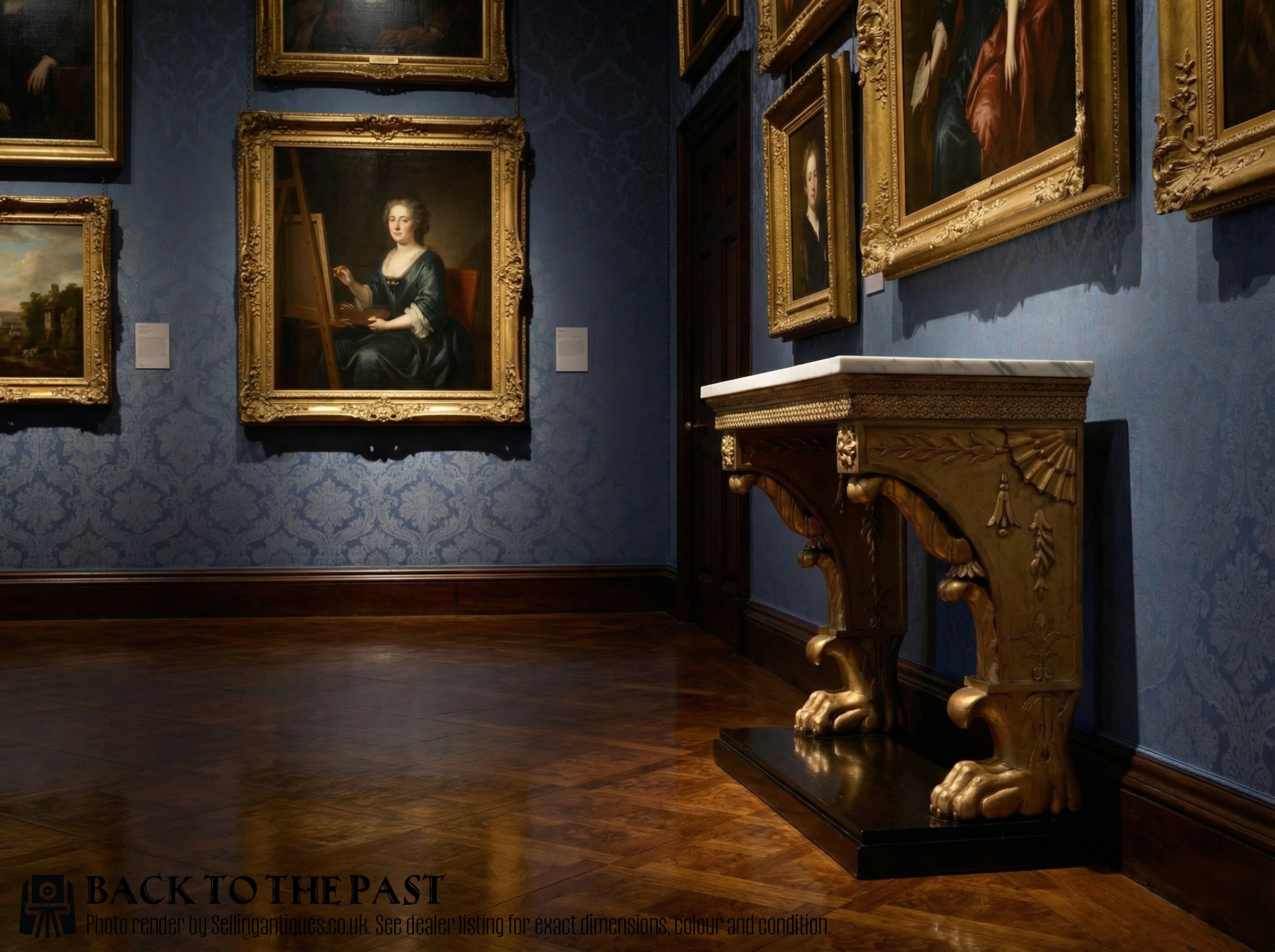
Antique Swedish Wall Table
When you search for an antique swedish wall table, you are looking at console tables and occasional tables designed to anchor narrow spaces without crowding a room. The most common form on this page is the demi-lune console table, shaped in a half-circle to sit snugly against a wall.
These pieces cross several distinct eras, spanning from the late 18th century through the 19th century and into the early 20th century. Styles range from refined Gustavian and Swedish Empire designs to rustic Scandinavian country and Swedish folk art pieces.
Many examples arrive as matched pairs, offering symmetry for a formal entrance or flanking a doorway. Occasional tables and console tables with paired mirrors also appear, reflecting light through domestic interiors.
Materials and construction methods
Carpenters built these tables primarily from pine and solid wood, shaping them into half-moon tops and supporting frames. Surfaces received layers of paint, often in pale tones, alongside gesso and gilt highlights on more formal neoclassical models.
Some sophisticated iterations incorporate marble tops to add weight and a cool, smooth working surface above the wooden base. Tree bark and painted wood finishes appear in folk variations, showing regional craft traditions.
One unexpected table incorporates tree bark into its construction, bringing raw forest texture indoors.
Distinguishing quality across examples
Quality rests in the harmony of the proportions and the crispness of the carving, distinguishing simple folk production from high neoclassical design. A table adhering strictly to Gustavian or Swedish Empire proportions displays a refined restraint in its legs and apron.
The treatment of the painted surface significantly alters the character and desirability of each piece. Original layered paint patinas hold greater depth than later heavy-handed repainting, showing wear that records decades of domestic use.
The Antique Swedish Wall Table Glossary
- Demi-lune
- A half-moon shape used for console tables designed to stand flat against a wall. This profile saves floor space while providing a useful surface.
- Gustavian
- The Swedish neoclassical style spanning the late 18th century, characterised by restraint, straight tapered legs, and classical motifs. It draws inspiration from French Louis XVI design interpreted through a Scandinavian lens.
- Gesso
- A plaster-like mixture applied to wood surfaces to prepare them for gilding or fine painting. It provides a smooth base for delicate decorative relief work.
- Console table
- A table supported against a wall by consoles or legs, often built specifically to fit a tight architectural space or beneath a mirror.
Antique Swedish Wall Table: Frequently Asked Questions
Where do I put a wall table?
These tables find a natural home in narrow entrance halls, corridors, or living rooms where floor space is limited. Their shallow depth allows them to sit comfortably in passage areas without obstructing movement.
Matching pairs work exceptionally well placed on either side of a doorway or beneath a large hanging mirror. Single demi-lune versions fit neatly into corners or small alcoves.
How do I identify Gustavian style?
Gustavian pieces display straight, tapered legs, often fluted, with restrained neoclassical carving such as beaded borders or leaf motifs. The overall aesthetic prioritises symmetry and clean lines over heavy ornamentation.
Colour palettes remain pale and muted, typically featuring soft greys, creams, and whites that reflect northern European light.
Are these tables sturdy enough for daily use?
Solid pine and hardwood construction gives these tables a stable frame suitable for supporting lamps, bowls, and decorative objects. Demi-lune tables rely on their flat back edge against the wall for added stability.
While robust, their antique status means they suit lighter decorative duties rather than heavy family use.
What is Swedish folk art style?
Folk art pieces reflect regional craftsmanship rather than courtly neoclassical trends, featuring hand-carved details and simpler construction. These tables often embrace rustic charm over strict architectural symmetry.
Surfaces might display painted finishes or unconventional materials like tree bark, showing the individual maker's local traditions.