



Antique Swedish Commode
An antique swedish commode brings northern restraint and elegance to a room, offering sculptural drawer chests shaped for functional storage.
Antique Swedish Commode
When searching for an antique swedish commode, buyers encounter case furniture primarily built as chests of drawers, secretaire chests, and bombe commodes. These pieces originate largely from the eighteenth and nineteenth centuries, spanning Gustavian, Rococo, and Biedermeier styles.
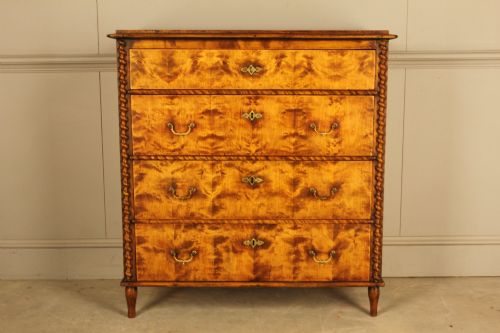
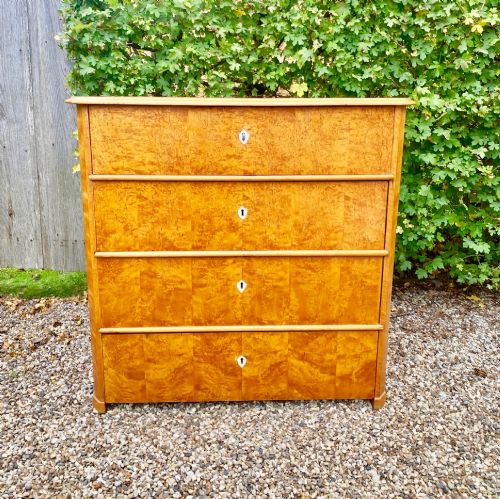
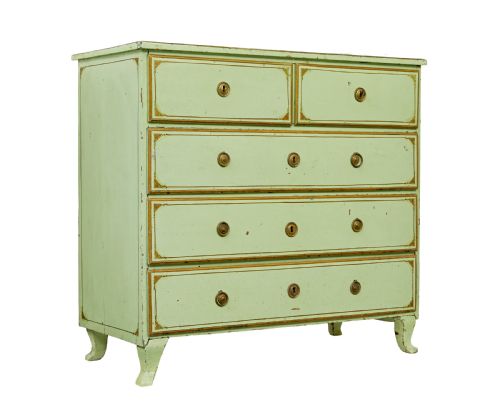
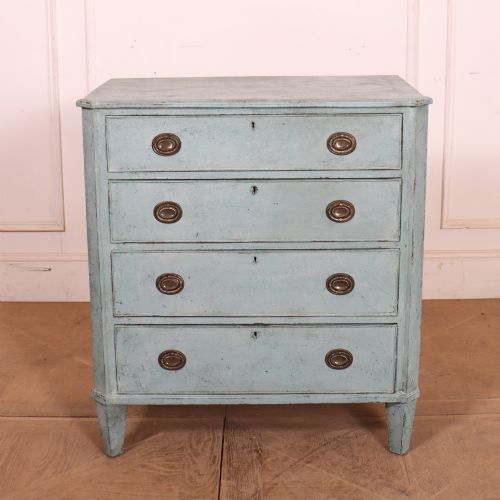
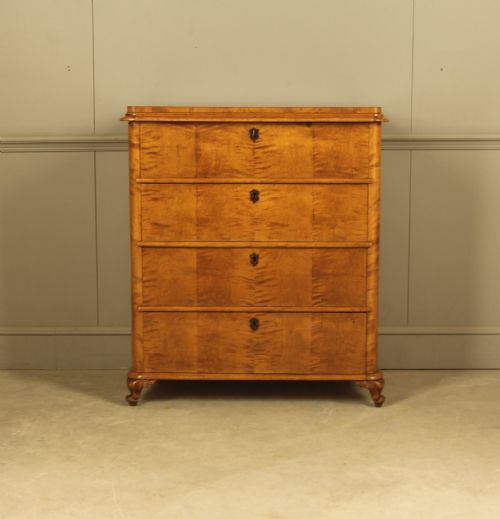
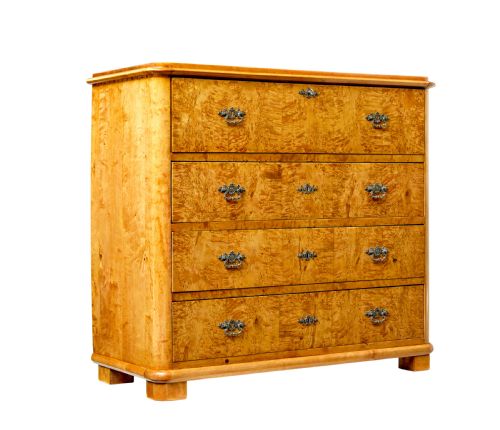
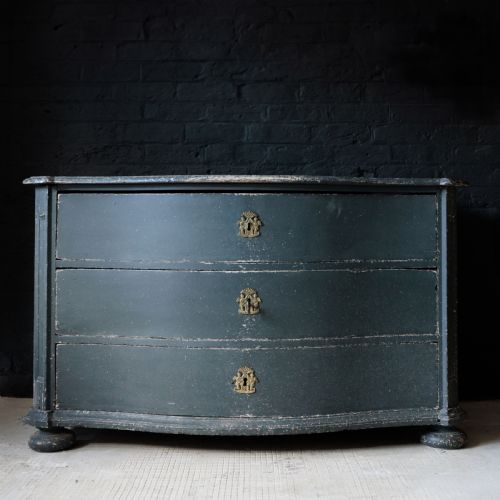
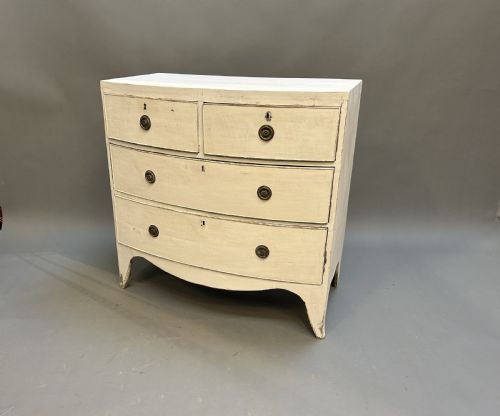
The version most commonly met on this page is the nineteenth-century birch chest of drawers, often finished in natural grain or painted surfaces. Alongside these, painted pine and walnut variants appear frequently, reflecting Scandinavian domestic traditions.
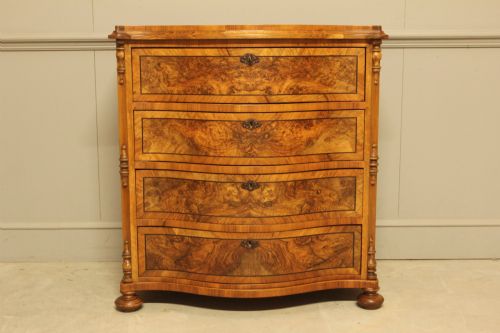
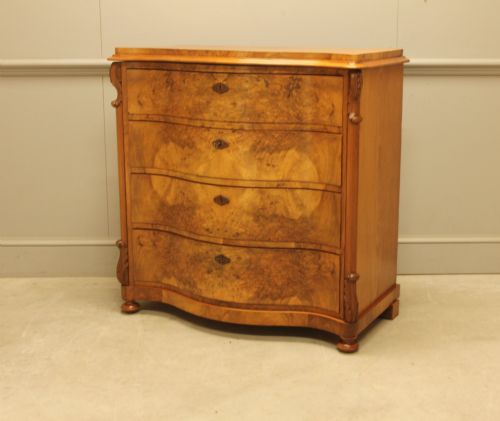
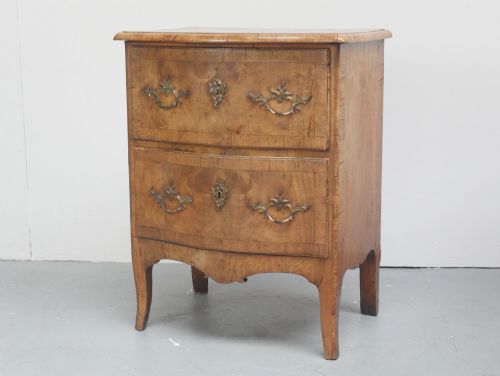
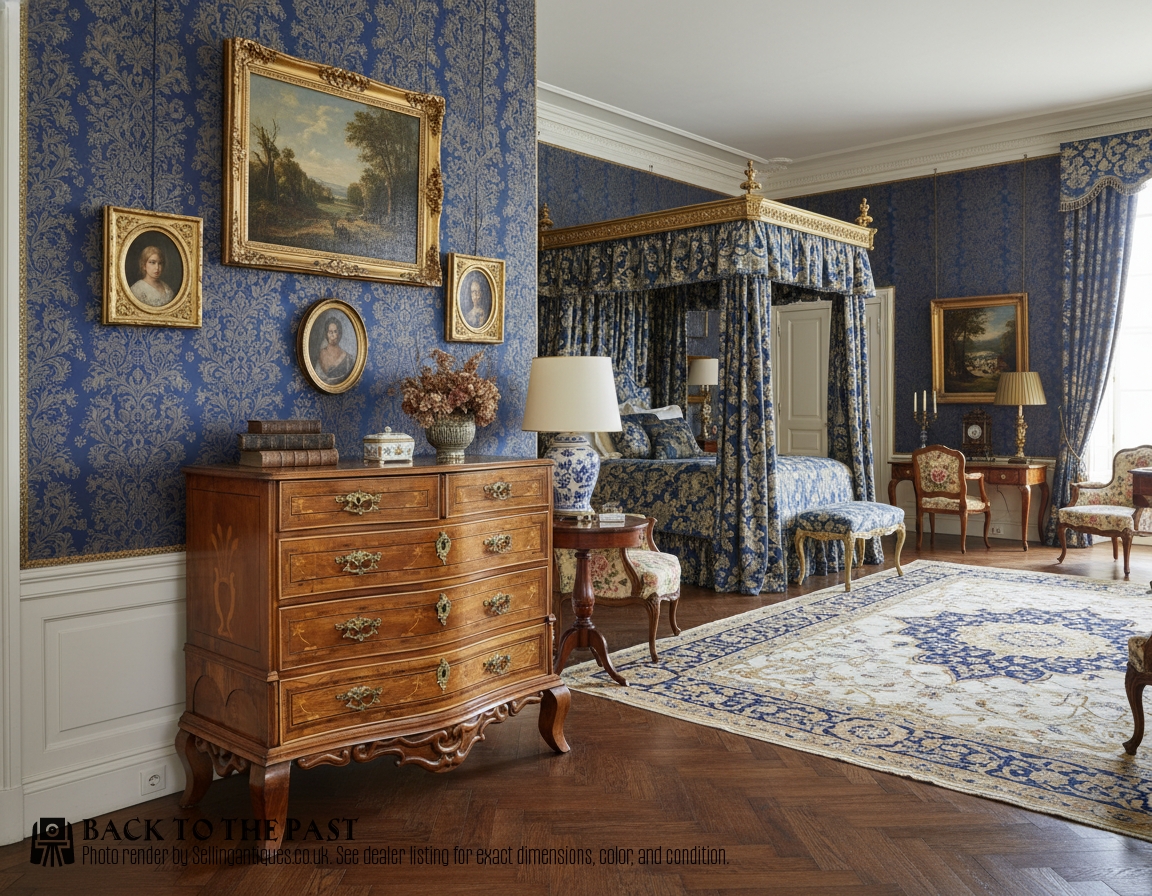
Forms range from straightforward straight-fronted drawer arrangements to complex serpentine and bombe profiles. Many examples incorporate fitted secretaire drawers or decorative hardware made of brass and iron.
Materials and construction methods
Cabinetmakers utilised native northern timbers such as pine, birch, flame birch, burr birch, and masur birch, alongside imported hardwoods like walnut and mahogany for veneering. Structural carcasses often relied on solid pine or deal, providing a stable frame for decorative exterior veneers and solid drawer fronts.
Surface treatments combined traditional hand painting with scraped paint techniques, marbling effects, and clear polishing to highlight wood grain figures. Intricate marquetry and parquetry patterns appear on select luxury items, integrating contrasting woods and occasional bone details.
Hardware elements included cast brass handles and escutcheons, while some advanced forms incorporated heavy marble tops and gilt bronze mounts. Drawer construction typically employed hand-cut dovetailing to ensure durability.
Antique Swedish Commode Retail Price Guide 2026
Typical asking prices for swedish commode among the pieces listed under this phrase on Sellingantiques today, from the lower quarter to the upper quarter. They describe what is for sale here now, not the wider market.
Listings feature eighteenth and nineteenth-century pieces alongside early twentieth-century items, utilising birch, pine, walnut, and painted wood.
Distinctions in craftsmanship and finish
The distinction between standard utility furniture and high-end cabinet work rests on timber selection and decorative complexity. Plain painted pine examples serve utilitarian roles, whereas matched flame birch, burr walnut, and intricate marquetry demonstrate superior workshop skill.
Carved details and structural geometry dictate the refinement of a piece. Simple straight-front chests contrast with labor-intensive serpentine and bombe shapes that require advanced timber bending and shaping techniques.
GEMLA FABRIKERS
The Antique Swedish Commode Glossary
- Bombe
- A bulging, convex shape characteristic of advanced case furniture. This swelling profile requires specialised joinery and shaping of the timber.
- Marquetry
- Decorative veneer work forming pictorial or geometric patterns using various coloured woods. It appears frequently on the drawer fronts of formal commodes.
- Secretaire
- A desk disguised as a chest of drawers featuring a drop-front writing surface. Inside, small compartments and pigeonholes store writing materials.
- Gustavian
- The Swedish neoclassical style spanning the late eighteenth century. It emphasises restrained proportions, pale painted finishes, and subtle classical carving.
- Parquetry
- Geometric mosaic woodwork utilised for tabletops and drawer fronts. Artisans assemble small wood blocks to create repeating patterns.
Antique Swedish Commode: Frequently Asked Questions
What is an antique swedish commode?
An antique swedish commode is a set of drawers or a cabinet produced in Sweden during the eighteenth or nineteenth century. These pieces combine practical storage with distinct Scandinavian design aesthetics.
They function primarily as bedroom or living room storage furniture, often featuring decorative painted finishes or native birch veneers.
How were these commodes used originally?
Historically, these units served domestic storage needs for clothing, linens, and personal valuables within Swedish homes. Secretaire variants also provided a dedicated writing surface for correspondence.
Wealthier households utilised marble-topped marquetry commodes in reception rooms as display surfaces for decorative objects.
How do I tell Gustavian from Biedermeier pieces?
Gustavian pieces date from the late eighteenth century and generally display neoclassical restraint, pale painted surfaces, and light carving. They favor symmetry and muted colour palettes.
Biedermeier pieces emerge later in the nineteenth century, emphasising unpainted wood grains like birch and walnut, clean lines, and minimal ornamentation.
How do I live with a painted commode?
Living with a painted wooden chest involves placing it out of direct sunlight to protect the historic surface finishes from fading. Maintenance requires only gentle dusting with a dry cloth rather than harsh cleaning products.
These pieces integrate well into modern interiors by providing natural texture and practical surface space alongside traditional storage.