
Antique Suzani Embroidery
Antique suzani embroidery pieces are vibrant Central Asian wall hangings and domestic textiles hand-stitched with rich botanical and geometric motifs that bring historic colour to any interior.
Antique Suzani Embroidery
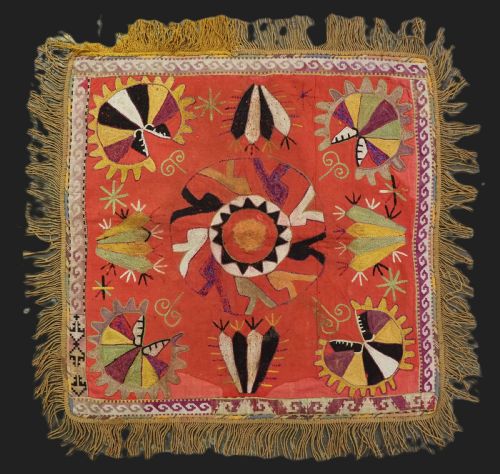
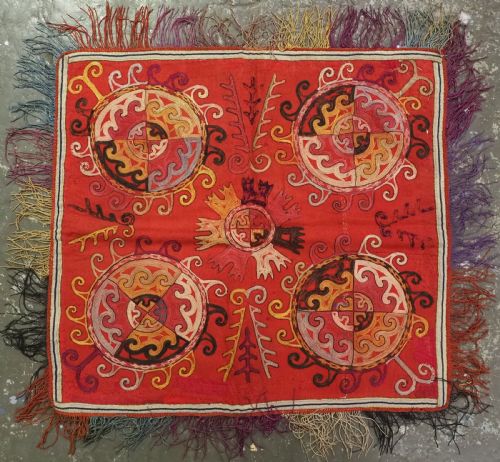
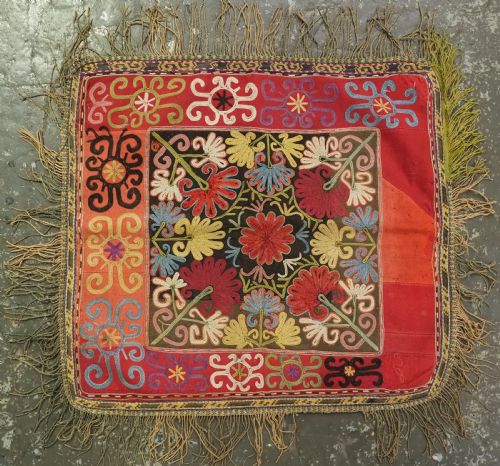
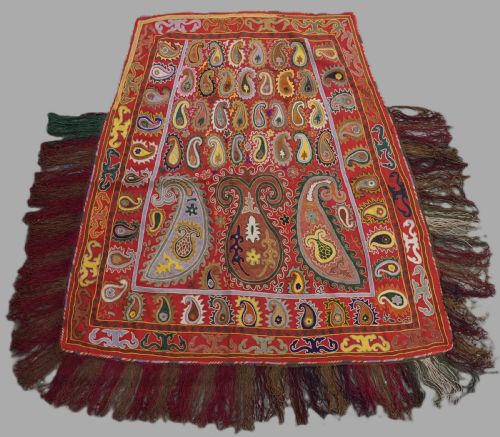
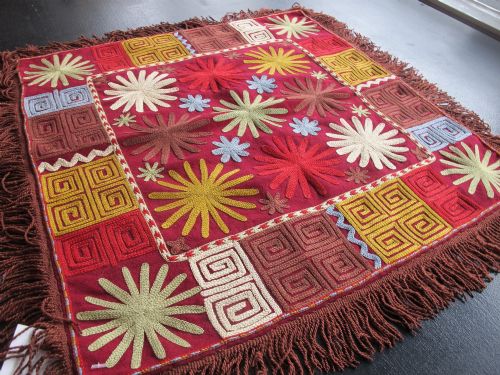
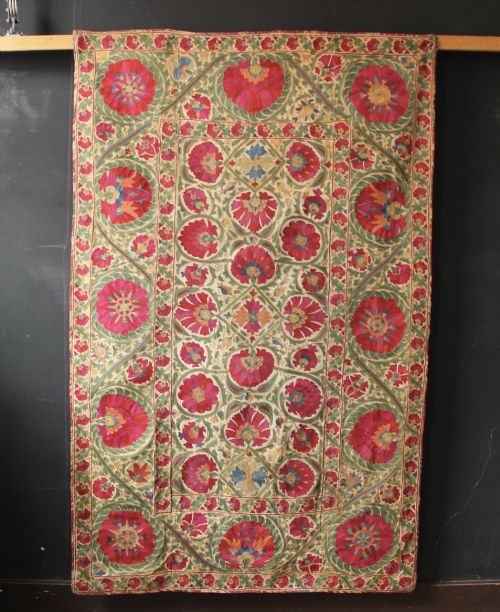
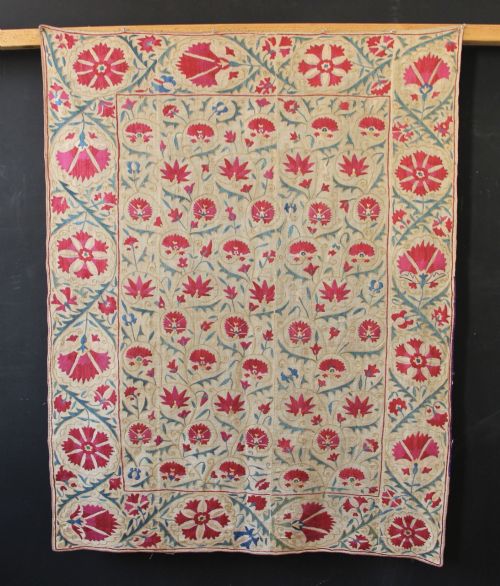
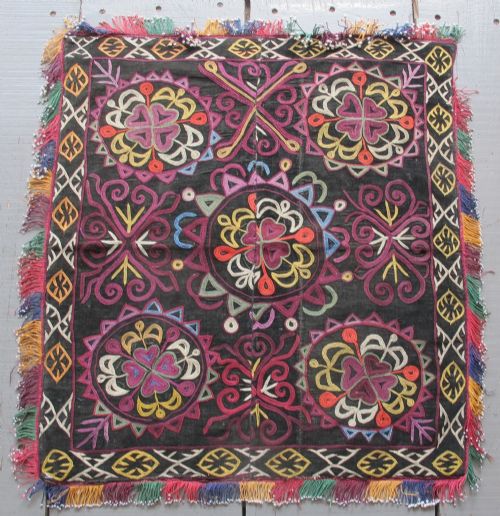
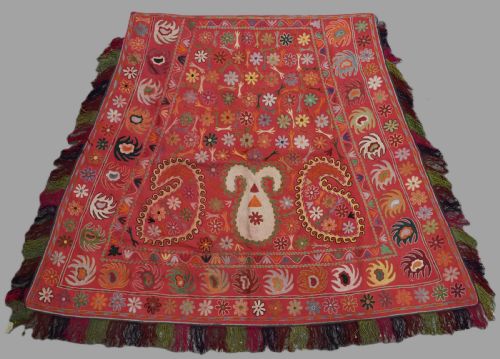
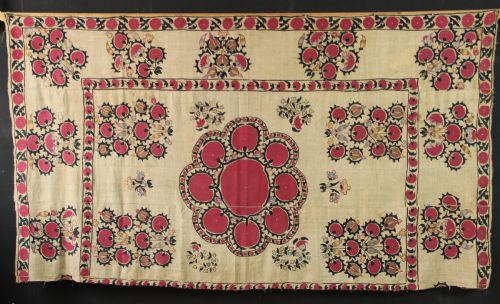
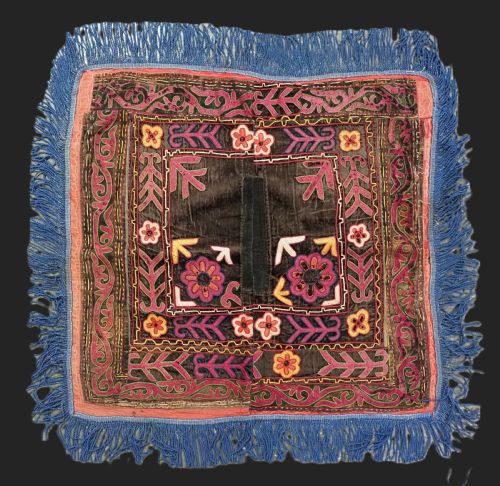
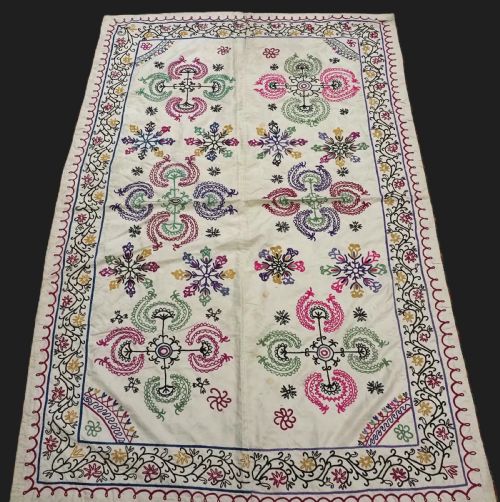
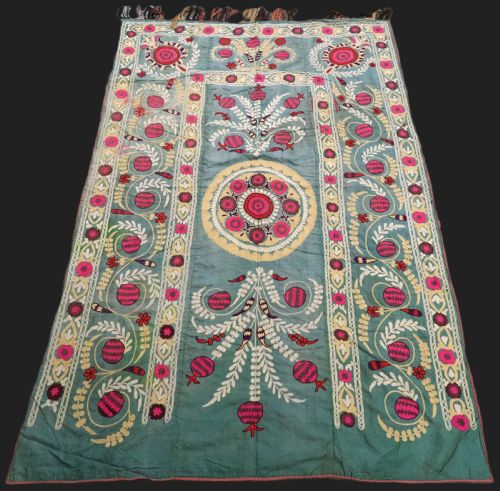
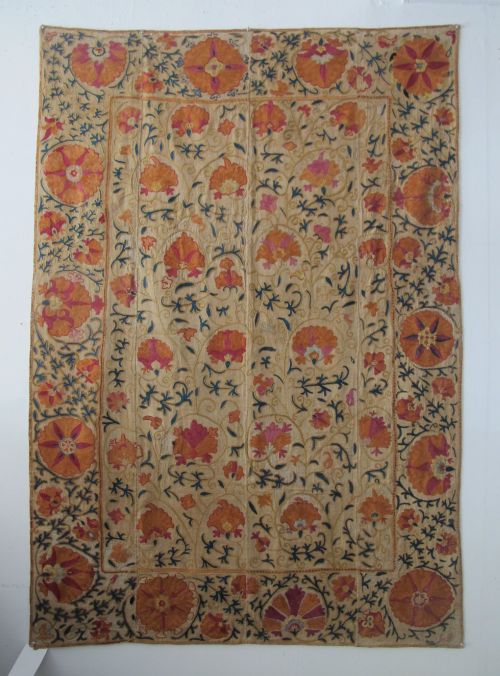
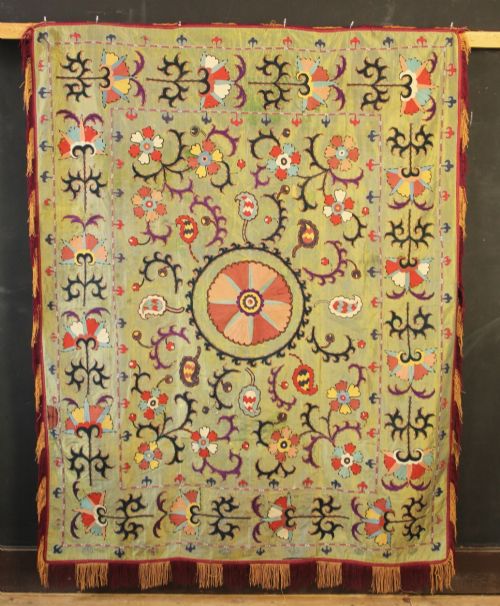
When searching for antique suzani embroidery, a buyer encounters traditional Central Asian textiles originating mainly from Uzbekistan, created across the nineteenth and early twentieth centuries. These works include large wall hangings, bed covers, and smaller dowry items such as ilgich panels and mirror covers.
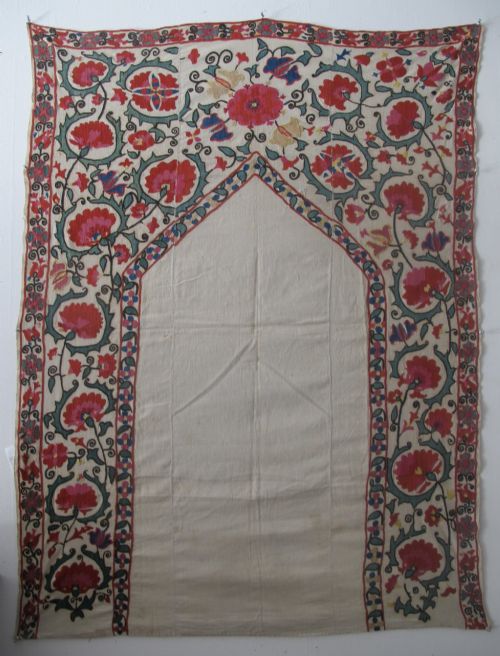
The selection ranges from regional Bokhara and Nurata designs to tribal Lakai and Tajik works, spanning periods from the mid-nineteenth century up to the 1930s. Pieces appear in various formats including prayer formats and half-size nim suzanis, reflecting the diverse domestic and ceremonial uses of the region.
How they were made
Artisans worked primarily with silk thread, stitching intricate patterns onto woven foundations made from cotton, wool, linen, or mixed adras silk and cotton grounds. Coloured threads transformed plain fabrics into dense tapestries through skilled needlework.
Ground fabrics varied by region and purpose, including yellow, red, and black cotton backgrounds alongside Mogul red wool and green silk bases. Glass beads occasionally supplemented the embroidery on specific tribal horse covers and dowry pieces.
Antique Suzani Embroidery Retail Price Guide 2026
Typical asking prices for suzani embroidery among the pieces listed under this phrase on Sellingantiques today, from the lower quarter to the upper quarter. They describe what is for sale here now, not the wider market.
Listings feature pieces spanning from the mid-nineteenth century through the 1930s, utilising silk, cotton, wool, and linen grounds.
What varies in quality
The distinction between standard and superior pieces rests upon the density of the silk threadwork and the complexity of the regional design layout. Finer examples display meticulous control over needlework alongside balanced architectural or medallion compositions.
The choice and preservation of the ground fabric, whether vibrant dyed cotton or rich wool, influence the visual impact of the embroidery. Condition of the delicate silk threads and the integrity of the original backing material also separate standard examples from exceptional textile panels.
The Antique Suzani Embroidery Glossary
- Nim suzani
- A smaller version of the standard suzani wall hanging, offering a compact format for interior display.
- Ilgich
- A specific type of Central Asian dowry embroidery created for wall hanging within the home.
- Ru-i-jo
- A traditional Central Asian bed cover suzani designed for domestic use.
- Adras
- A traditional woven fabric composed of a blend of silk and cotton, frequently utilised as a ground for embroidery.
Antique Suzani Embroidery: Frequently Asked Questions
How were antique suzanis used?
These textiles served practical and ceremonial functions within Central Asian homes, acting as wall hangings, bed covers, and dowry items. Families also produced specialised covers for mirrors and horses during traditional celebrations.
Today, collectors primarily mount these embroidered panels on walls to display their historical patterns and textile artistry within modern interiors.
How do I care for a suzani?
Protect antique textiles from direct sunlight to prevent the natural silk threads and dyed ground fabrics from fading over time. Keep them away from damp environments and handle the fragile embroidered surfaces with care.
Professional textile conservation methods should be consulted if cleaning or mounting becomes necessary for long-term preservation.
What regions made these embroideries?
Production centred across Central Asia, with specific towns and tribal groups developing distinct artistic traditions. Bokhara, Nurata, and Shakrisabz are prominent regions known for refined botanical and architectural layouts.
Tribal groups such as the Lakai and Tajiks produced works featuring unique geometric motifs and varied colour grounds like red wool and black cotton.
How do I date a suzani?
Dating relies on stylistic analysis, material composition, and the specific characteristics of the embroidered motifs associated with nineteenth and early twentieth-century workshops. Mid-nineteenth-century pieces often display distinct regional colour palettes and large-scale architectural or medallion variants.
Later works from the early twentieth century shift toward denser cotton grounds and varied tribal formats influenced by local traditions.