



Antique Sutherland Tea Table
These antique sutherland tea table pieces are folding drop-leaf occasional tables designed for compact spaces and tea service, prized for their clever pivoting leg action.

What an antique sutherland tea table is
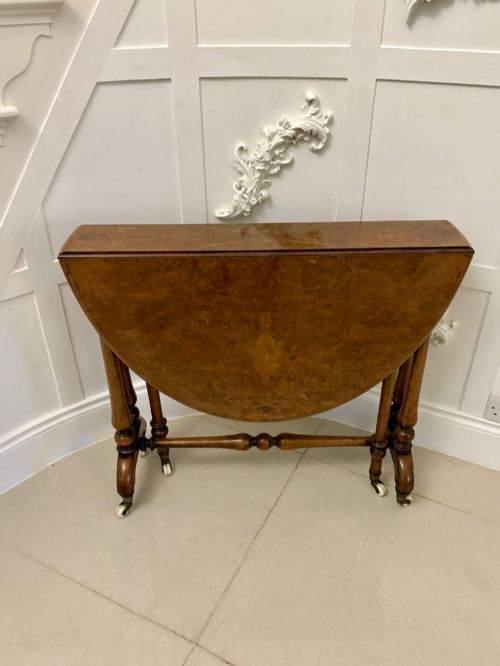
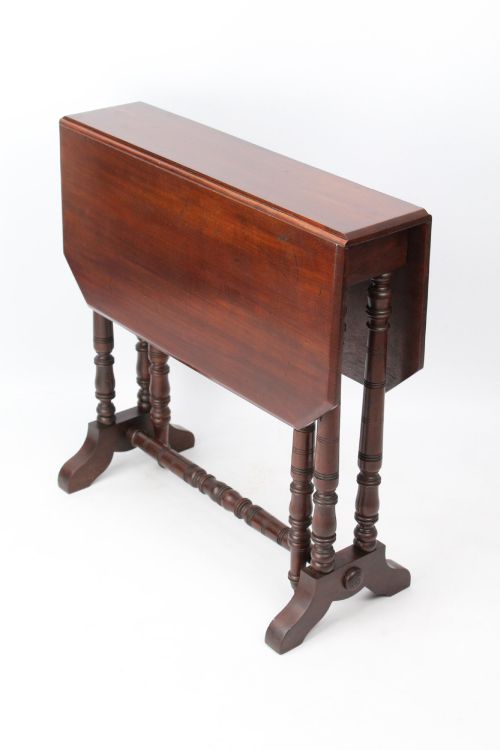
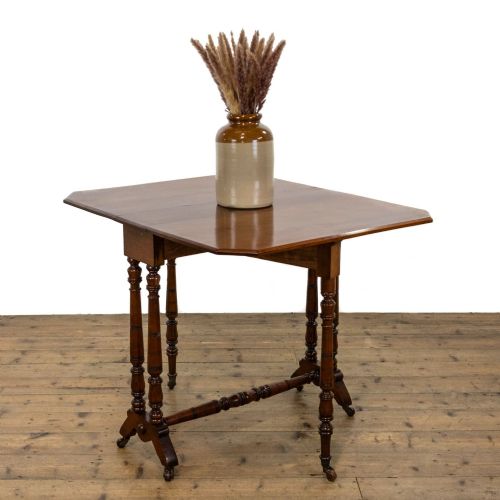
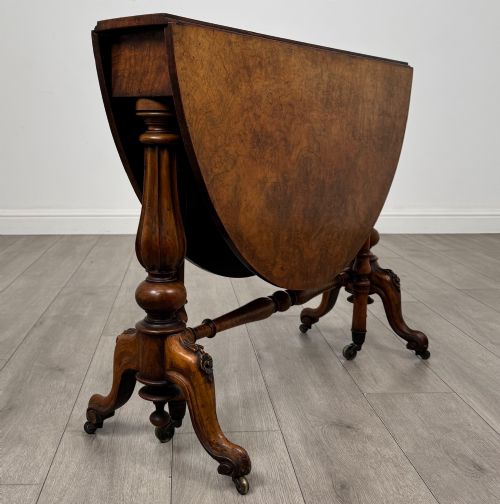
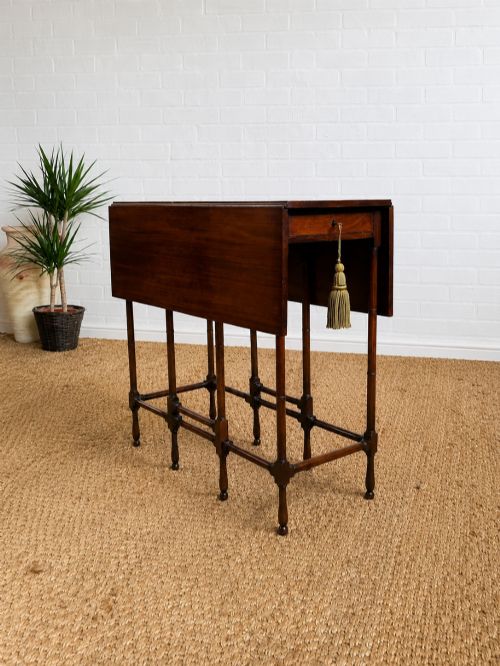
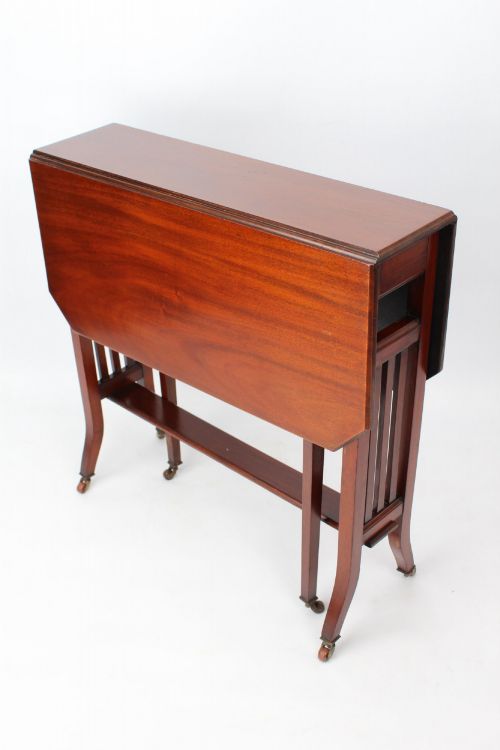
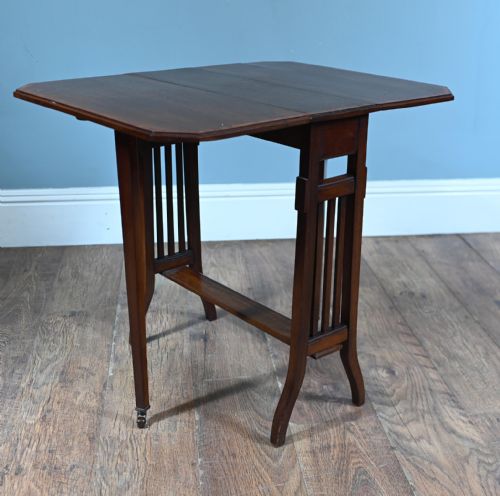
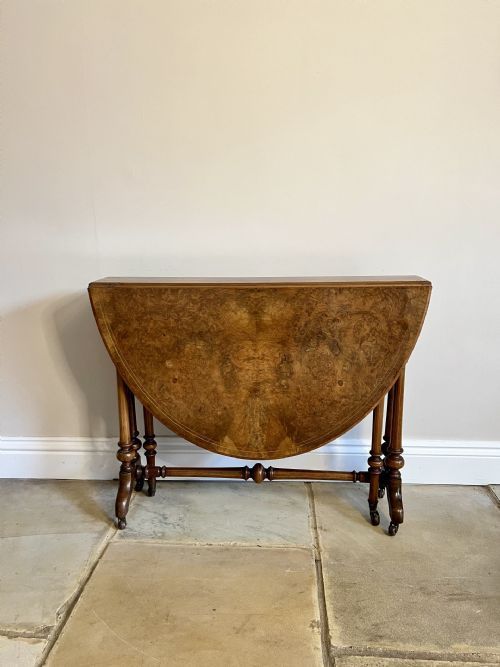
An antique sutherland tea table is a narrow gate-leg drop-leaf table that folds completely flat when the leaves drop down against the central frame. The hinged legs swing outward on pivoted gate supports to hold the extended leaves securely in place for use.
Most examples found on this page belong to the Victorian and Edwardian periods, dating roughly from 1880 to 1900. These tables function primarily as occasional or side tables, easily moved around a room to accommodate tea service or display objects.
Makers produced these versatile pieces in forms ranging from standard occasional tables to small drop-leaf coffee table heights. The design remains distinct from ordinary drop-leaf tables due to its exceptionally narrow fixed centre and exceptionally wide dropping leaves.

How they were made
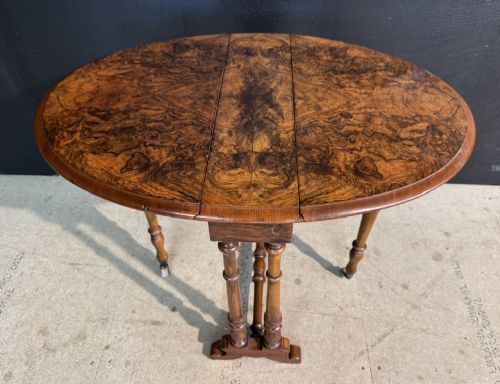
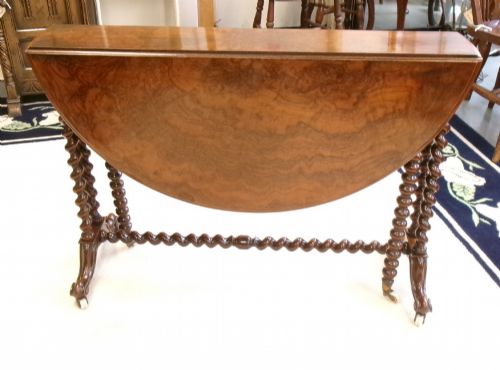
Cabinet makers utilised solid mahogany, burr walnut, and standard walnut for the primary structure of these tables. Satinwood inlay often decorates the surfaces, adding visual contrast to the polished timber grains.
Moving components relied on brass hinges and fittings to allow the drop leaves and swinging gate legs to operate smoothly. Ceramic castors frequently appear on the feet of Victorian and Edwardian examples to aid mobility across carpets and floorboards.
Retail Price Guide 2026
Typical UK retail prices for sutherland tea table, calculated from the Sellingantiques database of over a million retail prices indexed since 2003. This retail price guide relies exclusively on Sellingantiques data; no external sources or auction records are used, so the figures do not describe the wider market.
The object types recorded here include both standard occasional tables and specialised low drop-leaf coffee tables from around nineteen hundred.
What varies in quality
The choice of timber creates a fundamental distinction in quality across the range, with figured burr walnut and finely grained solid mahogany sitting above standard utility woods. Subtle decorative choices such as satinwood inlay elevate the visual sophistication of a piece.
Mechanical precision in the gate-leg pivot and hinge action determines the daily usability of the table. Solid construction without looseness in the frame separates superior cabinet work from more ordinary production.
The Antique Sutherland Tea Table Glossary
- Sutherland table
- A narrow drop-leaf table with exceptionally wide leaves and swinging gate legs. The design allows the entire table to fold into a very slim profile when not in use.
- Gate-leg
- A table leg hinged to a swinging frame that pulls out to support a drop leaf. This mechanical support swings parallel to the main frame when the leaf drops.
- Drop-leaf
- A hinged flap attached to a fixed table top that folds downward. These leaves multiply the surface area of the table when raised.
- Occasional table
- A small, movable table designed for intermittent use rather than a permanent dining or writing setup. These pieces populate parlours and drawing rooms of the nineteenth and early twentieth centuries.
- Satinwood inlay
- Contrasting light-coloured wood inserted into recesses in the primary timber. This decorative technique creates geometric or floral borders on table tops.
Frequently Asked Questions
What is an antique sutherland tea table?
An antique sutherland tea table is a narrow gate-leg table with folding leaves designed to save space in Victorian and Edwardian sitting rooms. When folded flat, it occupies minimal floor space.
Craftsmen built these tables primarily from mahogany and walnut, equipping them with pivoting legs that swing out to support the large drop leaves during tea service.
How do you fold a sutherland table?
To fold the table, you lift each drop leaf slightly to relieve pressure on the wooden catches, then swing the gate legs inward toward the fixed centre. Once the legs rest flat against the middle section, the leaves drop straight down.
The clever pivot mechanism allows the entire assembly to tuck away into a very narrow profile against a wall when not in use.
Were these tables used only for tea?
While the name associates them with tea service, these versatile pieces served multiple functions as occasional and side tables in period homes. People used them for holding books, displaying ornaments, or writing letters.
The folding leaves made them adaptable for rooms where floor space was at a premium during different parts of the day.
How do I date a sutherland table?
Dating relies on stylistic details, timber choices, and construction methods associated with Victorian and Edwardian cabinet making. Pieces from the 1880s and 1890s typically exhibit heavier Victorian proportions and darker mahogany or walnut.
Later examples from around 1900 often feature Edwardian refinements such as satinwood inlay and lighter solid mahogany frames.
Do these tables have castors?
Many Victorian and Edwardian examples feature small castors attached to the feet to make moving the table easier. These castors often incorporate ceramic wheels held in brass mountings.
Because these tables were designed to be moved around rooms for various activities, mobility hardware was a standard inclusion by makers of the period.