
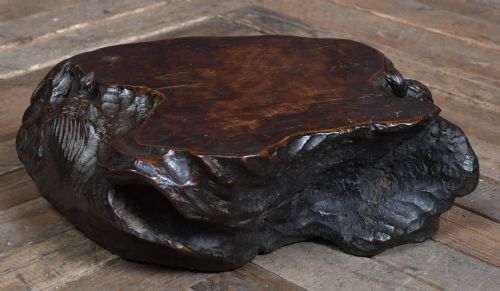


Antique Style Plinths
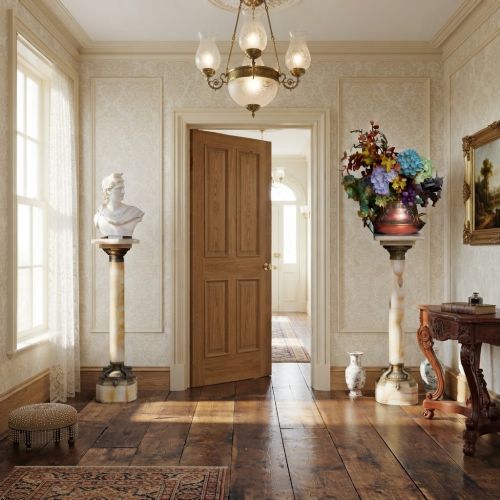
These antique style plinths bring sculptural elevation to rooms, holding urns, bronzes and busts with classical presence.
Antique Style Plinths
When buyers search for antique style plinths, they look at columns, pedestals, and display bases designed to elevate sculpture and decorative objects. These items appear across the nineteenth century, with Victorian, Edwardian, and earlier revival periods represented.
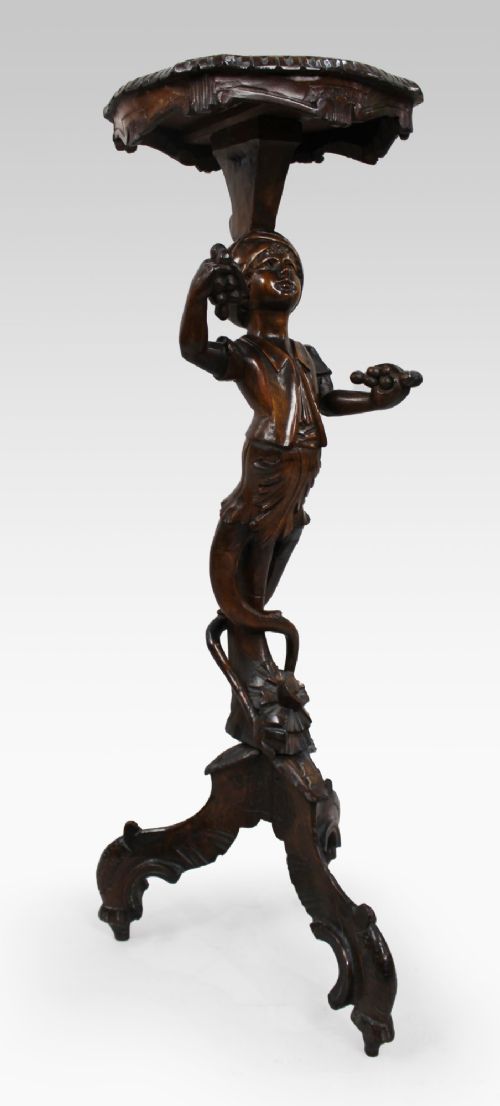
The pieces on this page span carved oak, mahogany, marble, onyx, and stone forms, alongside cast bronze and iron mounts. Makers utilised styles ranging from Neoclassical and French Louis XVI to Gothic Revival and Grand Tour aesthetics.
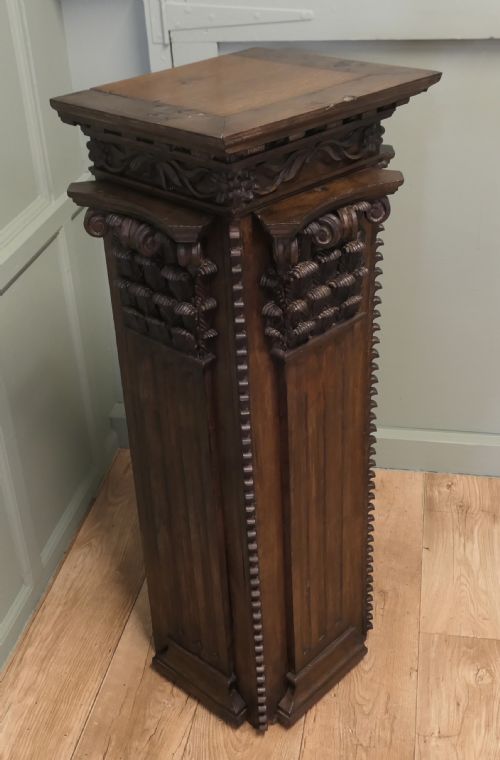
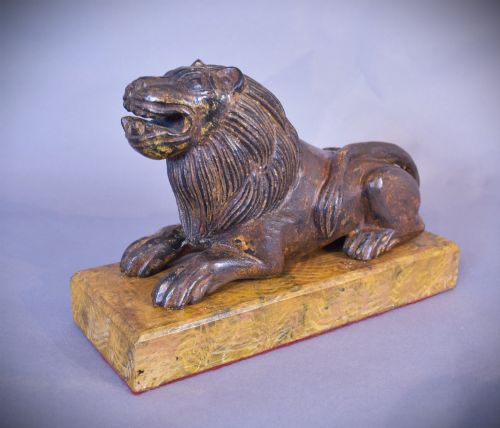
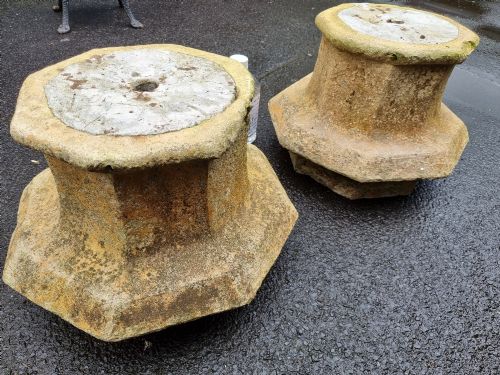
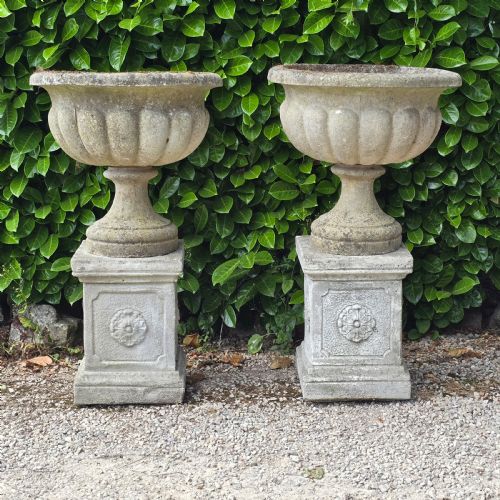
Common forms include tall display columns, column pedestals with ormolu collars, and low stone plinths supporting garden urns or animal figures. Architectural influences dominate, reflecting classical temples and European interior display traditions.
Materials and Technique
Carvers shaped dense hardwoods like mahogany and oak, while stonemasons turned marble, onyx, and composite stone into smooth columns. Cabinetmakers added gilt highlights, painted finishes, and ebonised details to timber surfaces.
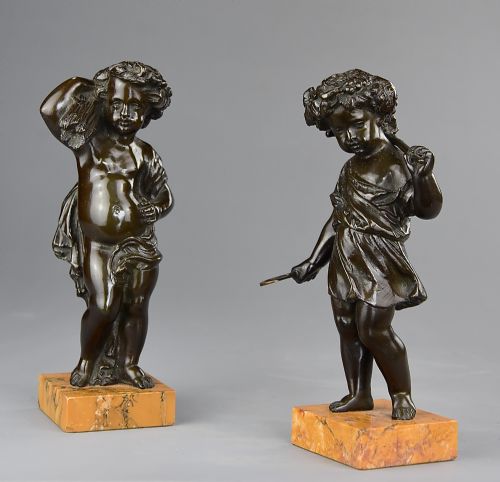
Foundries cast bronze, brass, and iron elements, applying patinas and mounting metal figures onto stone or marble bases. Ormolu mounts and cast collars provide decorative accents on stone and onyx shafts.
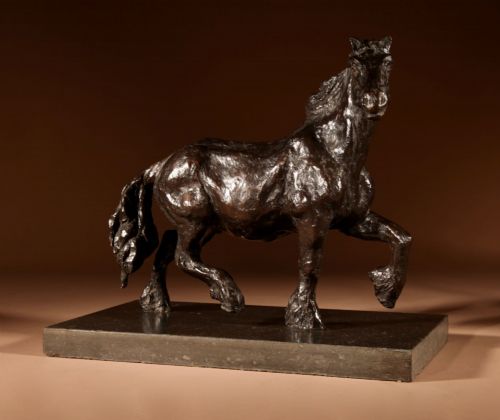
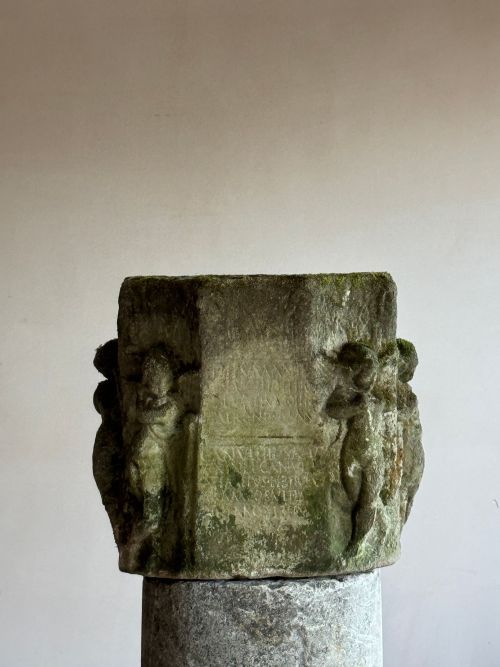
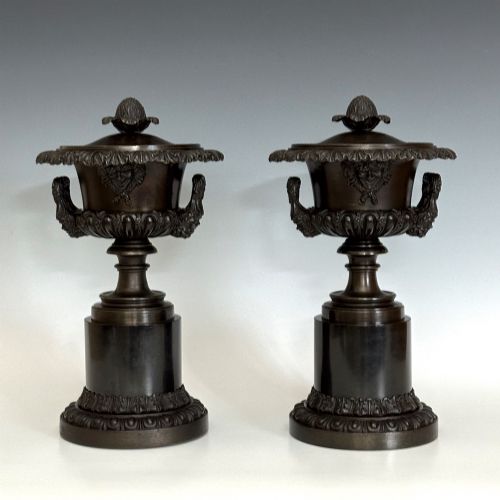
Draft horses and harvest putti share the floor with classical urns, proving even heavy stone needs good company.
Craft and Proportion
Quality rests in the precision of the carving and the selection of materials, such as figured mahogany or variegated marble. Sharp definition in acanthus leaves and figural details distinguishes finer work from simpler production.
Structural stability matters in tall columns, where balanced weight distribution ensures heavy urns or bronzes remain secure. Weighty stone bases and solid timber cores separate substantial display pieces from lighter decorative supports.
Gillow & Co.·Mawer & Stephenson
The Antique Style Plinths Glossary
- Ormolu
- Gilded bronze mounting applied to furniture and decorative objects. It provides metallic contrast against marble and wood surfaces.
- Campana urn
- A bell-shaped vessel typically mounted on a pedestal or plinth. These garden and interior ornaments derive from classical antiquity.
- Torchere
- A tall stand or pedestal designed to hold a light source or decorative figure. They raise display objects to eye level.
- Acanthus
- A carved leaf ornament derived from classical architecture. It decorates the capitals of columns and the bodies of urns.
- Ebonised
- Wood finished with a dark stain or paint to imitate ebony. This technique appears on nineteenth-century display pieces.
Antique Style Plinths: Frequently Asked Questions
What weights can these plinths hold?
Solid marble and heavy timber columns support substantial bronze sculptures and large stone urns safely. Lighter wooden torchere stands suit medium decorative figures and smaller vessels.
Check the base footprint and material density before placing heavy bronze or stone pieces on taller columns.
How do I clean marble columns?
Dust surfaces regularly with a soft, dry cloth to prevent dirt accumulation in carved recesses. Avoid harsh chemical cleaners that can dull polished stone or damage historic patinas.
Use a damp cloth with mild soap only when necessary, drying the marble thoroughly afterwards.
How do I identify a Neoclassical style plinth?
Neoclassical pieces feature architectural details such as fluted columns, acanthus leaf capitals, and classical proportions. They draw inspiration from ancient Greek and Roman design traditions.
Materials often include white marble, vert de patricia marble, and patinated bronze mounts.