


Carved Mahogany Display Pedestals
Carved mahogany display pedestals elevate sculptures, plants and lamps, offering structured height and rich timber grain to domestic interiors.
Carved Mahogany Display Pedestals
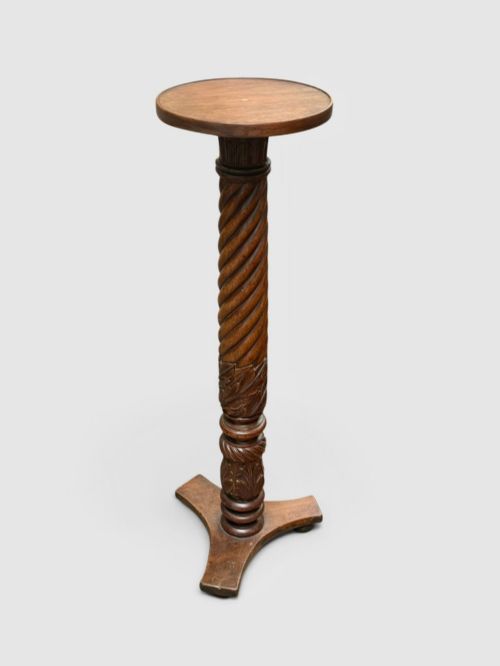
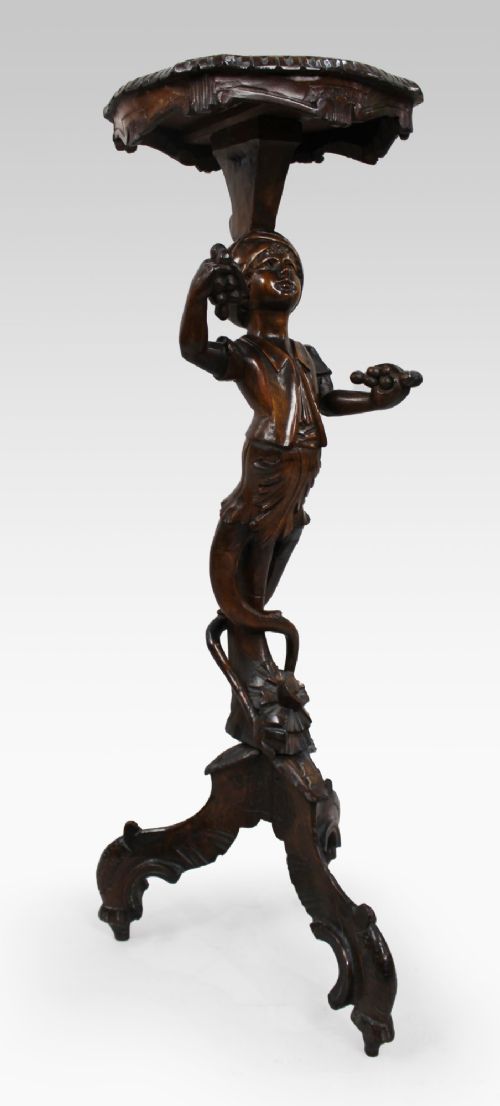
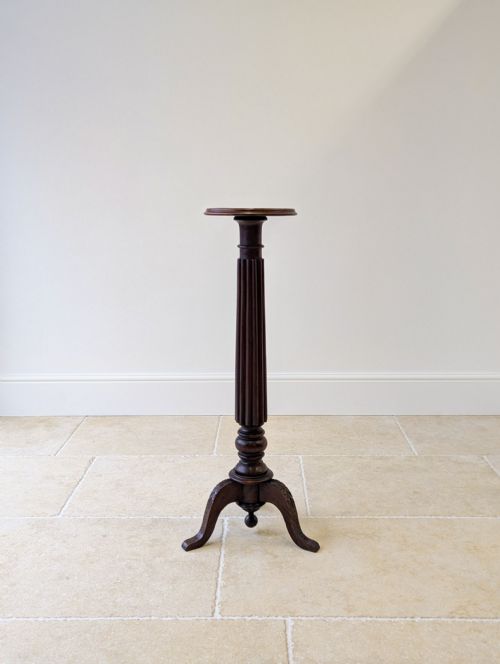
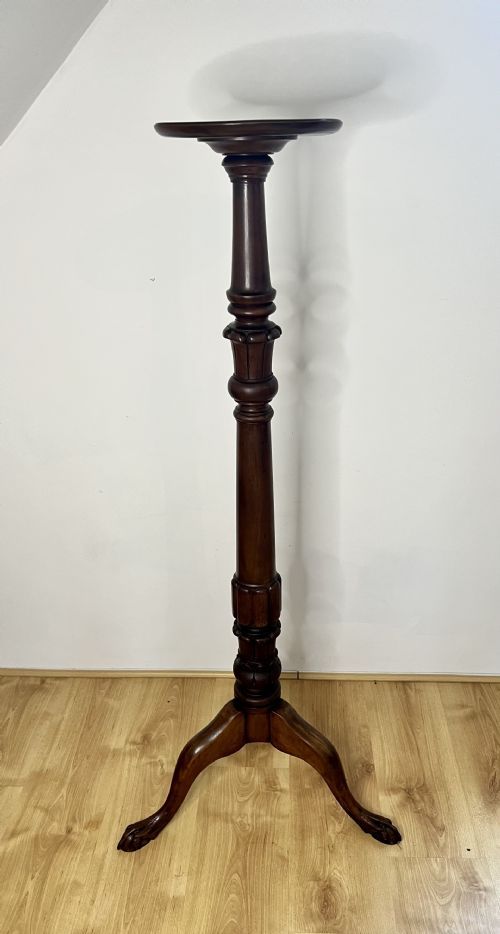
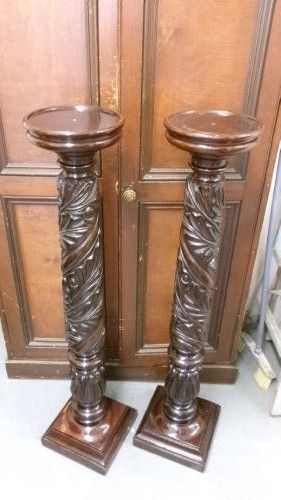
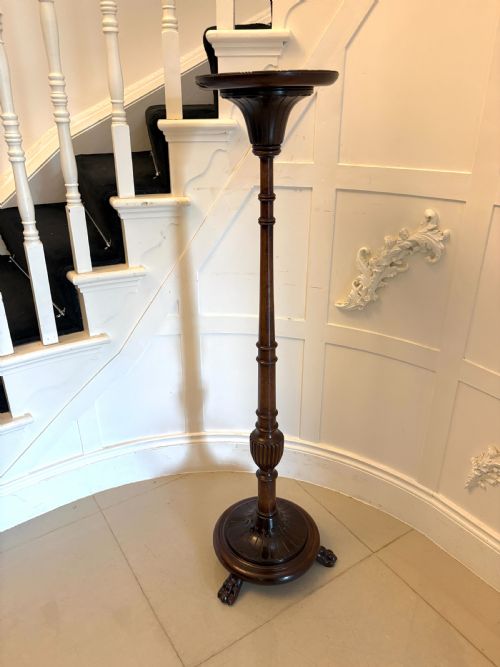
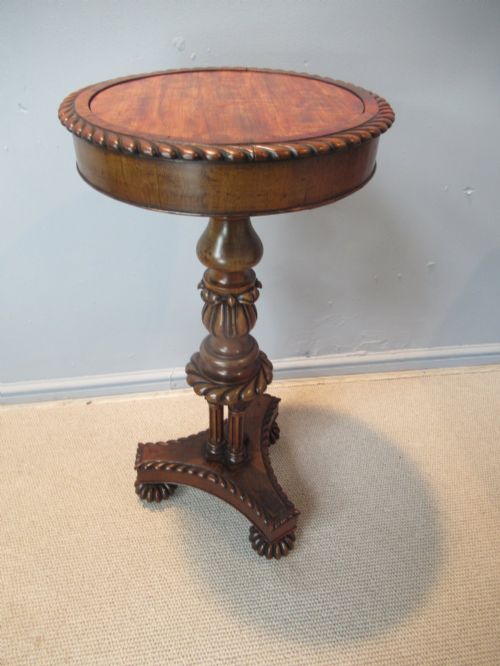
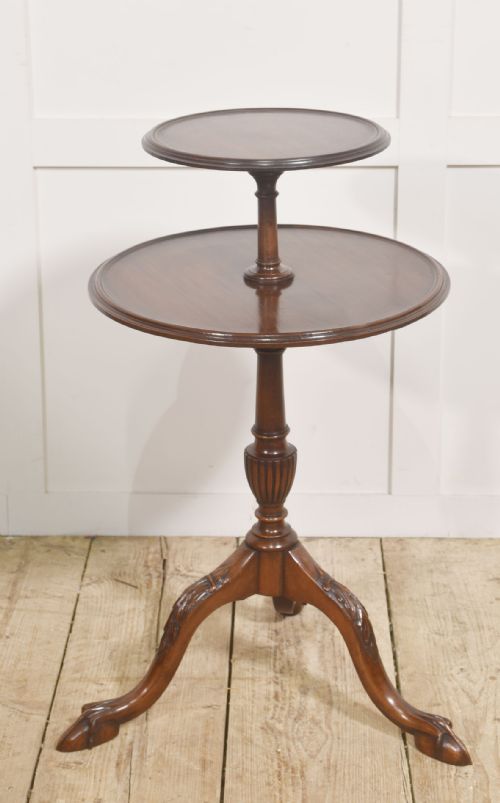
Carved mahogany display pedestals appear predominantly as tall torcheres, plant stands, and column supports originating from the nineteenth century and the Edwardian era. These vertical furnishings serve as elevated platforms for vases, busts, and decorative urns within domestic spaces. The selection ranges from slender tripod columns to heavier cylindrical pillars designed to bear significant weight.
Victorian examples dominate the available forms, often showcasing elaborate carved detailing upon dense hardwood timber. Alongside English designs, pieces referencing Chinese export styles and Georgian revival aesthetics occur frequently, broadening the architectural vocabulary of the stands. Buyers encounter both single columns and matched pairs suitable for symmetrical placement in a room.
Evaluating craftsmanship and proportion
Quality rests upon the crispness of the hand-carved detail and the inherent density and grain figure of the mahogany timber. Superior examples exhibit fluid, deep relief carving on capitals and pedestals without mechanical repetition or shallow finish work. The integrity of the structural joints determines longevity, particularly where slender columns meet weighted bases.
Proportion and balance define the aesthetic success of a pedestal, ensuring it supports objects visually without appearing top-heavy. The weight of the timber and the rigidity of the upright column distinguish robust architectural stands from lighter decorative plant holders.
Listings feature carved mahogany display pedestals spanning the nineteenth century through the Edwardian period, incorporating brass, marble, and hardwood elements.
The Carved Mahogany Display Pedestals Glossary
- Torchere
- A tall, slender stand designed specifically to support a lamp, vase, or decorative figure. These elevated columns originated to hold lighting fixtures before electricity.
- Jardiniere stand
- A specialised low or tall table built to hold a plant container or flower pot. They often feature water-resistant top surfaces such as marble or glazed ceramic inserts.
- Tripod table
- A piece of furniture supported by three legs branching from a central pillar. This configuration prevents wobbling on uneven nineteenth-century floors.
- Dish top
- A table or pedestal top featuring a raised, concave rim carved directly from the solid timber edge. This perimeter helps secure small objects from sliding off.
- Hongmu
- A dense, dark Asian hardwood frequently utilised for traditional Chinese furniture and vase stands. The term translates to red wood in Chinese.
Carved Mahogany Display Pedestals: Frequently Asked Questions
What were carved mahogany display pedestals used for?
These tall stands historically elevated lighting, floral arrangements, and decorative sculptures to optimal viewing levels within reception rooms and hallways. They allowed homeowners to showcase prized possessions at eye height.
In modern interiors, they continue to serve as structural plinths for house plants, table lamps, and art objects, adding vertical dimension to room layouts.
How do I choose the right height?
Consider the scale of the object you intend to place on top in relation to the overall room proportions. Taller torcheres work well in corners or flanking doorways, while shorter stands suit companion seating.
Ensure the top platform diameter matches the base of your display piece to guarantee physical stability and visual balance.
How do I tell Victorian pedestals apart from later ones?
Victorian pieces typically display heavier timber weights, deeper hand-carved relief work, and traditional patination developed through age. They frequently utilise dense solid mahogany or regional hardwoods.
Later Edwardian and revival pieces often exhibit lighter construction methods, brighter factory finishes, and stylistic nods to earlier Georgian or Art Nouveau movements.
Are these stands sturdy enough for heavy planters?
Solid mahogany and hardwood columns with wide tripod bases or heavy weighted feet offer substantial load-bearing capacity. They were originally engineered to support heavy marble urns and large ceramic jardiniere pots.
However, slender torchere designs with delicate legs require careful placement and lighter items to prevent accidental tipping.