


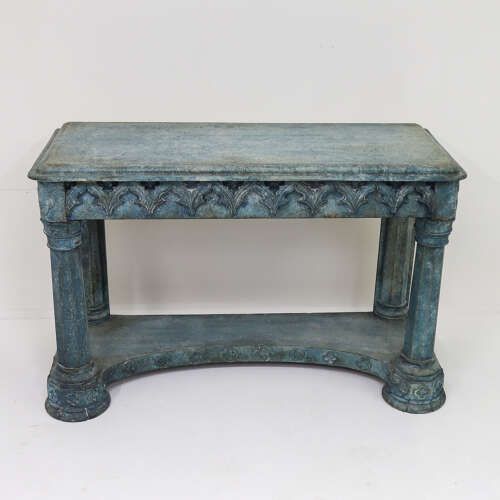


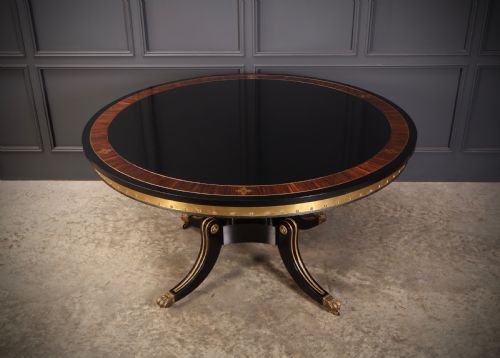
Antique Style Foyer Table
An antique style foyer table serves as a statement piece in an entrance hall, combining functional surface area with decorative historical design.
Antique Style Foyer Table
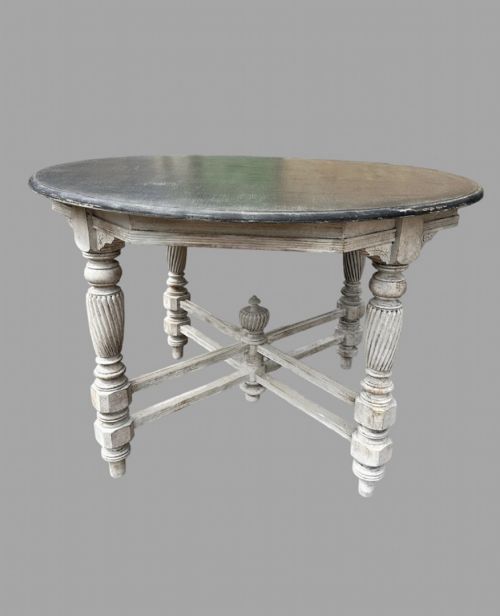
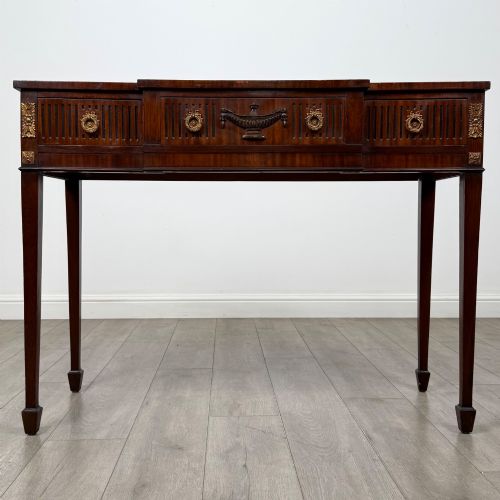
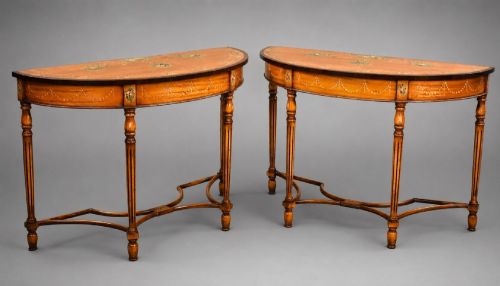
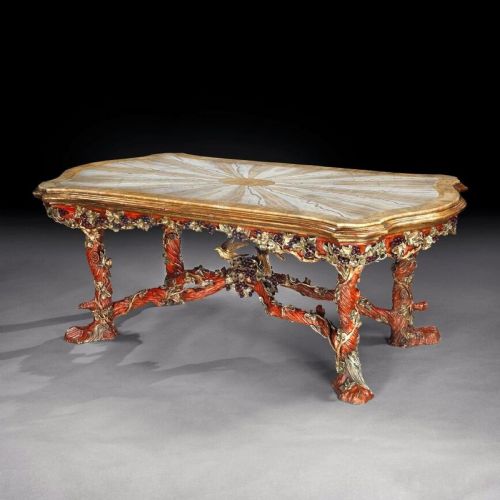
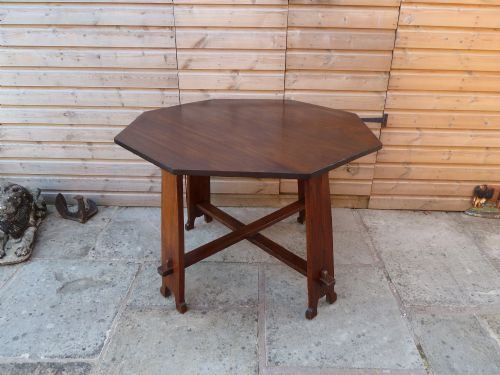
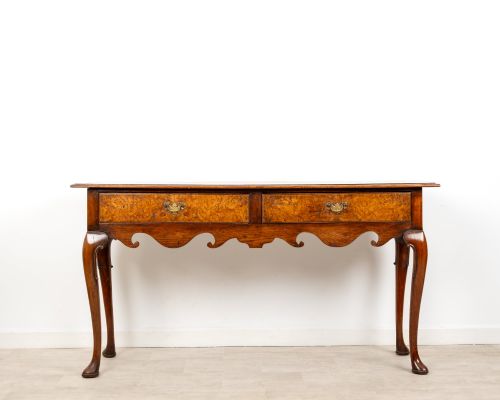
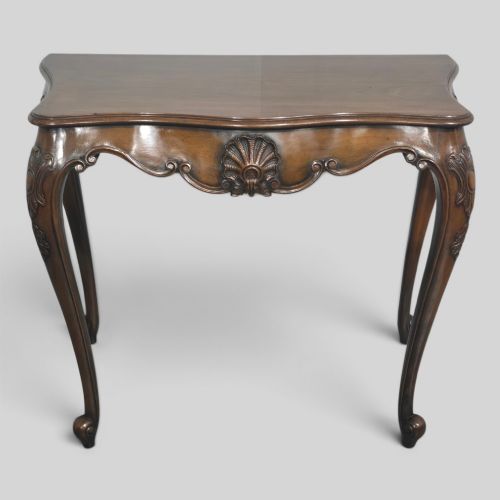
When searching for an antique style foyer table, buyers encounter various historical forms designed for entrance halls and reception spaces. These pieces primarily manifest as centre tables, console tables, side tables, and occasional tables, often placed against walls or positioned centrally in large hallways.
The selections span multiple periods, including the 18th century, the 19th century, the Victorian era, and the Edwardian period. Surviving examples frequently draw on design idioms such as French Empire, Sheraton Revival, Queen Anne style, Gothic Revival, and French Rococo.
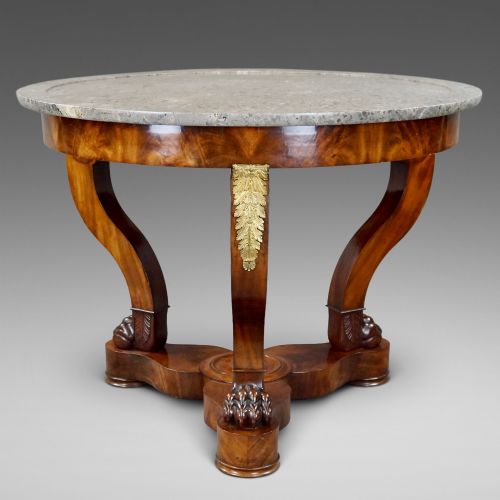
Makers and designers of these tables adapted historic proportions to suit domestic entryways. Formats range from narrow console tables designed for limited hallway depths to expansive round gueridons intended for prominent centre placement.
Materials and construction methods
Cabinet makers utilised a variety of durable timber substrates including mahogany, walnut, oak, satinwood, kingwood, and ebonised woods. These timbers were frequently enhanced with intricate marquetry, specimen wood inlays, and brass or ormolu mounts.
Surfaces often incorporate inset slabs of marble, providing a durable and decorative top resistant to everyday use in busy hallways. Giltwood, parcel gilt, and painted finishes were applied to carved wooden frames to achieve ornate decorative schemes.
Structural embellishments involved detailed hand carving, bronze mounts shaped as swans or rams' heads, and specialised turning. Joinery followed traditional workshop practices appropriate to each respective period and regional style.
Several tables include cast brass swans and rams' heads, ensuring your post receives classical zoological supervision daily.
What determines quality in these tables
The standard of materials selected for the top and base dictates much of the physical presence of each piece. Figured veneers, well-matched burr walnut, and dense marbles distinguish finer examples from standard production.
Execution of decorative details such as hand-carved wooden foliage, cast gilt-bronze mounts, and precise marquetry inlays separates sophisticated workshop output from simpler items. The crispness of carved mouldings indicates the skill of the artisan.
Structural integrity and the preservation of original surface finishes, such as mellow patinated timber or authentic gilding, govern the overall integrity of the piece. Tables retaining their original fitted marble tops and undamaged mounts hold greater cohesion.
The Antique Style Foyer Table Glossary
- Console table
- A table designed to be fixed against a wall, frequently supported by console brackets or legs.
- Gueridon
- A small round table, often with a central pillar support, originating in 17th-century France.
- Marquetry
- Decorative veneer work arranged in geometric or pictorial patterns across the surface of the timber.
- Ormolu
- Gilt bronze mounts applied to furniture for decorative enrichment during the 18th and 19th centuries.
- Demi-lune
- A half-moon shape characteristic of console and side tables designed to sit flush against a wall.
Antique Style Foyer Table: Frequently Asked Questions
Where should a foyer table be placed?
These tables typically sit in entrance halls against a flat wall or serve as a central anchor point in larger vestibules.
Narrow console versions suit limited hallway depths, while round centre tables require sufficient surrounding floor space.
How do I identify French Empire style?
French Empire pieces often feature classical motifs, mahogany timbers, and cast bronze mounts such as swans or rams' heads.
They emphasise symmetry and architectural presence derived from classical antiquity.
Are marble tops original to these tables?
Many 19th-century console and gueridon tables were constructed specifically to house heavy inset marble slabs.
These stone surfaces provided a durable, cool finish suited to the practical demands of entrance spaces.
What is Sheraton Revival furniture?
Sheraton Revival pieces draw inspiration from the late 18th-century neoclassical designs of Thomas Sheraton.
They frequently employ light satinwood, delicate painted decoration, and tapered legs.